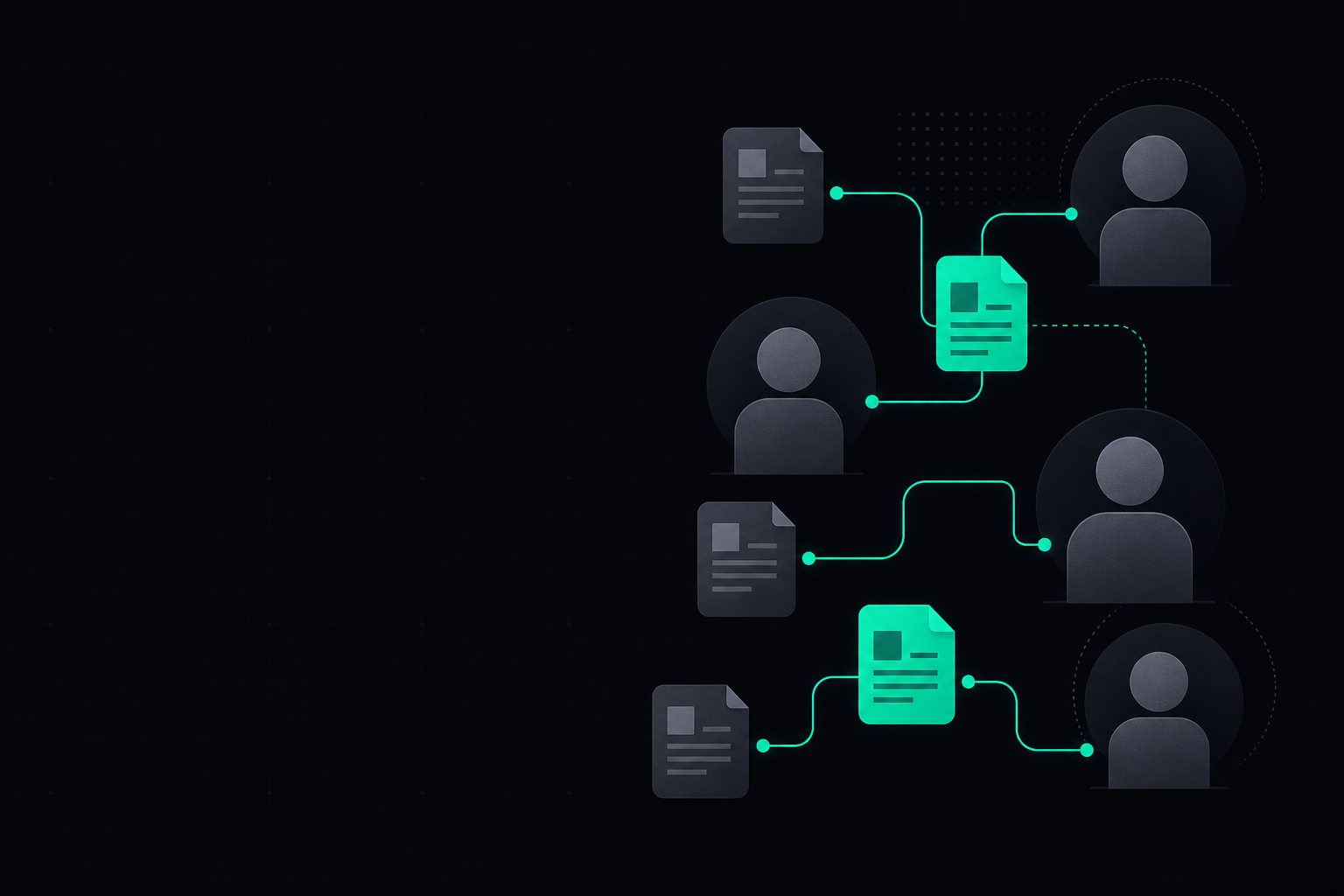
HR and people teams can leverage AI tools to draft, refine, and tailor job descriptions, ensuring they are engaging and attract suitable candidates. AI assists by structuring content, suggesting inclusive language, and optimising for clarity and appeal based on role requirements and company culture.
Key takeaways
- AI can draft initial job descriptions rapidly, freeing HR professionals to focus on strategic refinement.
- Use AI to analyse existing successful job descriptions and extract key elements for new roles.
- Prompt AI to suggest inclusive language and remove bias, broadening candidate pools.
- Leverage AI to tailor job descriptions for specific platforms or candidate profiles, increasing relevance.
Crafting a Job Description with AI
This flow illustrates how HR professionals can integrate AI at key stages to develop effective job descriptions.
Watch: a 2-minute intro
From the ChatGPT vs Claude vs Gemini vs Perplexity course on AI Bytes Learning.
A worked example
You are an expert HR professional writing a compelling job description.
Generate a job description for a [Job Title] role at [Company Name].
The ideal candidate should have [3-4 key skills/experiences].
The role involves [2-3 main responsibilities].
Our company culture values [2-3 cultural aspects, e.g., collaboration, innovation].
Include sections for 'About Us', 'The Role', 'Key Responsibilities', 'What You'll Bring', and 'What We Offer'.
Ensure the language is inclusive and attractive to diverse candidates.
Always review the generated output for accuracy, tone, and alignment with company brand guidelines before finalising.
Choosing the Right AI Tool for Job Description Tasks
| Task | Best for | Key Benefit |
|---|---|---|
| Initial Draft Generation | ChatGPT, Claude, Gemini | Rapidly creates full JD structures and content from brief inputs. |
| Bias Detection & Language Refinement | Claude, Gemini | Excellent at identifying and suggesting alternatives for non-inclusive language. |
| Summarising & Structuring | ChatGPT, NotebookLM | Efficiently organises raw notes into coherent sections and bullet points. |
| Researching Industry Benchmarks | Perplexity, Microsoft Copilot | Can quickly find common skills and requirements for similar roles in the market. |
| Tailoring for Specific Platforms | ChatGPT, Gemini | Adapts content length and style for LinkedIn, company careers page, etc. |
Step by step
Follow these steps to effectively use AI in crafting job descriptions that attract the right talent.
- 1Gather all essential information about the role, including responsibilities, required skills, team structure, and company culture.
- 2Use a tool like ChatGPT or Claude to generate an initial draft by inputting your gathered information and specifying desired sections.
- 3Review the draft for factual accuracy and completeness, adding any missing details or specific company nuances.
- 4Prompt the AI again to refine the language, requesting suggestions for more inclusive phrasing or to remove jargon.
- 5Ask the AI to tailor the description's tone and length for different platforms, such as a concise version for LinkedIn.
- 6Collaborate with hiring managers to get feedback, making final adjustments to ensure alignment with their needs.
- 7Proofread the entire document meticulously for any grammatical errors or typos before publishing.
What information does AI need to write a good job description?
To produce an effective job description, AI tools require clear and comprehensive inputs. At AI Bytes Learning, we teach professionals how to leverage these tools by providing the exact job title and the department it belongs to. Crucially, outline the core responsibilities and daily tasks the successful candidate will undertake. Be specific about the required skills, qualifications, and experience – differentiating between 'must-haves' and 'nice-to-haves'. Mention the team structure and who the role reports to, as this contextualises the position.
Beyond the technical details, AI benefits from insights into your company culture and values. Describe the work environment, opportunities for growth, and any unique perks or benefits. The more detail you provide about the role's strategic importance and its impact on the business, the better the AI can craft a description that resonates with ambitious candidates. Think of the AI as a highly efficient assistant; the quality of its output directly reflects the quality and detail of your initial instructions.
AI can draft initial job descriptions rapidly, freeing HR professionals to focus on strategic refinement.
How can AI help remove bias from job descriptions?
Unconscious bias in job descriptions can inadvertently deter diverse candidates, narrowing your talent pool. AI offers a powerful solution by analysing language patterns that might signal gender, age, or cultural preferences. Tools like Claude or Gemini are particularly adept at identifying words or phrases commonly associated with specific demographics, such as 'rockstar' or 'ninja' which might appeal more to certain groups, or 'assertive' which can be perceived differently across genders.
Once identified, the AI can suggest neutral, inclusive alternatives that convey the same meaning without alienating potential applicants. For example, it can rephrase 'proven track record' to 'demonstrated success' or 'highly motivated individual' to 'proactive team member'. By systematically reviewing and refining the language, HR and people teams can ensure their job descriptions appeal to the widest possible range of qualified candidates, fostering a more equitable and diverse hiring process.
What should HR teams check before publishing an AI-generated job description?
While AI can significantly expedite the job description writing process, human oversight remains essential before publishing. First, always verify the factual accuracy of all details: job title, reporting lines, responsibilities, and required qualifications. An AI might occasionally misinterpret context or generate generic information that doesn't quite fit your specific role or organisation. Ensure that the tone and language align perfectly with your company's brand voice and culture.
Next, thoroughly review for clarity and conciseness. Remove any redundant phrases or jargon that might confuse candidates. Pay close attention to legal compliance – ensure the description adheres to all relevant employment laws and regulations in the UK, especially regarding non-discrimination. Finally, collaborate with the hiring manager to confirm that the AI-generated description accurately reflects their expectations and the true nature of the role, making any necessary bespoke adjustments.
Frequently asked questions
Can AI really understand the nuances of our company culture for a job description?▾
AI can infer cultural nuances if you provide detailed input about your company's values, mission, and work environment. While it won't "understand" in a human sense, it can integrate keywords and themes you provide to reflect your culture in the description's tone and content. Always review and refine to ensure it accurately represents your unique workplace.
Is it safe to use AI for sensitive HR documents like job descriptions?▾
Yes, it is generally safe for drafting purposes, but always exercise caution and maintain human oversight. Ensure you are not inputting highly confidential or personal employee data into public AI models. Treat AI-generated drafts as a starting point that requires thorough review and validation by an HR professional before publication.
How can I ensure the AI-generated job description is unique and not generic?▾
To avoid generic outputs, provide specific, unique details about your company, the team, and the role's challenges and opportunities. Include your company's mission, specific projects, and desired soft skills. Prompt the AI to use an engaging, active voice and to highlight what makes your organisation a great place to work.
Can AI help optimise job descriptions for SEO or specific job boards?▾
Yes, AI can be highly effective for this. You can prompt AI tools to include relevant keywords that candidates are likely to search for, improving visibility on job boards and search engines. Additionally, you can ask the AI to tailor the length and format of the description to fit the requirements or best practices of specific platforms like LinkedIn or Indeed.
What if the AI generates something completely wrong or irrelevant?▾
This can happen, especially with less specific prompts. If the output is off-topic, refine your prompt by adding more context, constraints, or examples of job descriptions you like. Break down complex requests into smaller, more manageable steps. Remember, AI is a tool; it needs clear guidance to produce relevant results.
How long does it typically take to write a job description with AI compared to manually?▾
Using AI can significantly reduce the initial drafting time, often cutting it from hours to minutes. While the initial generation is fast, the total time will still include gathering inputs, reviewing, refining, and collaborating with hiring managers. However, the AI streamlines the creation of the core content, allowing HR professionals to focus on strategic adjustments and quality assurance.
ChatGPT vs Claude vs Gemini vs Perplexity
ChatGPT, Claude, Gemini, and Perplexity each do different things well. This short course shows you what sets them apart, where each one falls short, and how to pick the right tool for the job — so you stop guessing and start getting better results. [gemma]
Start learningPut this into practice
15 minutes a day. Real AI skills for your job. Free to start.
Get started freeStay Ahead of AI in 15 Minutes a Day
The AI news that actually matters for your work — explained in plain English, with the skill to learn alongside it. Straight to your inbox.
No spam, unsubscribe anytime. We respect your privacy.