HR and people teams can use AI tools like ChatGPT or Claude to draft competency-based interview questions by providing a clear competency definition and desired behavioural indicators. This approach helps generate structured questions quickly, ensuring consistency and fairness across candidate assessments, then refined by a human. AI Bytes Learning helps professionals master these techniques.
Key takeaways
- AI excels at generating initial question drafts based on detailed competency descriptions and behavioural anchors.
- Always provide AI with specific context, including job level, industry, and desired behavioural examples, for better output.
- Human review is crucial to ensure questions are fair, legally compliant, and genuinely assess the target competency.
- Tools like NotebookLM can help organise and summarise existing competency frameworks before prompting for questions.
Drafting Competency Questions with AI
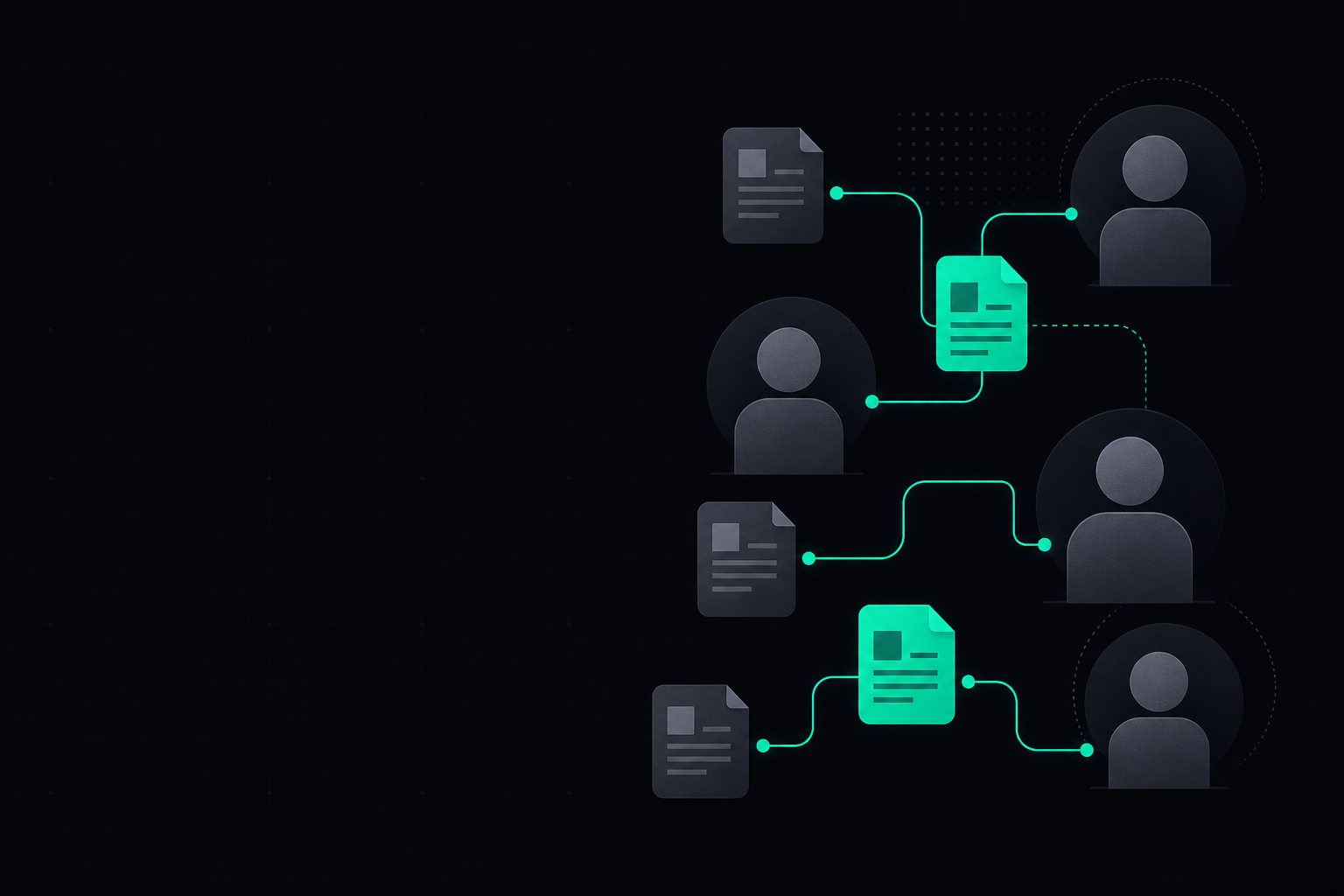
This flow illustrates the process of using AI to assist in drafting competency-based interview questions, from initial definition to final usage.
Watch: a 2-minute intro
From the ChatGPT vs Claude vs Gemini vs Perplexity course on AI Bytes Learning.
A worked example
You are an experienced HR professional specialising in competency-based interviewing.
Your task is to draft five open-ended interview questions for the competency '[Competency Name]'.
This competency is defined as: '[Competency Definition]'.
Key behavioural indicators for this competency include: '[List 3-5 specific behaviours]'.
The role level is [Junior/Mid/Senior] in the [Industry] sector.
Ensure questions encourage candidates to provide specific examples of past behaviour.
Avoid hypothetical questions.
Always check the questions for clarity, bias, and alignment with legal requirements before use.
Comparing AI Tools for Interview Question Drafting
| Tool | Best for | Key Advantage |
|---|---|---|
| ChatGPT | Rapid initial drafting, brainstorming | Broad knowledge base, versatile output styles |
| Claude | Detailed, nuanced questions, ethical considerations | Stronger at longer, more complex prompts, good for sensitive topics |
| Gemini | Concise, focused questions, multi-modal input potential | Efficient for quick iterations, can process varied input formats |
| Microsoft Copilot | Integrating with existing documents (e.g., job descriptions in Word) | Seamless integration within Microsoft 365 ecosystem |
| NotebookLM | Organising and summarising existing competency frameworks | Excellent for synthesising large documents before prompting |
| Perplexity | Researching best practices for specific competencies | Combines search capabilities with generative AI for informed suggestions |
Step by step
To effectively use AI for drafting competency-based interview questions, follow these practical steps.
- 11. Gather your competency definition, key behavioural indicators, and role context (level, department, industry).
- 22. Choose an AI tool like ChatGPT or Claude and craft a detailed prompt outlining your requirements, including the number of questions needed.
- 33. Generate an initial set of questions and review them for relevance, clarity, and alignment with the competency.
- 44. Refine the questions by asking the AI to rephrase, add follow-up probes, or adjust the complexity based on your feedback.
- 55. Human review is essential: check for potential bias, legal compliance, and ensure the questions genuinely assess the desired competency.
- 66. Pilot the questions with a small group or hiring manager to gather feedback before broad implementation.
Why use AI for competency questions?
Leveraging AI for drafting competency-based interview questions offers significant advantages for HR and people teams. Firstly, it dramatically speeds up the initial drafting process, freeing up valuable HR time that can be redirected to more strategic tasks. AI tools can generate a foundational set of questions in moments, which would traditionally take considerably longer to craft manually.
Secondly, AI can enhance consistency across the interviewing process. By providing the same competency definition and behavioural indicators, the AI will produce questions structured around those specific criteria, helping to standardise candidate assessment. This standardisation can contribute to reducing unconscious bias by ensuring all candidates are asked a similar calibre of questions, focused purely on job-relevant competencies, rather than interviewer-specific preferences or interpretations.
AI excels at generating initial question drafts based on detailed competency descriptions and behavioural anchors.
What does AI get wrong here?
While AI is a powerful assistant, it does not fully grasp the nuances of human interaction, organisational culture, or the intricate details of specific roles. AI-generated questions can sometimes be generic, lacking the depth or specificity needed to truly differentiate candidates or probe complex scenarios unique to your company. They might also miss subtle cultural cues or the specific tone that aligns with your employer brand.
Furthermore, AI models are trained on vast datasets, which can inherently contain biases reflecting societal norms. Without careful human review, AI could inadvertently generate questions that lead to indirect discrimination or are not fully compliant with UK employment law, such as the Equality Act 2010. Human oversight is therefore critical to refine, customise, and validate AI output, ensuring questions are fair, legally sound, and culturally appropriate.
Refining AI-generated questions for UK context
When using AI for interview questions, HR professionals in the UK must apply a critical lens, particularly concerning legal and cultural considerations. AI models do not inherently understand the specificities of UK employment law. It is crucial to review all AI-generated questions to ensure they avoid any potential for direct or indirect discrimination, adhere to principles of fairness, and are non-discriminatory regarding protected characteristics.
Beyond legal compliance, consider your organisation's unique culture and values. AI can provide a solid baseline, but only human HR expertise can tailor questions to truly reflect your company's ethos, ensuring they resonate with your brand and attract the right talent. Customising AI output also allows you to integrate specific industry jargon or scenarios relevant to the role, making the interview process more pertinent and engaging for candidates.
Frequently asked questions
Can AI completely replace human HR professionals in drafting interview questions?▾
No, AI cannot fully replace human HR professionals in this task. AI serves as a powerful assistant, generating initial drafts quickly and efficiently. However, human oversight is crucial for ensuring legal compliance, cultural fit, ethical considerations, and the nuanced assessment of specific job requirements.
How can I ensure AI-generated questions are free from bias?▾
While AI can help reduce unconscious human bias by standardising questions, it can also reflect biases present in its training data. To mitigate this, always review AI-generated questions critically for fairness, use inclusive language, and ensure they focus purely on job-relevant skills and behaviours. Diverse human review panels can further help identify and remove subtle biases.
What specific details should I include in my prompt for the best results?▾
For optimal results, include the exact competency definition, 3-5 specific behavioural indicators, the job level (e.g., junior, mid, senior), the industry, and any specific constraints like 'open-ended questions only' or 'avoid hypotheticals.' The more detail you provide, the more tailored and useful the AI's output will be.
Is it safe to use AI tools with sensitive HR data?▾
When using public AI tools like ChatGPT or Claude, it is crucial never to input sensitive or confidential HR data, such as candidate names, specific company performance details, or personal employee information. For sensitive internal data, use enterprise-grade solutions or tools with robust data privacy agreements, or anonymise all input carefully.
How can AI help with follow-up questions?▾
AI can also be prompted to suggest follow-up questions based on common candidate responses or to probe deeper into specific aspects of a competency. For example, you could ask the AI, 'For question X, if a candidate gives a very general answer, what are two specific follow-up questions I could ask?' This helps interviewers gain more detailed insights.
Does AI understand UK employment law?▾
Generalist AI models are trained on vast datasets but do not inherently 'understand' or apply specific legal frameworks like UK employment law. While they can provide information, it is critical for HR professionals to review all AI-generated questions for compliance with the Equality Act 2010 and other relevant UK legislation, ensuring questions are fair and non-discriminatory.
ChatGPT vs Claude vs Gemini vs Perplexity
ChatGPT, Claude, Gemini, and Perplexity each do different things well. This short course shows you what sets them apart, where each one falls short, and how to pick the right tool for the job — so you stop guessing and start getting better results. [gemma]
Start learningPut this into practice
15 minutes a day. Real AI skills for your job. Free to start.
Get started freeStay Ahead of AI in 15 Minutes a Day
The AI news that actually matters for your work — explained in plain English, with the skill to learn alongside it. Straight to your inbox.
No spam, unsubscribe anytime. We respect your privacy.