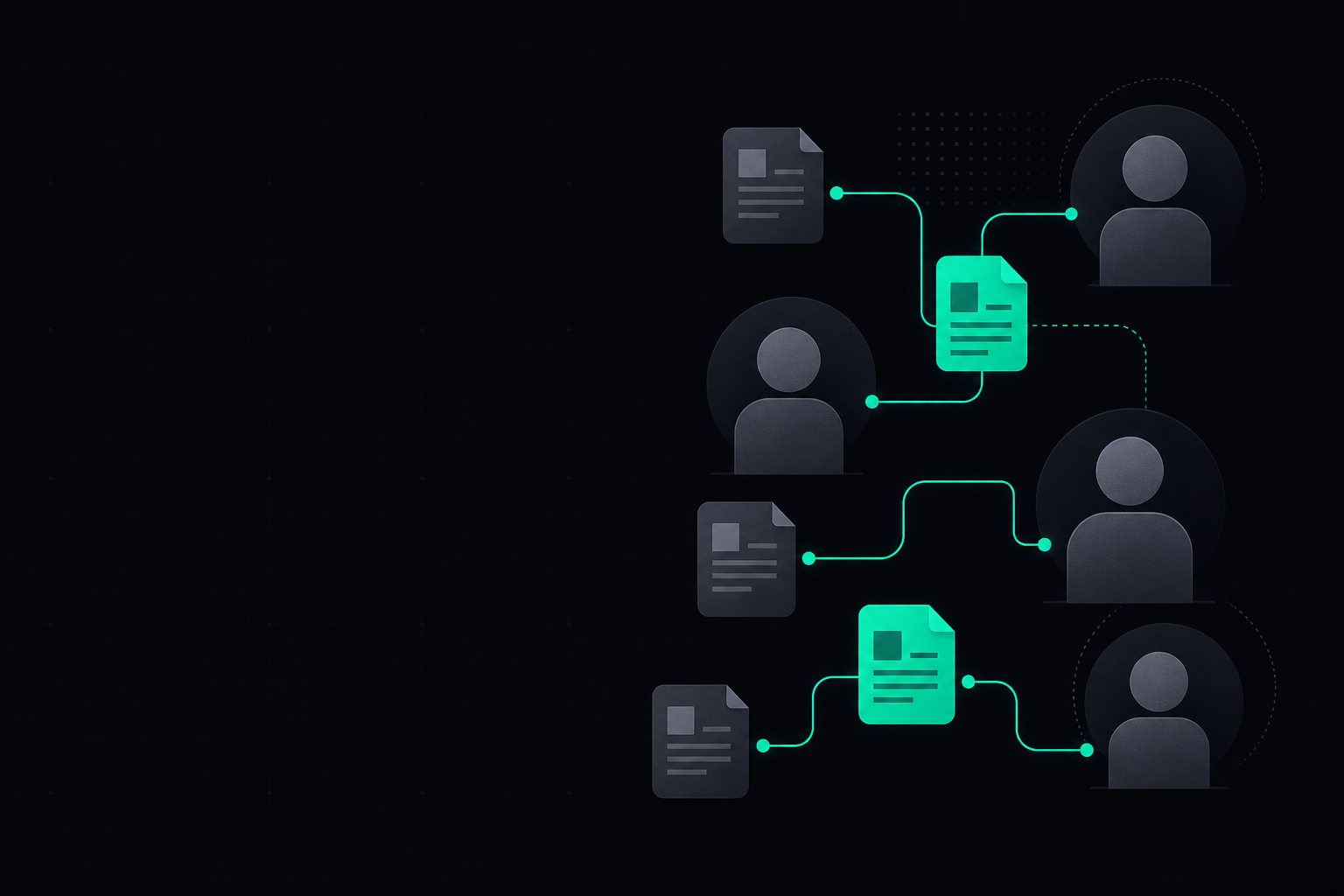
AI can transform raw exit-interview notes into actionable themes by processing unstructured text, identifying recurring patterns, and summarising key sentiment. This allows HR and people teams to quickly uncover common reasons for departure, pinpoint areas for improvement, and inform strategic decisions for retention.
Key takeaways
- AI tools excel at identifying subtle patterns in qualitative data that humans might miss due to volume or bias.
- Always anonymise exit interview data thoroughly before processing it with any AI tool to protect privacy.
- The quality of the AI-generated themes directly depends on the clarity and detail of the original interview notes.
- AI should augment, not replace, human analysis, providing a structured starting point for deeper HR insights.
Exit Interview Analysis Workflow with AI
This flow illustrates how AI can streamline the process from raw exit interview notes to meaningful, actionable insights for HR.
Watch: a 2-minute intro
From the ChatGPT vs Claude vs Gemini vs Perplexity course on AI Bytes Learning.
A worked example
You are an HR analyst.
I will provide anonymised exit interview notes.
Your task is to identify and summarise the top 3-5 recurring themes or reasons for departure, along with supporting examples from the notes.
Also, identify any overarching sentiment (positive, negative, mixed) related to the company culture.

Here are the anonymised notes:
[PASTE ANONYMISED EXIT INTERVIEW NOTES HERE]

Focus on actionable insights for improving employee retention.
Always cross-reference the AI's output with the original notes to ensure accuracy and contextual relevance.
Choosing the Right AI Tool for Exit Interview Analysis
| Task | Best Suited Tool(s) | Why |
|---|---|---|
| Initial theme identification | ChatGPT, Claude, Gemini | Excellent for rapid text analysis and pattern recognition. |
| Summarising long notes | ChatGPT, Claude, Gemini | Efficiently condenses detailed text into key points. |
| Handling sensitive data (on-premises) | Microsoft Copilot (with M365 Security) | Integrates with secure enterprise environments, maintaining data governance. |
| Deep-dive research/context | Perplexity, NotebookLM | Good for querying extracted themes against internal documents or broader industry trends. |
| Iterative refinement of themes | ChatGPT, Claude | Allows for conversational refinement and asking follow-up questions. |
Step by step
Follow these steps to effectively use AI for extracting themes from your exit interview notes.
- 1Step 1: Gather and anonymise all exit interview notes, removing any personally identifiable information.
- 2Step 2: Consolidate the anonymised notes into a single document or structured format, ready for AI input.
- 3Step 3: Choose an appropriate AI tool, considering data sensitivity and the volume of your notes.
- 4Step 4: Craft a clear prompt, instructing the AI to identify themes, sentiment, and supporting examples.
- 5Step 5: Paste your anonymised notes into the AI tool and run the prompt to generate initial themes.
- 6Step 6: Critically review the AI's output, validating themes against original notes and refining as needed.
- 7Step 7: Use the structured themes to inform HR strategies, identify trends, and improve employee experience.
Why AI Excels at Thematic Analysis for HR
AI offers HR and people teams a powerful advantage when sifting through qualitative data like exit interview notes. Unlike manual review, which can be time-consuming and prone to human bias, AI tools can process vast amounts of unstructured text rapidly. They are adept at identifying recurring words, phrases, and underlying sentiments that might not be immediately obvious to a human reviewer, especially across a large dataset.
This capability allows HR professionals to quickly pinpoint emerging trends and common reasons for departure, transforming raw, anecdotal feedback into structured, actionable insights. By automating the initial, laborious task of theme extraction, AI frees up HR teams to focus on the more strategic work of interpreting these themes, understanding their root causes, and developing effective retention strategies for AI Bytes Learning professionals.
AI tools excel at identifying subtle patterns in qualitative data that humans might miss due to volume or bias.
Essential Considerations for Data Privacy and Accuracy
While AI offers significant benefits, careful consideration of data privacy is paramount, especially with sensitive HR information. Before inputting any exit interview notes into a public or cloud-based AI tool, it is absolutely critical to anonymise all data thoroughly. This means removing names, specific dates, unique identifiers, and any other information that could directly or indirectly identify an individual. Organisations should also review their internal data governance policies and choose AI tools that comply with relevant UK data protection regulations.
Accuracy is another key factor. The quality of the AI's output is directly dependent on the clarity and detail of the input notes. Vague or poorly recorded interviews will yield less useful themes. Furthermore, AI is a tool to augment human insight, not replace it. Always conduct a human review of the AI-generated themes to ensure they are contextually accurate, relevant, and free from any AI-induced misinterpretations or 'hallucinations'.
From Themes to Tangible HR Actions
Identifying themes from exit interviews is only the first step; the real value comes from turning these insights into tangible HR actions. Once AI has helped categorise and summarise the core reasons for employee departures, HR teams can then delve deeper into each theme. For example, if "lack of career progression" is a dominant theme, this insight can prompt a review of internal promotion processes, development programmes, or talent management strategies.
These structured themes provide a data-driven foundation for conversations with leadership, enabling HR to present clear evidence of organisational challenges. This allows for targeted interventions, whether it's revising compensation structures, improving management training, or enhancing work-life balance initiatives. Ultimately, using AI for thematic analysis empowers HR to proactively address issues, reduce attrition, and foster a more positive and productive workplace culture.
Frequently asked questions
Is it truly safe to put sensitive HR data into AI tools?▾
It can be safe if done correctly. You must rigorously anonymise all data before inputting it into any AI tool, removing all personal identifiers. For highly sensitive data, consider enterprise-grade AI solutions like Microsoft Copilot that operate within your secure Microsoft 365 environment, offering stronger data governance.
What if the AI misses important themes or misinterprets the notes?▾
AI is a powerful assistant, but it's not infallible. It's crucial to always conduct a human review of the AI's output. Cross-reference the identified themes with the original notes and apply your HR expertise to ensure accuracy, context, and to catch any nuanced themes the AI might have overlooked or misinterpreted.
Can AI effectively analyse exit interviews conducted in multiple languages?▾
Yes, many modern AI tools like ChatGPT, Claude, and Gemini are highly capable of processing and analysing text in multiple languages. You would typically input the notes in their original language, and the AI can still identify themes and often even translate summaries if requested, though accuracy can vary.
How much data do I need for AI to effectively identify themes?▾
While more data generally leads to more robust pattern recognition, AI can still be useful with a relatively small dataset. Even with 10-20 detailed exit interviews, AI can help surface initial commonalities. For truly reliable, statistically significant themes, a larger volume of consistent notes is beneficial.
Can AI help me quantify how often certain themes appear in my exit interviews?▾
Absolutely. Once an AI tool has identified the core themes, you can ask it to review the original notes again and count the occurrences or mentions related to each theme. This provides a quantitative layer to your qualitative analysis, allowing you to see the prevalence of specific issues across your departing employees.
What is the biggest mistake HR teams make when using AI for this specific task?▾
The most significant mistake is either failing to properly anonymise data, thereby risking privacy breaches, or over-relying on the AI's output without human validation. AI should be seen as a tool to accelerate analysis, not as a definitive, unchallengeable source of truth. Human oversight and contextual understanding are always essential.
ChatGPT vs Claude vs Gemini vs Perplexity
ChatGPT, Claude, Gemini, and Perplexity each do different things well. This short course shows you what sets them apart, where each one falls short, and how to pick the right tool for the job — so you stop guessing and start getting better results. [gemma]
Start learningPut this into practice
15 minutes a day. Real AI skills for your job. Free to start.
Get started freeStay Ahead of AI in 15 Minutes a Day
The AI news that actually matters for your work — explained in plain English, with the skill to learn alongside it. Straight to your inbox.
No spam, unsubscribe anytime. We respect your privacy.