Marketing managers can use AI to quickly extract key insights from customer call transcripts, summarising needs, pain points, and preferences into a structured campaign brief. Tools like ChatGPT, Claude, and NotebookLM help synthesise raw data into actionable marketing strategies, saving significant time in the briefing process.
Key takeaways
- AI tools excel at summarising lengthy call transcripts, identifying core customer needs and recurring themes.
- Structured prompts are essential to guide AI in extracting specific brief components like target audience, objectives, and key messages.
- Combining AI-generated insights with human strategic oversight ensures briefs are both data-driven and strategically sound.
- Platforms like NotebookLM or Microsoft Copilot can handle multiple call documents, creating a more comprehensive view for briefing.
From customer call to campaign brief
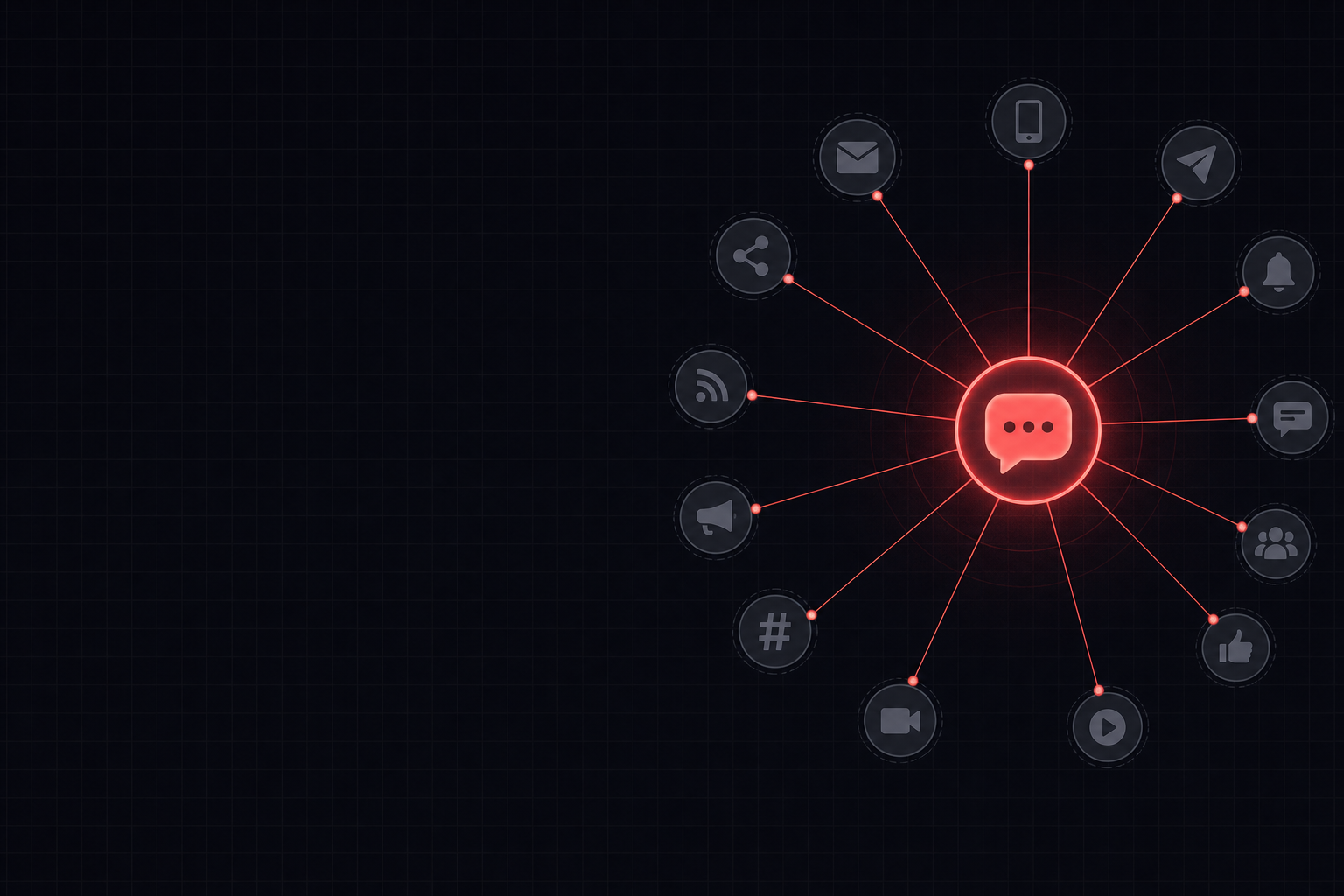
This flow illustrates how AI can transform raw customer call data into a refined campaign brief through several key stages.
Watch: a 2-minute intro
From the AI Business Strategy course on AI Bytes Learning.
A worked example
You are a marketing strategist. Your task is to extract key information from the customer call transcript provided and draft a preliminary campaign brief.
Focus on identifying:
- Target audience (demographics, psychographics, pain points)
- Campaign objective (what do we want to achieve?)
- Key message/value proposition (how do we solve their problem?)
- Call to action (what should customers do?)
- Channels suggested (if any, by the customer or implied)

Customer Call Transcript:
[Paste customer call transcript here, e.g., a transcript about a customer struggling with project management software, mentioning specific features they need and frustrations with current solutions.]
Always cross-reference the AI-generated brief with the original transcript and your strategic understanding to ensure accuracy and nuance.
Which tool for which part of the job
| Task | Best suited tool(s) | Benefit | Consideration |
|---|---|---|---|
| Summarising long transcripts | Claude, ChatGPT, Gemini | Handles large text volumes efficiently | May hallucinate details or misinterpret context |
| Extracting specific data points | ChatGPT, Gemini | Precise extraction with well-crafted prompts | Requires very clear and unambiguous instructions |
| Synthesising multiple documents | NotebookLM, Microsoft Copilot | Connects diverse insights for a holistic view | Needs structured input and document organisation |
| Creative messaging suggestions | ChatGPT, Claude | Generates varied options for taglines or themes | Output needs human refinement and brand alignment |
| Real-time call analysis (future) | Microsoft Copilot (Teams integration) | Provides immediate insights during or after calls | Data privacy implications; capabilities still evolving |
Step by step
Follow these steps to transform customer call insights into a concise campaign brief using AI.
- 1Gather customer call transcripts, ensuring they are clean and ideally text-based.
- 2Identify the core information needed for your campaign brief, such as audience, objective, and key messaging.
- 3Choose an AI tool (e.g., ChatGPT, Claude) and craft a detailed prompt, specifying the role, task, and desired output format.
- 4Paste the transcript into the AI tool, followed by your structured prompt, and generate the initial brief draft.
- 5Review the AI-generated draft against the original transcript and your strategic goals, refining any inaccuracies or missing elements.
- 6Enhance the brief with your own market knowledge, competitor analysis, and creative input to make it truly actionable.
- 7Iterate on the brief, using AI for further summarisation or ideation on specific sections if needed, until it meets your standards.
What are the key benefits of using AI for campaign briefing?
Automating the initial stages of campaign brief creation with AI offers significant time savings for marketing managers. Instead of manually sifting through hours of call recordings or extensive transcripts, AI tools can rapidly identify recurring themes, customer pain points, and explicit needs. This speed allows marketing teams to respond more agilely to market shifts and customer feedback, launching relevant campaigns much faster than traditional methods.
Beyond speed, AI enhances the data-driven nature of your briefs. By processing a large volume of customer interactions, AI can uncover subtle patterns or emerging trends that a human might miss. This leads to more precise targeting, more compelling messaging, and ultimately, more effective campaigns. The objective analysis provided by AI ensures that your marketing efforts are grounded in genuine customer insights, reducing reliance on assumptions or anecdotal evidence.
AI tools excel at summarising lengthy call transcripts, identifying core customer needs and recurring themes.
How to ensure accuracy and strategic value in AI-generated briefs?
While AI is powerful, it's crucial to maintain human oversight to ensure accuracy and strategic depth in campaign briefs. AI models, particularly large language models, can sometimes "hallucinate" or misinterpret context, leading to factual errors or misleading summaries. Always cross-reference the AI's output with the original call transcript and your understanding of the customer and market. This validation step is non-negotiable for producing reliable briefs.
Furthermore, AI excels at data extraction and summarisation but lacks true strategic intuition or creativity. A marketing manager's role remains vital in interpreting the AI's output, adding nuanced market understanding, competitive insights, and creative direction. Use AI as a powerful assistant for the foundational work, freeing you to focus on the higher-level strategic thinking, refining the messaging, and ensuring the brief aligns perfectly with broader business objectives. This combination of AI efficiency and human intelligence yields the most effective results, a concept AI Bytes Learning explores further in its lessons.
Which AI tools are best for this workflow?
For summarising lengthy customer call transcripts and extracting specific data points, general-purpose large language models like ChatGPT, Claude, and Gemini are highly effective. They can process extensive text and, with well-crafted prompts, pull out key information such as customer demographics, pain points, desired features, and even implied campaign channels. Claude is particularly known for its larger context window, allowing it to handle very long transcripts more comprehensively.
For marketing managers dealing with multiple call transcripts or other related documents (e.g., survey results, support tickets), tools like NotebookLM or Microsoft Copilot offer advanced capabilities. NotebookLM can link multiple source documents to synthesise a cohesive understanding, making it excellent for building a holistic customer profile for a brief. Microsoft Copilot, especially when integrated with Microsoft Teams, can provide real-time summaries and insights from calls, directly feeding into the brief creation process, though its full capabilities for this specific workflow are still evolving.
Frequently asked questions
Can AI replace a marketing manager in creating campaign briefs?▾
No, AI cannot replace a marketing manager. AI tools are powerful assistants for summarising data and drafting initial content, but human strategic thinking, market knowledge, and creative judgment are essential for effective campaign briefs.
What if my customer call transcripts are poor quality or contain jargon?▾
Poor quality transcripts can lead to inaccurate AI outputs. It's best to use high-quality, clean transcripts. If jargon is present, you might need to pre-process the transcript or explicitly instruct the AI to interpret industry-specific terms.
How do I handle customer privacy when using AI for call analysis?▾
Data privacy is paramount. Ensure all transcripts are anonymised before inputting them into public AI tools. Always comply with GDPR and other relevant data protection regulations. Consider using enterprise-level AI solutions with robust security features if available.
Can AI suggest creative campaign ideas based on call insights?▾
Yes, AI can generate creative campaign ideas. Once the brief's core elements are established, you can prompt tools like ChatGPT or Claude to brainstorm taglines, content themes, or visual concepts based on the extracted customer needs.
Is there a limit to how long a call transcript an AI can process?▾
Yes, AI tools have context window limits, which dictate how much text they can process at once. Claude generally has a larger context window than ChatGPT or Gemini, making it better for very long transcripts, but even then, extremely lengthy calls may need to be broken down.
How often should I update my AI prompts for this task?▾
You should update your AI prompts as your campaign brief requirements evolve or as you discover new ways to elicit better outputs from the AI. Regularly refining prompts based on the quality of the AI's responses will improve efficiency over time.
AI Business Strategy
Unlock the transformative potential of AI in business strategy. This micro-course provides a foundational understanding of AI technologies and their strategic applications, empowering you to make informed decisions and drive innovation within your organization. Learn how to identify key areas where AI can create a competitive advantage, optimize processes, and unlock new revenue streams. Explore real-world case studies and gain practical insights into integrating AI into your business model. This course will equip you with the knowledge and tools to leverage AI for strategic success. Antigravity Value Proposition: Transform your business strategy with the power of AI. Gain a competitive edge, optimize operations, and unlock new opportunities for growth and innovation.
Start learningPut this into practice
15 minutes a day. Real AI skills for your job. Free to start.
Get started freeStay Ahead of AI in 15 Minutes a Day
The AI news that actually matters for your work — explained in plain English, with the skill to learn alongside it. Straight to your inbox.
No spam, unsubscribe anytime. We respect your privacy.