Building Automated Workflows
Learn how to design and implement automated workflows using GPT-5.5 for various tasks.
What is an Automated Workflow?
An automated workflow is a series of tasks that are executed automatically without manual intervention. This process often uses AI tools like GPT-5.5 to improve efficiency and reduce human error.
By integrating various components, such as data sources, processing algorithms, and output mechanisms, workflows can handle repetitive tasks effectively. This allows users to focus on more strategic activities.
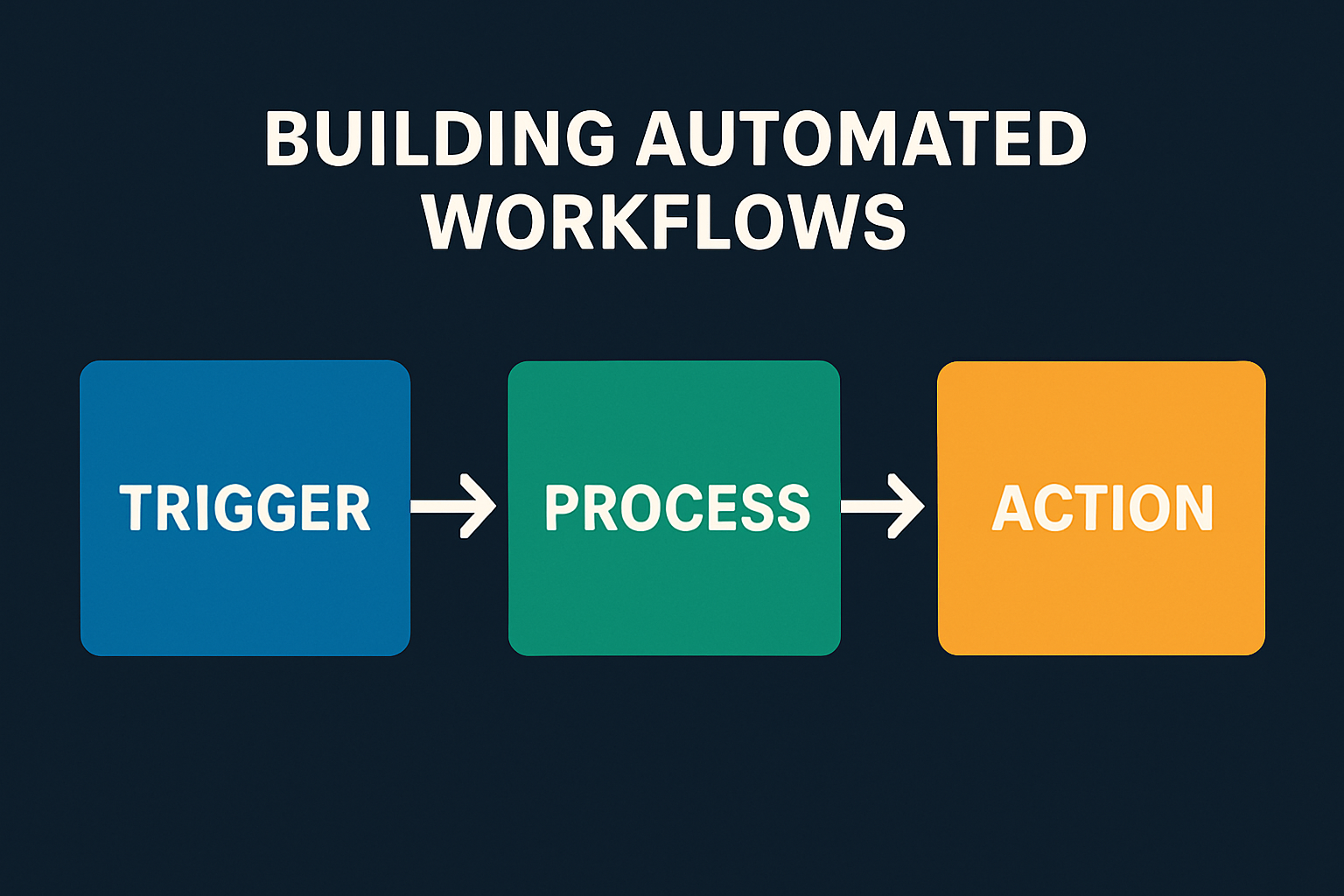
This visual illustrates how Building Automated Workflows applies in real-world GPT-5.5 for Professionals scenarios.
Automated workflows are the future of efficiency.
This clip illustrates the seamless operation of an automated workflow using GPT-5.5, highlighting its efficiency. Understanding this visual representation is essential for grasping the concept of automation in workflows.
Automated Workflow in Action
See how automated workflows simplify processes.
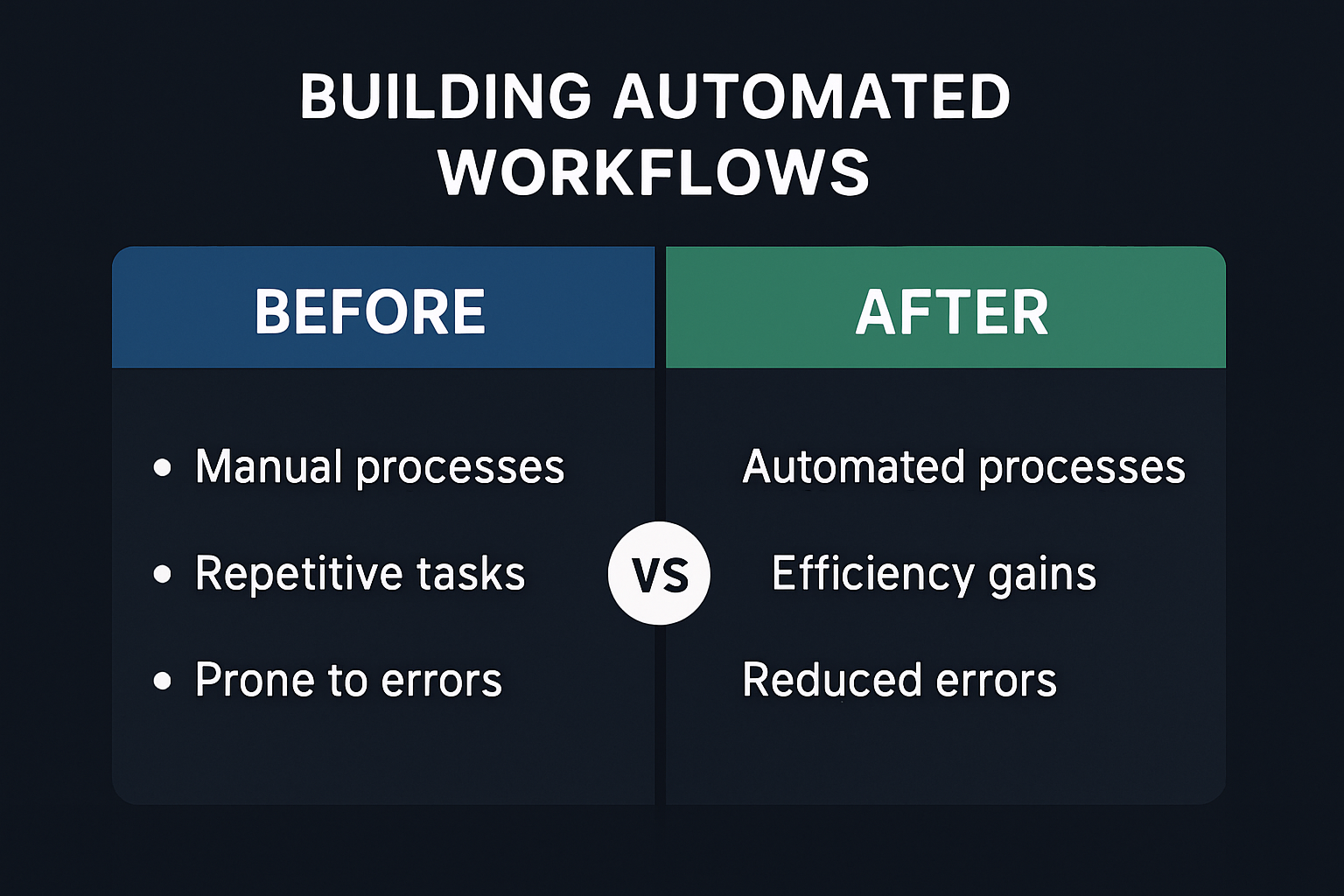
This visual illustrates how Building Automated Workflows applies in real-world GPT-5.5 for Professionals scenarios.
An online retailer uses GPT-5.5 to automate customer inquiries. This speeds up response times and enhances customer satisfaction.
The retailer faced high volumes of customer questions, leading to delays in responses. Manual handling was inefficient and prone to errors.
By implementing an automated workflow, the retailer reduced response times significantly. This allowed customer service representatives to focus on complex inquiries.
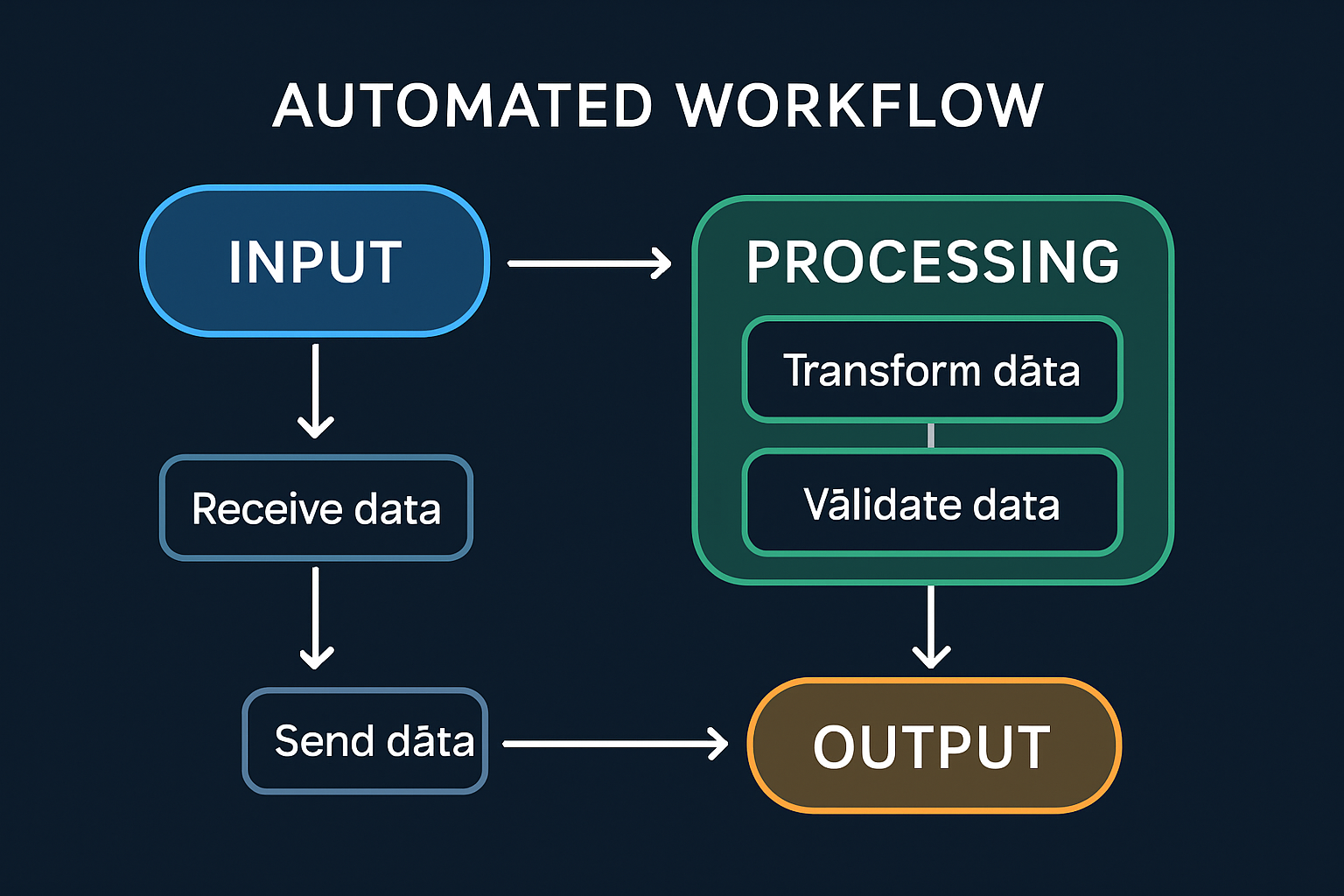
Understanding the Workflow Structure
Key Components of Workflows
Every automated workflow consists of three main components: processing.">input, processing, and output. The processing.">input phase gathers data, while the processing phase handles the logic and actions required to transform that data.
Finally, the output phase delivers results or actions based on the processed information. Recognising these components helps in designing efficient workflows.
Pause and reflect
Reflect on the components of an automated workflow. How do they interact to create efficiency?
Test Your Understanding
If you remember only three things.
Automated Workflows
Automated workflows simplify processes by reducing manual tasks. They enhance efficiency and accuracy.
Key Components
Every workflow has input, processing, and output stages. Understanding these is essential for effective automation.
Real-World Applications
Industries like e-commerce and healthcare benefit from automation. These workflows improve customer satisfaction and operational efficiency.
Using GPT-5.5
GPT-5.5 enhances workflows through advanced data processing. This leads to faster and more accurate results.
Craft a GPT-5.5 Task Automation Prompt
Write a prompt for GPT-5.5 that automates a specific part of a workflow, ensuring clarity and structure for the AI.
A project manager wants to automate the summarization of daily stand-up meeting transcripts. The summary needs to highlight key decisions, action items with assignees and deadlines, and any blockers. The output should be concise and formatted for quick review, ideally using bullet points for easy scanning. This task repeats daily, so the prompt needs to be robust for recurring use.
A series of tasks executed automatically. It reduces the need for manual intervention in processes.
The data or information entered into the workflow. It serves as the starting point for processing.
The stage where data is manipulated or transformed. This is where the logic of the workflow is applied.
The final result or action produced by the workflow. It is the end point of the automated process.
An advanced AI model used for data processing. It enhances the capabilities of automated workflows.
From Reaction to Prediction
You now understand how to create and implement automated workflows using GPT-5.5. This knowledge shifts your perspective on efficiency and productivity.
Automated workflows transform how tasks are executed, making processes faster and more efficient.
In the next lesson, we'll explore optimising these workflows for even greater efficiency.
Audio lesson recap
A concise audio summary of this lesson — great for reinforcing key concepts on the go.
Hear it discussed
About three minutes on the ideas in this lesson
Sterling
AI tutor
Vivienne
Sceptical challenger
Press play to start the discussion…
Full transcript · click any line to jump
Structure workflows for enhanced productivity
Develop a mental model for structuring automated workflows, focusing on input, processing, and output stages. This approach simplifies complex tasks and significantly reduces manual effort in various applications.
GPT-5.5 automates diverse real-world tasks
Recognise how GPT-5.5 can automate customer inquiries, patient scheduling, and report generation in real-world scenarios. This capability improves efficiency, accuracy, and customer satisfaction across industries.
Deconstruct workflows into core components
Understand that every automated workflow comprises input, processing, and output phases. Mastering these components is crucial for designing effective and smooth-running automated processes.
Ask anything about Building Automated Workflows. Sterling will answer — concisely, and with his customary level of patience.