Prompt Optimization Techniques
Refine your prompts to achieve precise outputs. Tailor your prompts for specific tasks and desired outcomes.
The Role of Context
Context is crucial for guiding the model towards the desired outcome. Without sufficient context, the model may struggle to understand the intent behind the prompt. Providing context clarifies the task and helps the model generate more relevant responses.
The amount of context needed depends on the complexity of the task. For simple tasks, a few keywords may suffice. For more complex tasks, you may need to provide detailed instructions and background information.
Effective prompts are the key to learn the full potential of large language models.
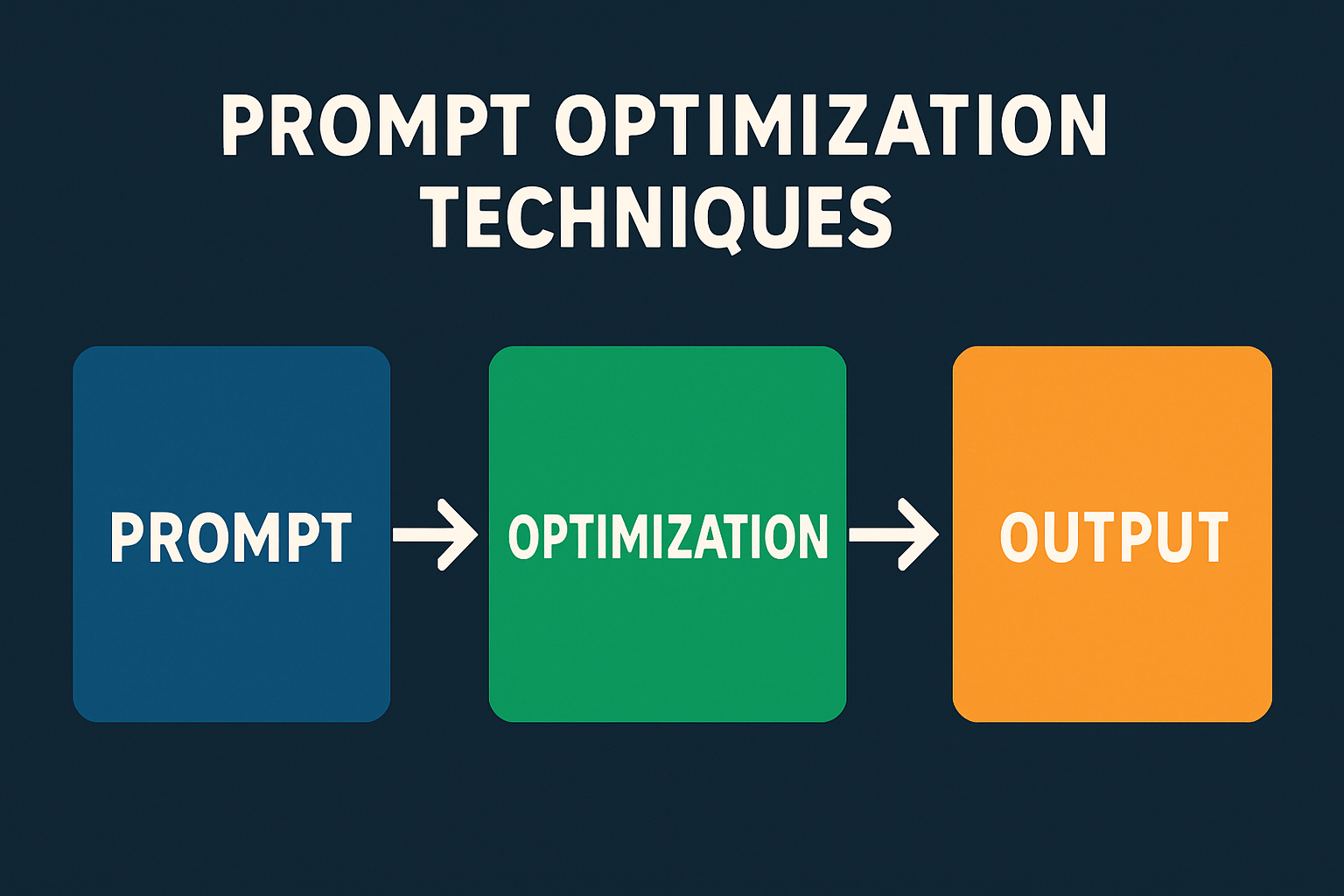
This visual illustrates how Prompt Optimization Techniques applies in real-world GPT-5.5 for Professionals scenarios.
This video shows the prompt optimization process. Understanding this process is essential for achieving desired AI outcomes.
Prompt Engineering in Action
See how prompt optimization improves AI output.
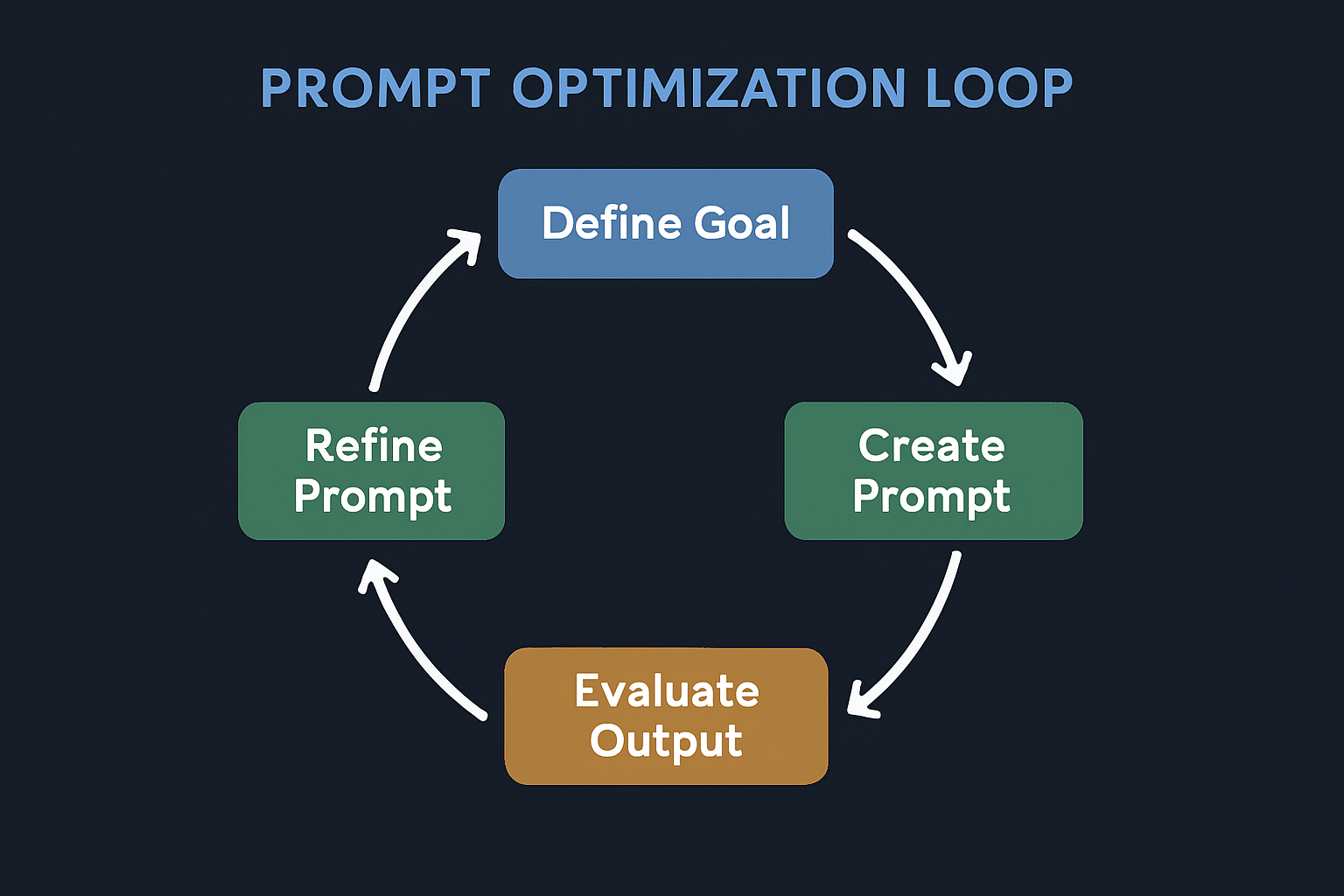
The Prompt Optimization Cycle
Evaluating Prompt Effectiveness
Evaluating the results of different prompt variations is essential. This allows you to identify which prompts are most effective for achieving your goals. Consistent evaluation helps you to fine-tune your approach and improve the quality of your prompts.
Consider using metrics such as relevance, accuracy, and coherence to evaluate the model's output. These metrics provide a quantitative way to assess the effectiveness of your prompts.
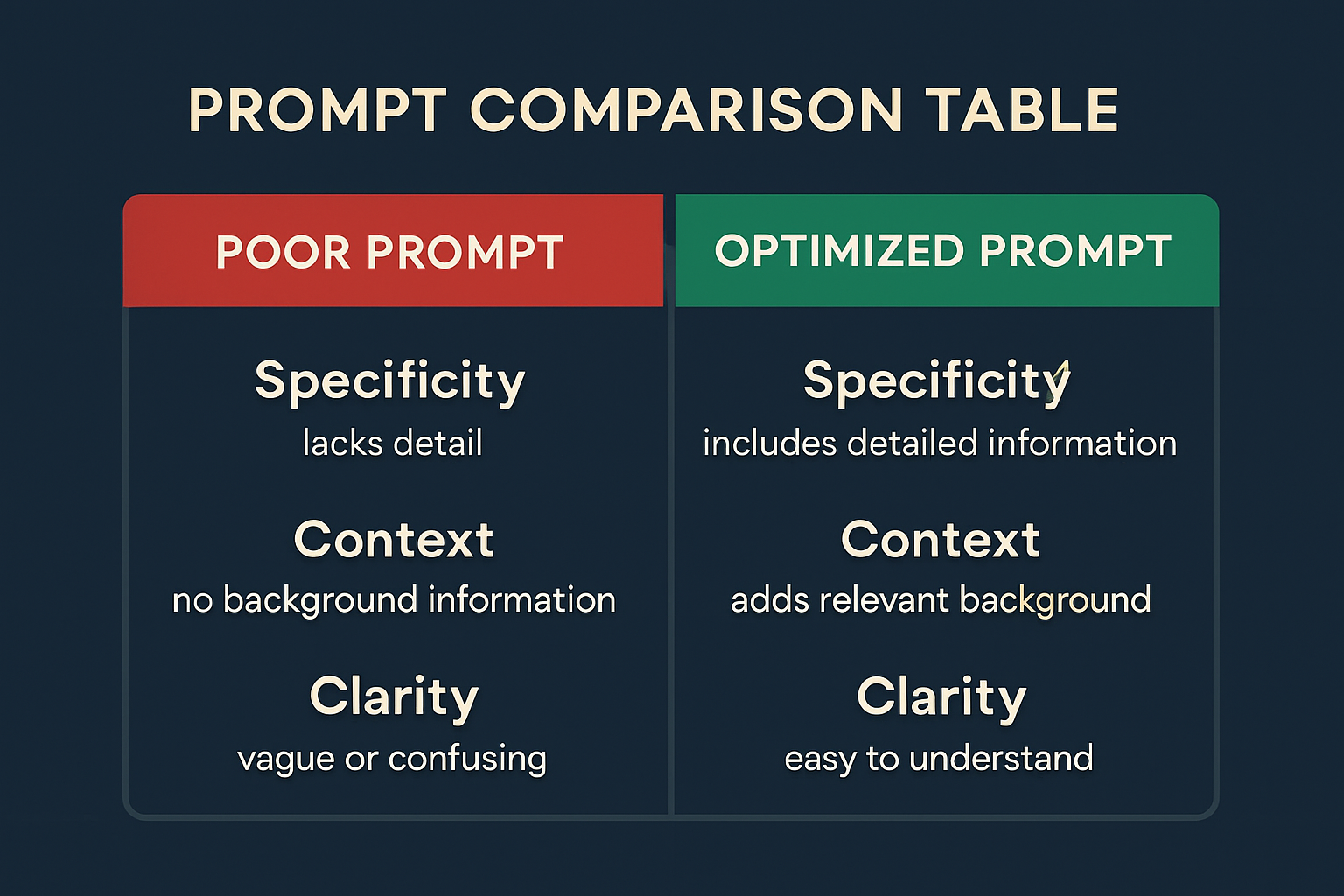
The visual contrasts how specificity and context affect prompt effectiveness. Optimized prompts are more likely to produce the desired results due to their clear and targeted nature.
Prompt Optimization in Practice
Prompt optimization is an ongoing process. It requires continuous experimentation and evaluation. The best prompts are often the result of multiple iterations and refinements.
Effective context to guide the model.">prompt engineering is not just about technical skill. It also requires creativity and a deep understanding of the AI model's capabilities. The process to mastering this skill involves trial and error.
This video demonstrates the iterative nature of prompt optimization. This iterative approach improves the relevance and accuracy of the AI's responses.
Iterating on a Prompt
See how modifying a prompt enhances the AI's response.
Key Principles of Optimization
Mastering prompt optimization involves understanding the AI model. This includes the model's strengths, limitations, and biases. With this knowledge, you can tailor your prompts more effectively.
Prompt optimization isn't just about the prompt itself. It's also about understanding the entire workflow. This workflow includes defining your goals, evaluating results, and iterating on your approach.
Key Takeaways
Specificity
Clearly define the desired output to guide the AI model. This ensures the model focuses on relevant information, improving output quality.
Iteration
Refine your prompts based on the model's initial responses. This helps to incrementally improve the model's output with each iteration.
Context
Provide sufficient context to the model, so it understands the task at hand. This clarifies the prompt's intent, leading to more accurate results.
Evaluation
Evaluate the results of different prompt variations. This allows you to identify which prompts are most effective for achieving your goals.
Test Your Understanding
Optimize a Summary Prompt for Clarity
Refine the provided basic prompt to generate a concise summary of a complex document, tailored for a specific audience and purpose.
Your team needs a summary of a detailed 50-page technical report on quantum computing, but the current prompt is too generic. The summary is intended for non-technical stakeholders (e.g., investors, sales team) who need to understand the key business implications without getting bogged down in jargon. Current prompt: 'Summarize this document.' (Assume the document content is provided to the AI separately).
The process of designing and refining prompts to elicit desired responses from AI models. It involves providing specific instructions and context to guide the model.
The degree to which a prompt is detailed and unambiguous. High specificity helps the model focus on relevant information and generate accurate outputs.
The background information provided to the model to clarify the prompt's intent. Providing context helps the model understand the task and generate relevant responses.
The process of refining a prompt based on the model's initial responses. Iteration helps to incrementally improve the model's output and achieve optimal results.
The Power of Precise Prompts
You now understand how to optimize prompts for AI models. This will enable you to achieve more accurate and relevant outputs.
Optimized prompts are the key to learn the full potential of AI.
Next, we'll explore the role of few-shot learning in prompt engineering.
Audio lesson recap
A concise audio summary of this lesson — great for reinforcing key concepts on the go.
Hear it discussed
About three minutes on the ideas in this lesson
Sterling
AI tutor
Vivienne
Sceptical challenger
Press play to start the discussion…
Full transcript · click any line to jump
Specificity drives relevant AI responses
Clearly define your desired output to guide the AI model effectively. This ensures the model focuses on relevant information, significantly improving the quality of its responses.
Context clarifies AI prompt intent
Provide sufficient background information for the AI to understand the task. Adequate context helps the model generate more accurate and meaningful results aligned with your objectives.
Iterate and refine for optimal outcomes
Continuously refine your prompts based on the AI's initial outputs. This cyclical evaluation and adjustment process is crucial for achieving consistently high-quality and relevant results.
Ask anything about Prompt Optimization Techniques. Sterling will answer — concisely, and with his customary level of patience.