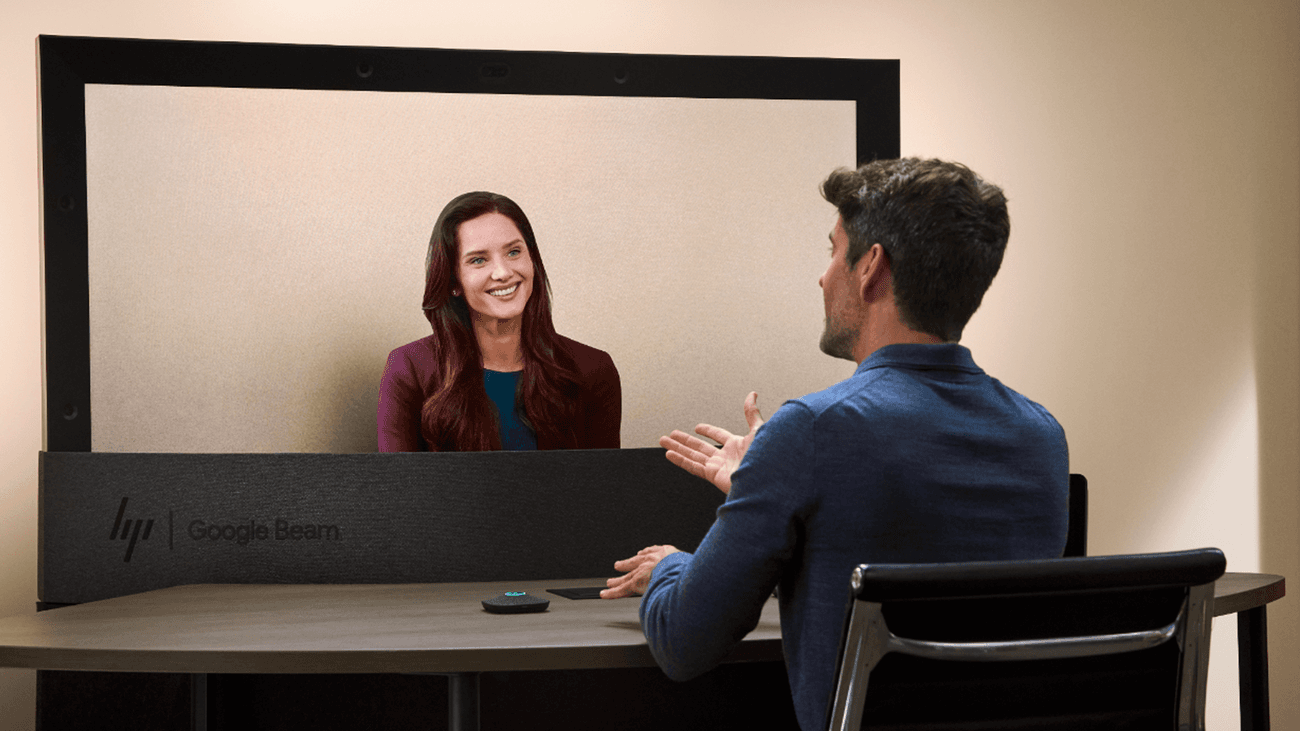
Google Beam's expansion into five new countries signals that AI-powered 3D video communication is no longer a lab experiment — it's becoming standard business infrastructure.
What Is Google Beam and Why Does It Matter?
Google Beam is Google's AI video communication platform that uses machine learning to reconstruct lifelike, three-dimensional representations of participants in real time. Think video calls, but where the AI actively works to make the other person feel physically present — not just a flat rectangle on a screen.
The technology uses an array of cameras and AI models to capture depth, lighting, and movement, then renders a 3D image that responds naturally as you move your head. It's the closest thing to sitting across a table from someone without leaving your desk.
The AI Breakthrough Driving This Expansion
The core breakthrough here isn't the hardware — it's the real-time AI inference that makes it work at scale. Beam's models must process multiple camera feeds simultaneously, reconstruct 3D geometry, and render output with low enough latency that conversation feels natural. Doing that reliably across international networks is a genuinely hard problem.
The partnership with Industrious — a major flexible workspace operator — is the telling signal. When enterprise real estate companies start baking your AI communication tech into their physical spaces, you've crossed from "impressive demo" to "actual deployment." That's a meaningful threshold.
What This Means for Learners
Google Beam is a live case study in applied AI inference — the same challenge covered in our Future of AI Inference course. Real-time 3D reconstruction is exactly the kind of compute-heavy, latency-sensitive problem that defines where AI infrastructure is heading.
If you're building skills around AI systems and agents, understanding how models get deployed at the edge — not just in data centres — is increasingly essential. Beam is a window into that world. For anyone curious about how AI is reshaping human collaboration itself, our AI Is More Human Than You Think course explores the blurring line between digital and physical presence.
The practical takeaway: the next generation of workplace tools won't just use AI as a feature — AI will be the foundation they're built on. Getting fluent in that shift now puts you ahead of most of the workforce.