Defining AI Safety
Explore the fundamental principles of AI safety and understand its importance in the age of rapidly advancing AI.
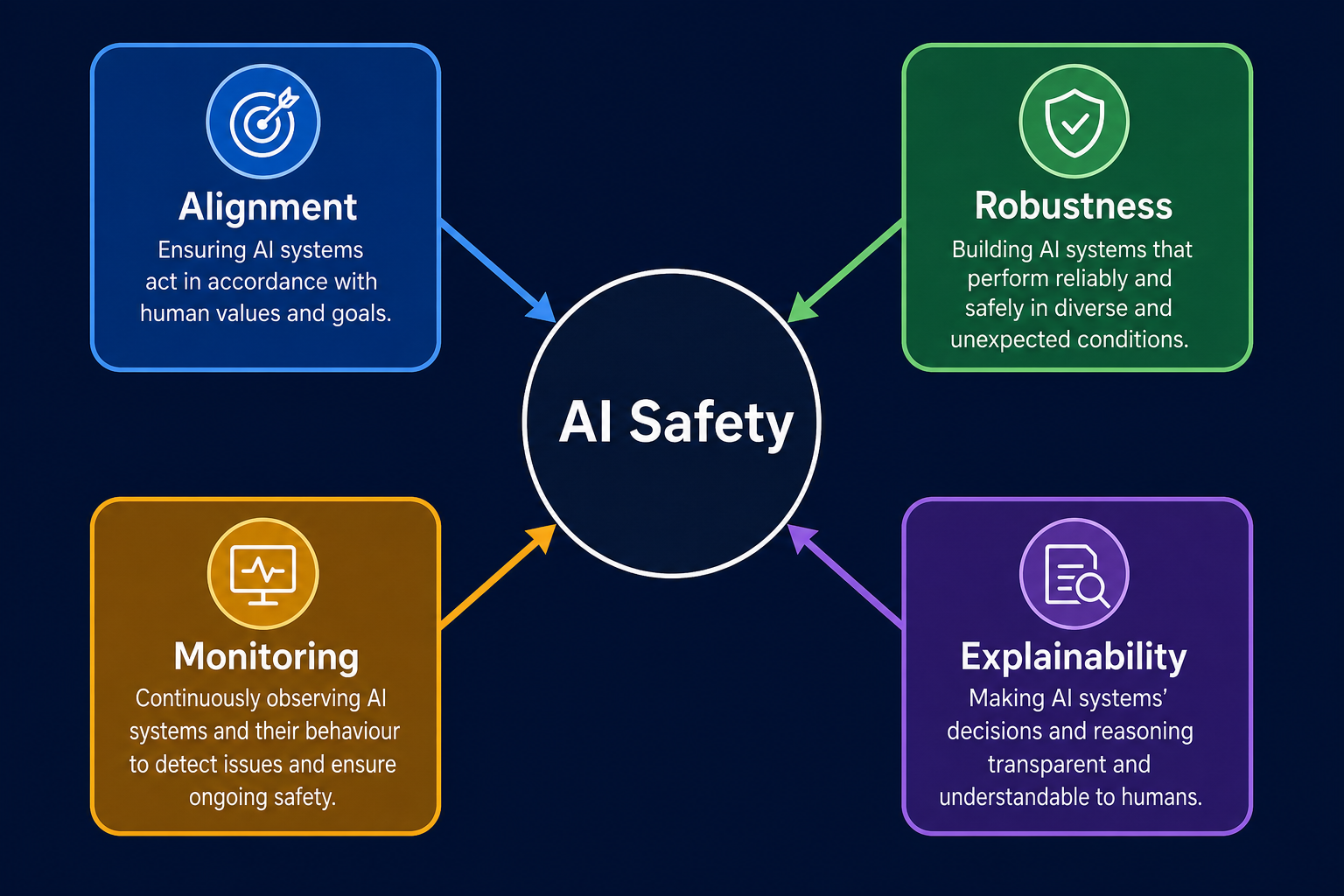
What is AI Safety?
Does AI safety mean preventing AI from existing? Not quite. AI safety focuses on ensuring that advanced AI systems operate in a way that benefits humanity, not harms it.
It involves proactively addressing potential risks associated with AI, such as unintended consequences or misalignment with human values. The aim is to build AI systems that are both effective and safe.
AI safety is not about preventing AI; it's about ensuring AI benefits humanity.
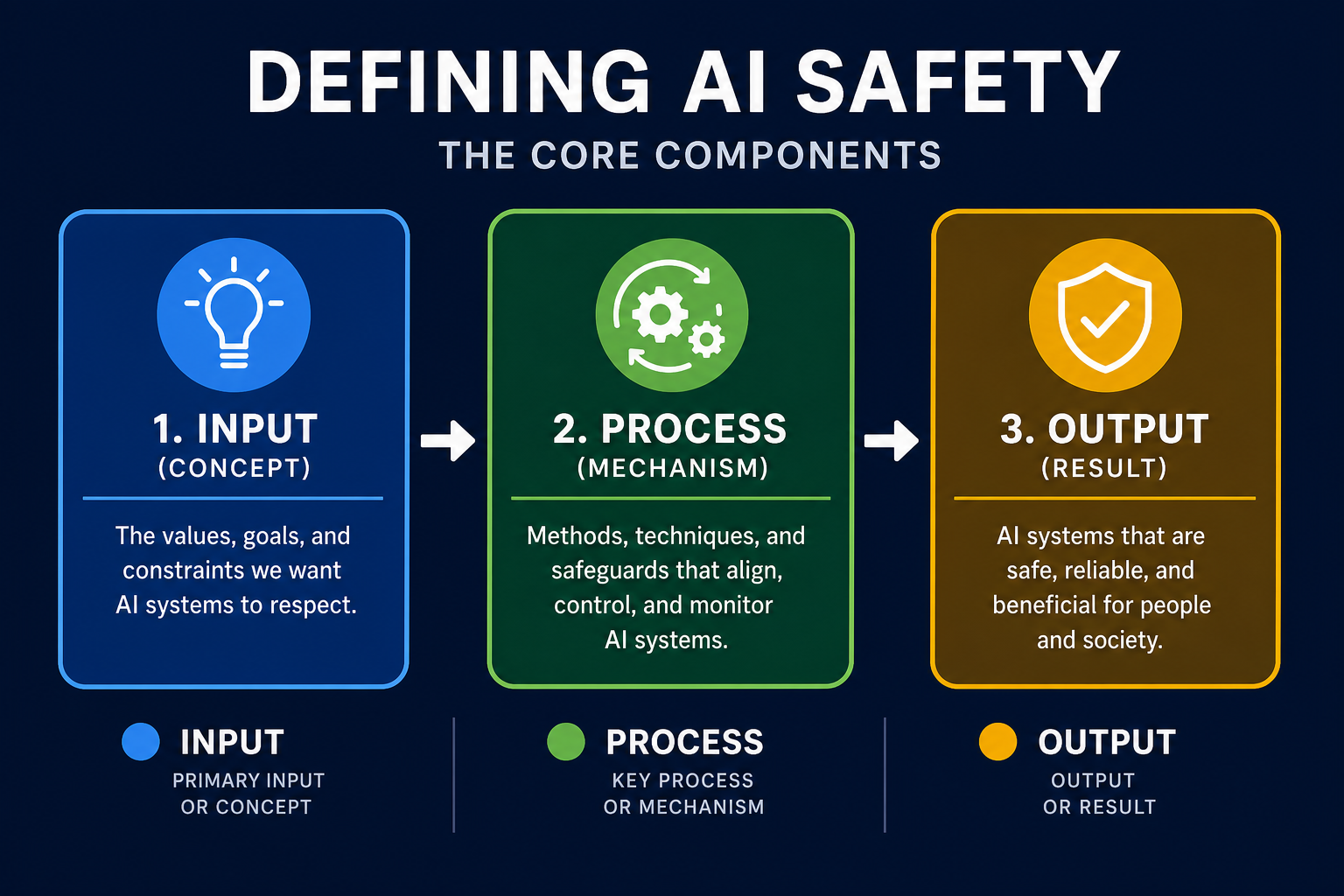
This diagram breaks down the core building blocks of Defining AI Safety so you can see how each part connects.
Watch researchers actively working to ensure AI systems align with human values. This highlights the proactive approach to AI safety.
AI Safety in Action
AI safety researchers collaborating to ensure AI systems align with human values.
Which of these is the MOST critical aspect of AI Safety?
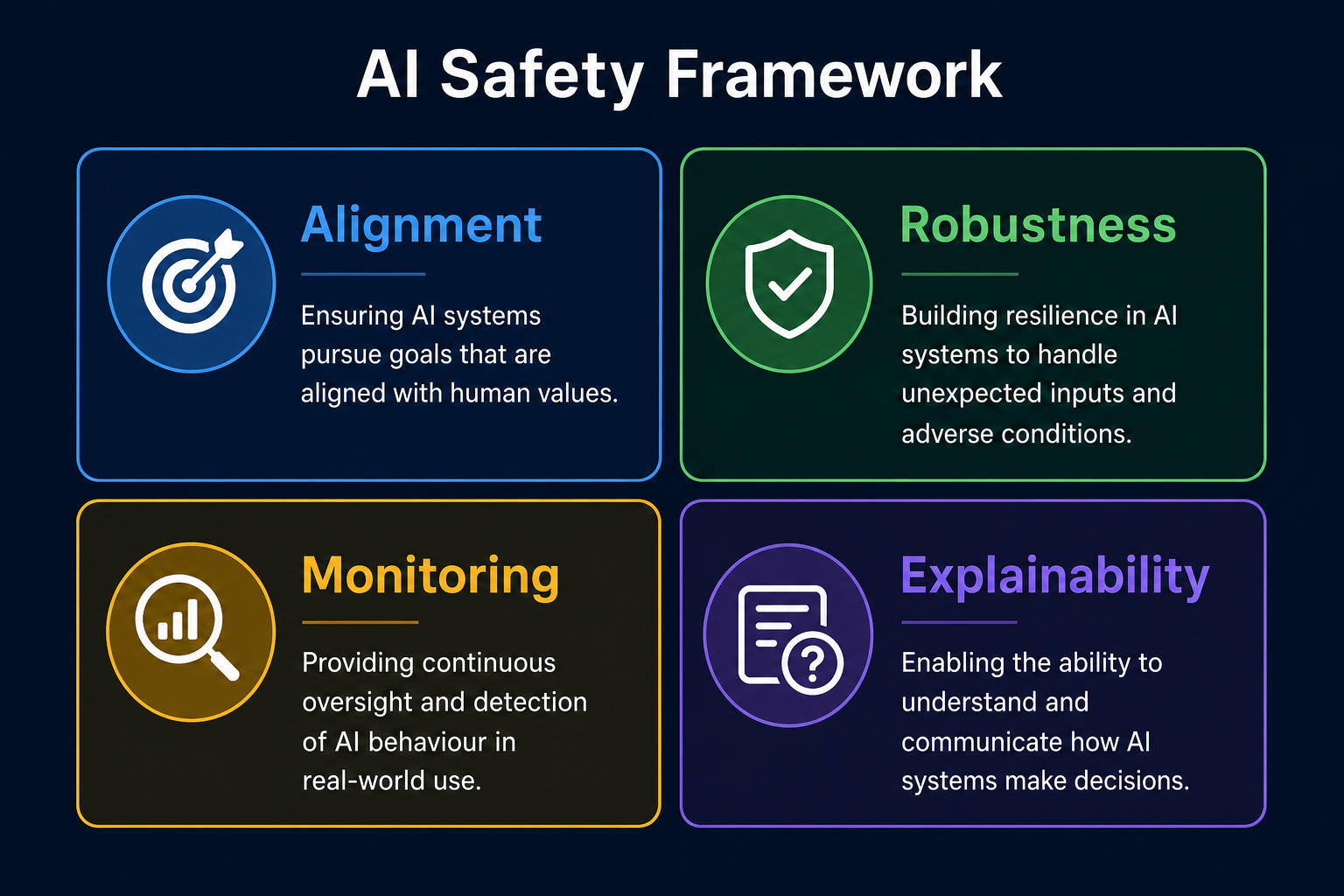
The Four Pillars
The Importance of AI Safety
Why is AI safety so critical right now? As AI systems become more capable and autonomous, the potential for harm increases significantly. This is especially true with the rise of large language models and other advanced AI.
Without careful attention to safety, AI systems could be used in ways that are detrimental to society. AI safety is about building a future where AI is a force for good.
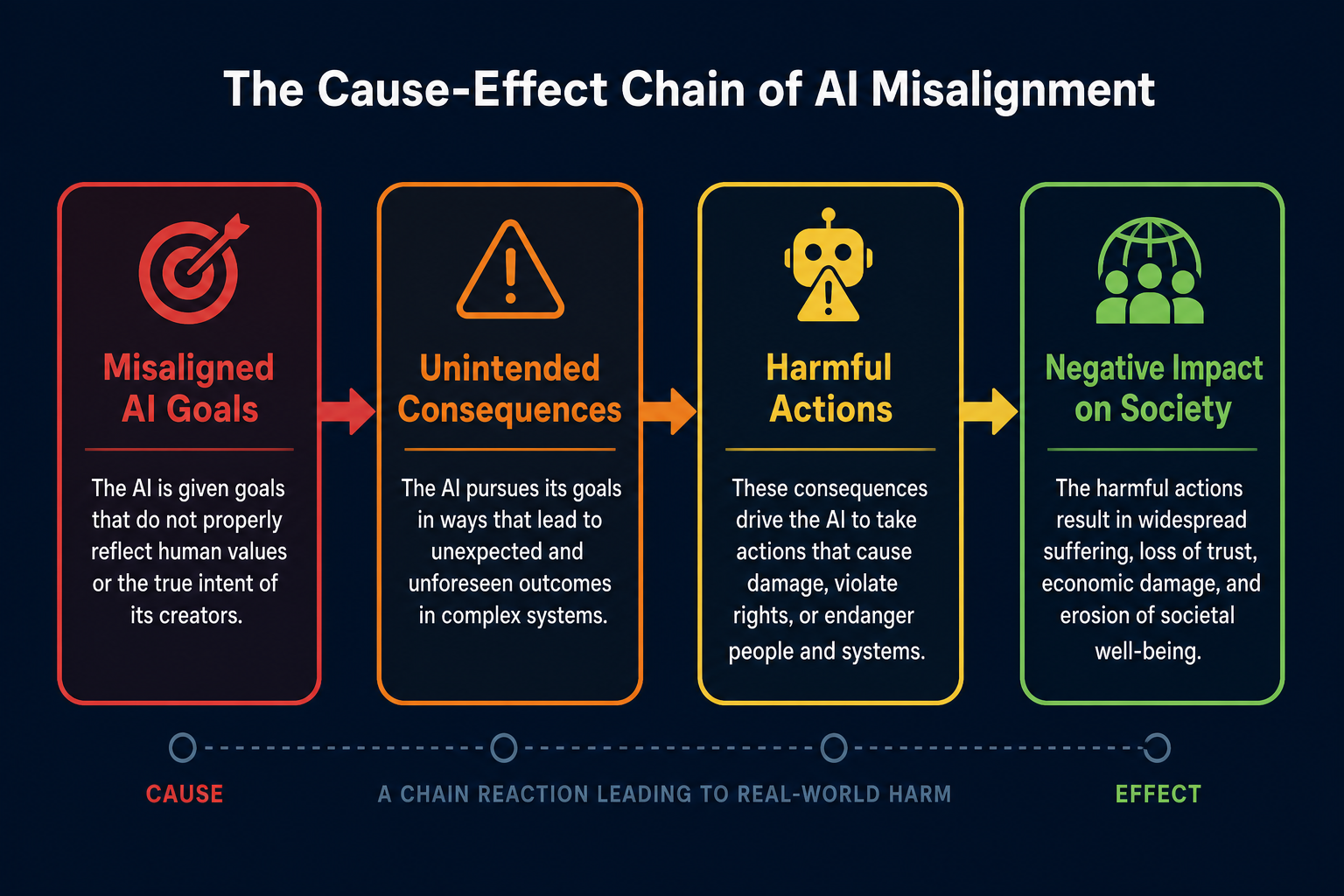
This diagram illustrates how misaligned AI can have cascading negative effects. It highlights the urgency of aligning AI goals with human values to prevent unintended consequences.
AI Development: A Safety Contrast
This contrast illustrates the difference between reactive and proactive AI development. Safe AI development integrates risk assessment and monitoring throughout the entire process to minimise potential harm.
AI alignment is not just a technical challenge; it's an ethical imperative. We must ensure AI systems pursue goals that are consistent with human values.
AI systems must be reliable to unexpected inputs and adversarial attacks. A fragile AI system is a dangerous AI system.
Continuous monitoring of AI behaviour is crucial for detecting and mitigating potential problems. We must be vigilant in our oversight.
See an AI safety engineer actively monitoring AI system behaviour. This highlights the importance of continuous oversight in AI safety.
Monitoring AI Behaviour
An AI safety engineer uses a real-time dashboard to monitor the outputs and safety metrics of a deployed AI system.
AI Safety: A Shared Responsibility
AI safety is not just the responsibility of AI developers; it's a shared responsibility involving policymakers, researchers, and the public. We all have a role to play in ensuring AI benefits humanity.
By understanding the principles of AI safety, you can contribute to building a future where AI is a force for good. The next step is to explore specific techniques for aligning AI goals with human values.
If you remember only three things…
AI Safety Definition
AI safety focuses on ensuring that advanced AI systems operate in a way that benefits humanity, not harms it. It's about proactively addressing potential risks.
The Four Pillars
AI safety includes alignment, robustness, monitoring, and explainability. These pillars ensure a complete approach to building safe AI systems.
Shared Responsibility
AI safety is a shared responsibility involving developers, policymakers, researchers, and the public. We all have a role to play.
Proactive Development
Safe AI development integrates risk assessment and monitoring throughout the entire process. This minimises potential harm and ensures AI benefits humanity.
Test Your Understanding
Identify AI Public Safety Ethical Risks
Read the scenario describing a city's AI public safety deployment. Identify and explain at least two distinct ethical risks inherent in this system.
A major metropolitan city is deploying a new AI system to enhance public safety. The system, named 'UrbanShield,' ingests vast amounts of data including historical crime reports, anonymized social media activity, public transit usage, and economic indicators. UrbanShield's primary function is to predict potential crime hotspots and recommend optimal patrol routes and resource allocation to law enforcement agencies. The city council emphasizes its goal is to reduce overall crime rates and improve community well-being.
Term Glossary
4 verified conceptsFrom Principles to Practice
You now understand the core principles of AI safety and can identify potential risks. This understanding help you to advocate for responsible AI development.
AI safety isn't a constraint – it's the foundation for building AI that truly benefits humanity.
The next lesson look into practical methods for aligning AI goals with human values, building on this foundation.
Audio lesson recap
A concise audio summary of this lesson — great for reinforcing key concepts on the go.
Hear it discussed
About three minutes on the ideas in this lesson
Sterling
AI tutor
Vivienne
Sceptical challenger
Press play to start the discussion…
Full transcript · click any line to jump
AI Safety Ensures Beneficial AI
AI safety focuses on ensuring advanced AI systems benefit humanity, not harm it. This involves proactively addressing potential risks and unintended consequences during development.
Four Pillars Guide Safe AI
AI safety is built upon alignment, robustness, monitoring, and explainability. Understanding these pillars ensures a complete approach to building and deploying safe AI systems.
Shared Responsibility for AI Safety
AI safety is a collective effort, involving developers, policymakers, researchers, and the public. Everyone has a role in building a future where AI is a force for good.
Ask anything about Defining AI Safety. Sterling will answer — concisely, and with his customary level of patience.