Hardware Accelerators: GPUs and TPUs
Explore the differences between GPUs and TPUs in deep learning applications.
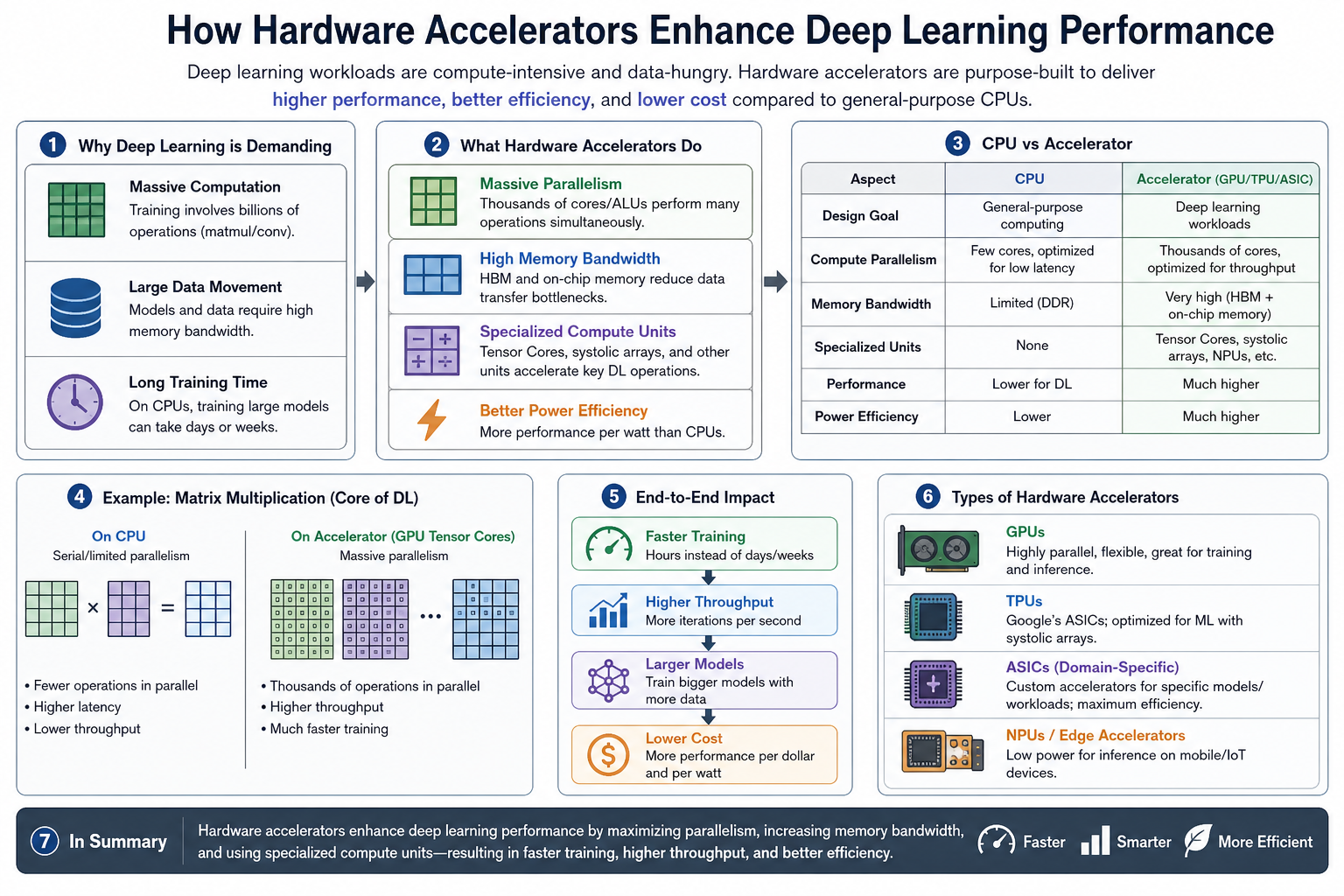
Introduction to Accelerators
Hardware accelerators like GPUs and TPUs are essential for optimizing deep learning tasks. They significantly speed up computations compared to traditional CPUs.
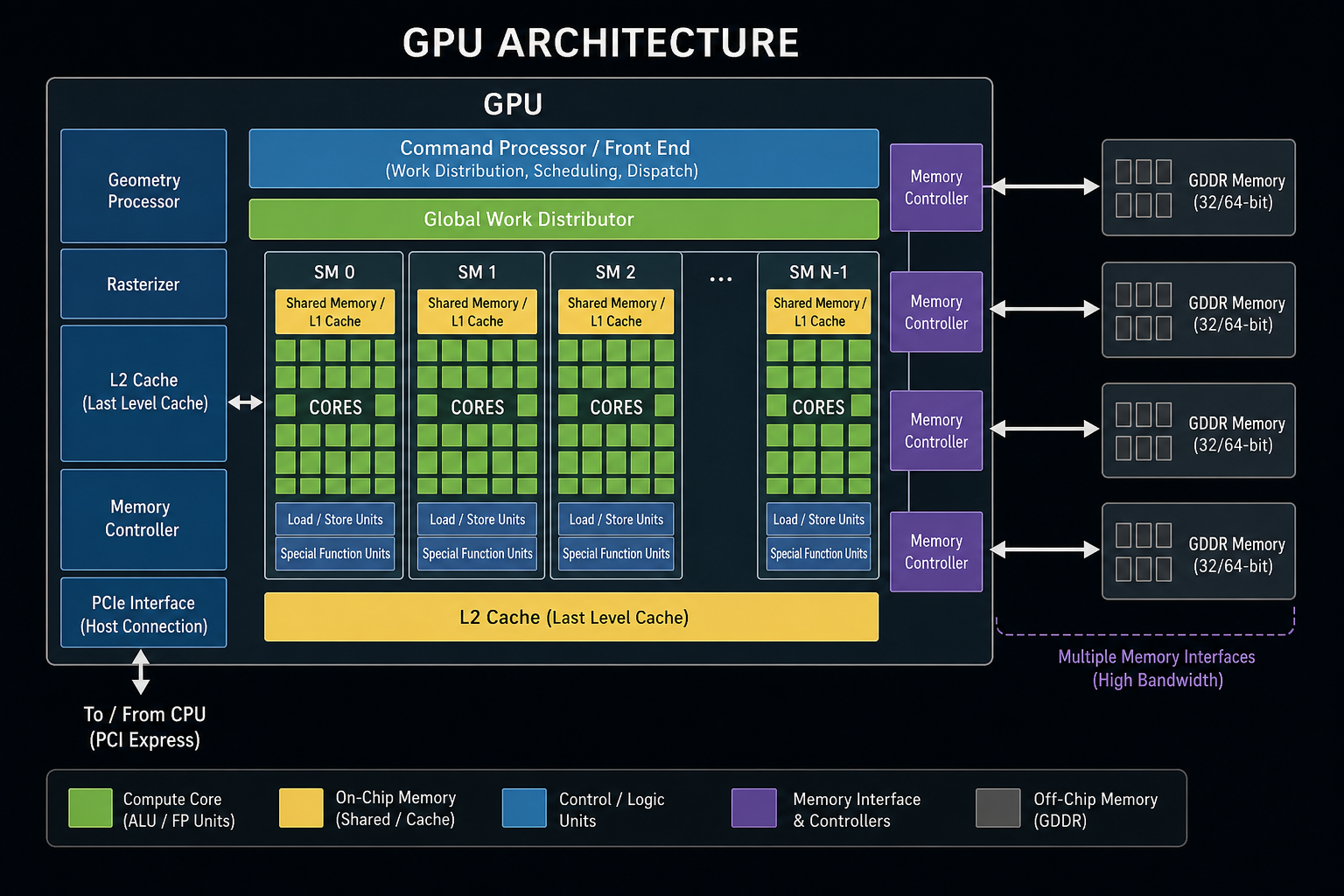
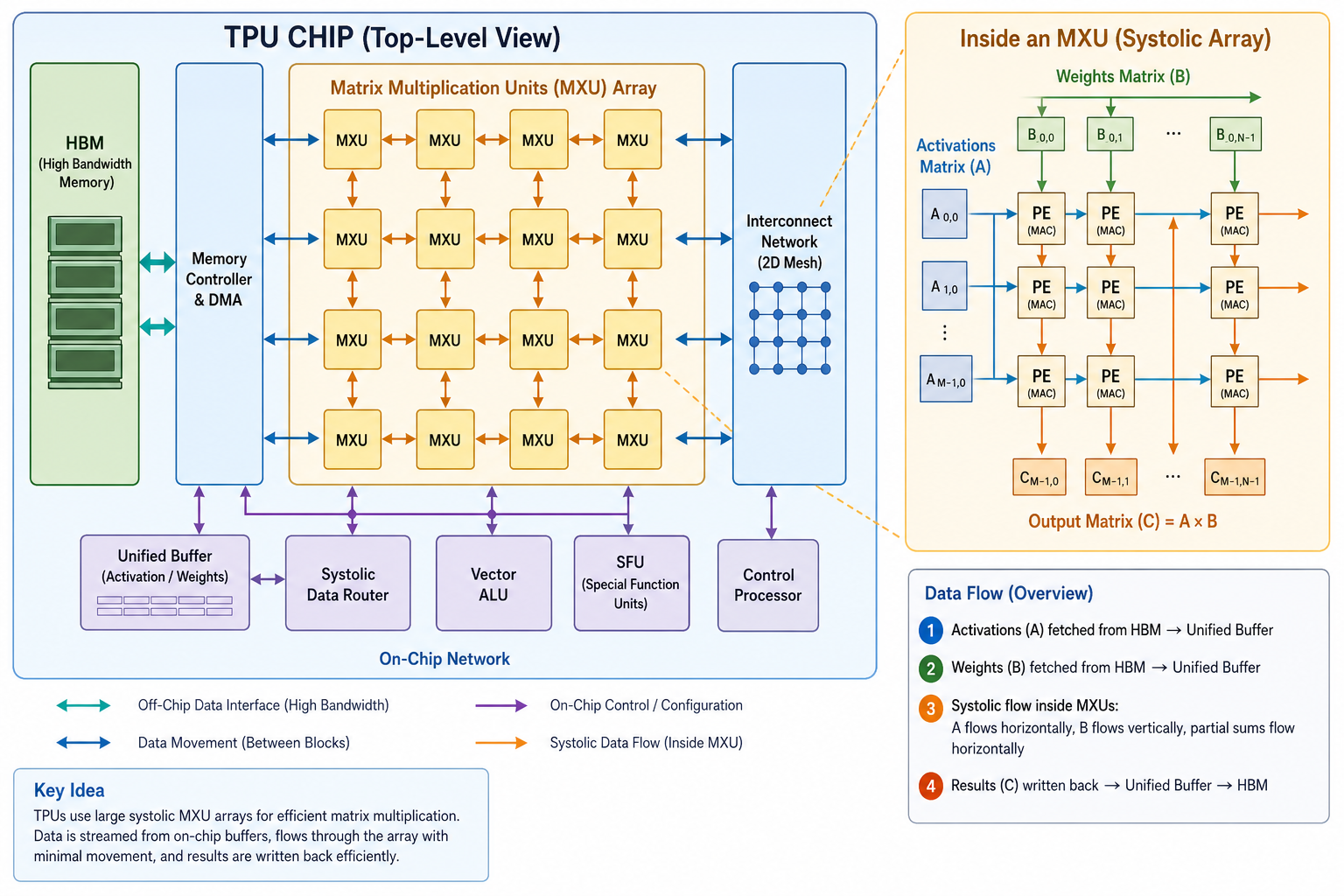
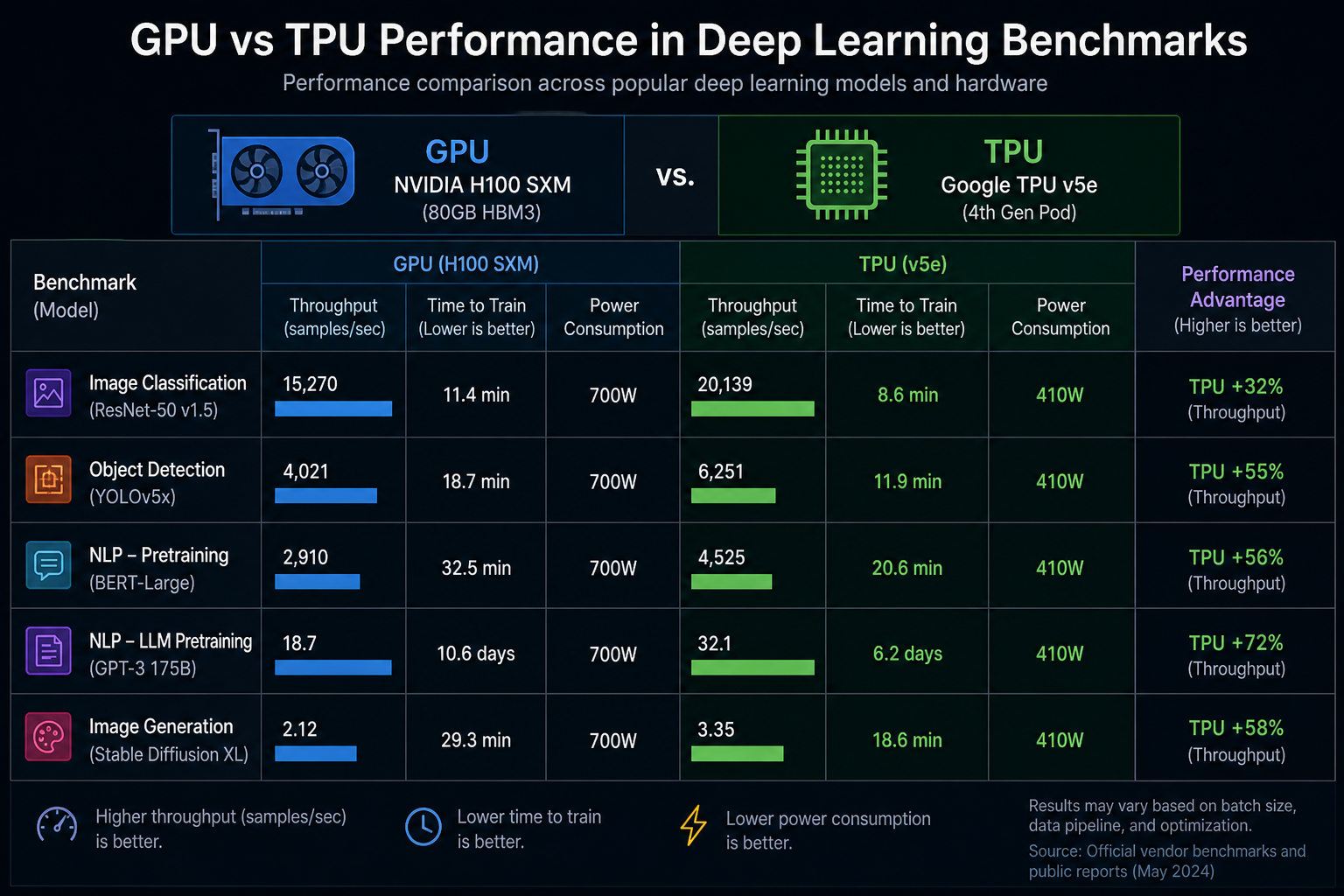
GPUs are versatile and widely used in various applications, while TPUs are specifically designed for TensorFlow and deep learning workloads.
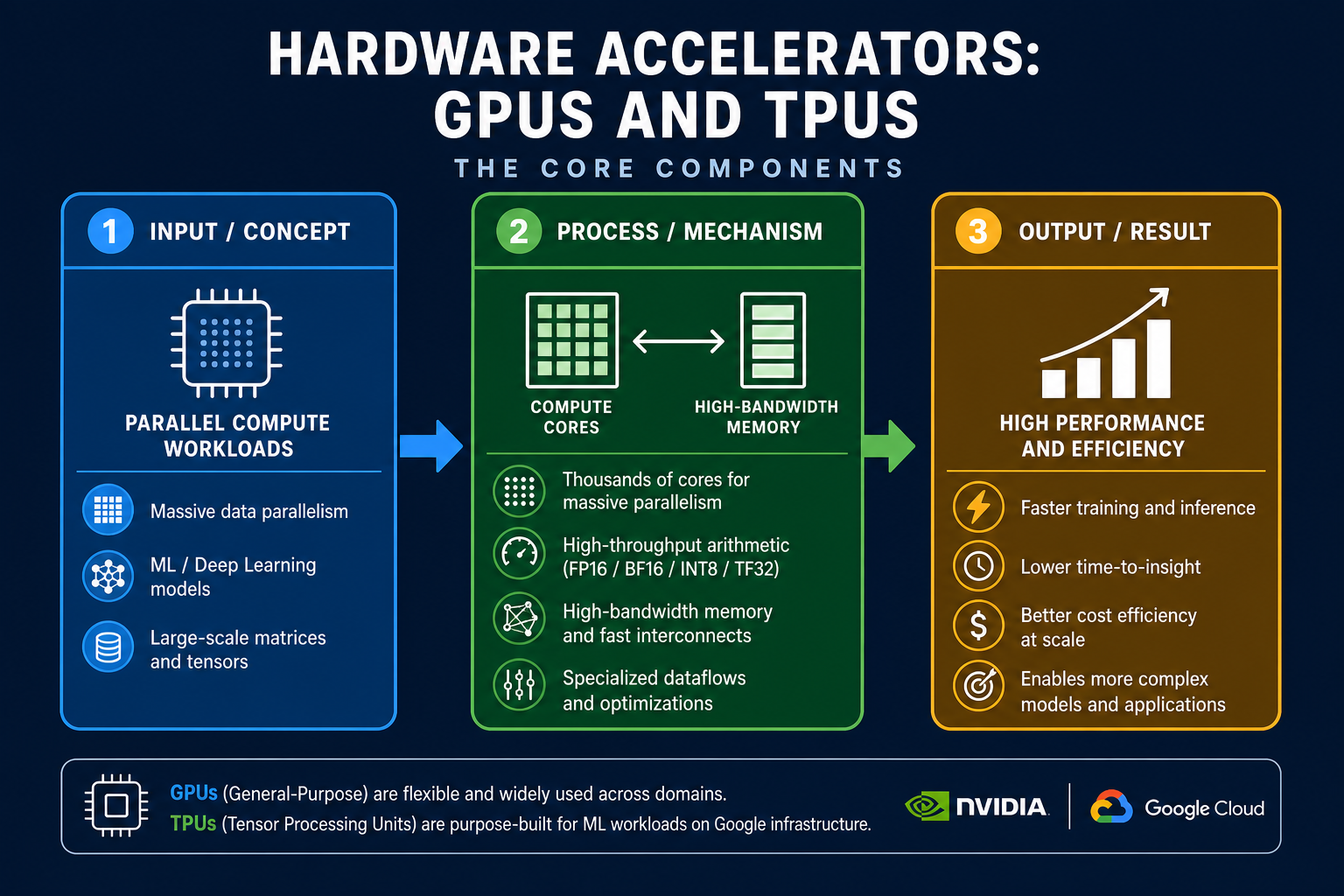
This diagram breaks down the core building blocks of Hardware Accelerators: GPUs and TPUs so you can see how each part connects.
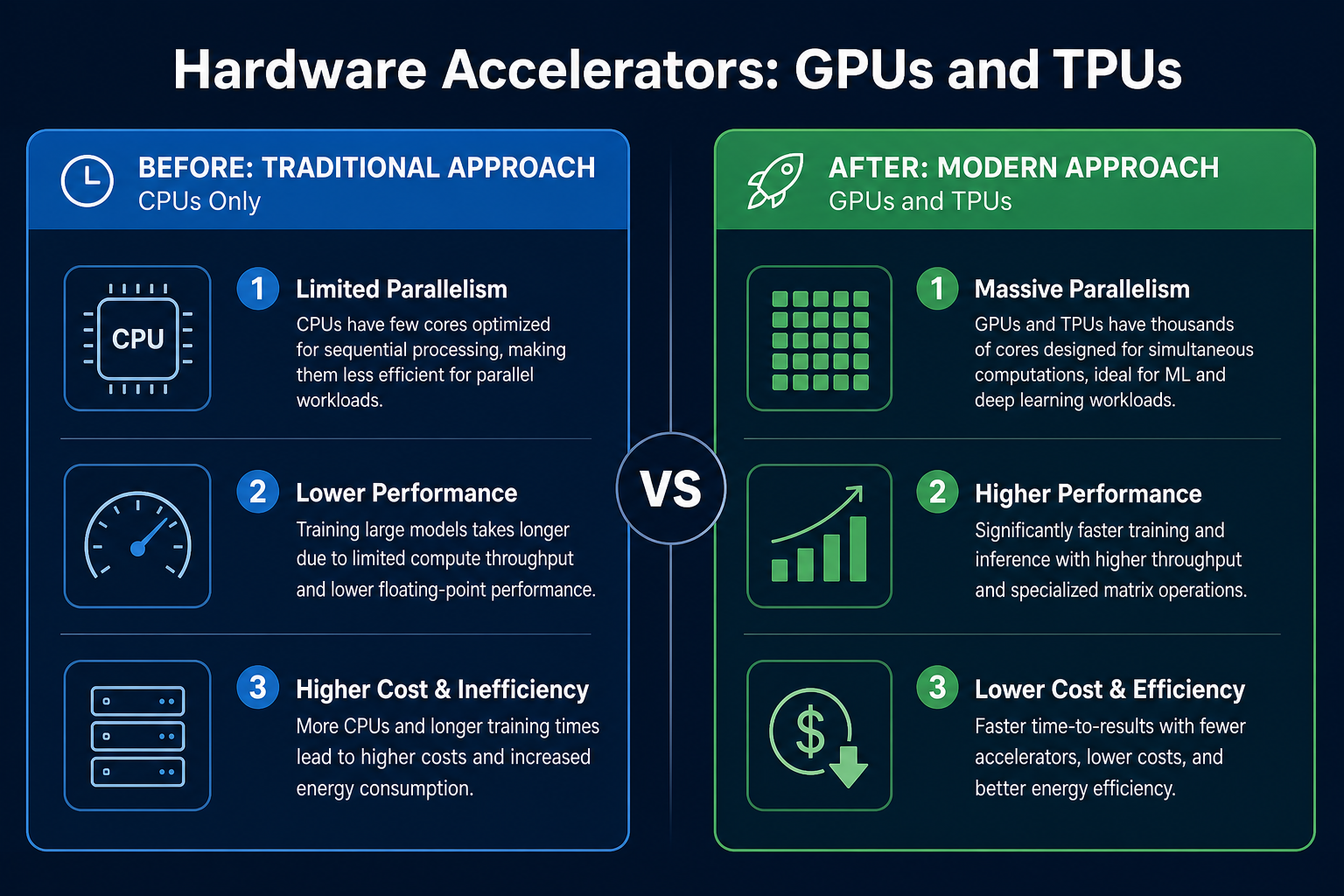
Comparing the old approach to the new one shows why Hardware Accelerators: GPUs and TPUs matters in Understanding AI Infrastructure.
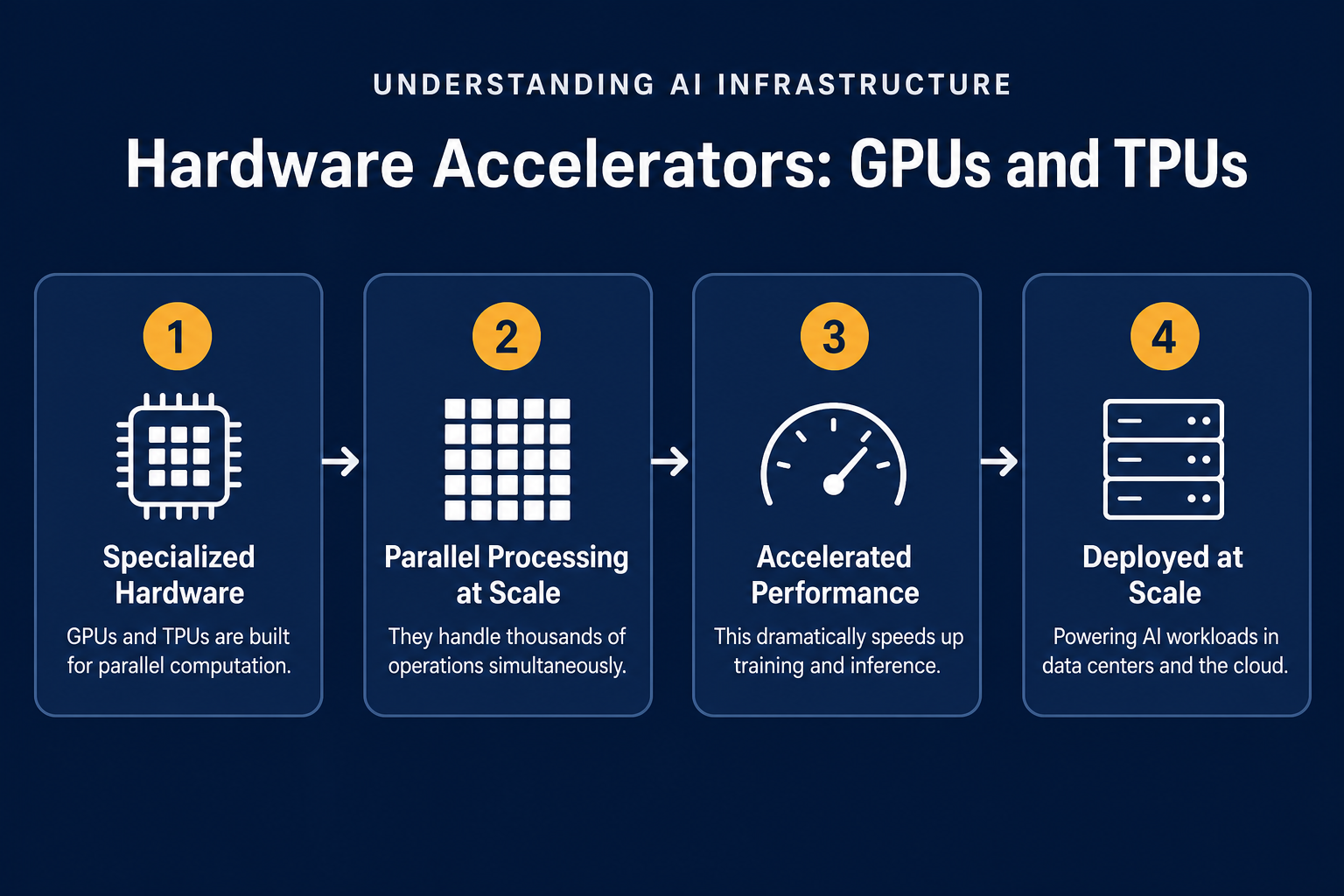
Following the sequence step by step makes Hardware Accelerators: GPUs and TPUs straightforward to apply immediately.
Key Differences
Key Takeaways
Accelerators optimise deep learning computations
Hardware accelerators like GPUs and TPUs significantly speed up deep learning tasks compared to traditional CPUs. This optimisation is crucial for handling the large datasets and complex neural networks used in modern AI.
GPUs offer versatility, TPUs specialise in TensorFlow
GPUs are widely used and versatile for various parallel processing tasks, offering broad application. TPUs are custom-built for TensorFlow, providing superior performance for specific deep learning workloads.
Parallel processing is key to acceleration
Both GPUs and TPUs leverage parallel processing to execute multiple computations simultaneously, dramatically increasing efficiency. This architectural design is fundamental to their ability to accelerate complex AI models.
Knowledge Check
Term Glossary
8 verified conceptsPrompt for AI Accelerator Comparison
Imagine you're trying to decide between GPUs and TPUs for a new AI project. Write a prompt that asks an AI model to compare these hardware accelerators for a specific AI task.
Your team is developing a new large language model (LLM) for natural language processing, requiring significant computational power for both training and inference. You've heard about the benefits of both GPUs and TPUs for accelerating AI workloads but aren't sure which is the best fit for an LLM specifically. You want a clear, concise comparison to help inform your decision.
Lesson Complete
You have learned about the key differences between GPUs and TPUs in deep learning.
Continue exploring hardware accelerators to deepen your understanding.
Consider enrolling in a course on deep learning frameworks.
Audio lesson recap
A concise audio summary of this lesson — great for reinforcing key concepts on the go.
Hear it discussed
About three minutes on the ideas in this lesson
Sterling
AI tutor
Vivienne
Sceptical challenger
Press play to start the discussion…
Full transcript · click any line to jump
Accelerators optimise deep learning computations
Hardware accelerators like GPUs and TPUs significantly speed up deep learning tasks compared to traditional CPUs. This optimisation is crucial for handling the large datasets and complex neural networks used in modern AI.
GPUs offer versatility, TPUs specialise in TensorFlow
GPUs are widely used and versatile for various parallel processing tasks, offering broad application. TPUs are custom-built for TensorFlow, providing superior performance for specific deep learning workloads.
Parallel processing is key to acceleration
Both GPUs and TPUs leverage parallel processing to execute multiple computations simultaneously, dramatically increasing efficiency. This architectural design is fundamental to their ability to accelerate complex AI models.
Ask anything about Hardware Accelerators: GPUs and TPUs. Sterling will answer — concisely, and with his customary level of patience.