What is Machine Learning?
Explore the core concept of machine learning and its distinction from traditional programming. See how systems learn from data to automate tasks.

Machine learning automates prediction, not programming.
This video contrasts traditional programming with machine learning. You'll see how machine learning systems learn from data instead of explicit instructions.
Machine Learning vs. Programming
See the key difference: data-driven learning.
Which of these tasks is better suited for machine learning than traditional programming?
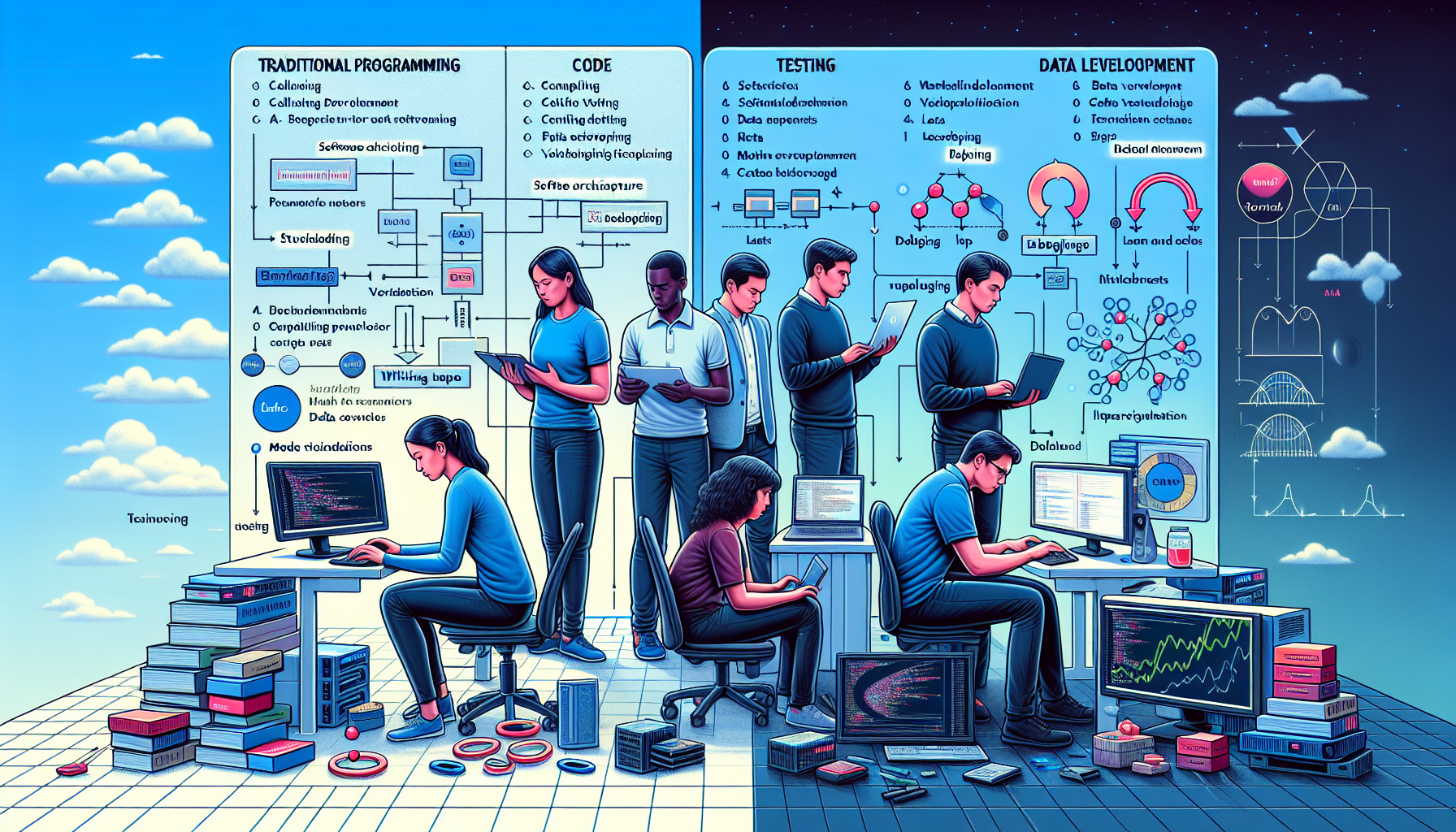
Traditional vs. Machine Learning
The Learning Mechanism
prediction and pattern recognition.">Machine learning models learn by adjusting their internal parameters based on data. This adjustment process is iterative, with the model refining its predictions over time.
The goal is to minimise the difference between the model's predictions and the actual outcomes. This process is called optimisation, and it's the core of how prediction and pattern recognition.">machine learning works.

The visual illustrates how machine learning models learn through iterative weight adjustments. This process allows the model to capture complex relationships in the data.
Machine Learning vs. Traditional Programming
The diagram contrasts the rule-based approach of traditional programming with the data-driven approach of machine learning. Machine learning models learn from data, adapting to new patterns without explicit programming.
Machine learning automates the process of finding the optimal parameters for a model. This contrasts with traditional programming, where developers manually define rules.
Machine learning models learn from data, allowing them to adapt to new patterns and trends. This is a key advantage over traditional programming, which relies on fixed logic.
Machine learning is primarily focused on making predictions or classifications. This contrasts with traditional programming, which is often used for general-purpose computation.
This video showcases real-world applications of machine learning. You'll see how machine learning is used to automate tasks and improve decision-making.
Applications of Machine Learning
See machine learning in action across industries.
Core Ideas Consolidated
prediction and pattern recognition.">Machine learning is not a replacement for traditional programming, but a complement to it. It excels in situations where patterns are complex and not easily defined by explicit rules.
By understanding the core principles of prediction and pattern recognition.">machine learning, you can use its power to solve a wide range of problems. The next step is to explore the different types of prediction and pattern recognition.">machine learning algorithms.
If you remember only four things…
Data-Driven
Machine learning models learn from data, adapting to new patterns without explicit programming. This is a key advantage over traditional programming.
Automated Prediction
Machine learning automates the process of making predictions or classifications. This contrasts with traditional programming, which requires manual rule definition.
Iterative Learning
Machine learning models learn through iterative weight adjustments, refining their predictions over time. This process allows the model to capture complex relationships in the data.
Workflow Shift
Machine learning shifts the workflow from manual coding to data collection, model training, and validation. This requires a different set of skills and tools.
Test Your Understanding
Complete the Machine Learning Definition
Fill in the blanks to correctly define key differences between traditional programming and Machine Learning.
Traditional programming relies on humans writing explicit [BLANK] to tell a computer exactly what to do. In contrast, Machine Learning enables systems to learn patterns and make predictions directly from [BLANK], without being explicitly programmed for every possible scenario. This process often involves training an algorithm on a large dataset to create a [BLANK] that can generalize to new, unseen information.
Term Glossary
12 verified conceptsFrom Rules to Patterns
You now understand that machine learning automates prediction, not programming. You also understand that this shift enables systems to adapt to complex and changing data patterns, learn new possibilities in various fields.
This is where systems stop being told what to do — and start learning to anticipate.
Next, we'll explore the different types of machine learning algorithms, starting with supervised learning, so you can begin to apply these concepts.
Audio lesson recap
A concise audio summary of this lesson — great for reinforcing key concepts on the go.
Hear it discussed
About three minutes on the ideas in this lesson
Sterling
AI tutor
Vivienne
Sceptical challenger
Press play to start the discussion…
Full transcript · click any line to jump
Test heading here
Test body content here for validation.
Second heading here
Second body content here for validation.
Third heading here
Third body content here for validation.
Ask anything about What is Machine Learning?. Sterling will answer — concisely, and with his customary level of patience.