Introduction to Feedback Loops
This lesson introduces the core concept of feedback loops in Claude agents. You will learn how these loops enable agents to self-correct and improve their performance.
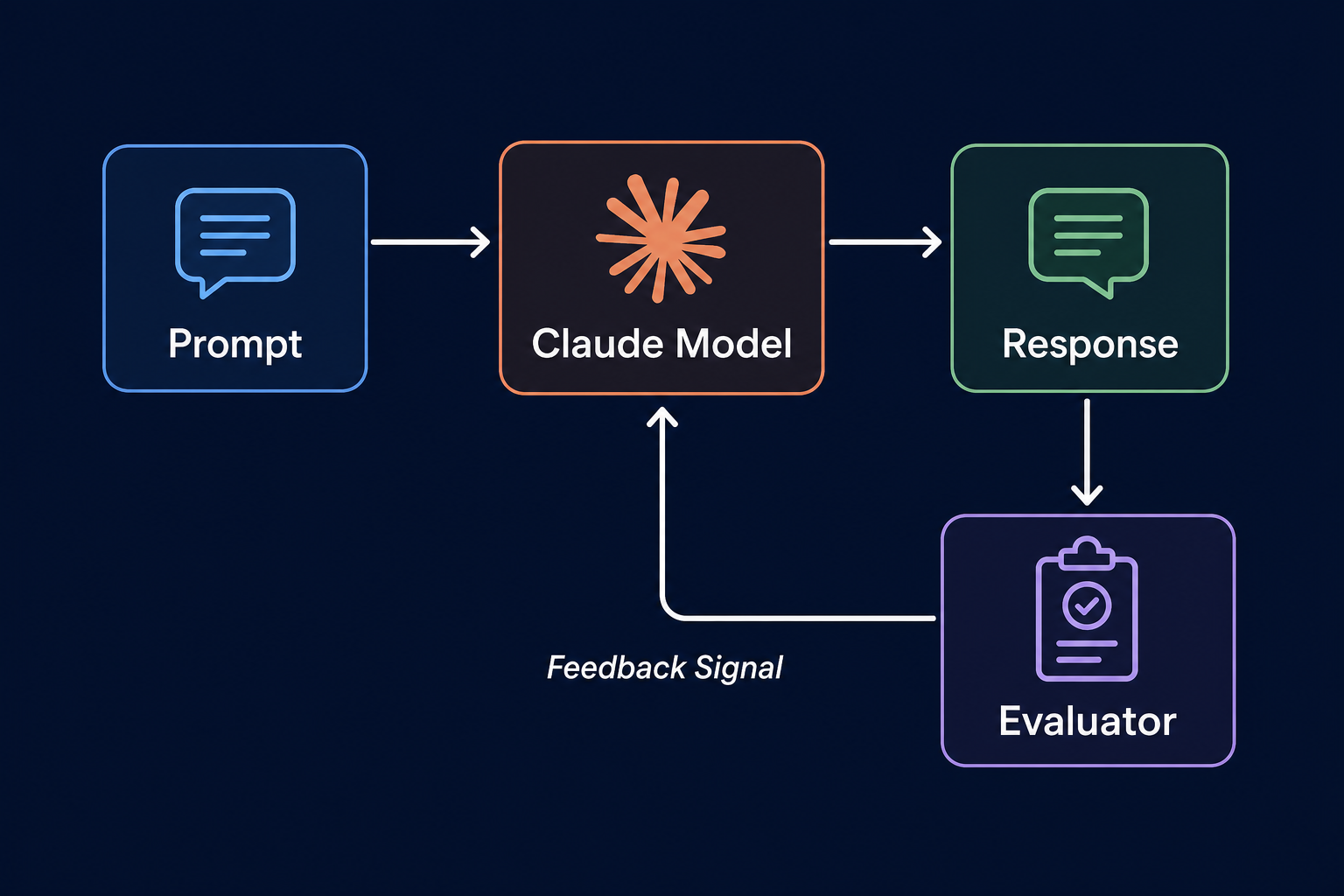
The First Self-Correction
You are witnessing the very first step towards truly intelligent systems: the ability to self-correct. This moment, when an AI agent can evaluate its own work and refine it without human intervention, marks a profound shift. It means moving from a reactive tool to a proactive, learning entity. This fundamental principle of feedback will underpin all complex Claude agent designs you build. Remember this feeling of quiet power, because you are now equipped to build it.
Feedback transforms a simple response into a continuous learning cycle.
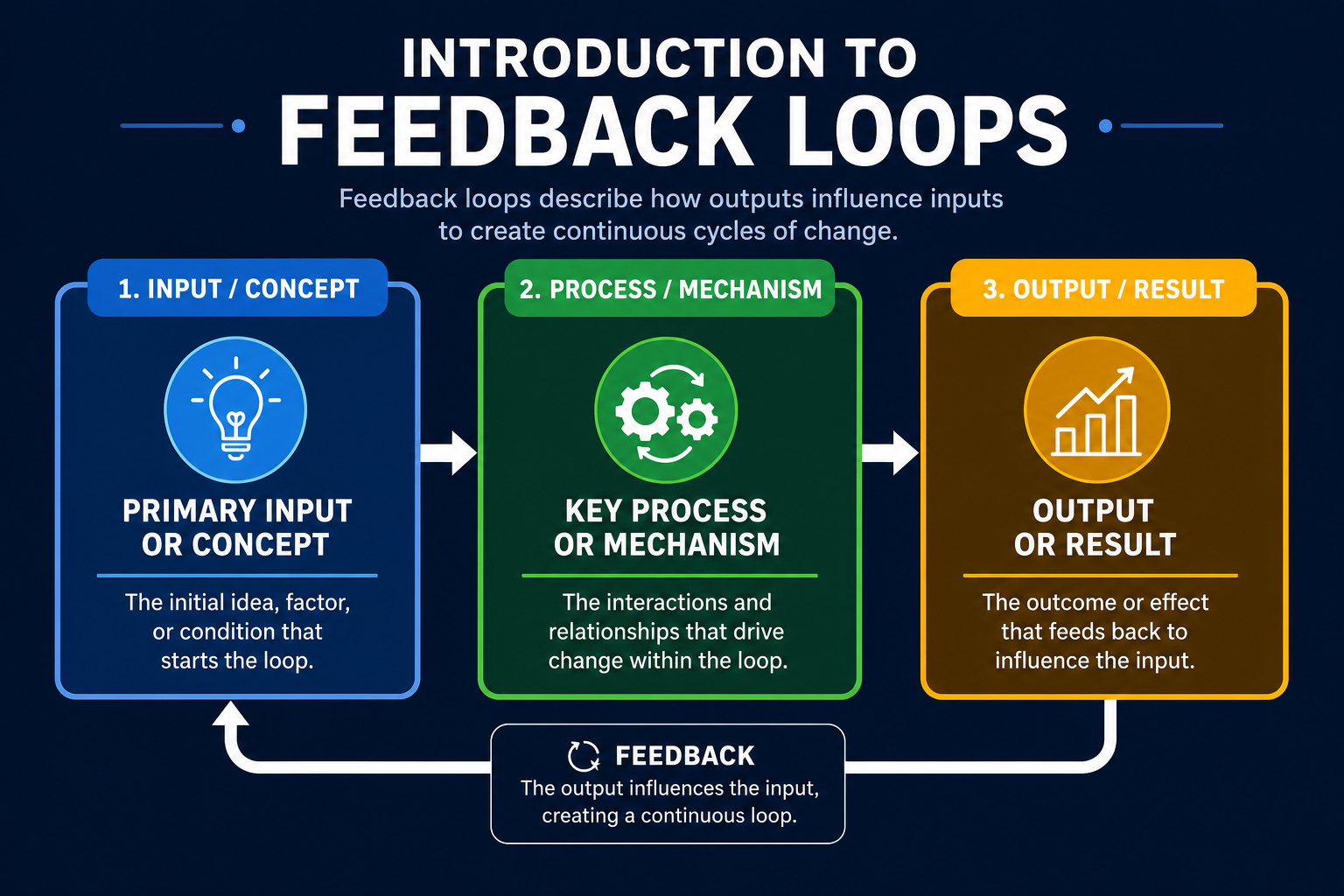
This diagram breaks down the core building blocks of Introduction to Feedback Loops so you can see how each part connects.
Before we begin
Why does Claude sometimes fail to produce the desired output, even with a clear prompt? The answer often lies not in the prompt itself, but in the absence of a mechanism for self-correction.
What is the primary benefit of adding a feedback loop to a Claude agent?
Understanding Feedback Loops
A feedback loop in a Claude agent is a mechanism where the agent's output is evaluated, and the results of that evaluation are then used to inform or adjust the agent's subsequent actions. This creates a continuous cycle of improvement, moving beyond a simple prompt-response interaction.
This mechanism functions by taking the agent's initial output and passing it to a separate component, often another Claude instance or a set of rules, which acts as an evaluator. The evaluator assesses the output against predefined criteria, such as correctness, style, or adherence to constraints.
For instance, if Claude generates a summary, an evaluator might check for factual accuracy or conciseness. If the summary fails to meet these standards, the evaluator provides specific guidance or a 'signal' back to the original Claude agent.
This signal allows the agent to iteratively refine its output, leading to a higher quality, more reliable final result. Feedback loops are essential for building reliable Claude agents that perform complex tasks consistently and accurately over time.
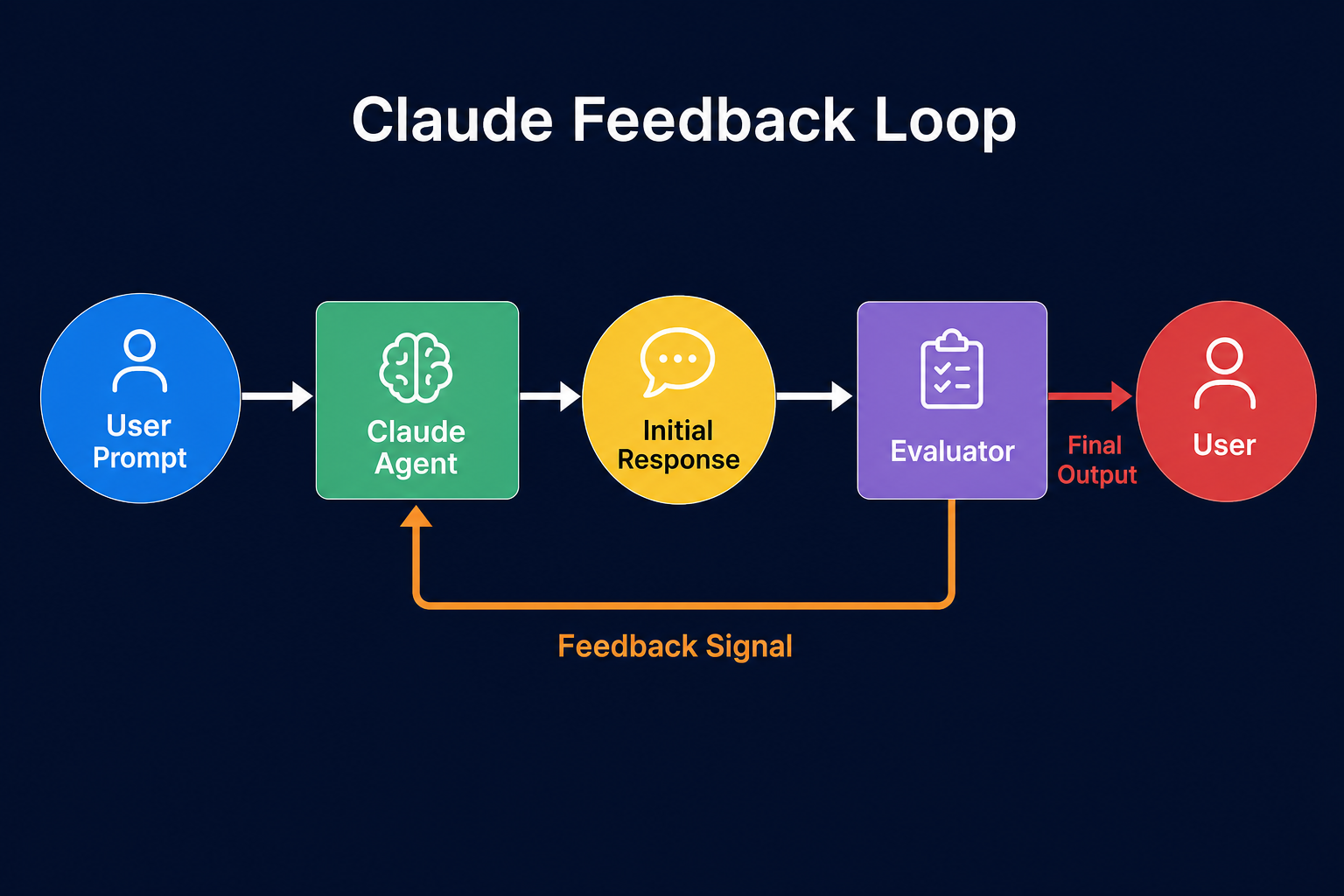
How a Basic Feedback Loop Operates
Feedback Loop: Cause and Effect
This diagram traces the causal chain of a feedback loop, from initial prompt to final refined output. Each step directly influences the next, demonstrating how the system builds upon previous actions. The cyclical nature of the flow ensures continuous improvement through self-correction.
Feedback loops enable continuous self-correction, allowing Claude agents to refine their outputs over multiple steps. This iterative process is key to handling complex tasks that a single-pass generation cannot manage effectively.
By defining clear evaluation criteria, feedback loops align the agent's behaviour with specific performance goals. This ensures Claude's outputs consistently meet desired quality standards and user expectations.
The ability to identify and correct errors within the generation process makes Claude agents significantly more reliable. This reduces the need for manual oversight and increases trust in automated systems.
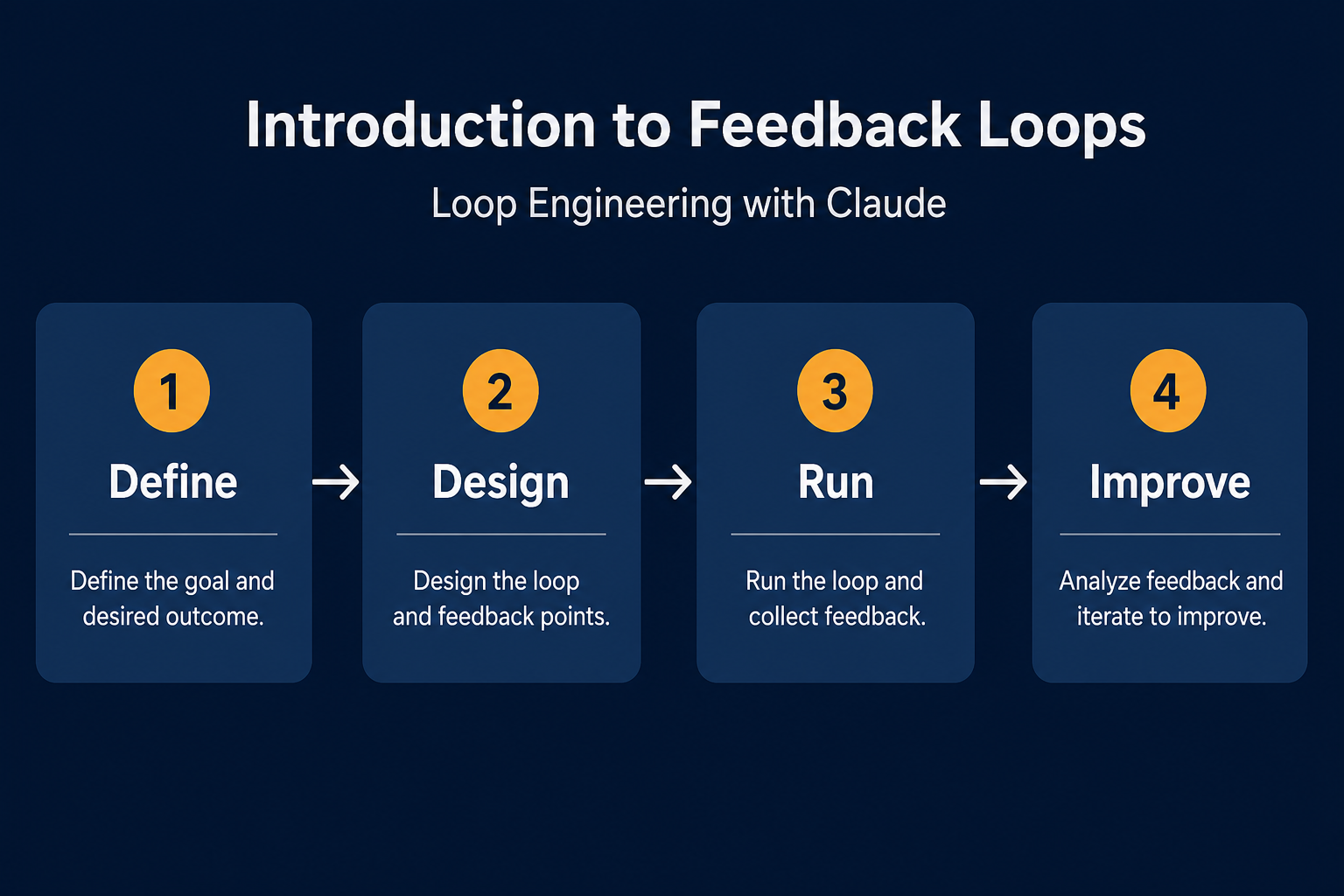
Following the sequence step by step makes Introduction to Feedback Loops straightforward to apply immediately.
This video visualises a Claude agent undergoing multiple iterations of refinement. It demonstrates how continuous feedback drives the agent to produce a more polished and accurate final output.
Claude Agent Iteration
Observe an AI agent refining its output through multiple feedback cycles.
Before vs. After Feedback
This contrast highlights the fundamental difference in output quality when feedback loops are introduced. Without feedback, the process is linear and prone to single-point failures, leading to suboptimal results. With feedback, the iterative refinement process dramatically improves accuracy and reliability.
The Power of Self-Correction
Feedback loops fundamentally change how Claude agents operate, shifting them from static response generators to adaptive problem-solvers. This capability is not merely an enhancement; it is a prerequisite for building truly intelligent systems that can function autonomously.
Understanding these foundational principles prepares you to design agents that learn and improve from every interaction. This is the core skill for developing advanced, reliable AI applications.
If you remember only three things…
Feedback Loops Defined
Feedback loops allow Claude agents to evaluate their own outputs and use that information to refine subsequent responses. This moves beyond simple one-shot interactions.
Iterative Improvement
The core mechanism involves an evaluator assessing an initial output and generating a feedback signal. Claude then uses this signal to iteratively improve its generated content.
Enhanced Reliability
By enabling self-correction, feedback loops significantly increase the accuracy and consistency of Claude's outputs. This makes agents more trustworthy and effective in complex tasks.
Adaptive Agents
Feedback transforms Claude from a reactive tool into a proactive, learning system. This adaptive capability is essential for building reliable and autonomous AI applications.
Test Your Understanding
Term Glossary
4 verified conceptsFrom Reactive to Adaptive
You now understand how feedback loops help Claude agents to move beyond simple responses and become adaptive, self-correcting systems. This fundamental shift enhances reliability and performance.
Feedback loops transform a single output into a continuous path towards intelligent action.
The next lesson will explore different types of evaluators and how to design effective criteria for feedback generation.
Audio lesson recap
A concise audio summary of this lesson — great for reinforcing key concepts on the go.
Hear it discussed
About three minutes on the ideas in this lesson
Sterling
AI tutor
Vivienne
Sceptical challenger
Press play to start the discussion…
Full transcript · click any line to jump
Ask anything about Introduction to Feedback Loops. Sterling will answer — concisely, and with his customary level of patience.