LLM Architecture close look
Deconstruct the transformer architecture and its key components.
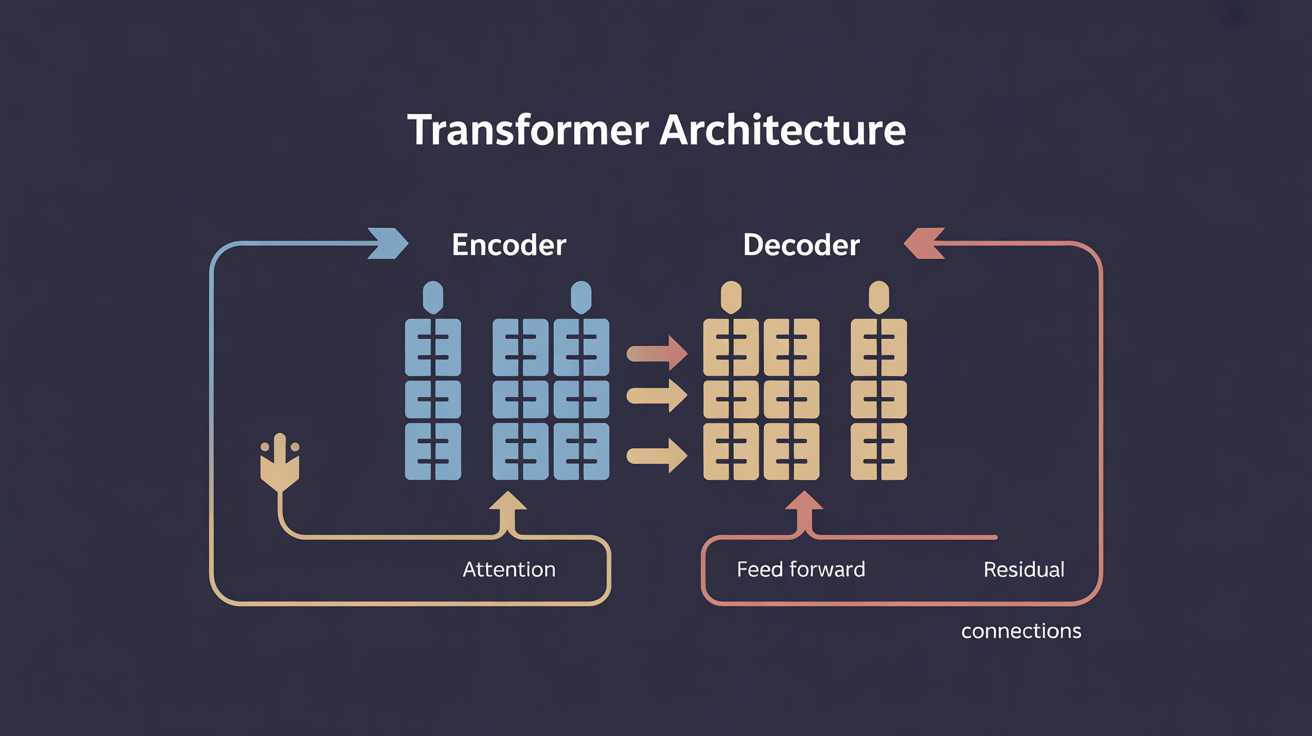
Attention Mechanism
The attention mechanism is the key innovation in transformer architecture. It's not convolutional layers, nor recurrent networks. It allows the model to focus on different parts of the input sequence when processing each token.
This is achieved by assigning weights to each token, indicating its relevance to the current token being processed. These weights enable the model to capture long-range dependencies more effectively than previous architectures.
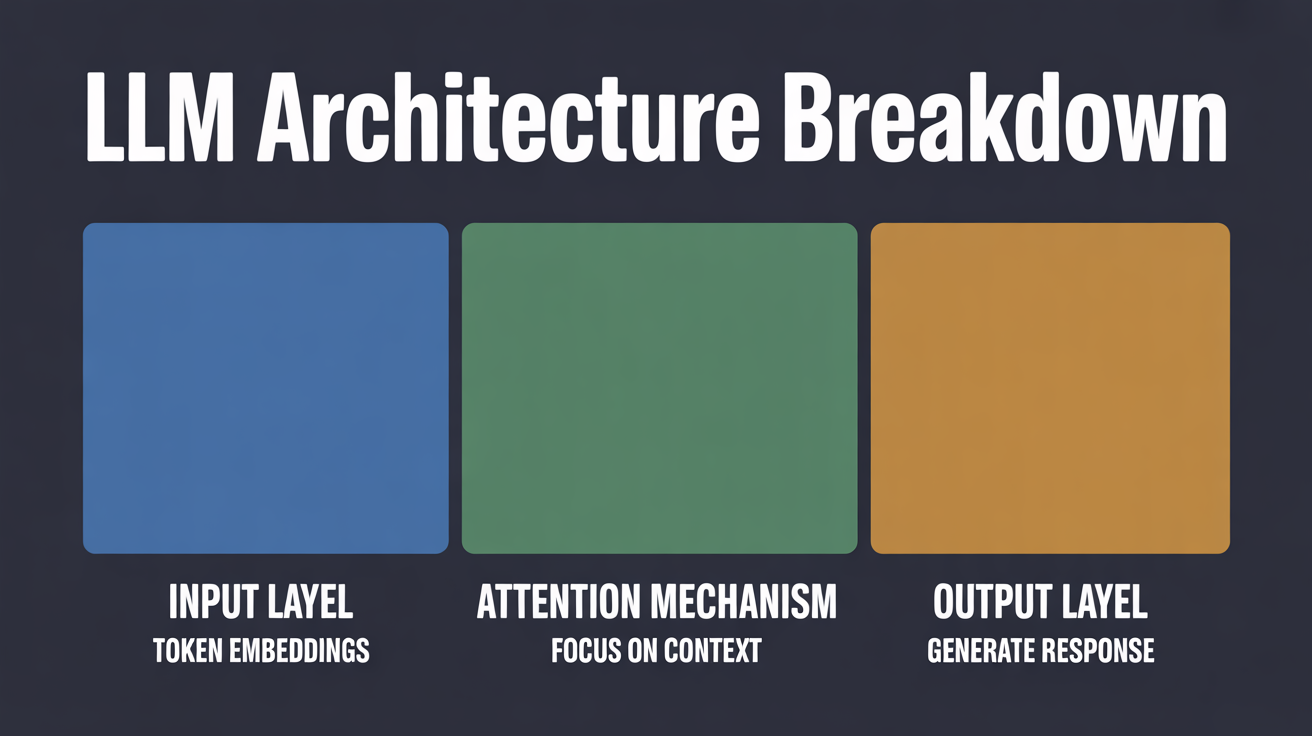
This visual illustrates how LLM Architecture close look applies in real-world Large Language Models scenarios.
The attention mechanism changed everything — not because it was new, but because it could hold the whole sentence in mind.
This video demonstrates how the attention mechanism links different words in a sentence. It illustrates how the model focuses on relevant parts of the input.
Visualising Attention
See attention weights in action.
Which component of the transformer architecture is responsible for capturing long-range dependencies in a sequence?
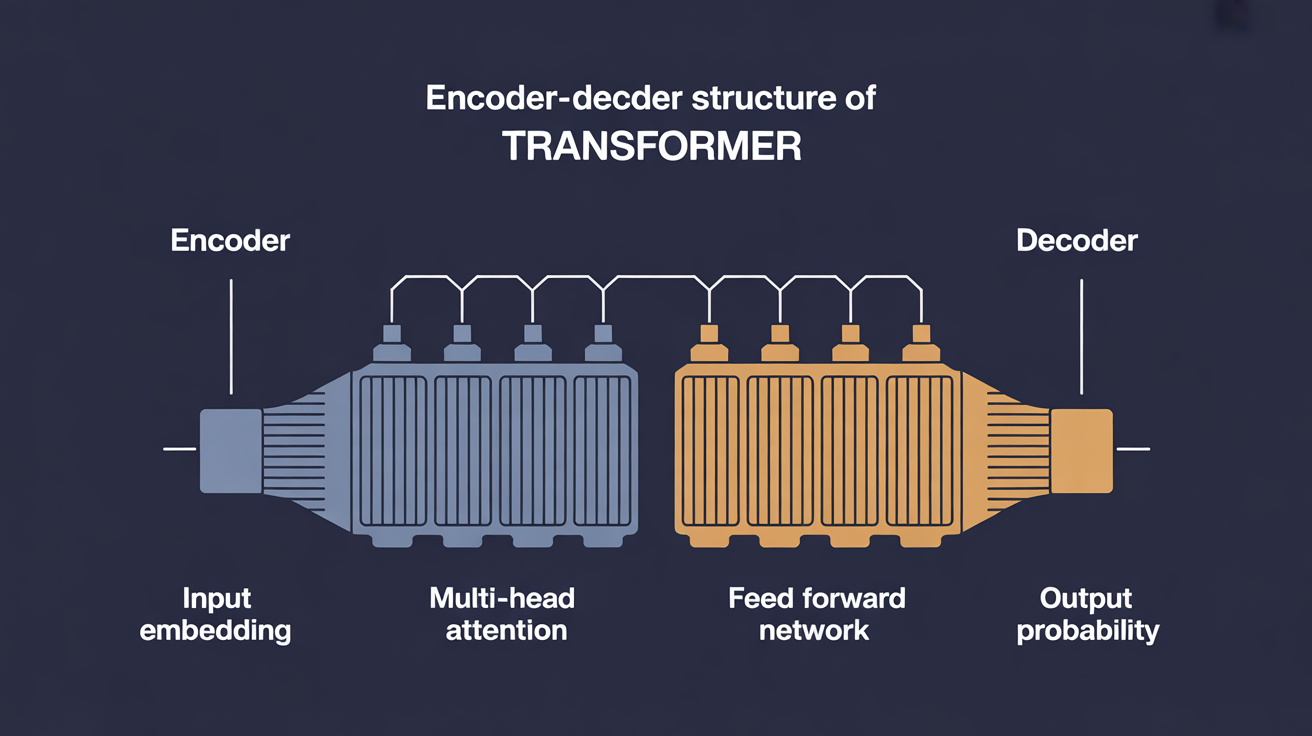
Encoder-Decoder Structure
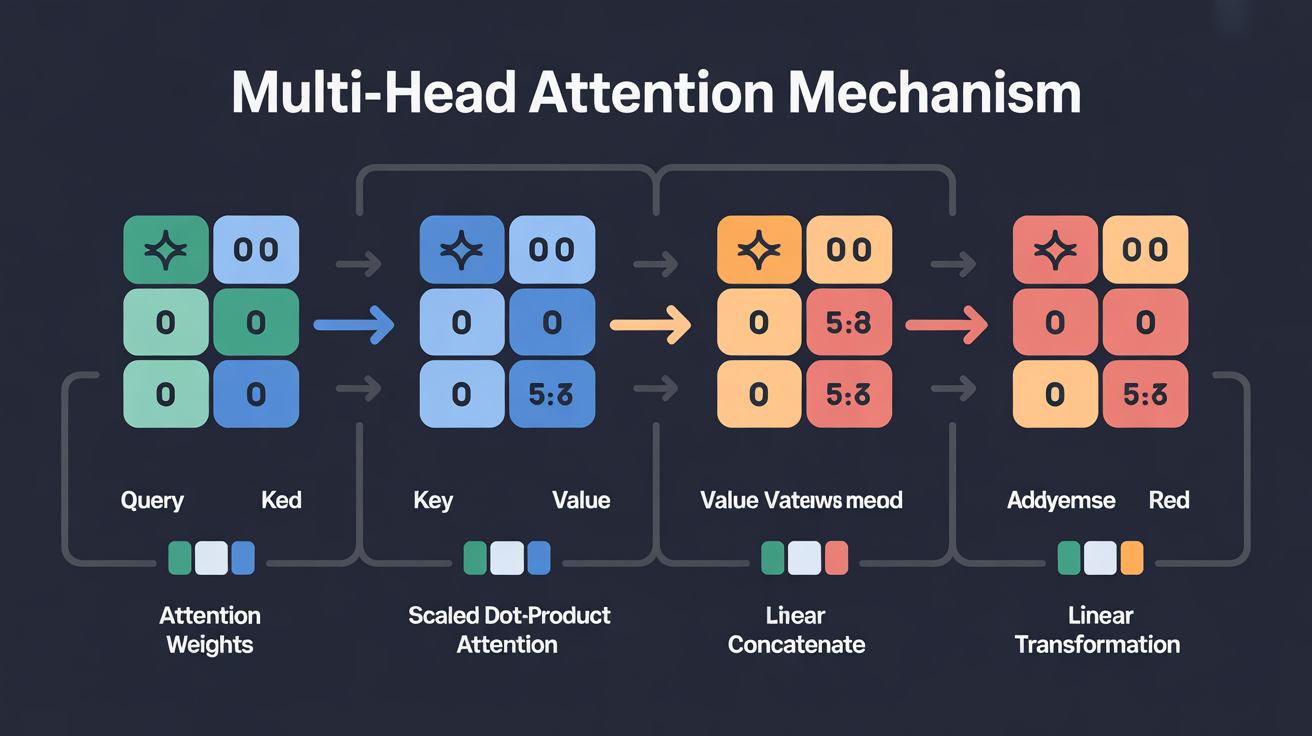
The multiple attention heads enable the model to learn different relationships between tokens. This increases the model's representational capacity, enabling it to capture more nuanced patterns in the data.
Single-Head vs Multi-Head Attention
Multi-head attention enhances the model's capacity to capture diverse relationships. The parallel heads allow the model to learn different patterns, which are then combined to form a more reliable representation.
The attention mechanism allows the model to focus on relevant parts of the input, improving performance.
Transformers can capture long-range dependencies in sequences, which is crucial for understanding context.
The parallel nature of transformers enables efficient training and scaling to large datasets.
Positional Encoding
Transformers do not have inherent knowledge of the order of tokens in a sequence. Unlike recurrent networks, they process all tokens in parallel. This requires a different approach to sequence understanding.
Positional encoding provides information about the position of each token in the sequence. This allows the model to understand the relationships between tokens based on their order.
If you remember only three things…
Attention Mechanism
The attention mechanism enables the model to focus on relevant parts of the input, improving performance. It is the cornerstone of transformer architecture.
Encoder-Decoder Structure
The encoder processes the input sequence, and the decoder generates the output sequence. This structure allows transformers to solve sequence-to-sequence tasks efficiently.
Multi-Head Attention
Multi-head attention allows the model to capture different aspects of the input sequence. This improves the model's ability to represent complex information.
Positional Encoding
Positional encoding provides information about the position of each token in the sequence. Without it, the model would not understand the order of words.
Test Your Understanding
Prompt for Embedding Distinction
Write a prompt that asks an LLM to clearly differentiate between 'token embeddings' and 'positional encodings' within a Transformer model, explaining their distinct purposes.
You're trying to solidify your understanding of how a Transformer model processes input. Specifically, you're a bit fuzzy on the exact roles of token embeddings versus positional encodings. You want a clear, concise explanation from an LLM that highlights their individual contributions to the model's ability to understand language and sequence. Avoid overly technical jargon.
Term Glossary
4 verified conceptsThe Architecture Becomes Clear
You now understand the crucial components of the transformer architecture and how they work together. This understanding is the foundation for working with and adapting modern LLMs.
Transformers capture relationships between words in a sequence, enabling effective language understanding and generation capabilities.
Next, we'll examine how transformers are pre-trained on massive datasets, exploring the techniques and challenges involved in training these models.
Audio lesson recap
A concise audio summary of this lesson — great for reinforcing key concepts on the go.
Hear it discussed
About three minutes on the ideas in this lesson
Sterling
AI tutor
Vivienne
Sceptical challenger
Press play to start the discussion…
Full transcript · click any line to jump
Deconstruct Transformer for LLM Understanding
Understanding transformer architecture is crucial for fine-tuning and optimising modern language models. This knowledge builds a system-level mental model essential for AI engineering and development.
Attention Mechanism: Core of Transformers
The attention mechanism allows models to focus on relevant input parts, capturing long-range dependencies effectively. Multi-head attention further enhances this by learning diverse relationships between tokens.
Positional Encoding for Sequence Order
Transformers process tokens in parallel, lacking inherent order knowledge. Positional encoding provides vital information about token sequence, enabling the model to understand relationships based on order.
Ask anything about LLM Architecture close look. Sterling will answer — concisely, and with his customary level of patience.