The Hypothetical GPT-5.6 Core
Explore the rumoured architectural advancements of GPT-5.6, focusing on its vastly increased context window and enhanced reasoning capabilities.
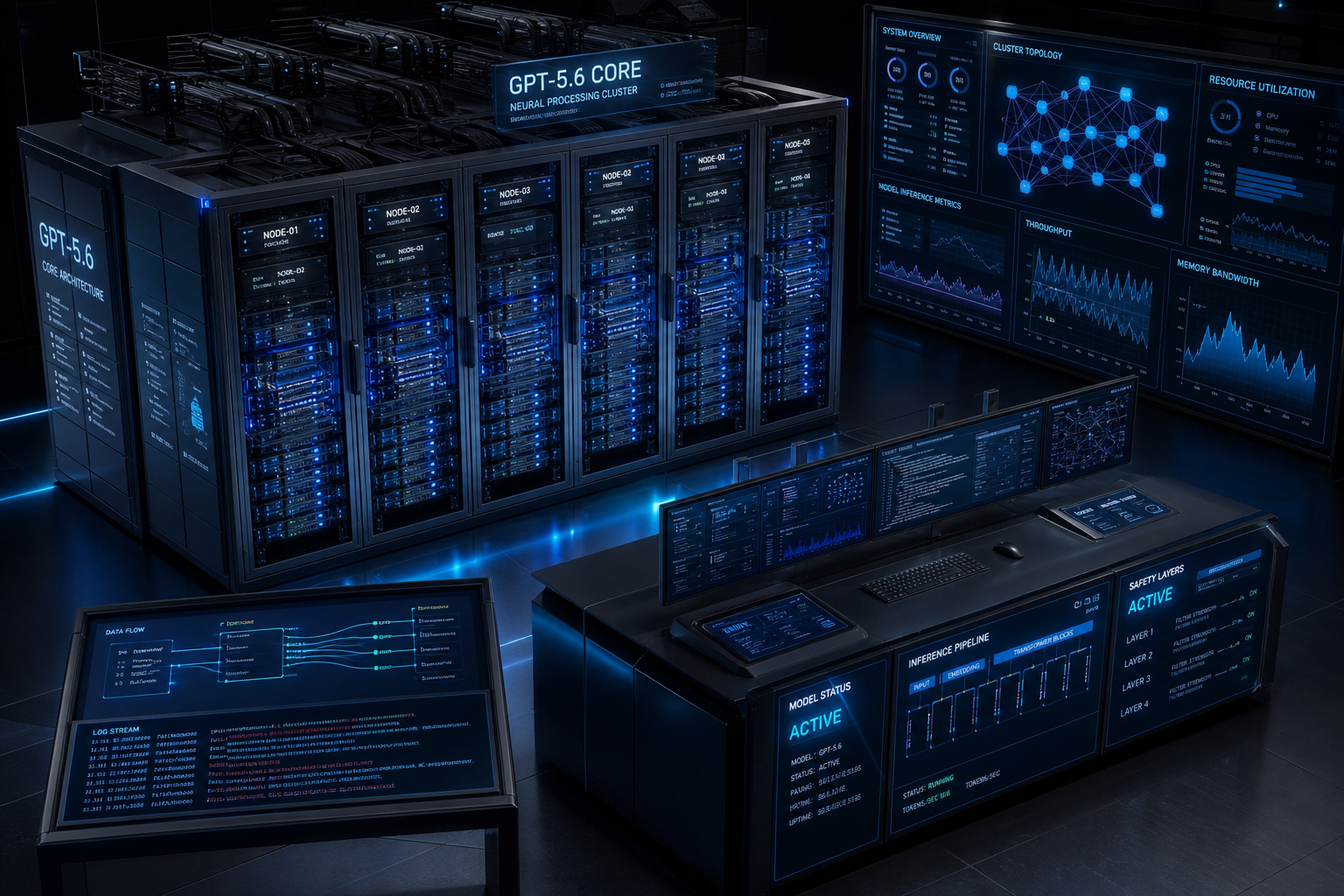
GPT-5.6: A Look Back from the Future
The context window isn't just bigger; it's a new dimension of understanding.
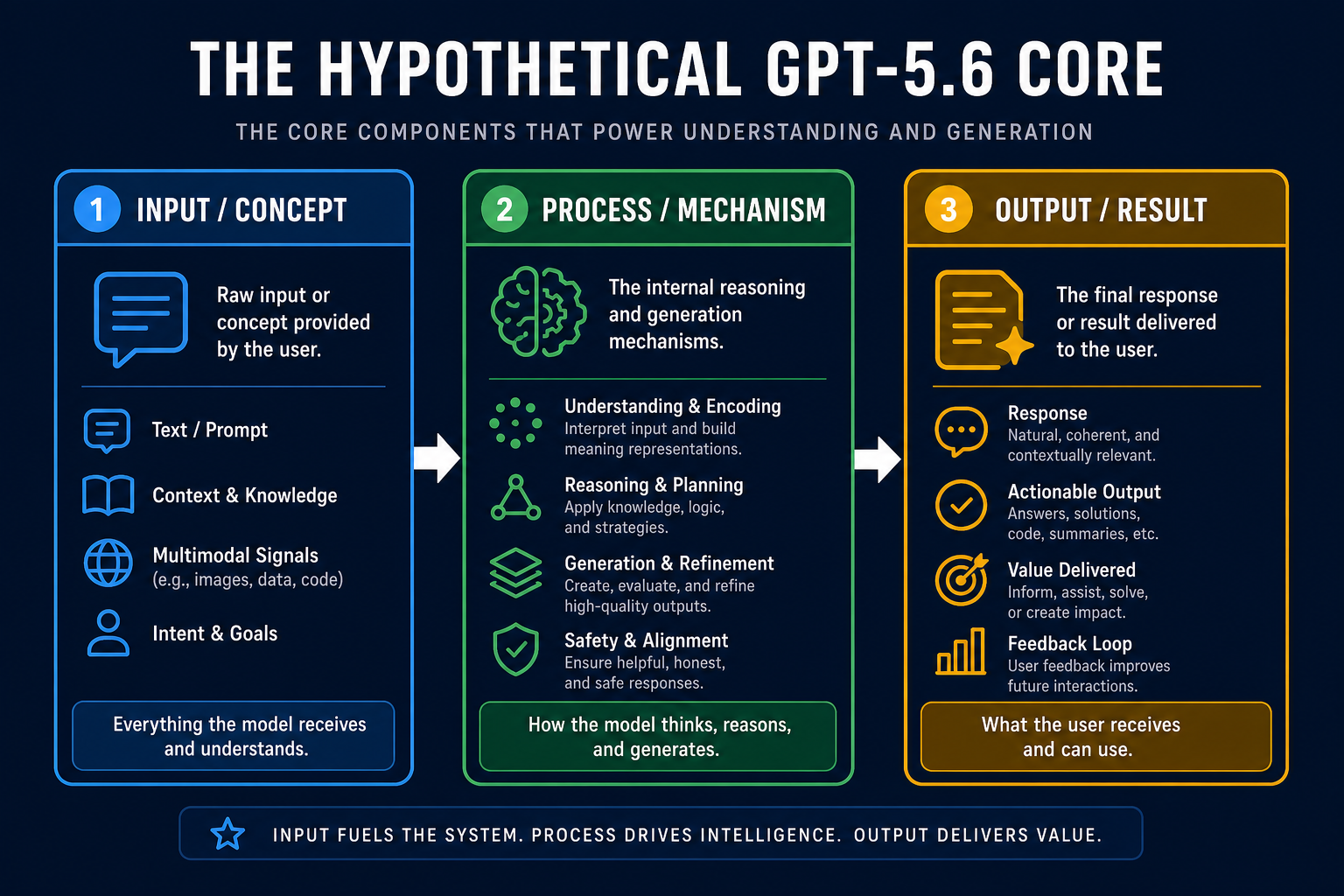
This diagram breaks down the core building blocks of The Hypothetical GPT-5.6 Core so you can see how each part connects.
Before we begin
Why might GPT-5.6 process entire novels as a single thought, rather than sentence by sentence? The answer lies not in faster processing, but in a fundamental shift in how it holds information.
Which architectural advancement is most likely to enable GPT-5.6 to handle highly complex, multi-turn conversations without losing track of details?
The Expanded Context Window
The context window in a large language model defines how much information it can consider at once. Previous models struggled with long texts, essentially 'forgetting' earlier parts of a conversation or document as they processed new information.
This limitation is addressed in GPT-5.6 by a dramatically expanded context window, allowing it to ingest and process entire books, extensive codebases, or prolonged dialogues in a single pass. This isn't merely more memory; it's a fundamental change in how the model understands relationships across vast data sets.
For example, you could feed GPT-5.6 an entire legal brief, asking it to identify subtle inconsistencies across hundreds of pages. The model would hold all relevant clauses in active memory, making connections that a human might miss without extensive cross-referencing.
The practical implication is a shift from fragmented, turn-by-turn interactions to truly complete understanding. This enables AI to maintain deep thematic coherence and logical consistency across extremely long, complex tasks, fundamentally altering prompt engineering strategies.
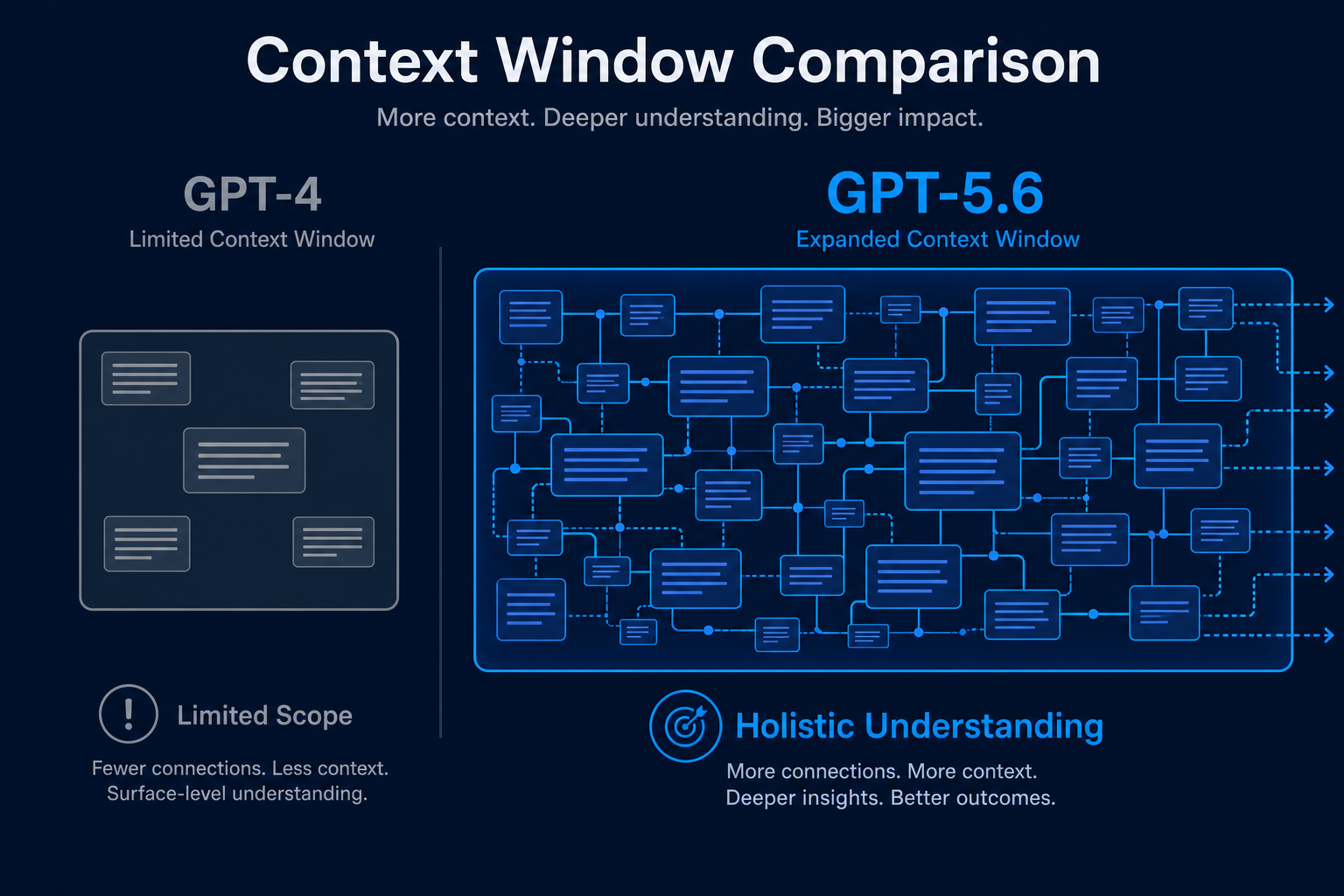
From Snippets to Symphonies
Enhanced Reasoning Capabilities
Beyond just a larger window, GPT-5.6 is rumoured to feature a significantly enhanced reasoning engine. This means it can not only process more information but also apply more sophisticated logical operations and inferential steps to that information.
This isn't about brute-force computation; it's about architectural improvements that allow for more complex causal chains and multi-step problem-solving directly within the model. The model can simulate scenarios and weigh probabilities with greater precision.
Reasoning Evolution: From Heuristics to Deep Inference
This diagram contrasts the reasoning pathways of previous models with the hypothetical GPT-5.6. The 'Previous Models' relied on simpler pattern matching and rule-based responses, often leading to superficial understanding. GPT-5.6, however, constructs a 'Contextual Graph' and performs 'Multi-Step Causal Analysis', revealing a capacity for deeper, more reliable inference. This shift enables the model to handle nuanced problems that require genuine understanding of underlying relationships.
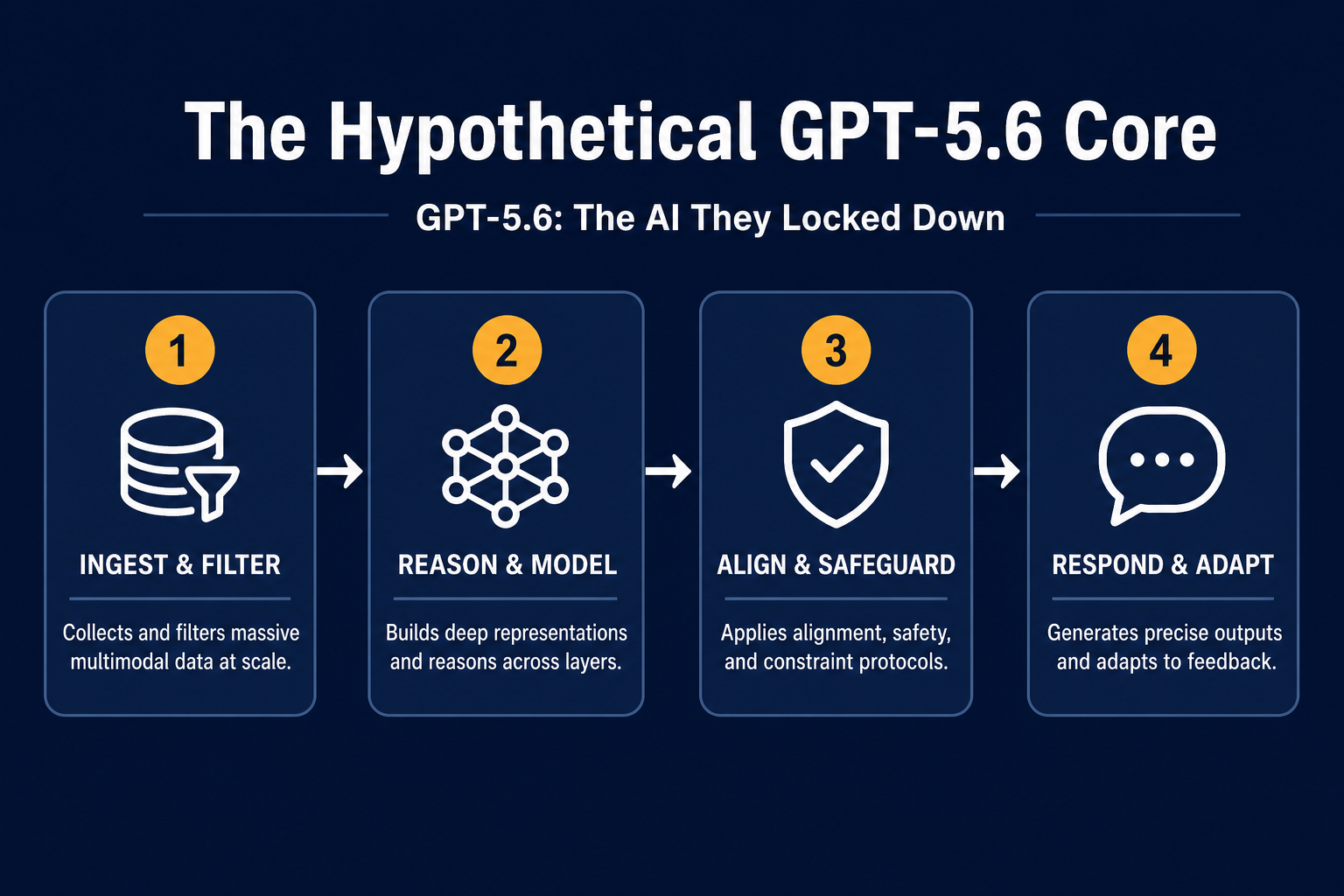
Following the sequence step by step makes The Hypothetical GPT-5.6 Core straightforward to apply immediately.
The true power isn't just remembering more words; it's connecting distant ideas within that vast memory. This creates real 'understanding'.
GPT-5.6 moves past basic correlation, developing a capacity for complex, multi-layered causal reasoning. It can 'think' several steps ahead.
These advancements lay the groundwork for AI to manage and coordinate other AIs, creating self-organising, intelligent systems.
You'll see a professional interacting with a sophisticated multi-agent AI system, visualising its complex internal operations. This demonstrates the practical application of GPT-5.6's enhanced reasoning and context capabilities, allowing for autonomous, coordinated AI workflows.
Multi-Agent Orchestration in Action
Watch how advanced reasoning could enable AI to manage complex tasks.
The Path to Autonomous Orchestration
The combination of an expanded context window and enhanced reasoning positions GPT-5.6 for autonomous multi-agent orchestration. This means it could manage and coordinate multiple specialised AI models, assigning tasks and integrating their outputs to achieve a larger goal.
Such a system moves beyond a single AI responding to prompts; it becomes a conductor of an AI orchestra. This capability allows for the automation of highly complex workflows, where different AI tools collaborate dynamically to solve problems, adapting in real time.
If you remember only three things…
Vastly Expanded Context
GPT-5.6 can process entire documents or conversations at once, maintaining coherence over extreme lengths.
Enhanced Reasoning Engine
The model performs complex, multi-step logical inference, moving beyond simple pattern matching.
Multi-Agent Orchestration
These capabilities enable GPT-5.6 to coordinate other AI models, automating complex workflows autonomously.
Test Your Understanding
Term Glossary
3 verified conceptsThe Architecture Becomes Clear
You now grasp the conceptual leaps that GPT-5.6 represents, moving beyond simple input-output to a system capable of deep, complete understanding and complex autonomous action. This redefines what is possible with AI.
The future of AI is not just about bigger models, but fundamentally smarter ones.
The next lesson will explore how to craft advanced prompts that exploit GPT-5.6's enhanced context and reasoning capabilities.
Audio lesson recap
A concise audio summary of this lesson — great for reinforcing key concepts on the go.
Hear it discussed
About three minutes on the ideas in this lesson
Sterling
AI tutor
Vivienne
Sceptical challenger
Press play to start the discussion…
Full transcript · click any line to jump
Ask anything about Sol, Terra & Luna: OpenAI's Three-Tier Frontier. Sterling will answer — concisely, and with his customary level of patience.