Google's AI Search Models
Explore the AI models that power Google's search engine. Understand how these models influence search results and user experience.
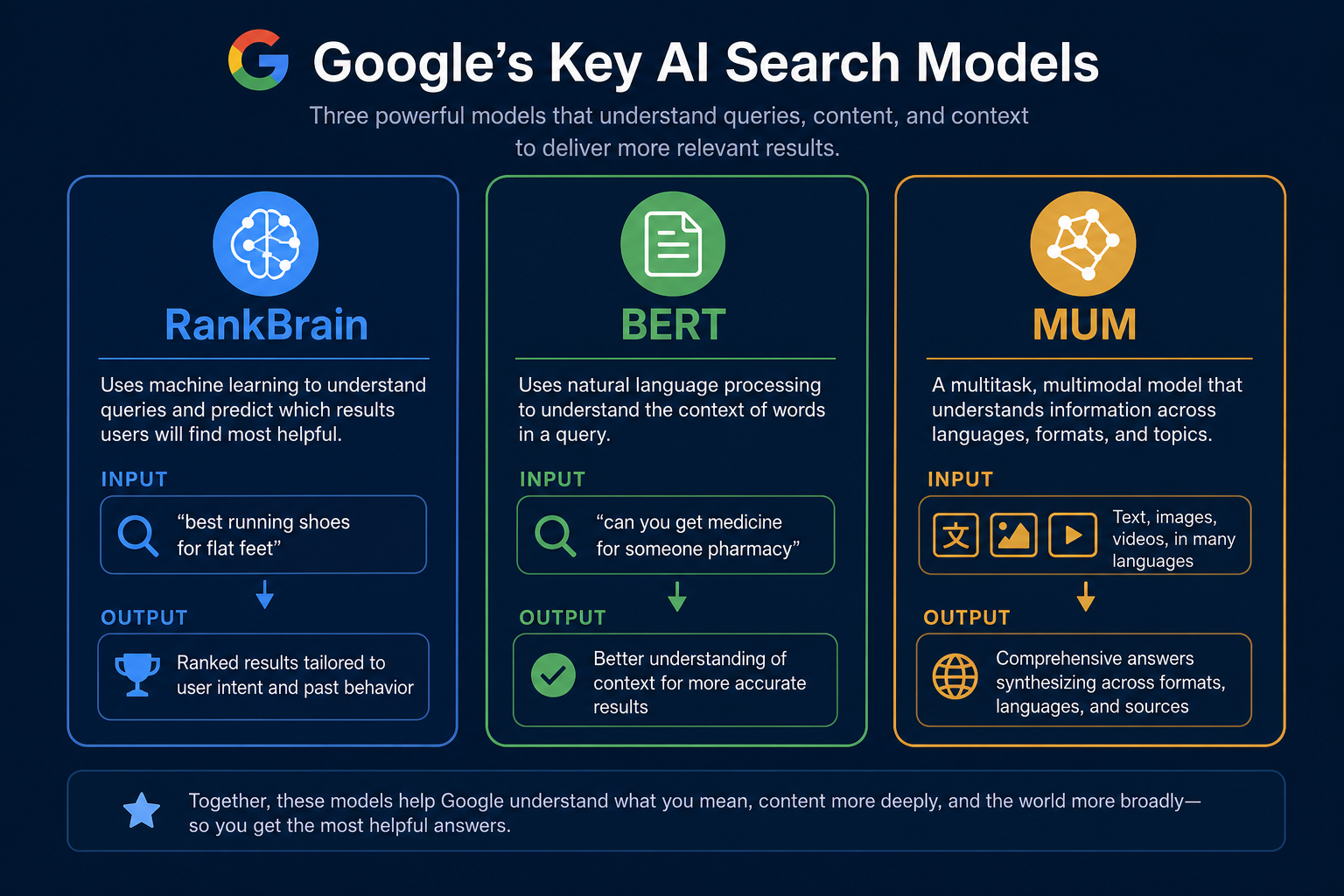
RankBrain's Role
RankBrain uses machine learning to understand the intent behind a search query. It analyses historical search data to predict which results a user is most likely to find relevant.
This model adjusts ranking factors based on user interaction. If users spend more time on a particular search result, RankBrain boosts its ranking for similar queries.
AI doesn't just find information; it understands and anticipates user needs.
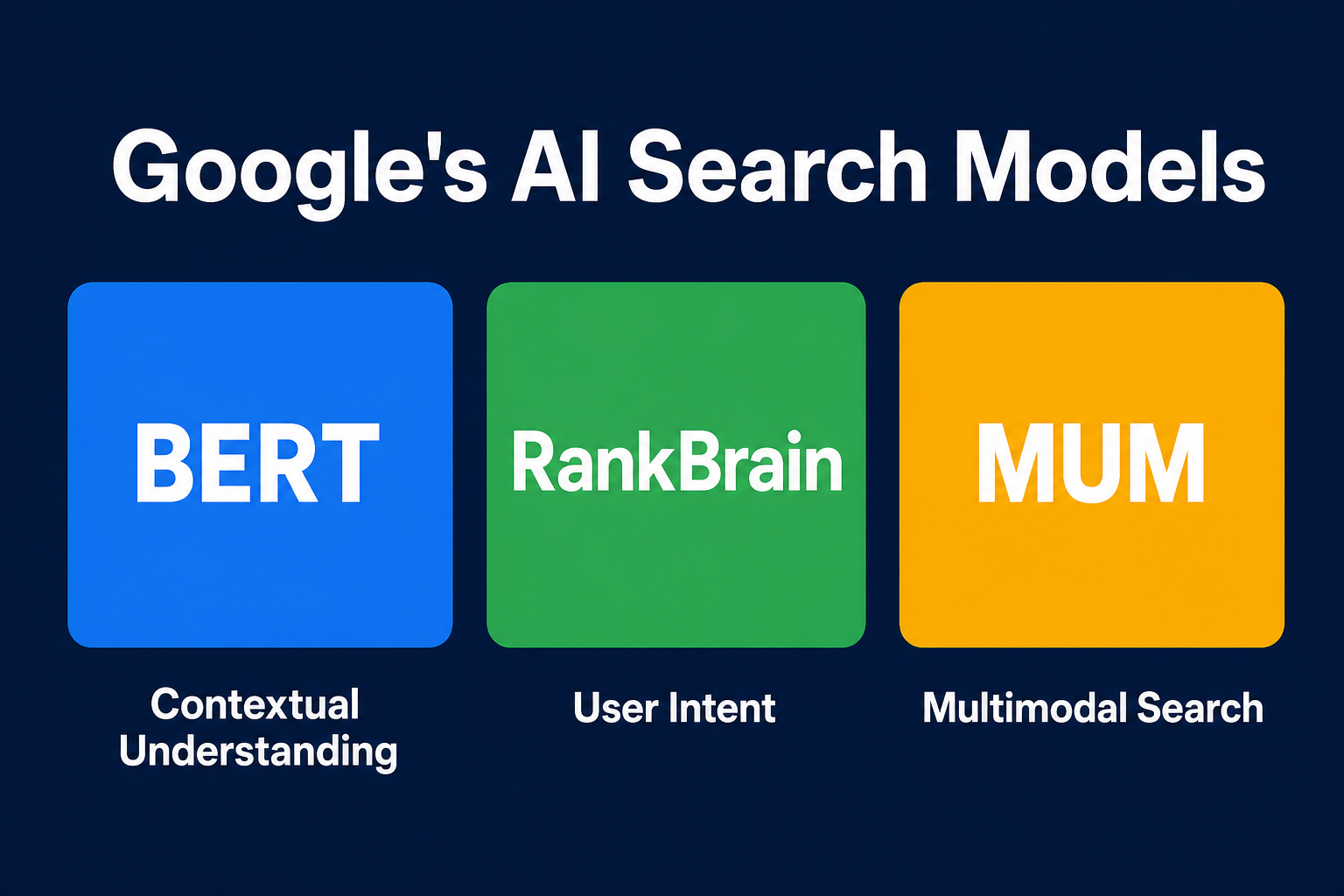
This diagram breaks down the core building blocks of Google's AI Search Models so you can see how each part connects.
This video shows AI models improving search results. It highlights how AI enhances information retrieval.
AI-Powered Search Explained
See how AI models refine search results. Understand their impact on information retrieval.
Which AI model primarily focuses on understanding the context of search queries?
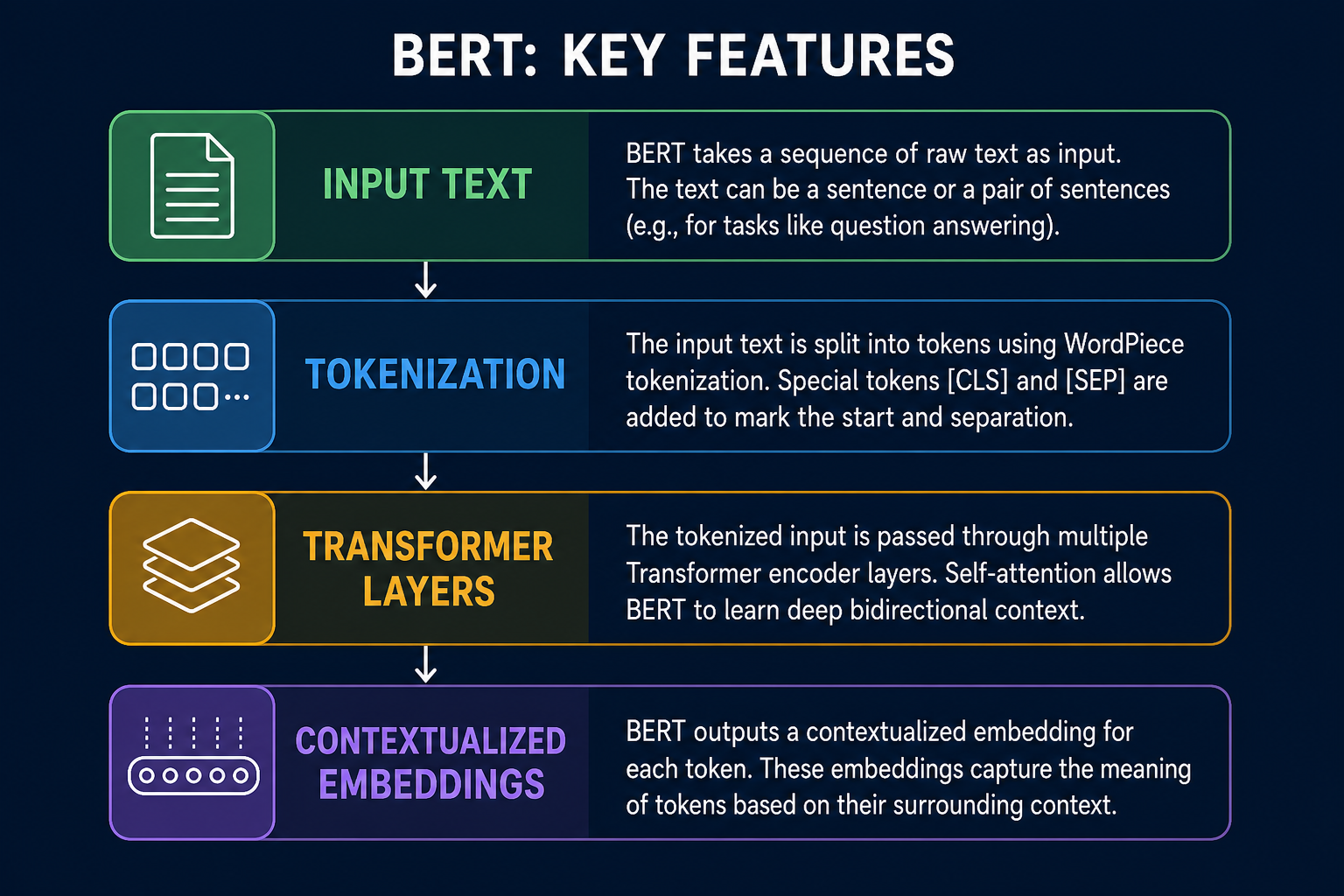
Understanding BERT
The Power of MUM
MUM (Multitask Unified Model) handles complex, multi-faceted searches. It can understand information across different formats like text, images, and video.
This model anticipates the next steps a user might take. MUM can provide complete answers that reduce the need for multiple searches.
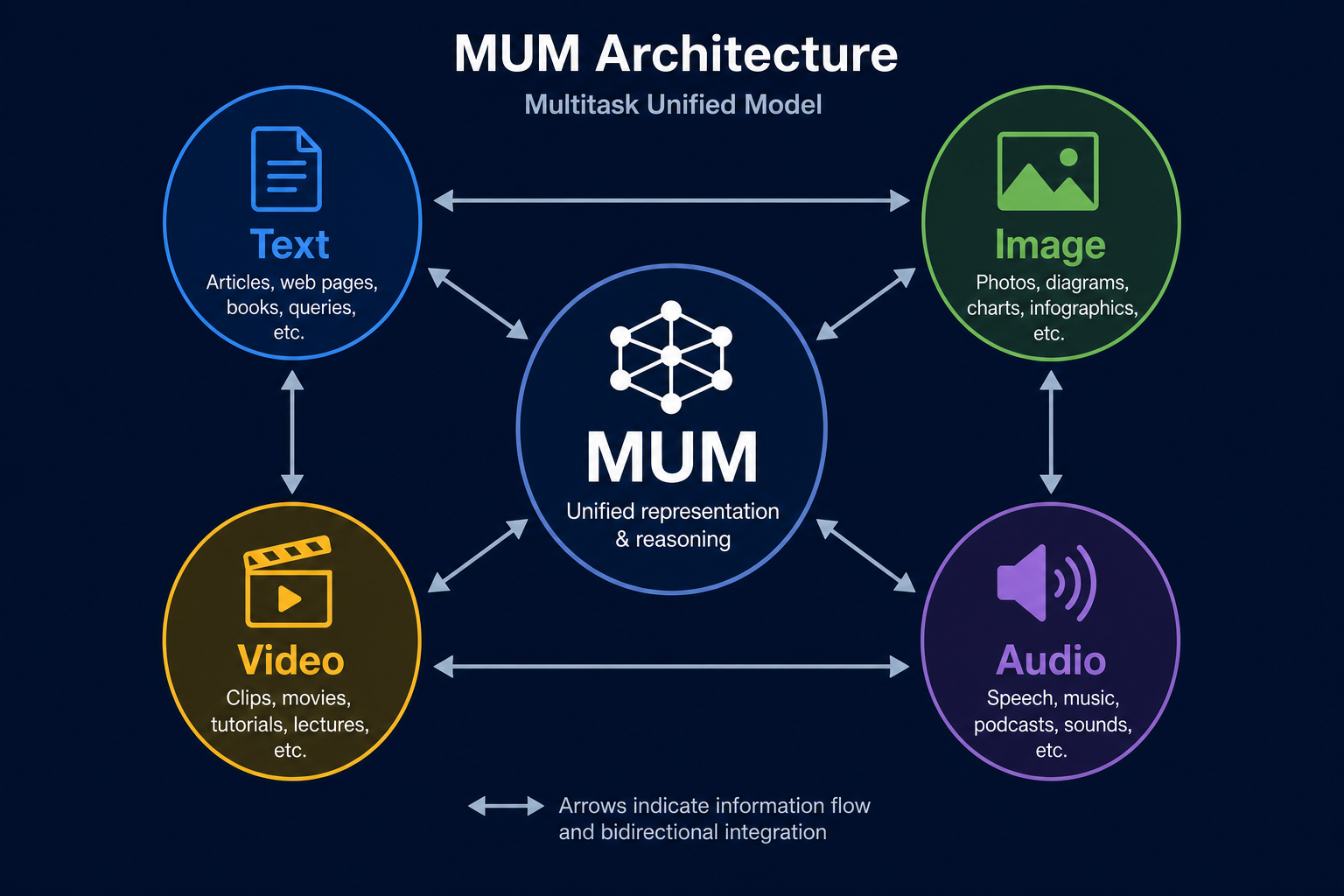
This diagram illustrates how MUM integrates diverse data types. It reveals MUM's ability to understand complex queries, leading to more complete search results.
Search Before and After AI
This contrast shows how search has evolved. AI-powered search considers context and adapts dynamically, providing more relevant results than traditional keyword matching.
AI models focus on understanding the context of search queries. This leads to more accurate and relevant results.
RankBrain adjusts ranking factors based on user interaction. This ensures the most helpful results appear higher in the rankings.
MUM integrates information across different formats. This enables complete answers to complex queries.
This video shows AI models enhancing travel searches. It demonstrates AI's practical application in improving information access.
AI in Action: Real-World Search
Explore how AI models improve search results in practice. See AI's real-world impact on information retrieval.
The Future of Search
Google's AI models are constantly evolving to provide better search experiences. Understanding these models is crucial for adapting to the changing search field.
By focusing on creating high-quality, contextually relevant content, you can improve your online visibility. This ensures your content reaches the right audience.
If you remember only three things…
RankBrain
Uses machine learning to understand search query intent. It predicts the most relevant results based on historical data.
BERT
Enhances language understanding by considering context. It processes words around a target word to capture nuances in meaning.
MUM
Handles complex, multi-faceted searches across different formats. It anticipates the next steps a user might take.
Continuous Evolution
Google's AI models are constantly improving search experiences. Adapting to these changes is crucial for online visibility.
Test Your Understanding
Craft a query comparing Google's AI models
Write a concise search query designed to leverage Google's advanced AI models (like MUM and BERT) for a nuanced comparison of their capabilities.
You're a tech journalist researching the evolution of Google's AI in search. You need to understand how models like BERT and MUM differ in their approach to interpreting complex, multi-faceted queries, especially those that involve comparing concepts rather than just retrieving facts. Your goal is to get a concise summary that highlights their unique strengths in handling such requests effectively.
Term Glossary
4 verified conceptsFrom Reactive to Anticipatory Search
You now understand how Google's AI models are reshaping search. You can now adapt your search strategies and optimise content for improved visibility in this changing field.
AI models are no longer just finding information; they are understanding and anticipating user needs.
Next, you'll explore how generative AI is further transforming search experiences.
Audio lesson recap
A concise audio summary of this lesson — great for reinforcing key concepts on the go.
Hear it discussed
About three minutes on the ideas in this lesson
Sterling
AI tutor
Vivienne
Sceptical challenger
Press play to start the discussion…
Full transcript · click any line to jump
Context is King for Search Visibility
Google's AI models prioritise understanding the context of your content, not just keywords. Focus on creating high-quality, contextually relevant material to improve your online visibility.
Adapt to Dynamic AI Search Ranking
Search rankings are constantly evolving based on user interaction and AI model updates. Regularly review your content's performance and adapt your optimisation strategies accordingly.
Master Multimodal Content for MUM
MUM understands information across text, images, and video, offering complete answers. Diversify your content formats to cater to complex queries and enhance user experience.
Ask anything about Google's AI Search Models. Sterling will answer — concisely, and with his customary level of patience.