Chain-of-Thought Prompting with Claude
Learn how to use chain-of-thought prompting to guide Claude Opus through complex reasoning.
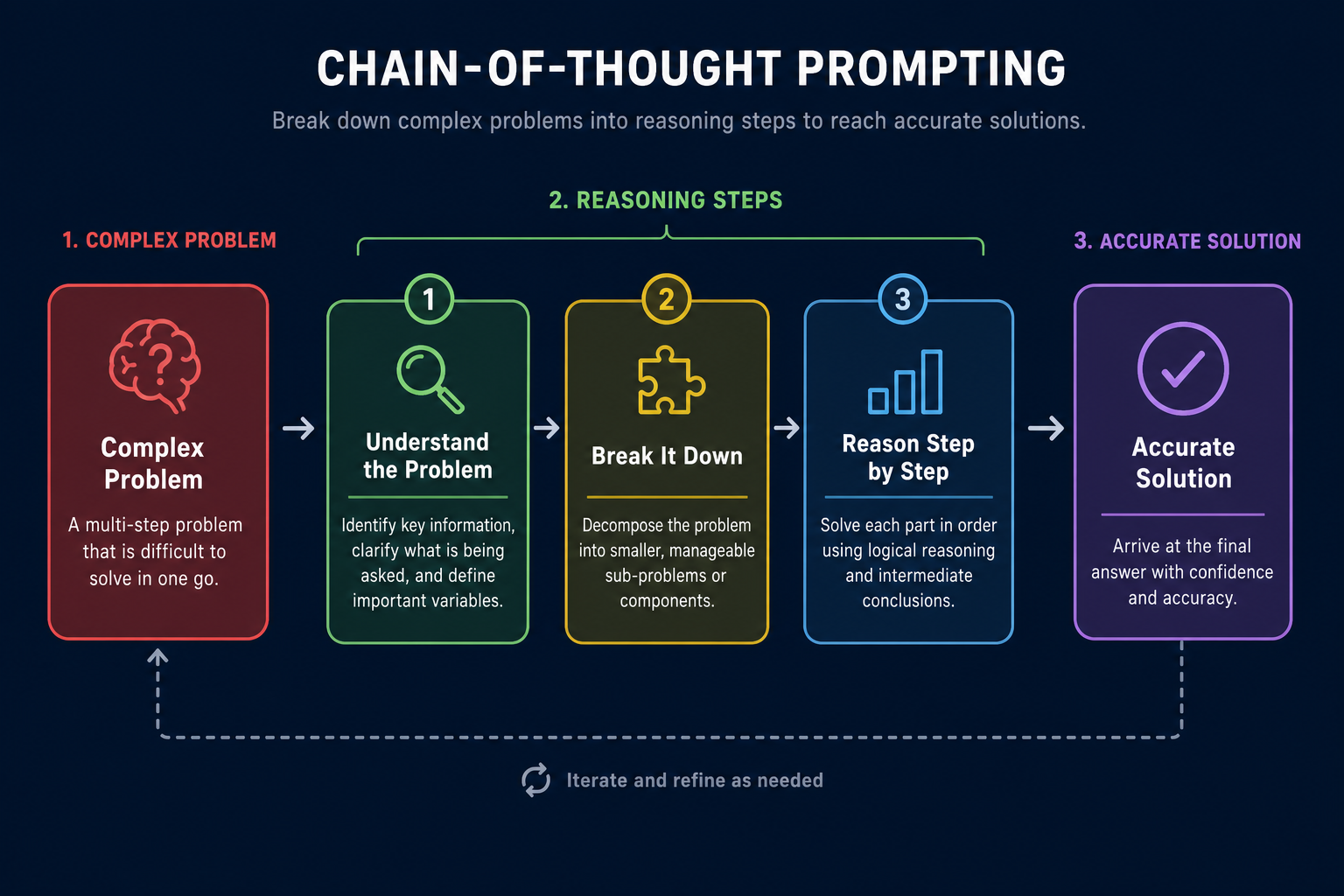
Breaking Down Complexity
accuracy for complex problems.">Chain-of-thought prompting guides Claude to think step by step. This method involves breaking down a complex problem into smaller, more manageable parts. Each step builds upon the previous one, leading to the final solution.
By explicitly prompting Claude to show its reasoning, we gain insight into its thought process. This transparency helps us understand why Claude arrived at a specific conclusion. It also enables us to identify potential errors in the reasoning chain.
Consider a prompt asking Claude to solve a difficult maths problem. Instead of directly asking for the answer, we prompt Claude to first outline the steps needed to solve the problem. This structured approach dramatically improves accuracy.
Chain-of-thought prompting learn Claude's reasoning potential.
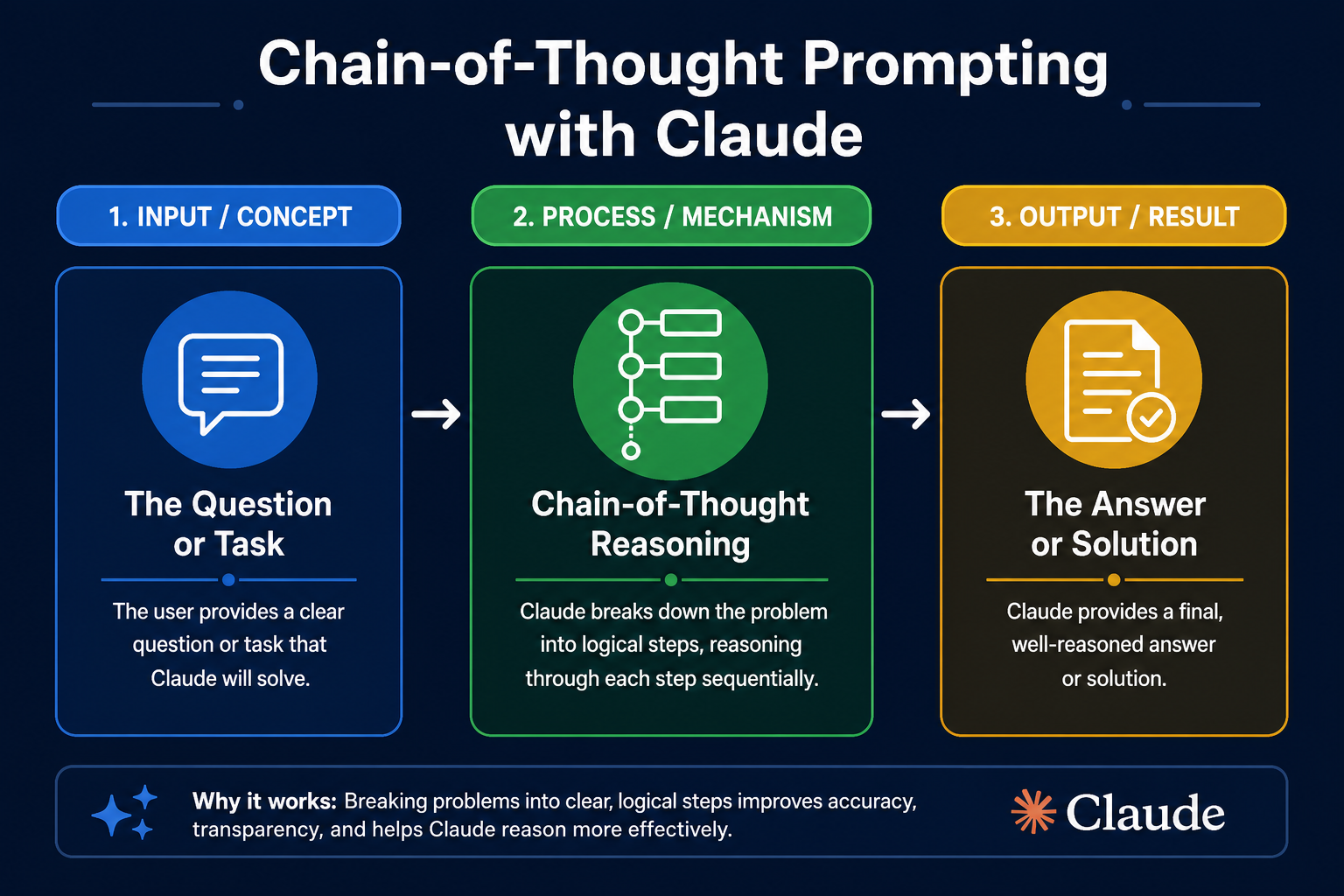
This diagram breaks down the core building blocks of Chain-of-Thought Prompting with Claude so you can see how each part connects.
Viewers will see an equation being solved step-by-step. This demonstrates the chain-of-thought process in action.
Chain-of-Thought Animation
Visualising thought processes.
Which of these prompts is MORE likely to produce an accurate answer to a complex question?
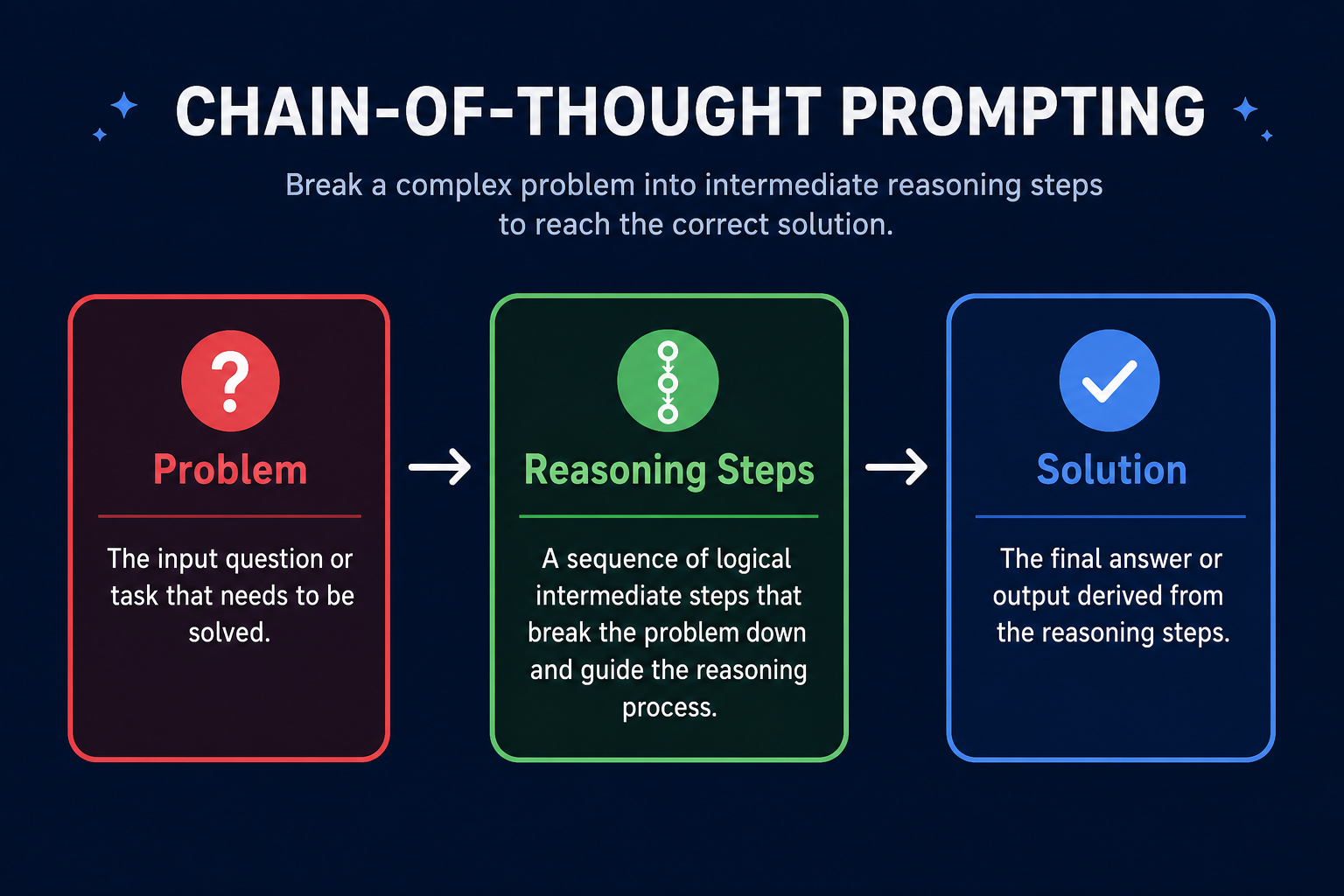
Chain-of-Thought Visualised
Prompt Engineering Strategy
Effective accuracy for complex problems.">chain-of-thought prompting requires careful prompt engineering. The prompts must be clear, concise, and guide Claude through each step of the reasoning process. It is vital to avoid ambiguity and provide sufficient context.
Experiment with different prompting styles to find what works best for your specific task. For example, you might try using questions to guide Claude's reasoning. Alternatively, you might provide a template for Claude to fill in.
Remember, the goal is to make the reasoning process as explicit as possible. This not only improves accuracy but also makes it easier to debug and refine your prompts. Iteration is key to mastering accuracy for complex problems.">chain-of-thought prompting.
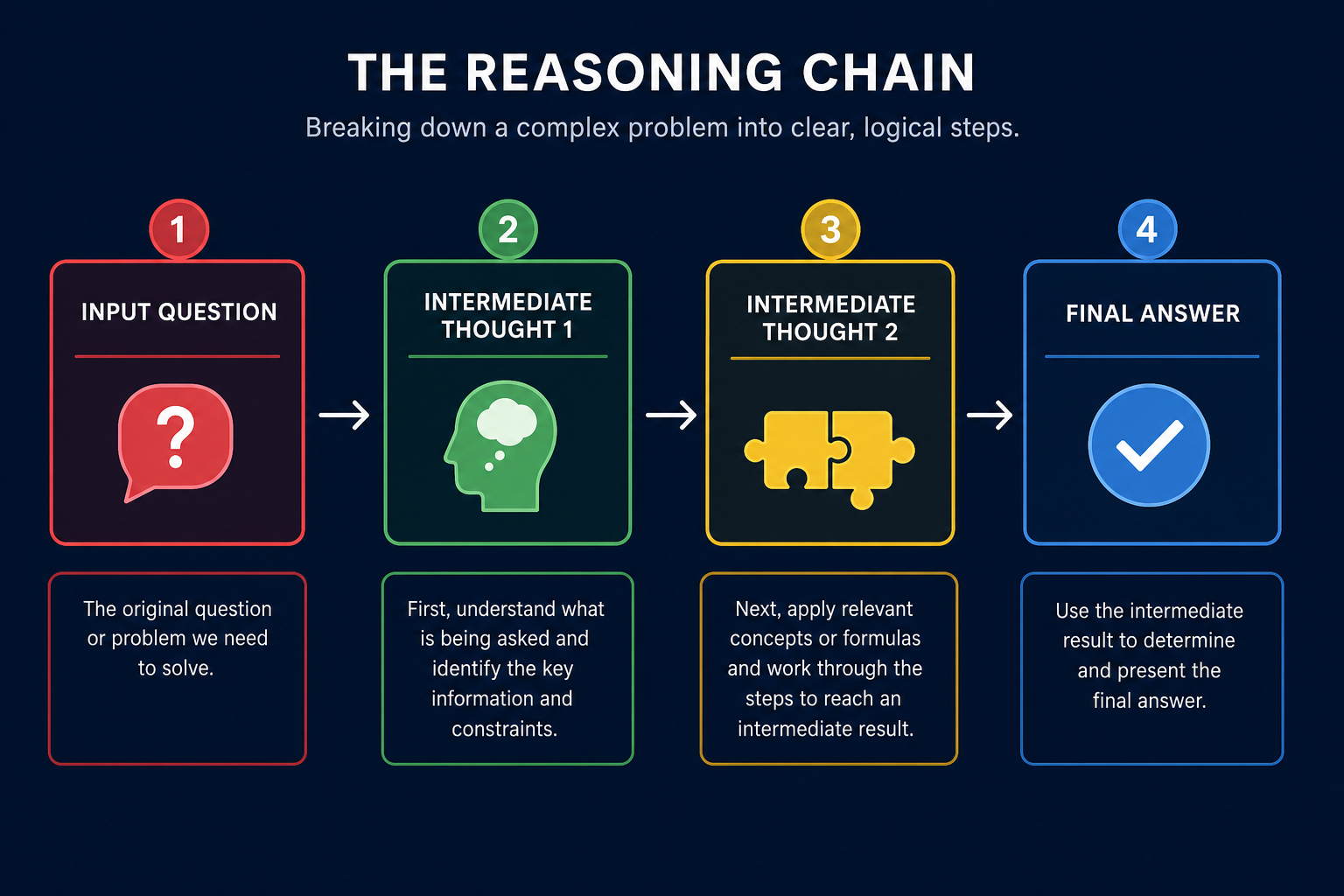
This image shows how Claude breaks down a problem into intermediate steps. Each thought builds upon the previous one, leading to the final answer.
Chain-of-Thought Contrast
This comparison shows how chain-of-thought prompting improves accuracy. By breaking down the problem, Claude avoids errors.
Chain-of-thought forces Claude to show its work. This makes errors easier to spot and fix.
Complex problems become manageable when broken into smaller steps. Each step should be clear and logical.
Chain-of-thought prompting significantly improves the accuracy of Claude's answers. This is especially true for complex tasks.
Viewers will see code being generated and refined automatically. This demonstrates the application of chain-of-thought prompting in coding.
Code Generation with CoT
Automated refinement of code.
Mastering the Technique
accuracy for complex problems.">Chain-of-thought prompting is a effective technique for improving Claude's reasoning abilities. By guiding Claude through the problem-solving process step by step, you can achieve more accurate and reliable results.
The key to success is careful prompt engineering and experimentation. Test different prompting styles and refine your prompts based on the results. Remember, the more explicit you make the reasoning process, the better the outcome.
If you remember only three things…
Step-by-Step
Chain-of-thought prompting breaks down complex problems. This allows Claude to handle them more effectively.
Explicit Reasoning
Guiding Claude to show its reasoning improves transparency. This helps identify and correct errors.
Prompt Engineering
Careful prompt engineering is essential for success. Experiment with different prompting styles to refine your approach.
Accuracy Boost
Chain-of-thought prompting improves the accuracy of Claude's answers. This is especially useful for complex tasks.
Test Your Understanding
Craft Chain-of-Thought for Analysis
Write a prompt for Claude that uses Chain-of-Thought to analyze raw customer feedback and extract actionable insights.
Your marketing team has collected a large volume of unstructured customer feedback (e.g., survey responses, support tickets). They need to identify the primary recurring pain points and receive actionable suggestions to address them. A simple, direct prompt might yield superficial or unorganized results. You want Claude to meticulously break down the analysis process, showing its reasoning before presenting the final findings.
Term Glossary
4 verified conceptslearn Logical Chains
You now understand how to use chain-of-thought prompting to guide Claude through complex reasoning. This capability shifts AI from providing simple answers to solving multi-step problems, enabling more complex applications.
Chain-of-thought prompting learn Claude's ability to tackle complex tasks by making its reasoning transparent and structured.
Next, you will explore how to use few-shot learning to further improve Claude's performance on a variety of tasks.
Audio lesson recap
A concise audio summary of this lesson — great for reinforcing key concepts on the go.
Hear it discussed
About three minutes on the ideas in this lesson
Sterling
AI tutor
Vivienne
Sceptical challenger
Press play to start the discussion…
Full transcript · click any line to jump
Guide Claude's step-by-step reasoning
Explicitly prompt Claude to break down complex problems into smaller, manageable steps. This structured approach significantly improves the accuracy and reliability of its outputs for challenging tasks.
Transparency reveals AI thought processes
By forcing Claude to show its work, you gain insight into its reasoning chain. This transparency helps identify and correct potential errors, leading to better understanding and debugging of AI responses.
Iterate and refine your prompts
Experiment with different prompting styles and continuously refine your prompts based on the results. Clear, concise, and unambiguous prompts are crucial for effective chain-of-thought prompting.
Ask anything about Chain-of-Thought Prompting with Claude. Sterling will answer — concisely, and with his customary level of patience.