Defining AI Strategy
Understand the core elements of a successful AI strategy and how it aligns with your business objectives.
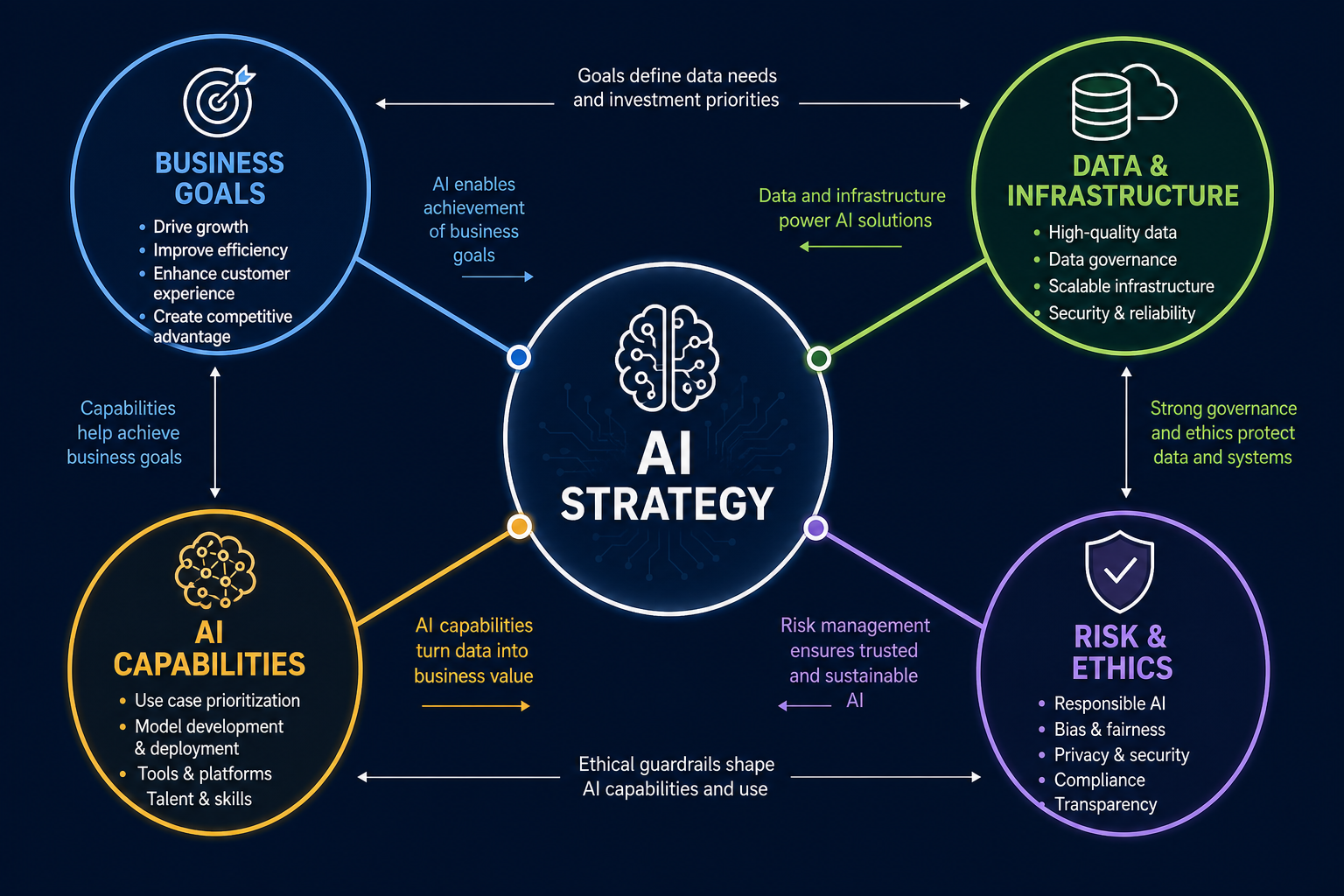
Defining the AI Strategy
What makes an AI project strategic, not just experimental? An AI strategy defines how AI will create value for the business.
It's about choosing the right problems to solve with AI. This ensures that AI efforts contribute to the company's overall goals, making it more than just a technology project.
An AI strategy is not just about AI; it's about transforming your business.
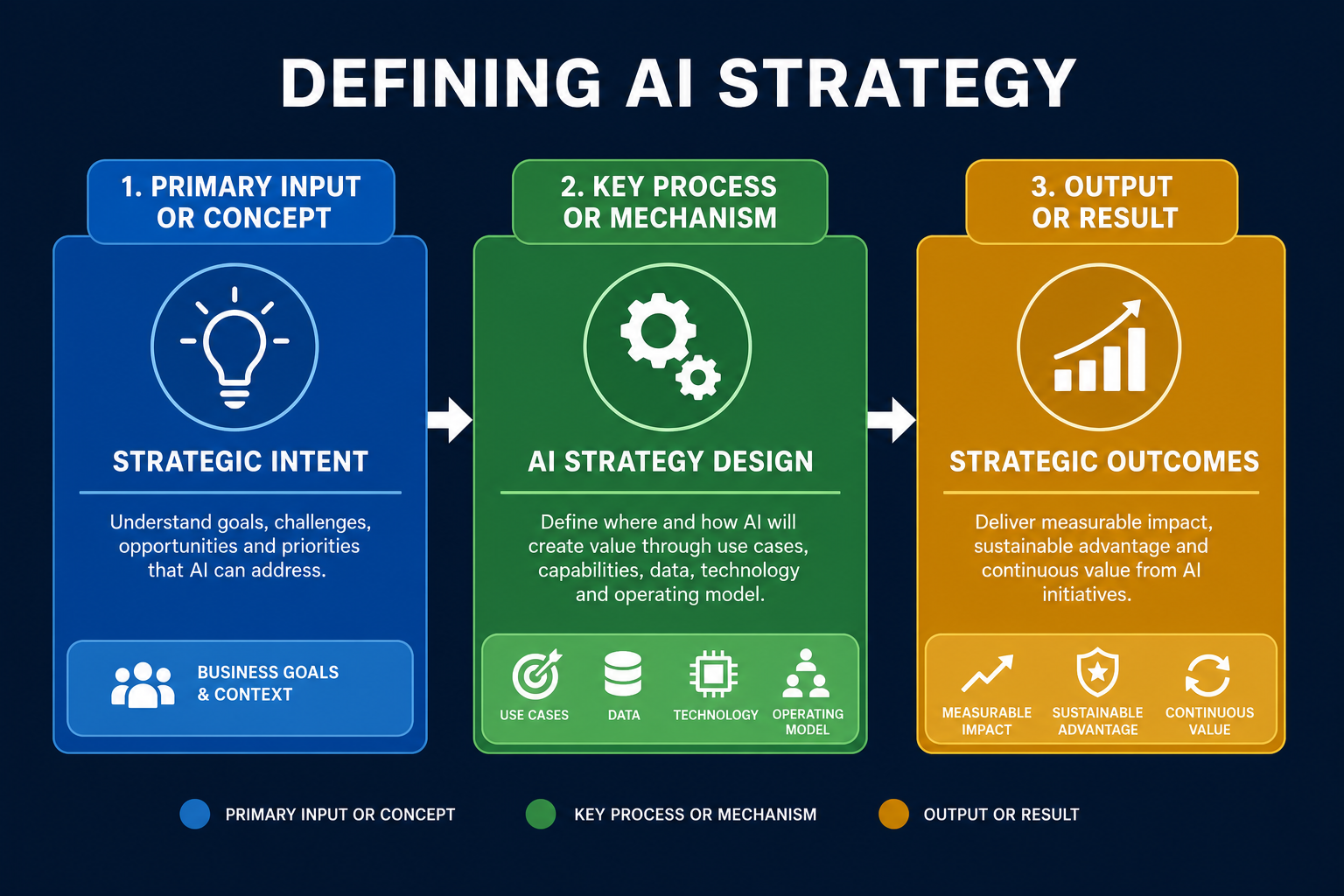
This diagram breaks down the core building blocks of Defining AI Strategy so you can see how each part connects.
This video shows an AI strategy presentation. It highlights the connection between strategy and execution.
AI Strategy in Action
See how AI strategy drives business decisions.
Which of these is the MOST important factor in a successful AI strategy?
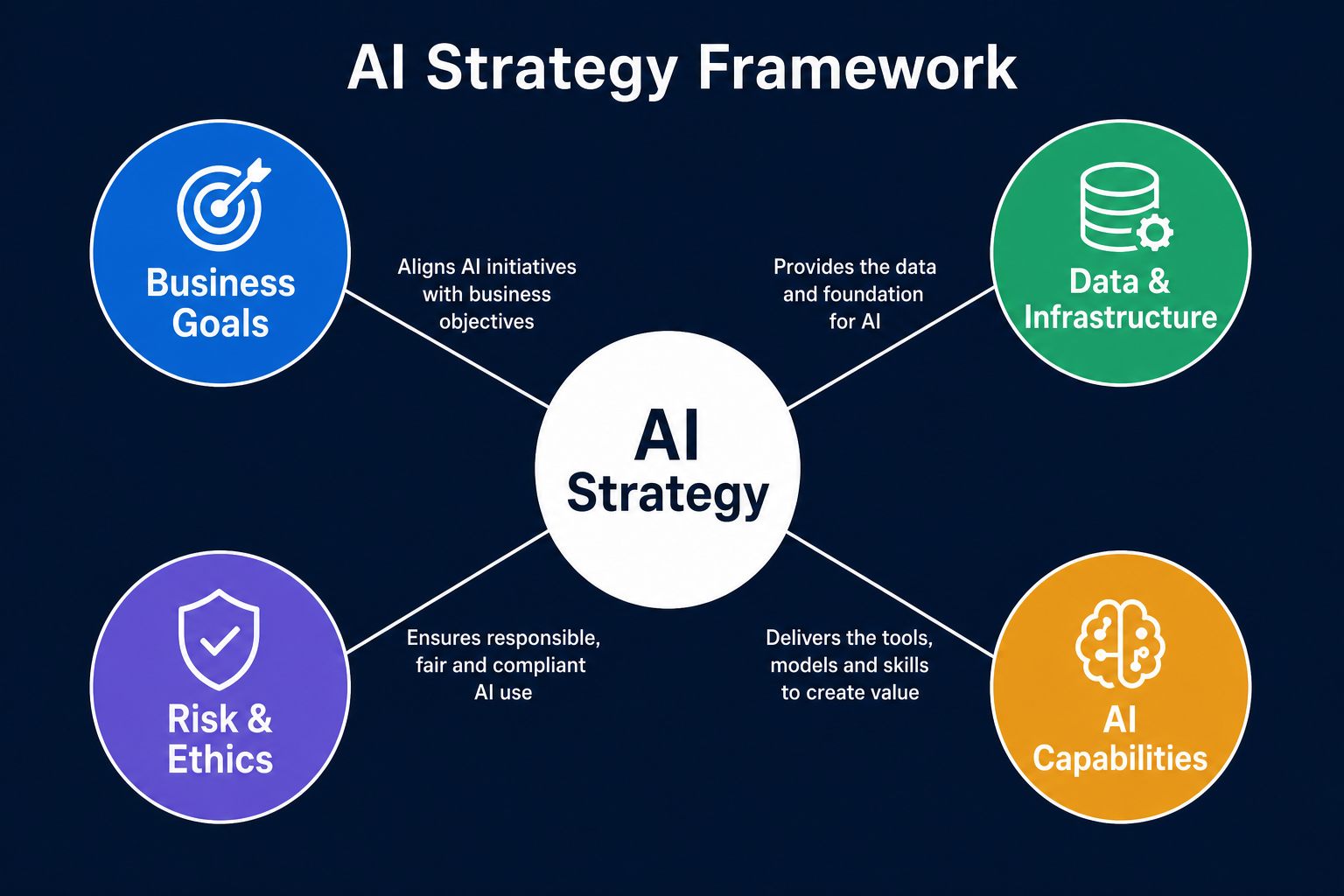
The AI Strategy Framework
Four Key Components
An AI strategy comprises four core elements. These components must work together to drive success.
These include aligning with business goals, use data and infrastructure, developing AI capabilities, and managing risks and ethical considerations.
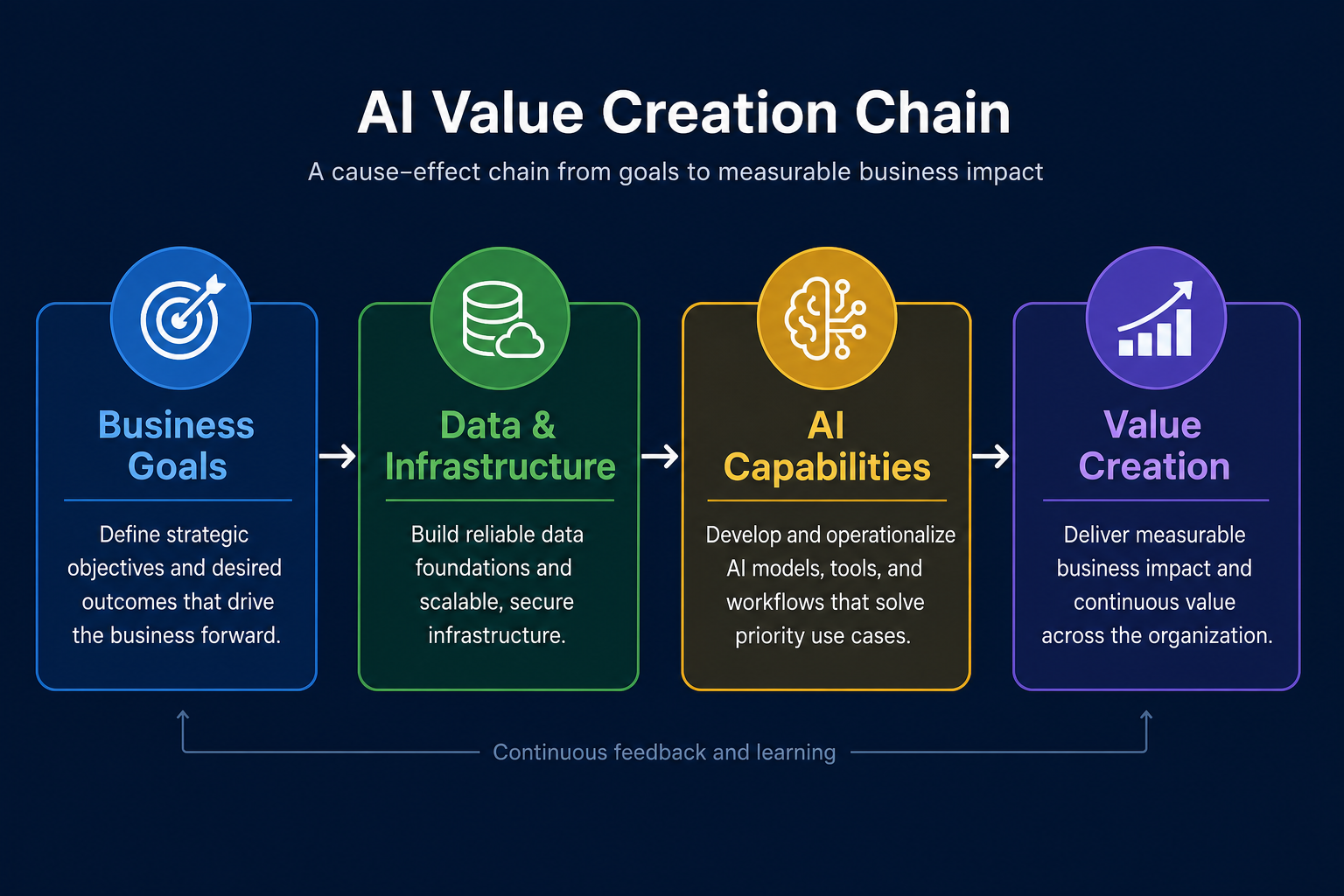
This diagram illustrates how business goals drive AI strategy. Each element builds upon the previous one, resulting in value creation.
Centralised vs Distributed AI Strategy
This contrast shows the two approaches to AI strategy. A centralised approach offers control, while a distributed approach encourage agility.
AI is not valuable in itself. It is valuable when it solves a business problem and drives measurable results.
AI initiatives should closely align with overall business objectives. This alignment ensures that AI efforts contribute to the company's success.
AI involves risks and ethical considerations. It is crucial to address these proactively to avoid negative consequences.
This video illustrates an AI risk assessment in action. It shows the process of identifying and mitigating potential AI risks.
AI Risk Assessment
Watch how to identify and mitigate AI risks.
Preparing for the Next Stage
An effective AI strategy is more than just the technology. It is a plan for how AI will transform your organisation.
Aligning AI with business needs ensures that AI investments deliver real value, driving the company forward.
If you remember only four things…
Business Alignment
AI strategy must align with business goals. This alignment ensures that AI efforts contribute to overall organisational success.
Data & Infrastructure
reliable data and infrastructure are essential. They provide the foundation for successful AI implementation.
AI Capabilities
Developing AI capabilities is critical. It enables the organisation to use AI effectively.
Risk Mitigation
Managing AI risks is crucial. It prevents potential negative consequences and ensures ethical AI use.
Test Your Understanding
Recommend AquaFlow's Initial AI Strategy
Given AquaFlow's situation, recommend a strategic AI approach for their first initiative, justifying your choice based on their constraints and goals.
AquaFlow, a regional water utility, faces increasing customer service call volumes and slow resolution times. Their current manual ticketing system is overwhelmed, leading to low customer satisfaction. The CEO wants to explore AI but has a strict budget of $150,000 for an initial pilot and a small, non-technical team. They need a quick win to prove AI's value before committing further investment. What strategic approach should AquaFlow take for its first AI initiative?
Term Glossary
4 verified conceptsFrom Vision to Action
You now understand the key components of an AI strategy and its pivotal role in driving business value, enabling you to transform vision into action. You can now appreciate how aligning AI initiatives with overarching business goals creates a strategic advantage, ensuring that AI investments deliver tangible results and long-term success.
An effective AI strategy help your business by aligning AI with your core objectives, turning potential into progress and ensuring sustainable growth.
Next, we'll explore how to identify and assess AI opportunities within your organisation to drive further strategic alignment and learn new avenues for innovation.
Audio lesson recap
A concise audio summary of this lesson — great for reinforcing key concepts on the go.
Hear it discussed
About three minutes on the ideas in this lesson
Sterling
AI tutor
Vivienne
Sceptical challenger
Press play to start the discussion…
Full transcript · click any line to jump
Align AI with Business Goals
Ensure AI initiatives directly support overarching business objectives to maximise value. This alignment transforms AI from an experimental project into a strategic asset.
AI Strategy: Business Transformation Plan
An AI strategy is not just about technology; it's a blueprint for organisational change. It defines how AI will solve real business problems and drive measurable results.
Manage AI Risks Proactively
Address ethical considerations and potential risks early in the planning process. Proactive risk mitigation prevents negative consequences and ensures responsible AI deployment.
Ask anything about Defining AI Strategy. Sterling will answer — concisely, and with his customary level of patience.