Attack Vectors on AI Systems
Explore common attack vectors targeting AI systems and learn mitigation strategies.
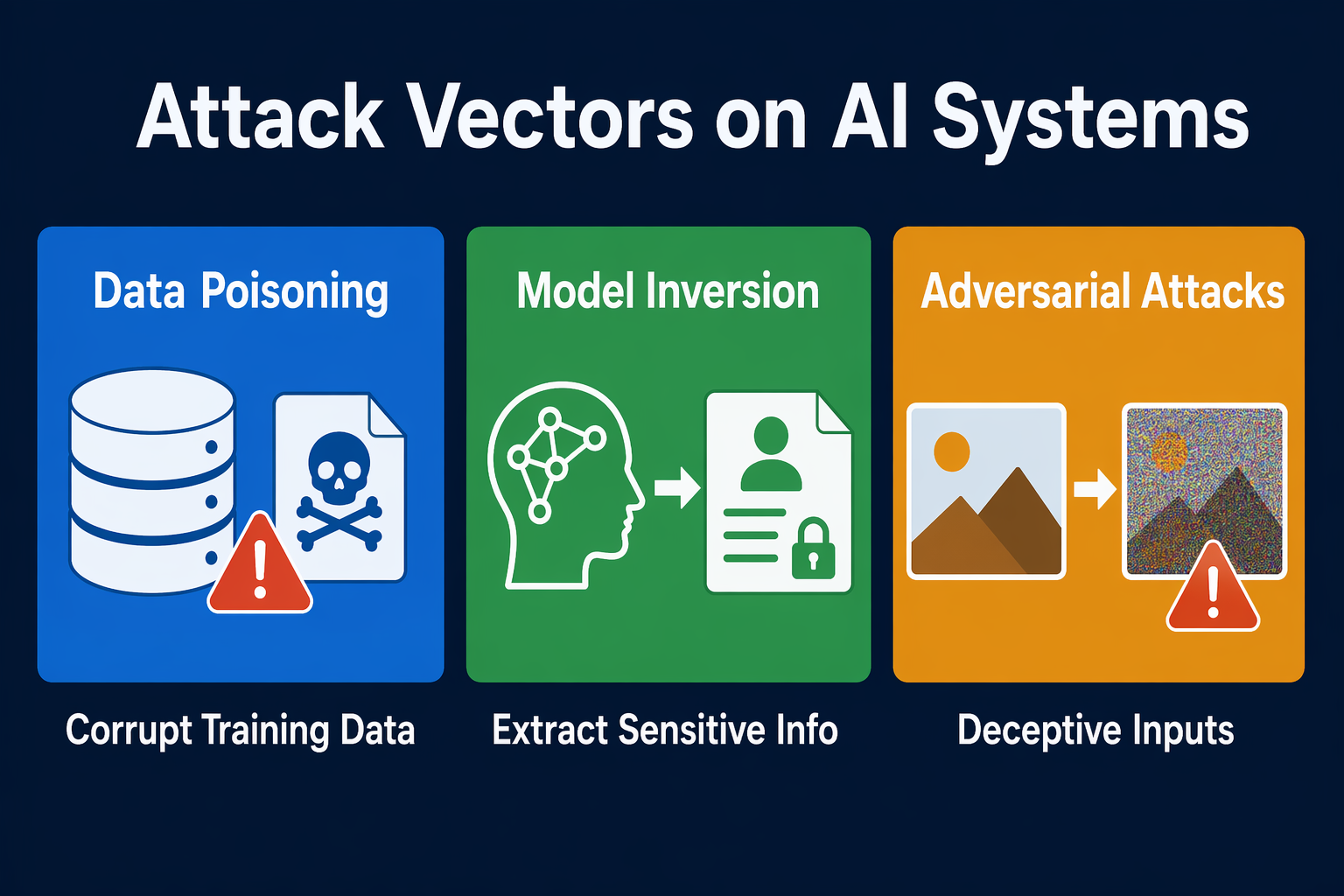
Introduction to Attack Vectors
Attack vectors are pathways or methods used by adversaries to exploit vulnerabilities in AI systems.
Understanding these vectors helps in designing reliable defenses against potential threats.
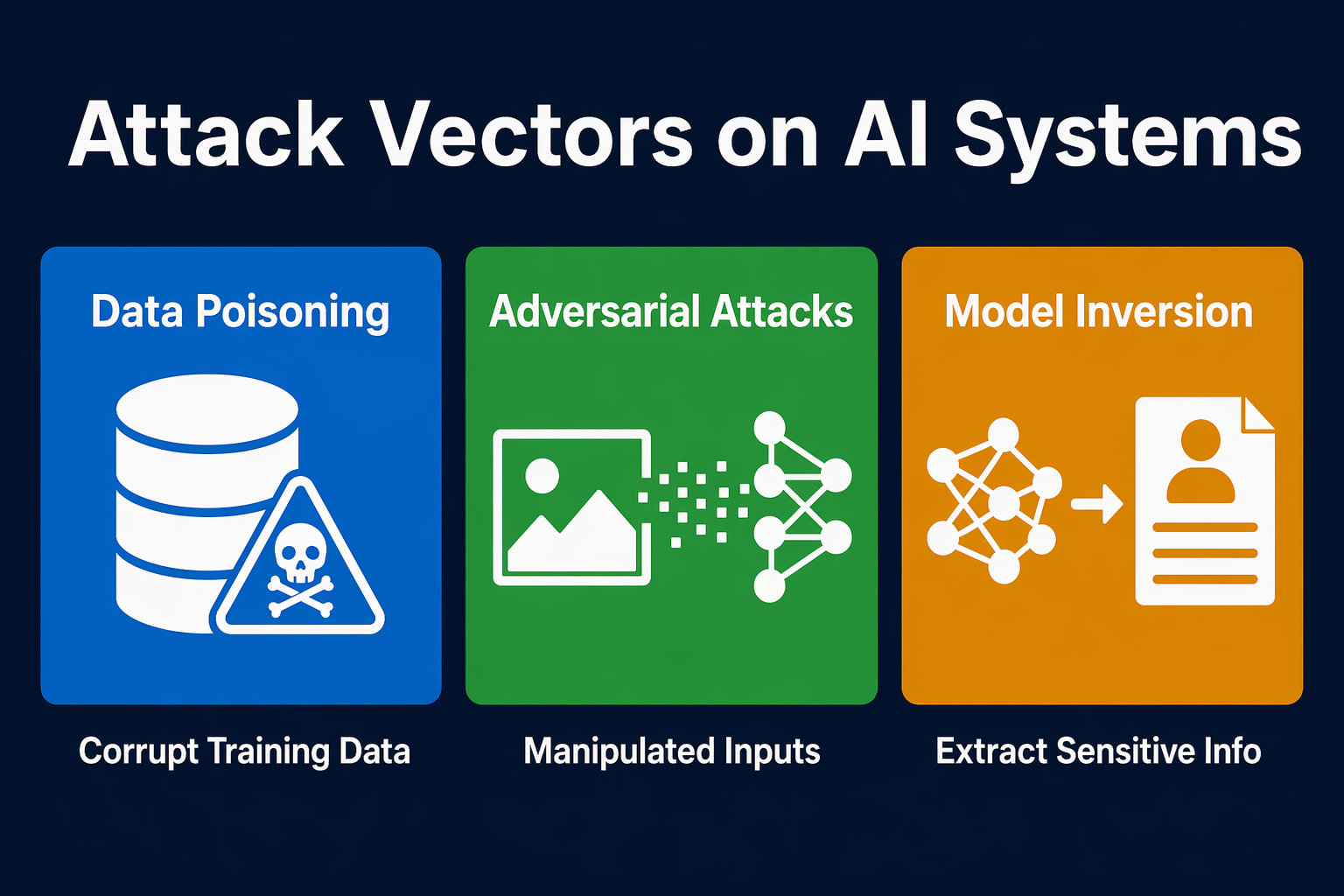
This visual illustrates how Attack Vectors on AI Systems applies in real-world Advanced AI Security scenarios.
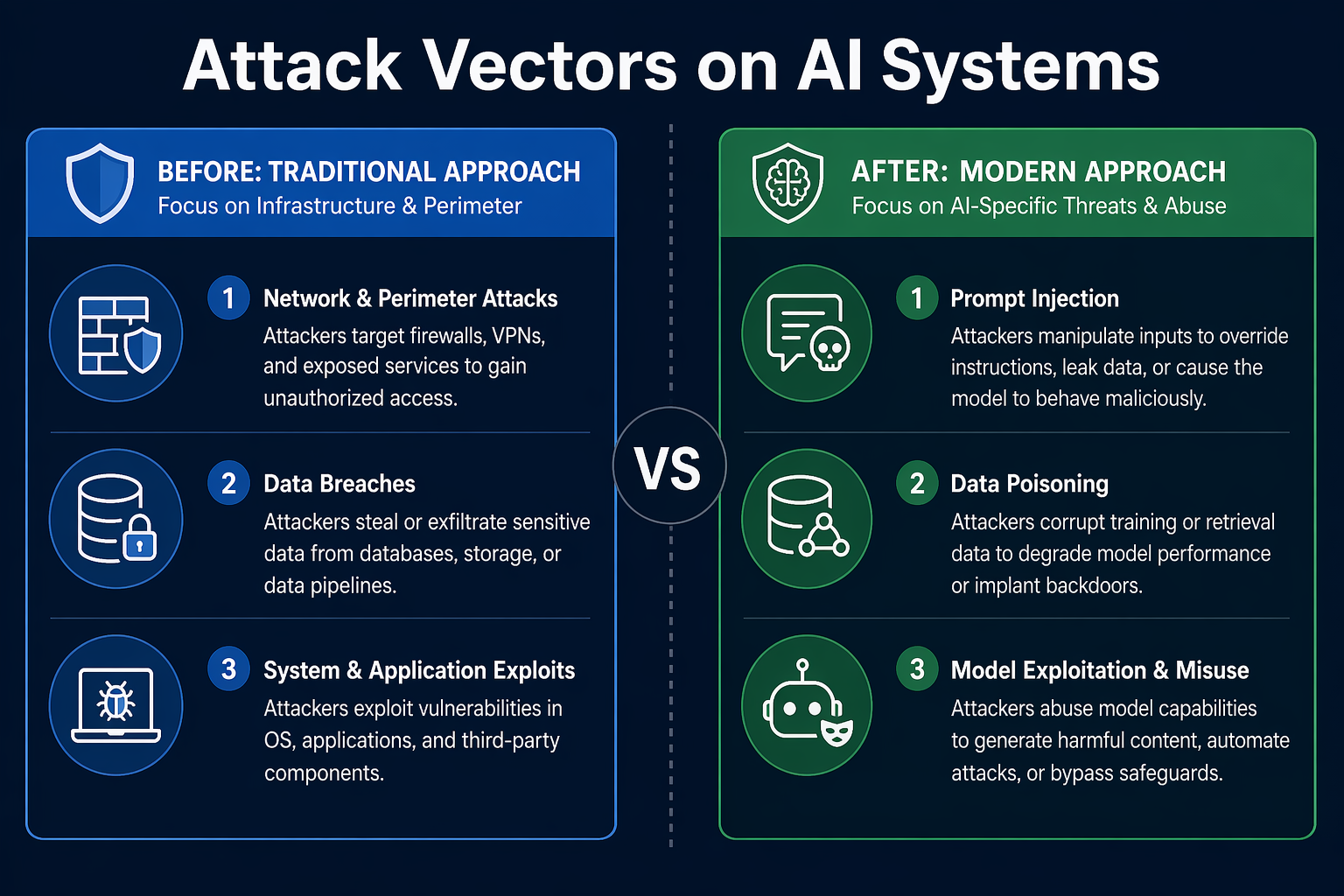
This visual illustrates how Attack Vectors on AI Systems applies in real-world Advanced AI Security scenarios.
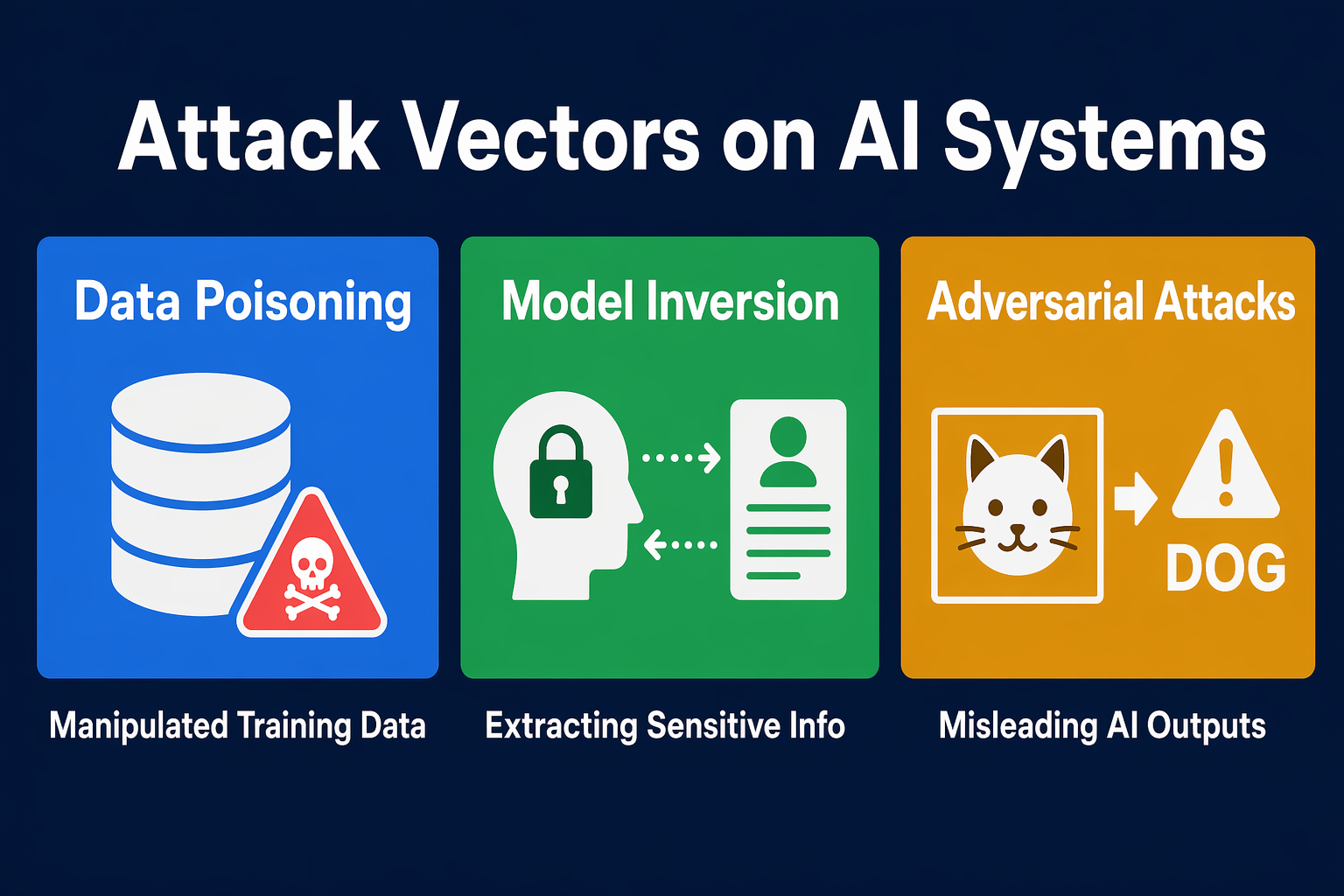
This visual illustrates how Attack Vectors on AI Systems applies in real-world Advanced AI Security scenarios.
Common Attack Vectors
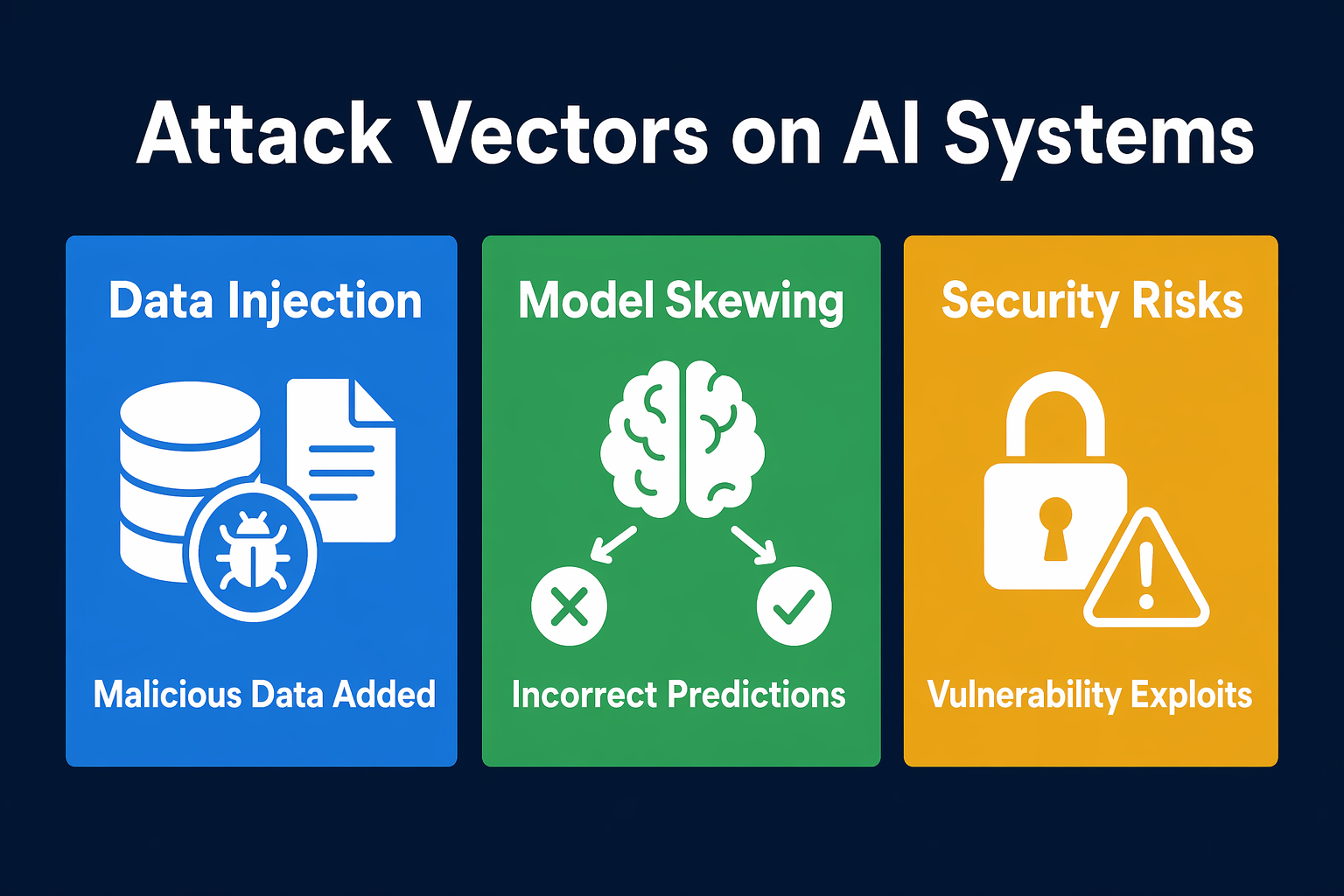
Data Poisoning
Attackers inject malicious data into training sets to skew AI model behavior.
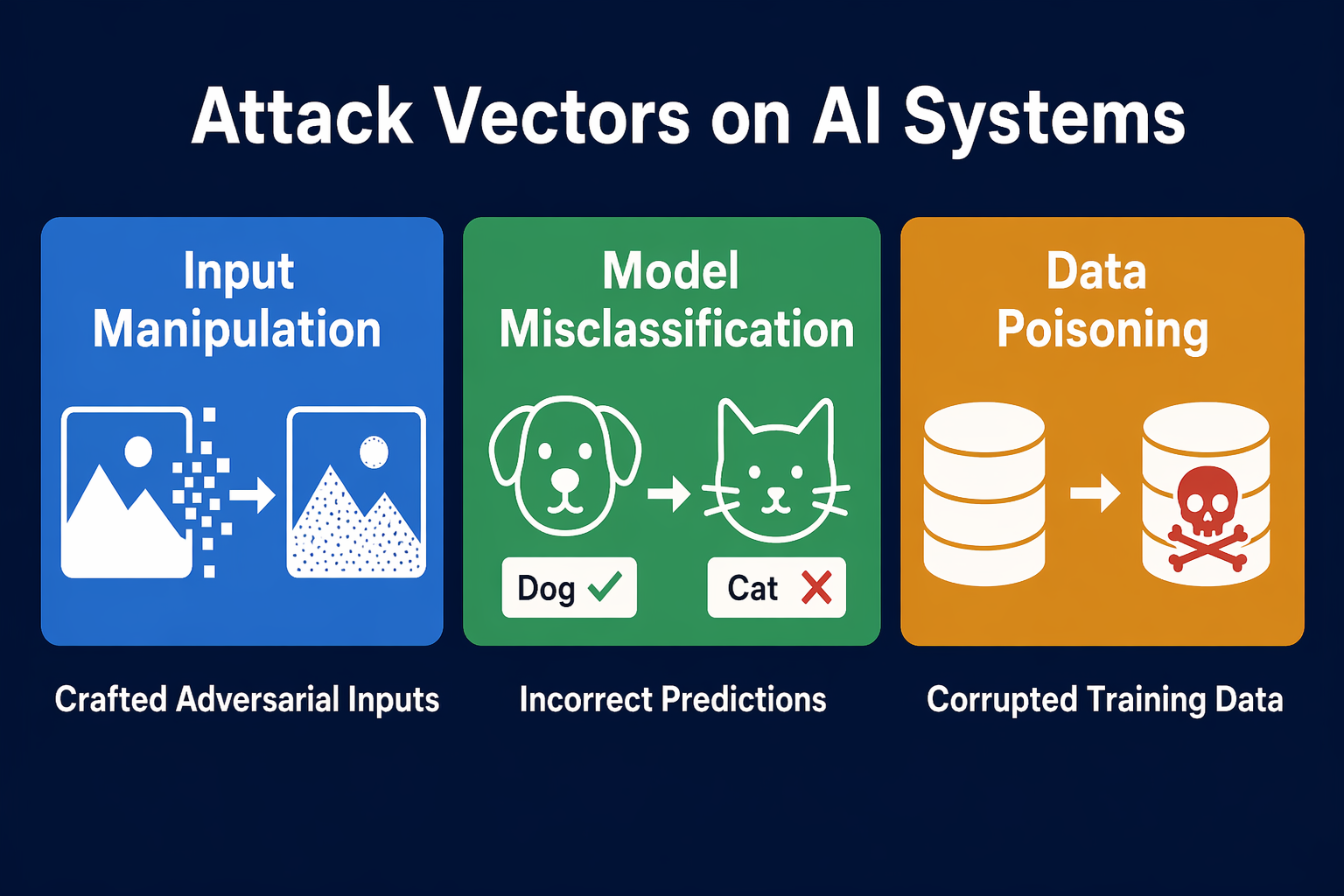
Model Evasion
Adversaries craft inputs to mislead AI models into incorrect classifications.
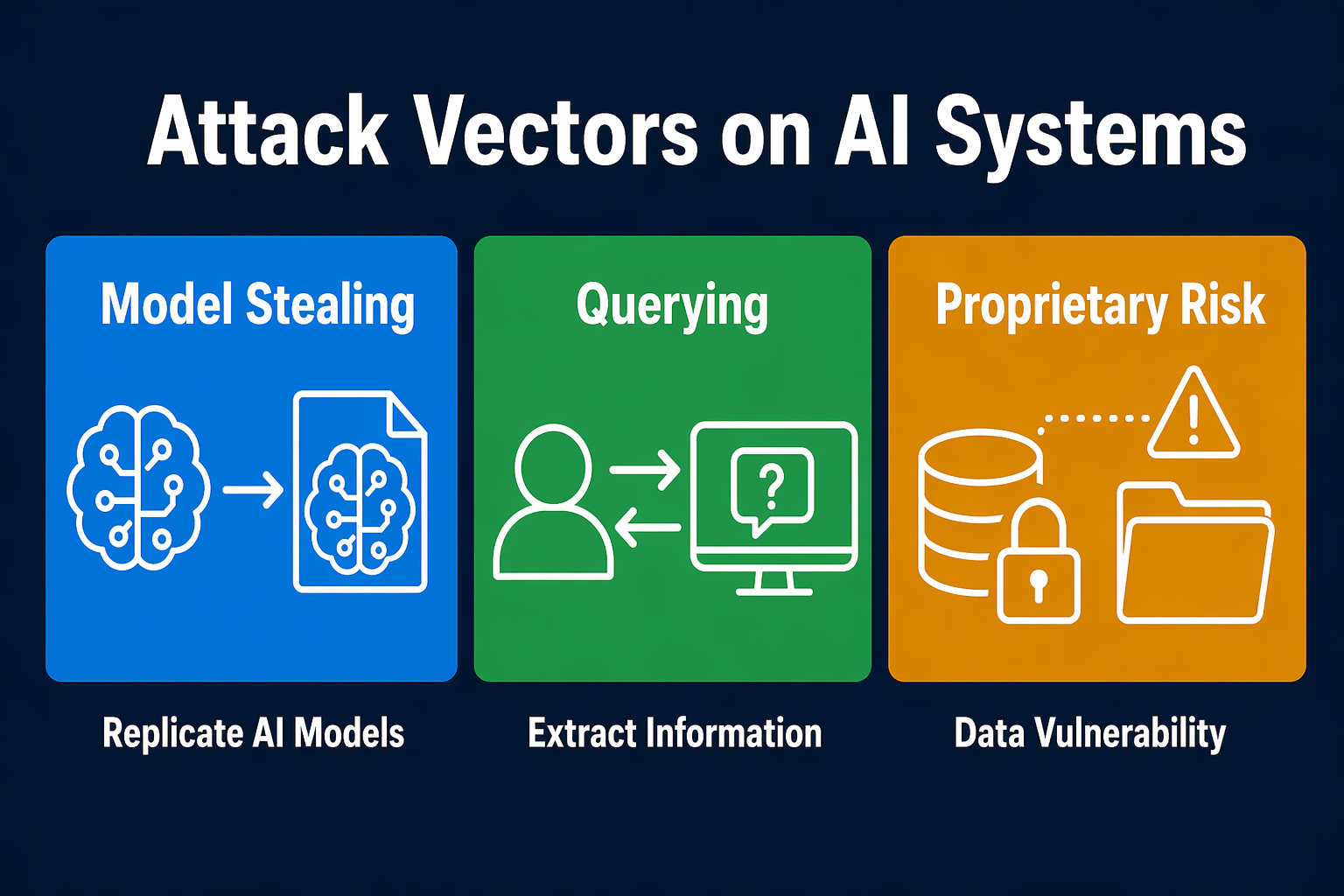
Model Stealing
Attackers replicate AI models by querying them and extracting proprietary information.
Key Takeaways
Identify AI attack vectors for defence
Understanding various attack vectors is crucial for designing robust defences against potential threats to AI systems. This knowledge allows for proactive security measures to be implemented effectively.
Data poisoning skews AI behaviour
Attackers inject malicious data into training sets, deliberately manipulating an AI model's learning process. This can lead to biased or incorrect outputs in real-world applications.
Model evasion misleads AI classification
Adversaries craft specific inputs to deceive AI models, causing them to make incorrect classifications or predictions. This highlights the importance of robust input validation and adversarial training.
Knowledge Check
Prompt to Identify Adversarial Text Attacks
Write a prompt for an AI assistant that asks it to analyze vulnerabilities in a content moderation system.
A company is developing an AI-powered content moderation system to detect hate speech and misinformation. You suspect the system might be vulnerable to 'adversarial text' attacks, where subtle modifications to harmful content can bypass the AI's detection. Your goal is to write a prompt for an AI assistant that asks it to identify and explain potential adversarial text attack vectors against such a moderation system, and suggest specific examples of how these attacks might be crafted.
Term Glossary
8 verified conceptsLesson Complete
You've learned about common attack vectors on AI systems and how to defend against them.
Stay vigilant to protect AI systems from evolving threats.
Explore advanced defense mechanisms in the next lesson.
Audio lesson recap
A concise audio summary of this lesson — great for reinforcing key concepts on the go.
Hear it discussed
About three minutes on the ideas in this lesson
Sterling
AI tutor
Vivienne
Sceptical challenger
Press play to start the discussion…
Full transcript · click any line to jump
Identify AI attack vectors for defence
Understanding various attack vectors is crucial for designing robust defences against potential threats to AI systems. This knowledge allows for proactive security measures to be implemented effectively.
Data poisoning skews AI behaviour
Attackers inject malicious data into training sets, deliberately manipulating an AI model's learning process. This can lead to biased or incorrect outputs in real-world applications.
Model evasion misleads AI classification
Adversaries craft specific inputs to deceive AI models, causing them to make incorrect classifications or predictions. This highlights the importance of robust input validation and adversarial training.
Ask anything about Attack Vectors on AI Systems. Sterling will answer — concisely, and with his customary level of patience.