Uncovering AI Product Opportunities
Learn how to identify unmet needs that AI solutions can address, learn valuable product opportunities.
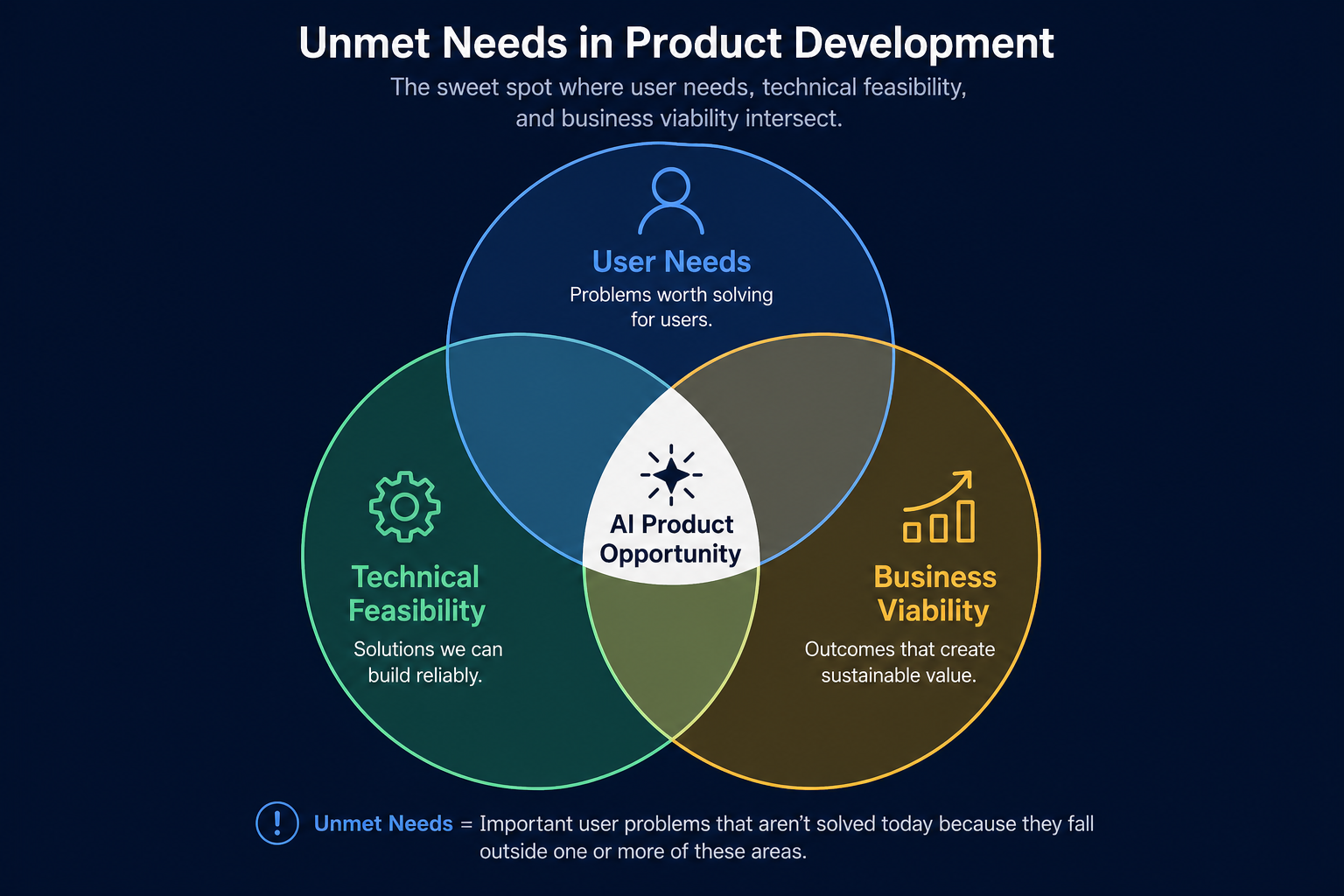
Uncovering Latent Needs
Sometimes, the most promising opportunities hide beneath the surface. People may not explicitly recognize their needs or articulate them clearly. These are latent needs.
AI can be particularly effective in addressing latent needs. By analysing large datasets, AI can uncover patterns and insights that humans might miss, revealing hidden problems and opportunities.
The best AI products don't just automate; they solve previously unsolvable problems.
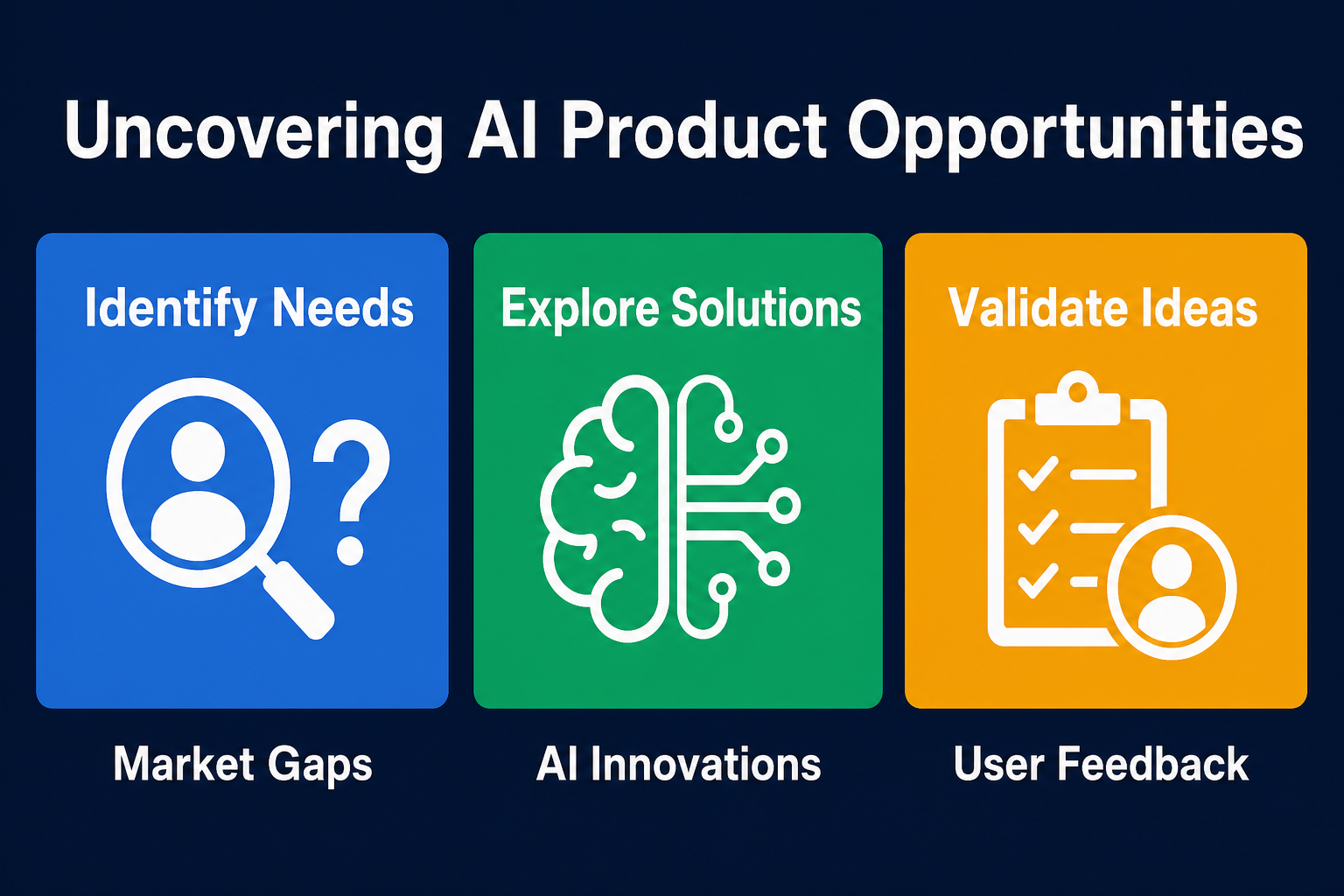
This visual illustrates how Uncovering AI Product Opportunities applies in real-world AI Product Development scenarios.
This video shows the process of a data scientist identifying a real-world problem that AI can solve. It highlights the connection between data analysis and opportunity discovery.
AI Opportunity Discovery
Spotting the gap between user need and AI capability.
Which of these is the MOST important factor when identifying AI product opportunities?
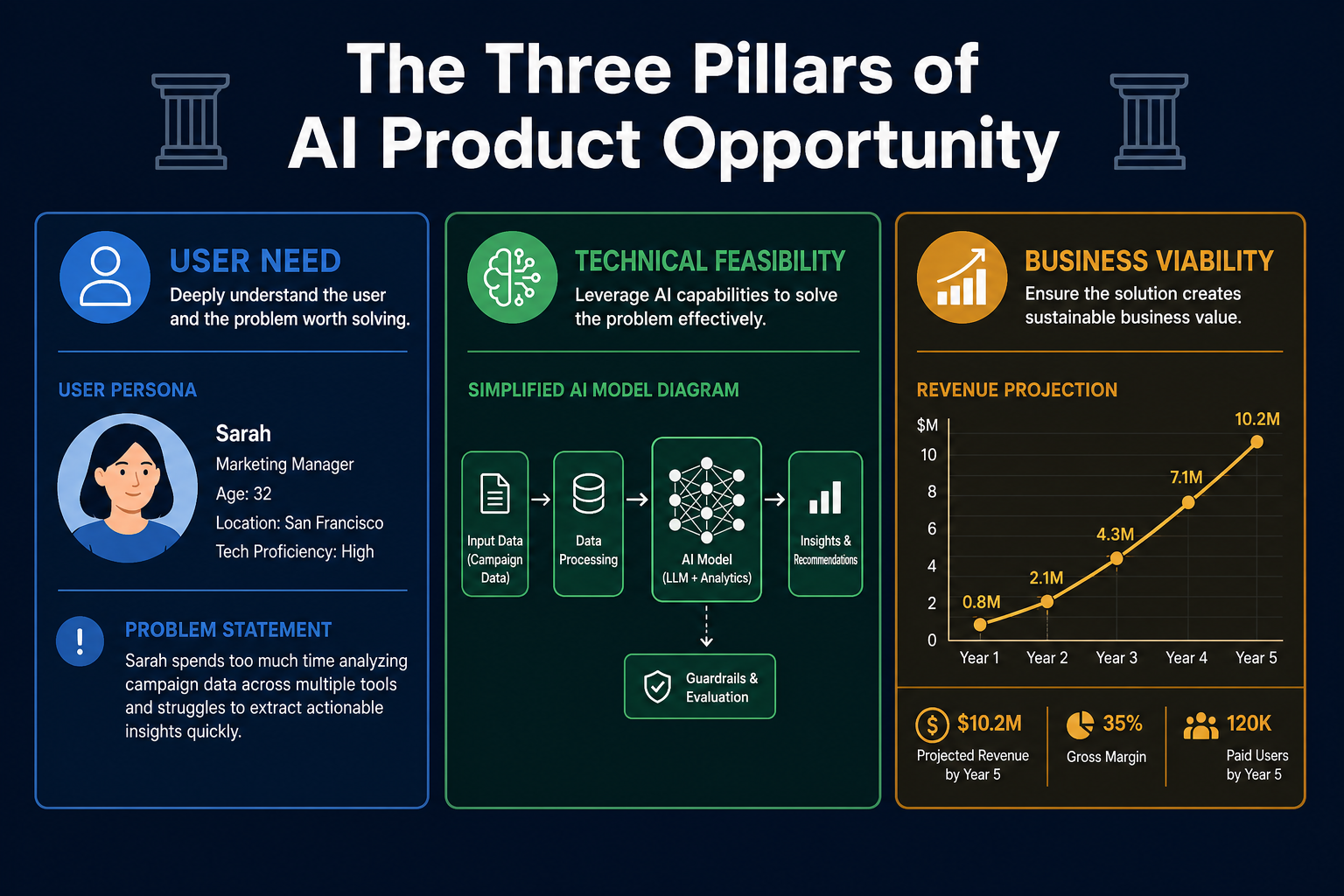
AI Opportunity Criteria
The Data Advantage
AI thrives on data, so access to relevant datasets is paramount. The quality and quantity of available data heavily influence the potential for AI solutions.
Consider data sources that are currently underutilized. Could AI extract valuable insights from existing databases, sensor networks, or user-generated content?
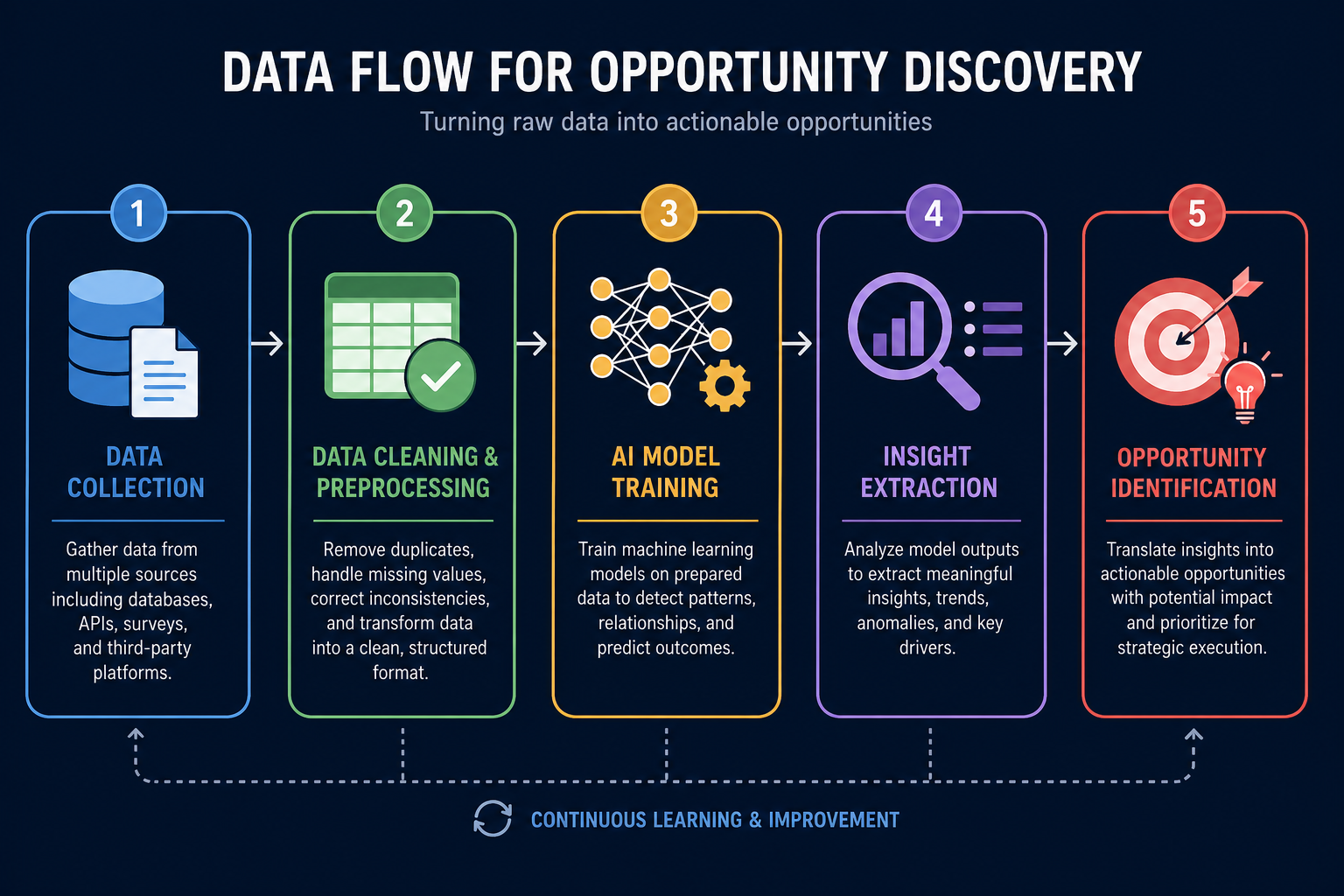
This flow shows how raw data is transformed into valuable insights. AI models extract patterns, leading to the identification of unmet needs and potential AI product opportunities.
Reactive vs. Predictive Maintenance
Predictive maintenance uses AI to anticipate equipment failures, minimising downtime. This contrasts with reactive maintenance, which only acts after a failure occurs.
Prioritise AI solutions that deliver tangible value to users, solving pressing problems or improving existing processes.
Don't try to solve everything at once. Identify specific, well-defined user needs that AI can address effectively.
AI product development is iterative. Continuously refine your solutions based on user feedback and performance data.
This video shows a real-world example of predictive maintenance in a factory setting. It demonstrates how AI can prevent equipment failures and reduce downtime.
Predictive Maintenance in Action
Visualising the benefits of AI-driven predictive maintenance.
From Reactive to Proactive
The shift from reactive to proactive problem-solving is key to learn AI's potential. It's not just about automating existing tasks; it's about anticipating future needs and preventing problems before they arise.
By use AI's predictive capabilities, we can move beyond simply reacting to events and start shaping outcomes. This requires a fundamental change in mindset and a willingness to embrace new approaches.
If you remember only four things…
Unmet Needs
Focus on identifying user needs that are not currently being met. These represent the most promising opportunities for AI solutions.
Data is Key
The availability and quality of data are crucial for successful AI product development. Look for untapped data sources.
Predictive Power
use AI's predictive capabilities to anticipate future needs and prevent problems. This is where AI truly shines.
Iterative Process
AI product development is an iterative process. Continuously refine your solutions based on feedback and performance.
Test Your Understanding
Prompt AI for new product opportunities
Write a prompt for an AI to generate novel AI product opportunities. Ensure your prompt guides the AI to consider market needs and potential user problems.
You're a product manager at 'InnovateAI Solutions' tasked with identifying the next big AI product. Your team has identified a potential gap in productivity tools for remote creative professionals, specifically graphic designers. You want to leverage an LLM to brainstorm innovative AI solutions that address common pain points like managing feedback, version control, or generating initial concepts. Your goal is to get specific, actionable ideas.
Term Glossary
4 verified conceptsSeeing the Hidden Opportunities
You now understand how to identify unmet needs and use AI to create new product solutions. You can see beyond existing solutions and envision new possibilities.
This is where intelligent systems stop reacting – and start anticipating.
Next, we'll examine how to translate these opportunities into concrete product specifications.
Audio lesson recap
A concise audio summary of this lesson — great for reinforcing key concepts on the go.
Hear it discussed
About three minutes on the ideas in this lesson
Sterling
AI tutor
Vivienne
Sceptical challenger
Press play to start the discussion…
Full transcript · click any line to jump
Pinpoint unmet needs for AI solutions
Focus on identifying user needs that are not currently being met, as these represent the most promising opportunities for AI solutions. This approach allows you to see beyond existing solutions and envision what's truly possible with AI.
Leverage data to uncover latent needs
AI excels at analysing large datasets to uncover patterns and insights that humans might miss, revealing hidden problems and opportunities. Access to relevant, high-quality data is paramount for successful AI product development.
Shift to proactive problem-solving with AI
Utilise AI's predictive capabilities to anticipate future needs and prevent problems before they arise, moving beyond reactive approaches. This fundamental change in mindset allows you to shape outcomes rather than just respond to events.
Ask anything about Uncovering AI Product Opportunities. Sterling will answer — concisely, and with his customary level of patience.