AI Creativity break down
This lesson explores how AI generates creative works. You will learn to identify human-like artistic expression in AI-generated content.
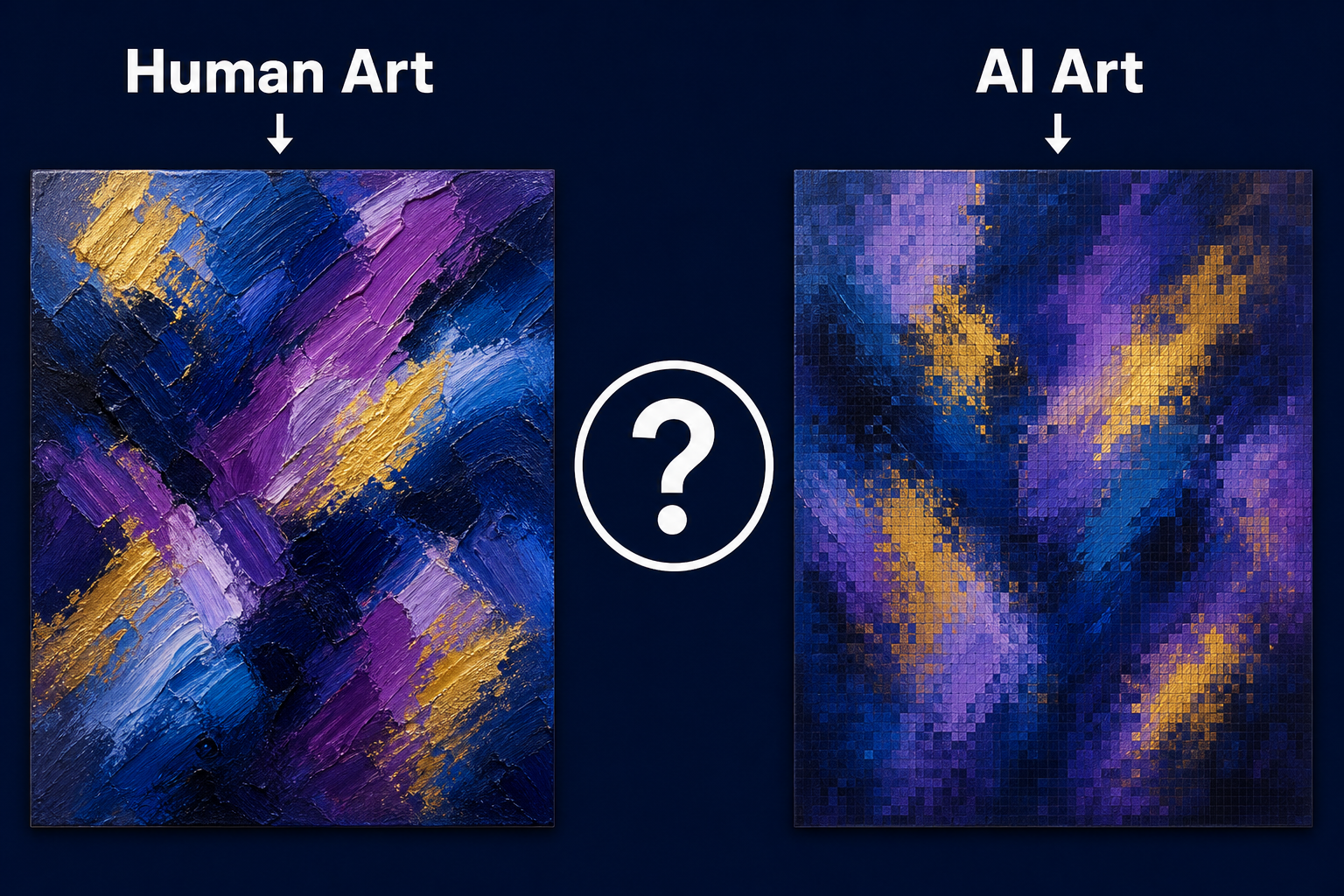
The Mechanism of AI Creativity
AI creativity stems from its ability to identify and extrapolate patterns from vast datasets. It learns the underlying structures and styles present in its training data, rather than simply memorising individual examples. This allows the AI to then generate new content that adheres to learned aesthetics but possesses unique characteristics.
When an AI creates, it does not experience inspiration or intent in the human sense. Instead, it operates on complex algorithms that combine, modify, and synthesise elements based on statistical probabilities. The apparent 'creativity' is an emergent property of these computational processes, reflecting the diversity and richness of its input data.
AI does not merely imitate; it synthesises and generates novel expressions.
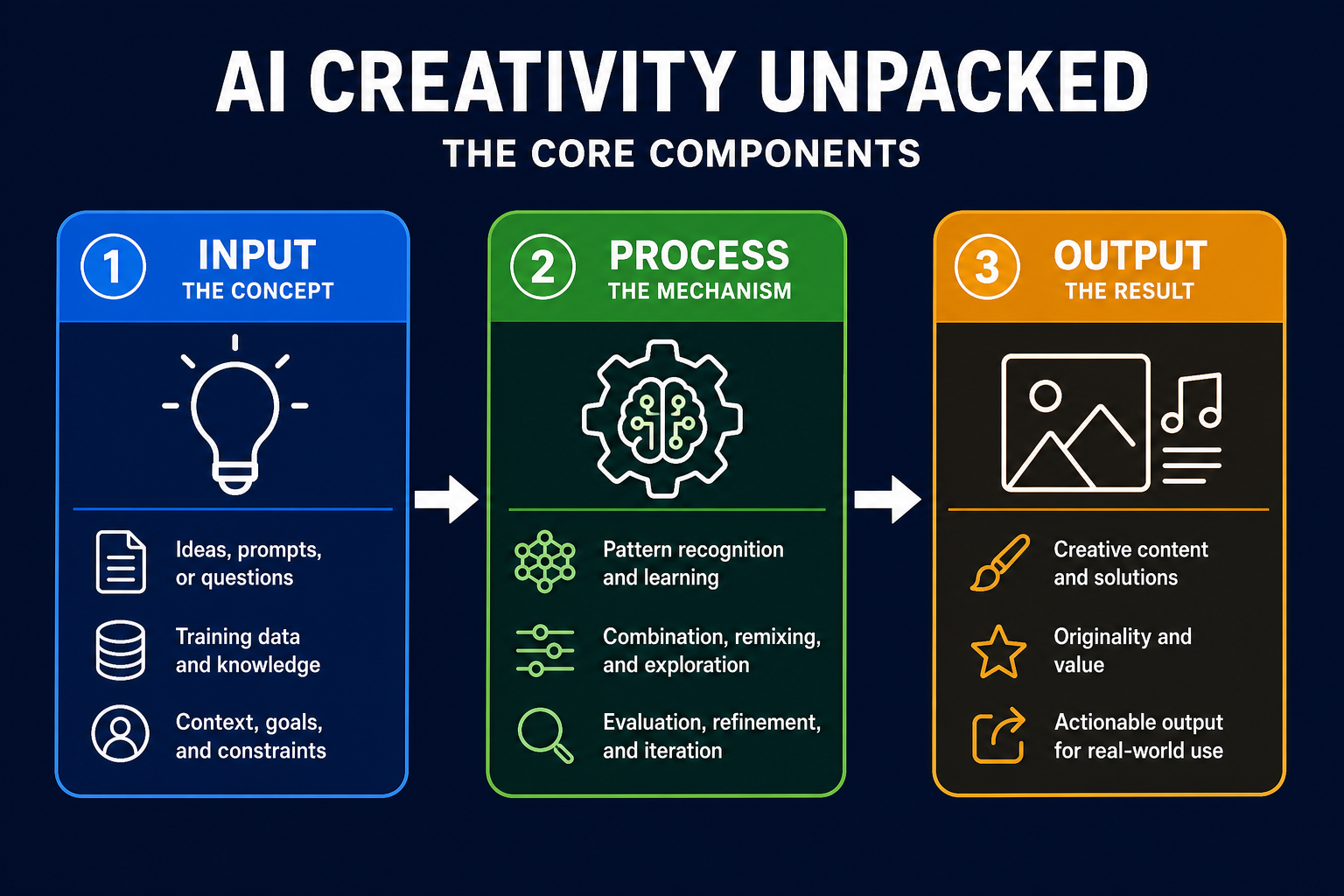
This diagram breaks down the core building blocks of AI Creativity break down so you can see how each part connects.
This clip shows an artist interacting with AI-generated art. It highlights the collaborative potential between human creativity and artificial intelligence.
AI-Generated Art Showcase
Observing AI in the act of creation.
Can AI truly be creative, or does it only mimic existing patterns?
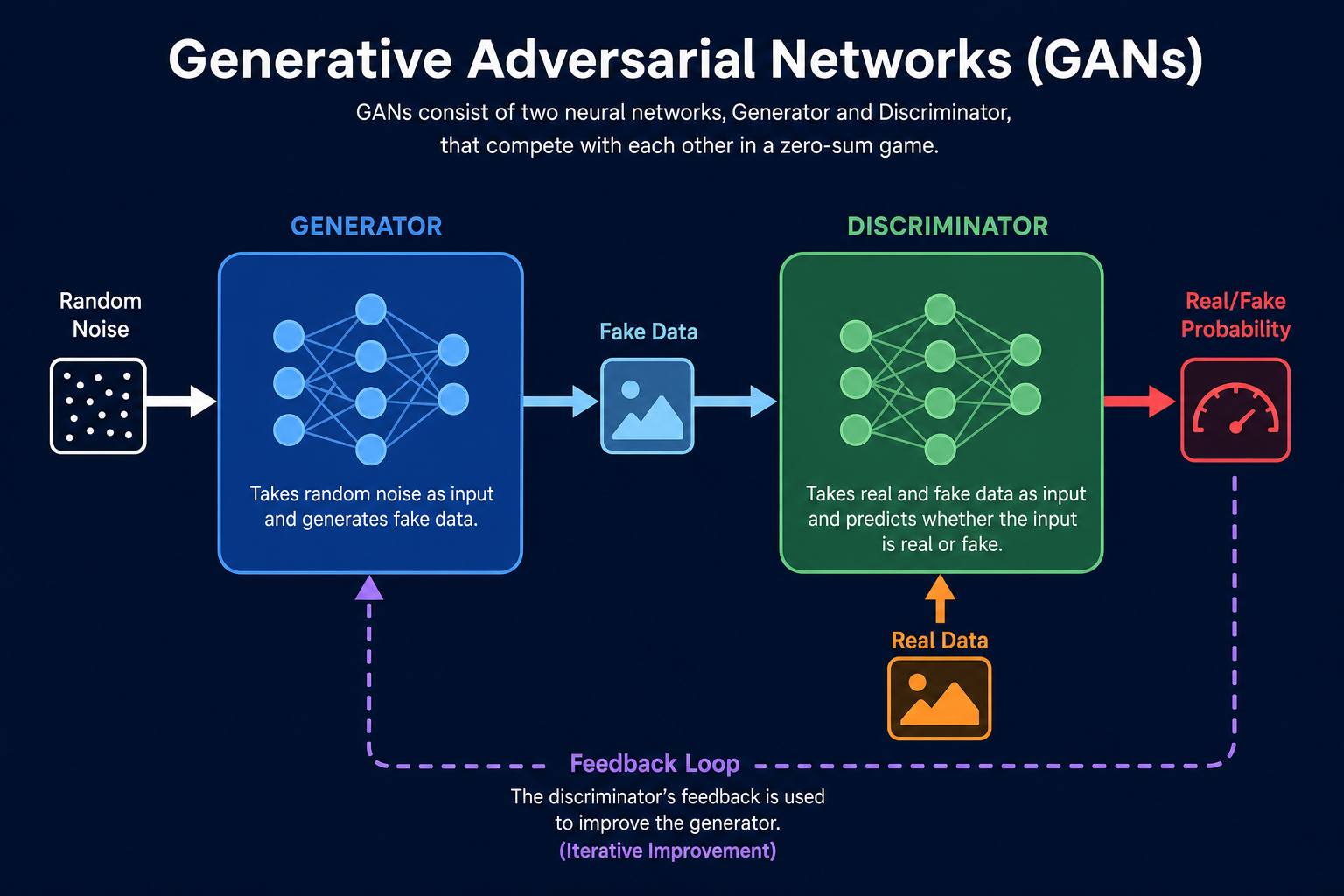
Generative Adversarial Networks
The Dawn of Digital Artistry: 2024
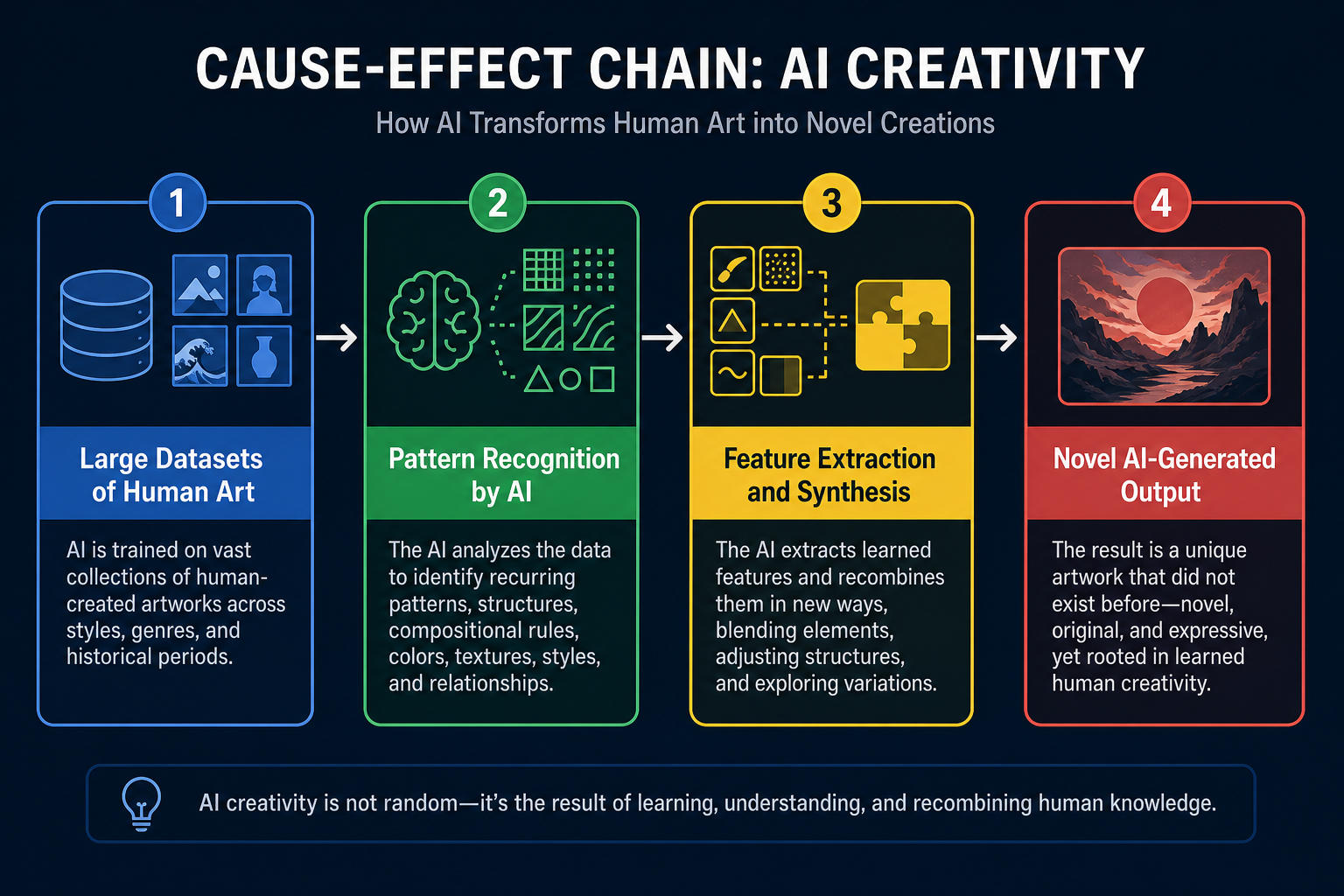
This diagram illustrates the sequential process through which AI achieves creative output. It shows that AI's ability to generate novel works is not arbitrary, but a direct consequence of its capacity for identifying and recombining learned features. The chain explain the 'black box' of AI creativity, showing it as an algorithmic transformation.
Deterministic vs. Probabilistic Generation
This contrast highlights the fundamental difference between traditional rule-based generation and AI creativity. While rule-based systems produce predictable outcomes, AI's probabilistic approach allows for emergent originality. This distinction clarifies why AI outputs often feel surprising, even to its creators.
AI does not just copy; it distills styles and themes from its training data. This allows it to create entirely new pieces that resonate with established artistic conventions.
The 'creativity' we observe in AI is an emergent property of complex algorithms interacting with vast datasets. It's a computational process, not a conscious act of inspiration.
AI often acts as a creative tool, augmenting human artists' capabilities by generating ideas or variations. This shifts the focus from AI replacing artists to AI collaborating with them.
This video shows a designer actively refining AI-generated art. It demonstrates the iterative process and human oversight involved in achieving desired creative outcomes with AI.
Refining AI Art
A designer iterates on AI-generated visuals.
The Spectrum of Originality
True originality in AI remains a topic of active debate, often depending on how 'originality' is defined. AI excels at generating variations and combinations that humans might not conceive, pushing creative boundaries. This capability challenges our anthropocentric view of artistic creation.
Understanding AI's creative process helps us appreciate its contributions without falsely attributing human-like consciousness. It allows us to focus on the unique ways AI can expand artistic possibilities, rather than merely replicating existing human forms.
If you remember only three things…
Pattern Synthesis
AI creativity emerges from synthesising patterns found in vast datasets, not from human-like inspiration. This allows for novel combinations and styles.
Probabilistic Generation
Unlike deterministic rule-based systems, AI generates content probabilistically, leading to varied and often surprising outputs. This enables emergent originality.
Human-AI Collaboration
AI serves as a effective tool to augment human creativity, offering new avenues for artistic exploration and production. This partnership redefines creative workflows.
Redefining Originality
AI challenges traditional notions of originality by creating works that are unique yet rooted in learned styles. This expands our understanding of creative expression.
Test Your Understanding
Term Glossary
3 verified conceptsThe Emergence of Digital Originality
You now understand that AI's creative output arises from sophisticated pattern synthesis and probabilistic generation. This shifts our perception of creativity from solely human inspiration to an expanded view embracing algorithmic processes.
AI's creativity reveals intelligence not as a replica of human thought, but as a unique computational path to novelty.
The next lesson will explore the ethical considerations surrounding AI authorship and intellectual property in a world of algorithmic creators.
Audio lesson recap
A concise audio summary of this lesson — great for reinforcing key concepts on the go.
Hear it discussed
About three minutes on the ideas in this lesson
Sterling
AI tutor
Vivienne
Sceptical challenger
Press play to start the discussion…
Full transcript · click any line to jump
Ask anything about AI Creativity break down. Sterling will answer — concisely, and with his customary level of patience.