AI-Powered Diagnostics
Explore how artificial intelligence is revolutionising medical diagnosis, improving accuracy and speed.
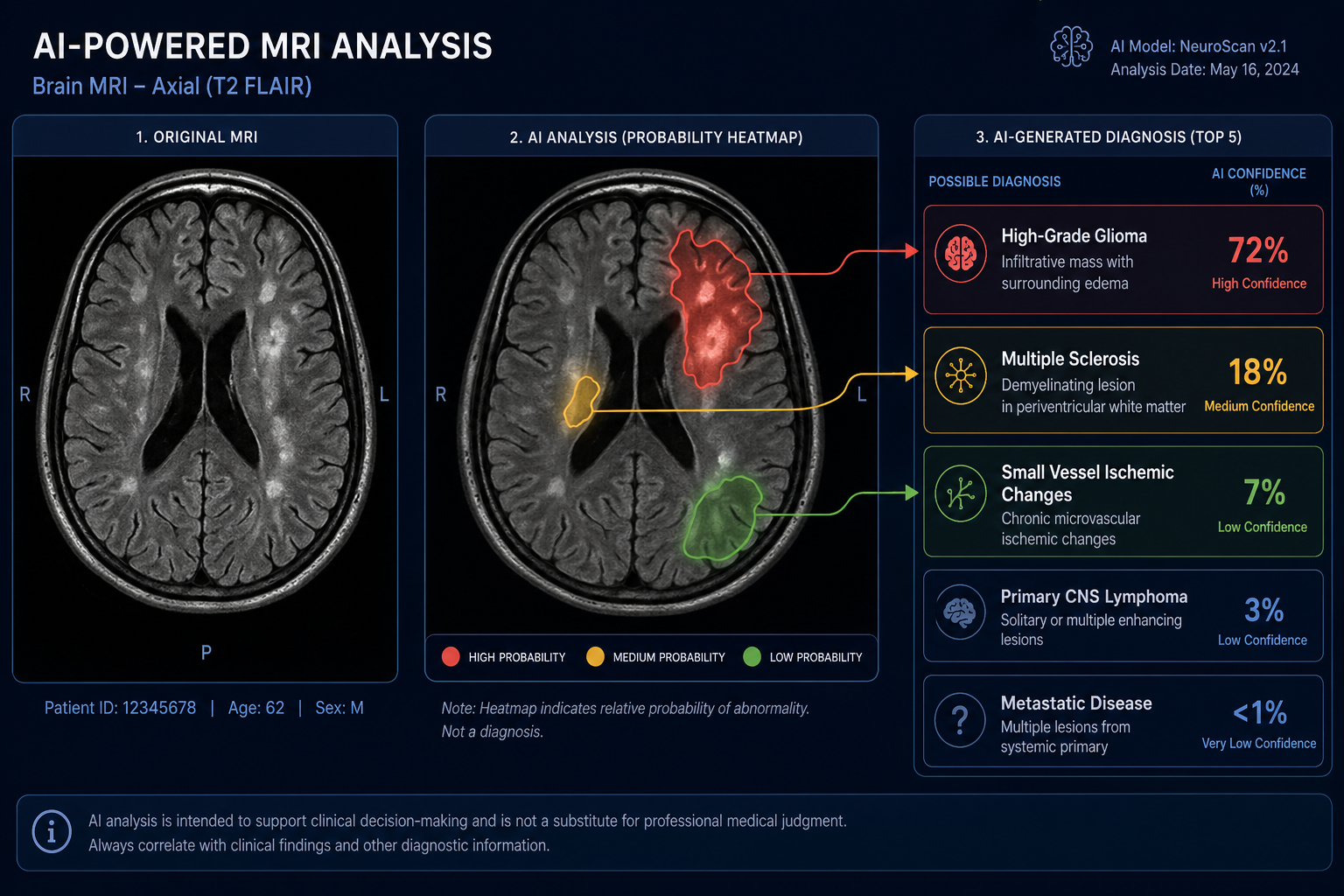
The Power of Data
AI's strength in diagnostics comes from its ability to process massive datasets. We're talking about millions of medical images, patient histories, and research papers. This scale of analysis would be impossible for a human doctor.
This vast data pool allows AI to identify subtle patterns and correlations that might otherwise go unnoticed. AI can then use these insights to improve diagnostic accuracy and speed.
AI isn't replacing doctors; it's augmenting their abilities to detect and diagnose diseases earlier.
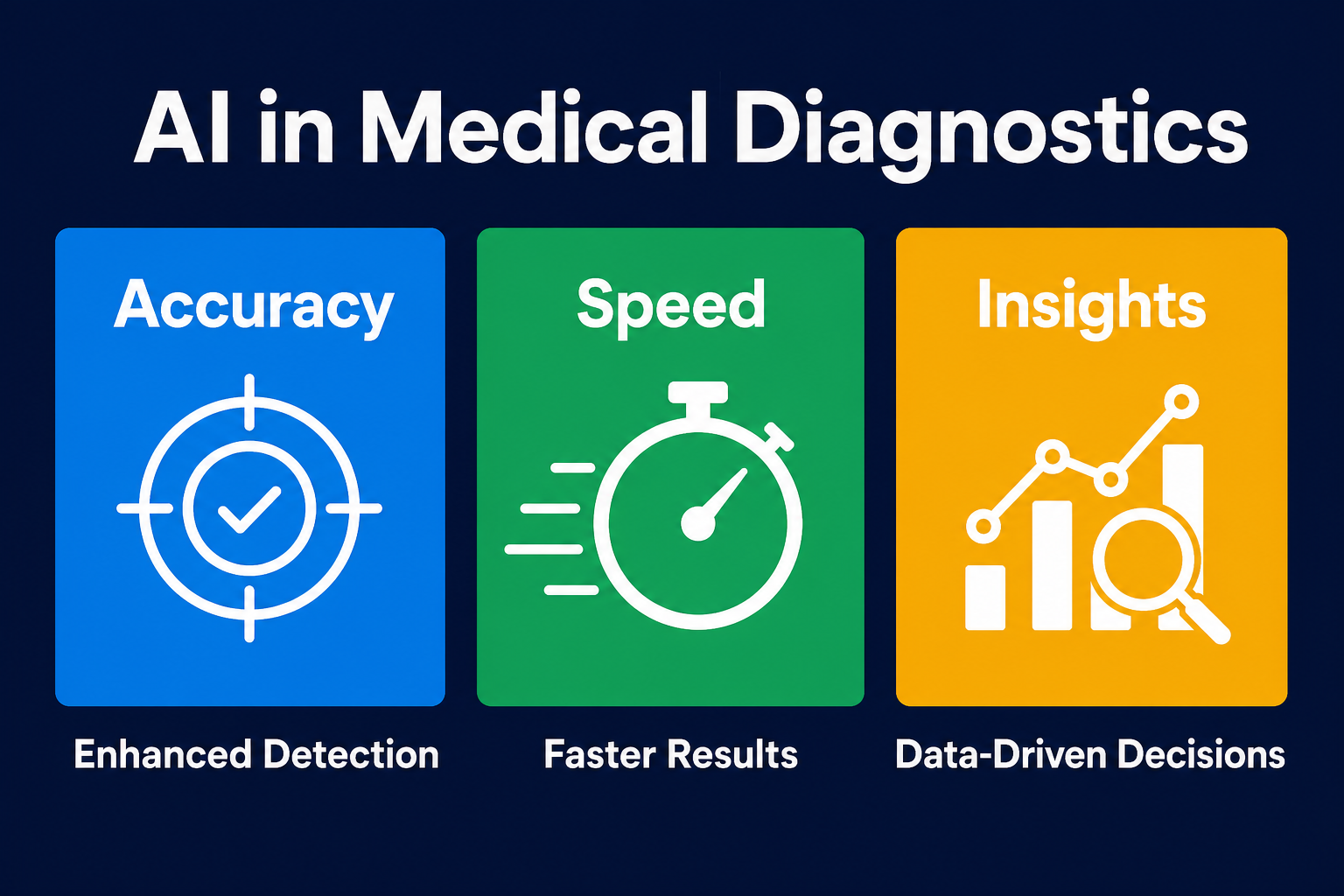
This visual illustrates how AI-Powered Diagnostics applies in real-world AI in Industry Applications scenarios.
The video shows how AI algorithms process medical images. This is important for understanding how AI can assist doctors in making faster and more accurate diagnoses.
AI in Medical Imaging
AI algorithms can detect subtle anomalies in medical images that might be missed by human eyes.
Which of these is a key advantage of AI in medical diagnosis?
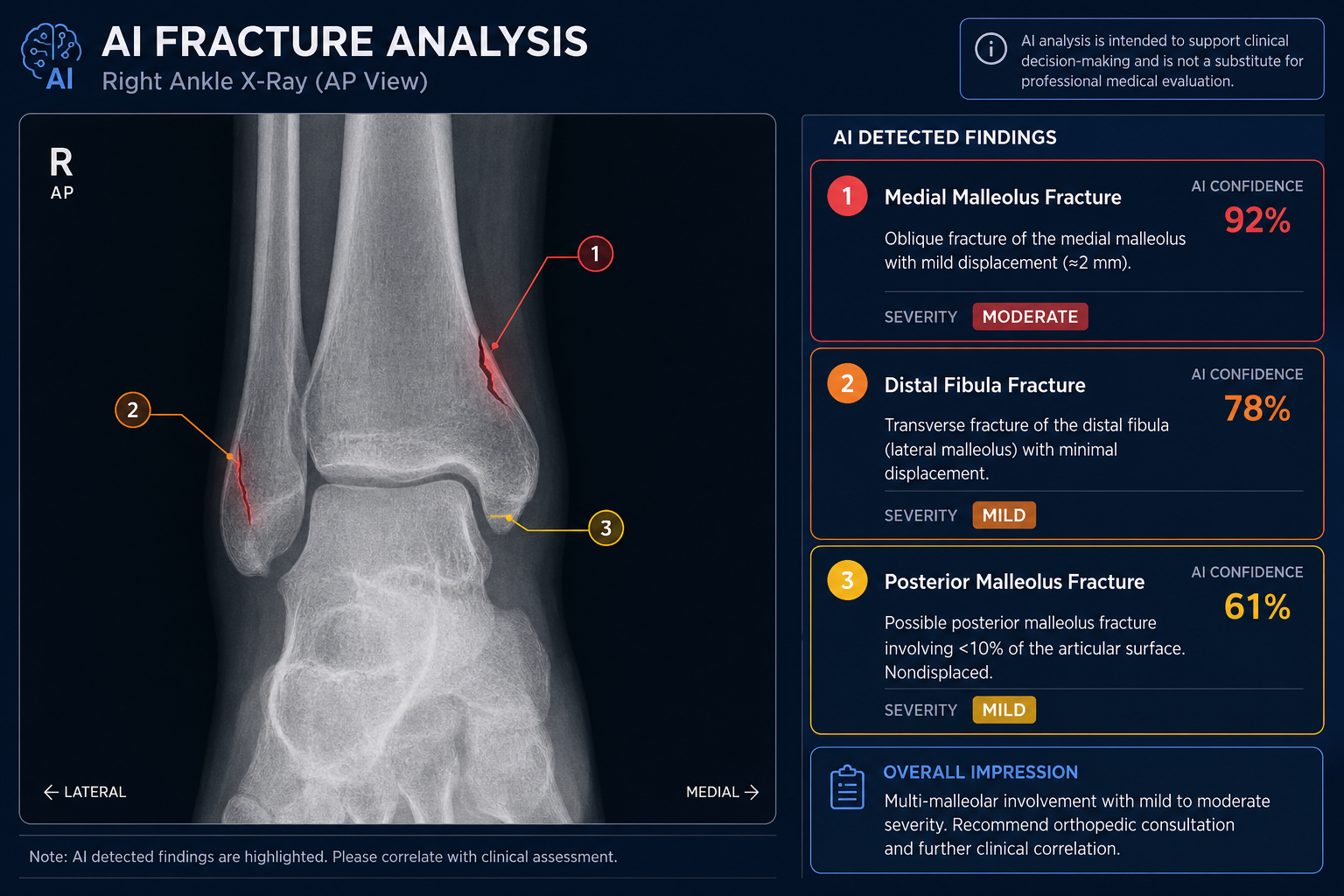
AI-Enhanced Fracture Detection
The Diagnostic Process
AI algorithms are trained on labelled datasets of medical images. These algorithms learn to recognise patterns associated with specific diseases or conditions. The more data they see, the better they become at identifying these patterns.
When a new medical image is fed into the system, the AI algorithm analyses it and compares it to the patterns it has learned. It then generates a report highlighting potential areas of concern and providing a list of possible diagnoses.
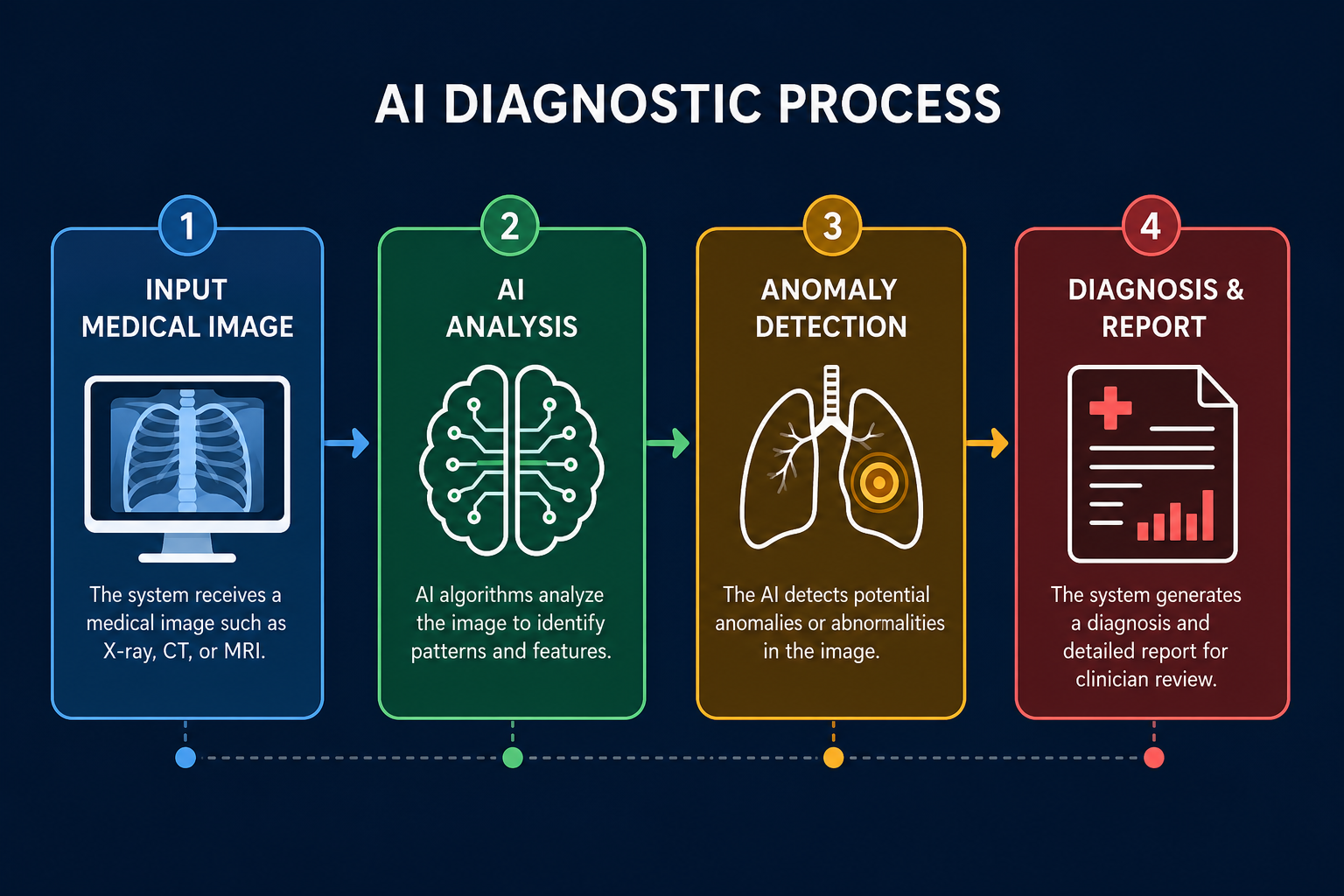
The diagram shows how an AI system takes a medical image, analyses it for anomalies, and generates a diagnostic report. The process highlights the key steps where AI can assist doctors.
Traditional vs. AI Diagnostics
The contrast highlights how AI automates image analysis, leading to faster and more objective diagnoses. This reduces the potential for human error and enables earlier treatment.
AI can process images much faster than humans, leading to quicker diagnoses and treatment.
AI algorithms can detect subtle anomalies that might be missed by human eyes, improving diagnostic accuracy.
AI provides objective, data-driven insights, reducing the reliance on subjective interpretations.
The video shows how AI is being used in real-world clinical settings. This demonstrates the practical application of AI in improving patient care.
AI in Clinical Practice
Doctors are using AI to improve diagnostic accuracy and speed in clinical practice.
Looking Ahead
AI's role in medical diagnostics is only going to grow. We can expect to see even more sophisticated algorithms and applications in the future. These advancements will improve patient outcomes and transform the way healthcare is delivered.
Here's the thing: AI is not meant to replace medical professionals, but to assist them in making faster, more accurate, and data-driven decisions. This collaboration between humans and AI will be key to learn the full potential of medical diagnostics.
If you remember only four things…
Data Analysis
AI excels at processing large medical datasets, identifying patterns that humans might miss. This leads to more accurate diagnoses.
Speed and Efficiency
AI can analyse medical images much faster than humans, reducing the time it takes to diagnose patients. This speed saves time and improves outcomes.
Objective Insights
AI provides objective, data-driven insights, reducing the reliance on subjective interpretations. This objectivity enhances diagnostic consistency.
Collaboration
AI is not meant to replace doctors, but to assist them in making better decisions. The future of medical diagnostics is a collaboration between humans and machines.
Test Your Understanding
Prompt AI for Pneumonia Diagnosis
Write a prompt for an AI model to accurately detect and localize signs of pneumonia in a chest X-ray image.
Imagine you are developing an AI diagnostic tool for radiologists. Your goal is for the AI to analyze chest X-ray images and provide a clear, concise report on potential findings. Specifically, the AI should identify signs indicative of pneumonia. The output needs to be actionable for a medical professional. Consider what details would be crucial for the AI to provide beyond just a 'yes/no' answer.
Term Glossary
4 verified conceptsFrom Reaction to Prediction
You now see how AI enhances medical diagnosis by analysing complex data and improving accuracy, shifting your perspective from theoretical to a practical tool. You understand AI's role in aiding, not replacing, medical professionals.
This is where AI stops reacting to symptoms and starts predicting diagnoses.
Next, we'll explore how AI is used in drug discovery.
Audio lesson recap
A concise audio summary of this lesson — great for reinforcing key concepts on the go.
Hear it discussed
About three minutes on the ideas in this lesson
Sterling
AI tutor
Vivienne
Sceptical challenger
Press play to start the discussion…
Full transcript · click any line to jump
AI Augments Medical Diagnosis, Not Replaces
AI significantly enhances doctors' abilities to detect and diagnose diseases earlier by analysing vast datasets. This collaboration leads to more accurate and timely interventions, ultimately improving patient outcomes and potentially saving lives.
Massive Data Processing Powers AI Diagnostics
AI's strength lies in its capacity to process millions of medical images, patient histories, and research papers, a scale impossible for humans. This extensive analysis allows AI to identify subtle patterns and correlations, boosting diagnostic accuracy and speed.
AI Improves Speed, Accuracy, and Objectivity
AI algorithms process medical images much faster than humans, leading to quicker diagnoses and treatment. They also detect subtle anomalies, providing objective, data-driven insights that reduce reliance on subjective interpretations.
Ask anything about AI-Powered Diagnostics. Sterling will answer — concisely, and with his customary level of patience.