Intro to AI in Sales
Understand the foundations of AI and machine learning to enhance sales strategies.
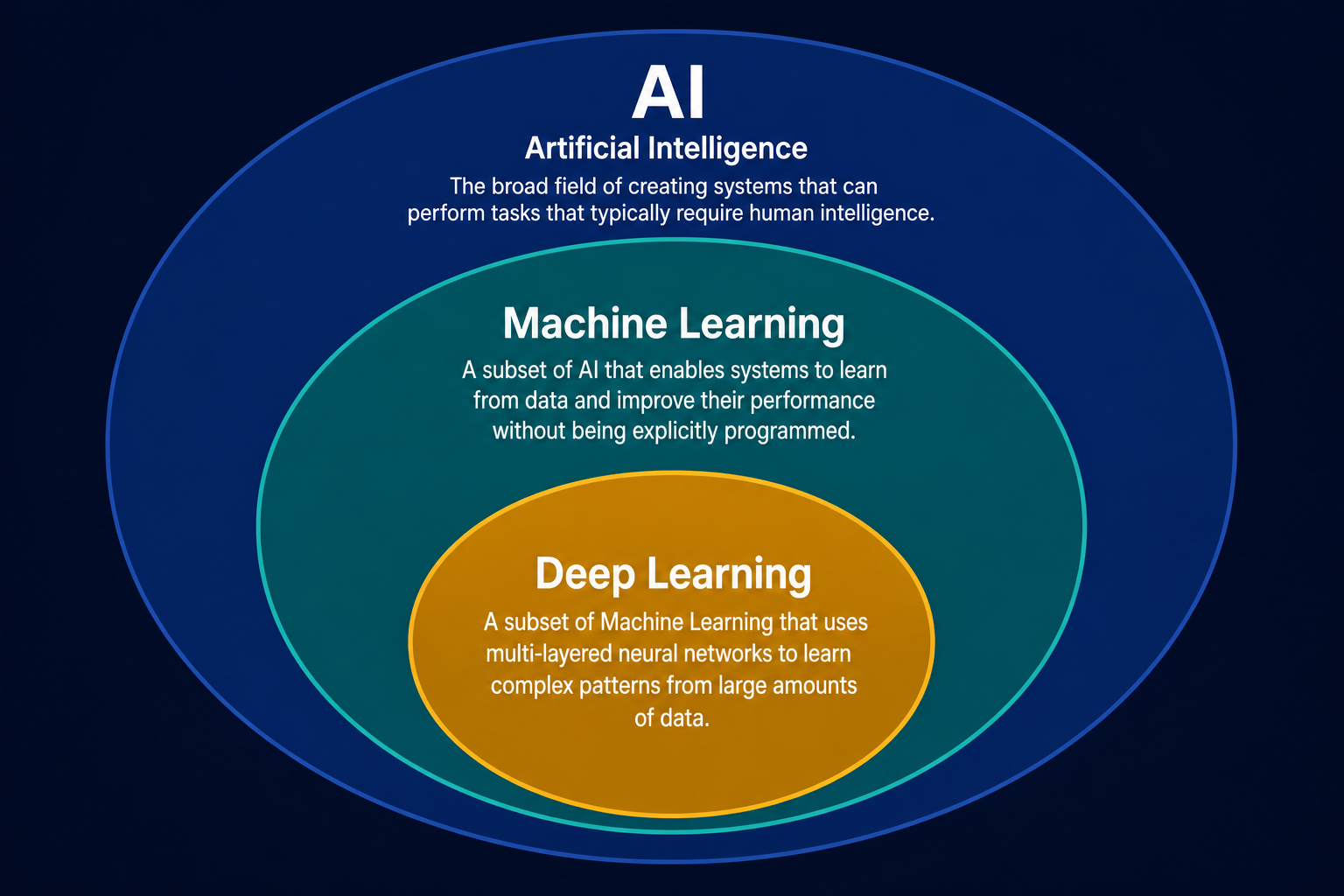
What is Artificial Intelligence?
Artificial intelligence (AI) involves creating systems that can perform tasks that typically require human intelligence. These tasks include learning, problem-solving, and decision-making. AI aims to mimic human cognitive functions through algorithms and models.
AI systems analyse vast amounts of data to identify patterns and make predictions. This is achieved using techniques like machine learning. The goal is to create machines that can adapt and improve over time.
For example, AI can analyse customer data to predict which leads are most likely to convert. This allows sales teams to focus their efforts on high-potential prospects. The ability to predict outcomes increases sales efficiency.
AI isn't just about automation; it's about understanding customers better and anticipating their needs.
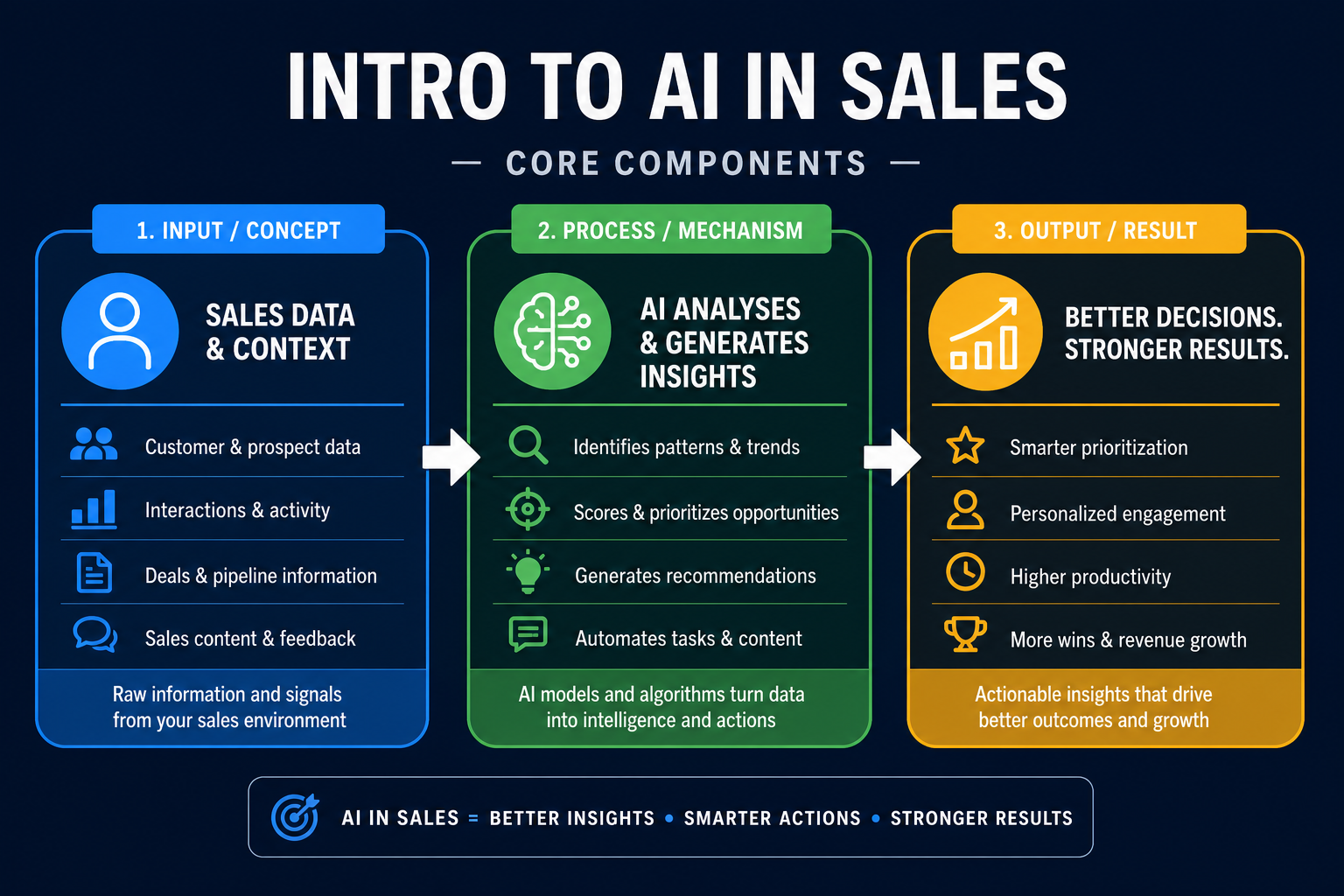
This diagram breaks down the core building blocks of Intro to AI in Sales so you can see how each part connects.
This video shows AI tools in a sales setting. It demonstrates the potential for AI to improve sales workflows.
AI in Sales: A Glimpse
AI is changing how sales are done.
Which of these tasks is AI most likely to automate in sales?
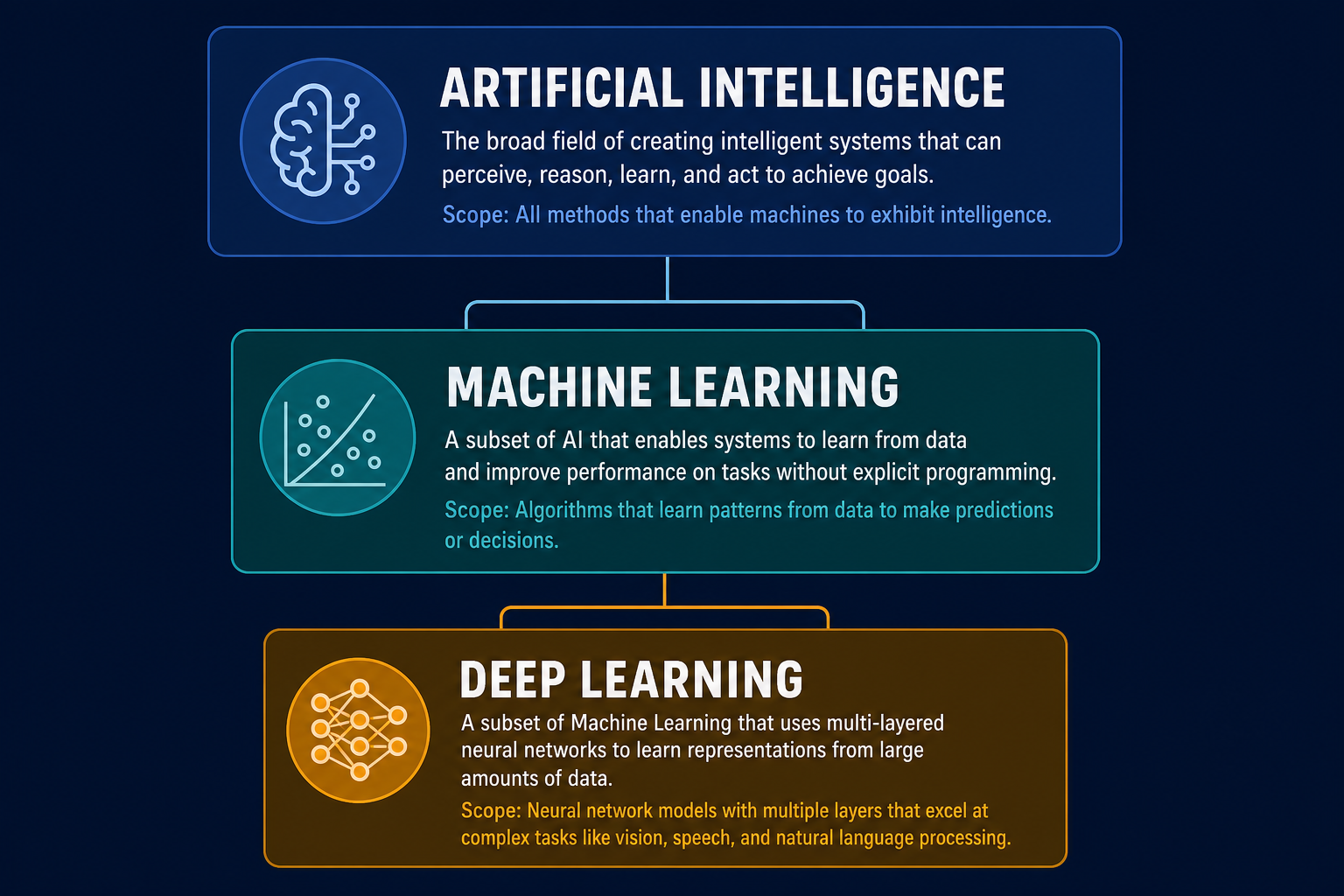
Understanding the AI Family
The Role of Machine Learning
Machine learning (ML) is a subset of AI that focuses on enabling systems to learn from data. Instead of being explicitly programmed, ML algorithms learn patterns and relationships from data. This allows them to make predictions or decisions without direct human intervention.
ML algorithms use statistical techniques to identify patterns in data. These patterns are used to build models that can predict future outcomes. The algorithms improve their accuracy as they are exposed to more data.
Consider a sales tool that uses ML to predict churn. By analysing customer interactions, purchase history, and feedback, the tool can identify customers at risk of leaving. This allows sales teams to proactively address their concerns and retain their business.
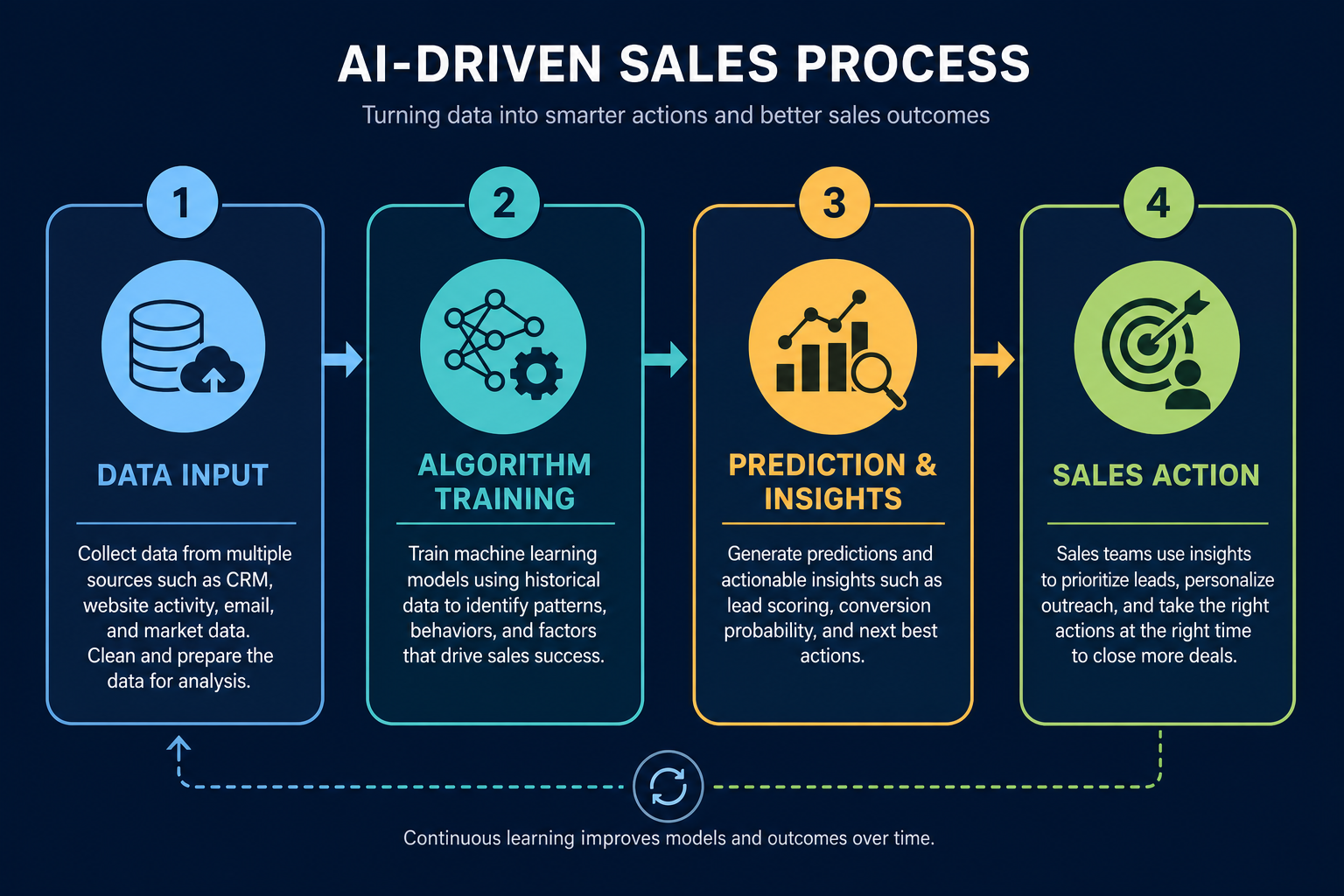
The diagram illustrates how AI uses data to generate insights. These insights drive more effective sales actions.
Sales Process: Manual vs. AI-Driven
The contrast highlights how AI simplify the sales process. It reduces time spent on manual tasks and increases focus on high-potential leads.
AI's effectiveness depends on the quality and quantity of data. Ensure your data is clean and relevant.
AI should drive measurable improvements in sales performance. Start with clear goals.
AI augments human capabilities, it doesn't replace them. Focus on collaboration.
This video shows AI creating personalised emails. See how AI can tailor sales messages to individual prospects.
AI Personalising Emails
AI can tailor communications to each prospect.
Looking Ahead
Understanding AI and machine learning is crucial for modern sales teams. These technologies offer effective tools for improving efficiency and effectiveness. By adopting AI, sales organisations can achieve better results.
The next step is to explore specific AI applications in sales. These applications include lead generation, customer relationship management, and sales forecasting. Each application offers unique benefits for sales teams.
Key Takeaways
AI Definition
AI involves systems that mimic human intelligence. It automates tasks and improves decision-making in sales.
Machine Learning
ML is a subset of AI that learns from data. It enables sales systems to make predictions without direct programming.
AI Applications
AI can automate lead generation and personalise customer interactions. This leads to more efficient sales processes.
Future Focus
The future of sales involves AI-driven insights and automation. This requires a strategic approach to data and technology.
Test Your Understanding
Complete Personalized Sales Follow-Up Prompt
Complete the AI prompt template with specific details to generate a highly personalized follow-up email for a sales prospect.
You are an AI sales assistant helping a sales representative draft a personalized follow-up email after a discovery call. The prospect, John Doe, works in the [BLANK] industry, and during the call, their primary pain point discussed was [BLANK]. The rep also noted that John showed particular interest in the [BLANK] feature of our product. Draft a concise, engaging email that acknowledges these specific points, offers a relevant resource related to their pain point, and proposes a clear next step.
Term Glossary
4 verified conceptsUnderstanding AI's Role
You now understand how AI and machine learning are foundational to modern sales. This understanding gives you a new perspective on how to improve lead generation and customer retention.
AI is transforming sales: shifting from reactive strategies to proactive, data-driven insights.
Next, we will explore how AI enhances lead generation, expanding on this fundamental knowledge.
Audio lesson recap
A concise audio summary of this lesson — great for reinforcing key concepts on the go.
Hear it discussed
About three minutes on the ideas in this lesson
Sterling
AI tutor
Vivienne
Sceptical challenger
Press play to start the discussion…
Full transcript · click any line to jump
AI predicts sales leads effectively
AI analyses customer data to predict high-potential leads, allowing sales teams to focus efforts strategically. This predictive capability significantly increases sales efficiency and conversion rates.
Machine learning learns from data
Machine learning algorithms learn patterns from data without explicit programming, making predictions or decisions autonomously. This enables tools to identify customer churn risks and proactively address concerns.
Data quality drives AI success
The effectiveness of AI in sales is directly dependent on the quality and quantity of your data. Ensure data is clean, relevant, and aligned with clear sales performance goals for optimal results.
Ask anything about Intro to AI in Sales. Sterling will answer — concisely, and with his customary level of patience.