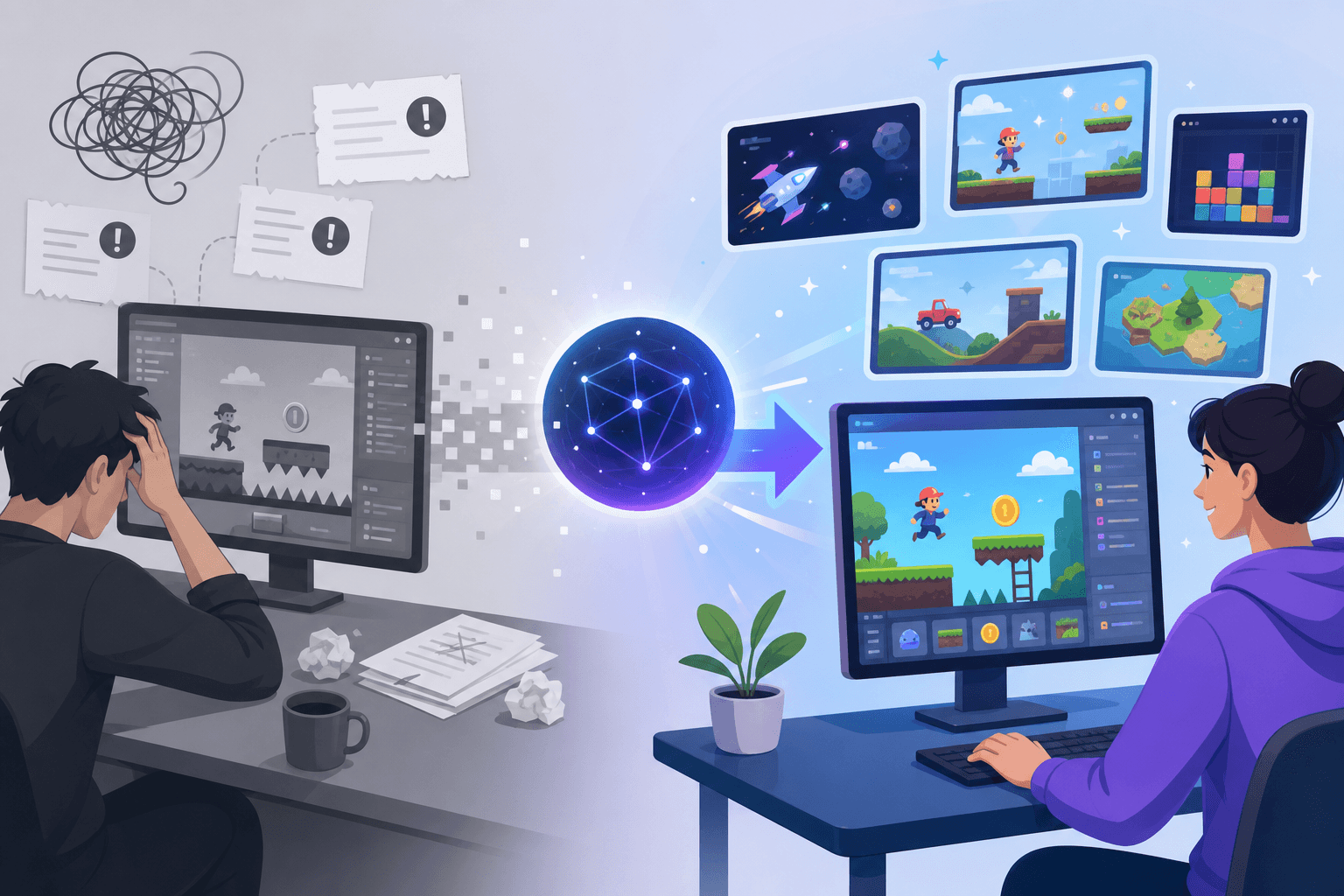
If a game studio just halved its manual fix rate using AI-assisted prototyping, the question isn't whether this changes game dev — it's whether you're using the same workflow yet.
One Grey Box, Three Games, Half the Headaches
Playco used GPT-6 Astra to spin up three fully themed game prototypes from a single "grey box" foundation — the bare, untextured skeleton developers build before art and polish arrive. That's not just faster iteration; that's a fundamentally different way of branching creative ideas without multiplying your bug count.
The headline number is 50% fewer manual fixes compared to the previous model. In game dev, manual fixes are the silent killer of momentum — every hour spent correcting AI-generated logic is an hour not spent designing, testing, or shipping.
Why GPT-6 Astra's Generative AI Productivity Gains Hit Different Here
Earlier AI coding tools were good at generating code snippets but notoriously bad at maintaining consistency across a whole project. Astra's improvement appears to be in coherence — the generated prototypes needed less human correction to actually work as intended, not just compile.
Think of it like the difference between a junior dev who writes correct functions but breaks the rest of the codebase, versus one who understands the whole system. That systemic awareness is what cuts the fix rate in half.
For non-game-developers, the lesson transfers directly: any creative or technical workflow where you're generating multiple variants from one base — marketing copy, data pipelines, UI mockups — stands to benefit from the same approach.
What This Means for Learners
The Playco workflow is essentially a live demonstration of AI agent thinking applied to creative production: define a base, branch into variants, let the model handle coherence. That's a skill set, not a lucky accident.
If you want to understand how to build and direct AI systems that actually reduce rework rather than create it, AI Agents is the place to start — it covers exactly how to structure tasks so AI outputs need less human correction. For those ready to go deeper into multi-step AI workflows, Multi Agent Architecture That Actually Works shows how to chain these systems without the chaos.
The practical takeaway: next time you're prototyping anything, build one solid base and prompt your AI to generate themed variants from it. Measure your fix rate. Then compare.