OpenAI just inserted itself into the $750 billion global advertising industry — and the way it's doing it will fundamentally change how brands reach you online.
What Are Sponsored Agents, and Why Should You Care?
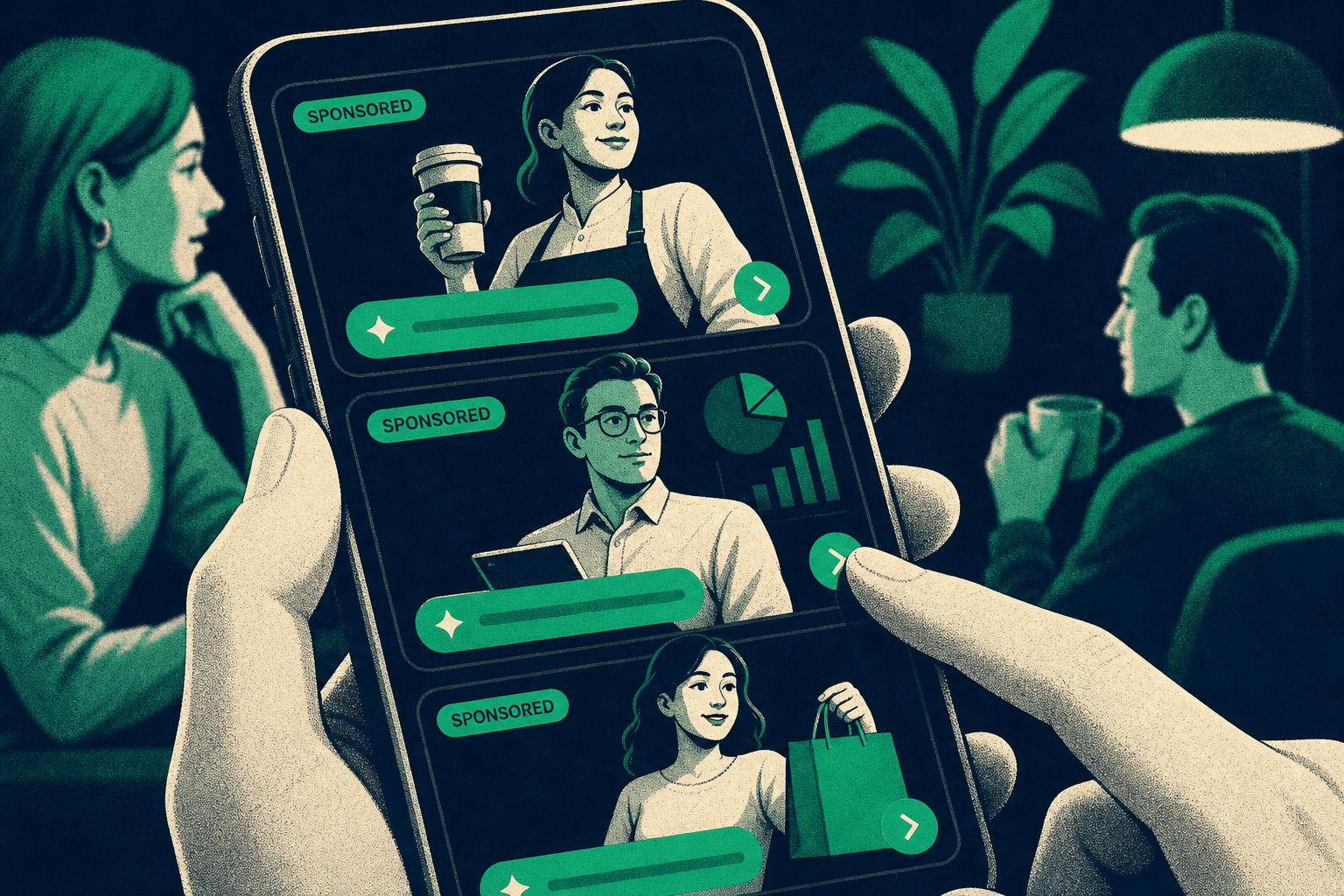
OpenAI's new advertising model isn't banner ads slapped onto a chatbot. It's something structurally different: Sponsored Agents — AI-powered brand experiences that can actively assist users, answer product questions, and guide purchasing decisions, all inside the ChatGPT ecosystem.
Think less "ad on a webpage" and more "a brand's AI representative joins your conversation." If you ask ChatGPT to help you plan a kitchen renovation, a Sponsored Agent from a paint or appliance brand could step in with personalised, contextually relevant help — and a nudge to buy.
The platform also announced direct integrations with HubSpot and Shopify, giving marketers tools to connect their existing customer data and storefronts directly to OpenAI's ad infrastructure. That's not a pilot programme — that's a commercial pipeline.
The Business Impact and the Ethical Fault Lines
For marketers, this is genuinely powerful. Intent signals inside an AI conversation are far richer than a Google search query. When someone asks ChatGPT "what's the best running shoe for wide feet under £100?", that's a purchase-ready signal with context that keyword advertising has never been able to capture this cleanly.
But the ethical questions are sharp. When an AI agent is simultaneously your helpful assistant and a paid brand representative, where does the disclosure live? The EU's AI Act and the UK's Online Safety Act both have provisions around transparency in automated systems — and regulators will be watching whether "Sponsored" labels are prominent enough to constitute genuine informed consent.
There's also a deeper concern about AI objectivity. Users have come to trust ChatGPT's recommendations as relatively neutral. Sponsored Agents risk corroding that trust the moment a user realises the "helpful suggestion" was a paid placement. OpenAI will need to walk a very careful line — the same one Google has been navigating (imperfectly) for two decades with search ads.
What This Means for Learners
If you work in marketing, e-commerce, or brand strategy, this is the moment to get ahead of the curve on AI-powered advertising literacy. Understanding how AI agents operate — and how they can be directed, prompted, and integrated into commercial workflows — is rapidly becoming a core professional skill, not an optional extra.
Start by getting comfortable with how AI agents actually work under the hood. Our AI Agents course breaks down the mechanics of agentic systems in plain language, which is exactly the foundation you need to evaluate (and build with) tools like Sponsored Agents. If you want to understand the broader competitive race shaping these product decisions, The AGI Race gives you the strategic context behind why OpenAI is moving into advertising now.
The advertising industry is about to be restructured around AI-native experiences. The professionals who understand both the technology and its commercial implications will be the ones setting strategy — not just executing it.