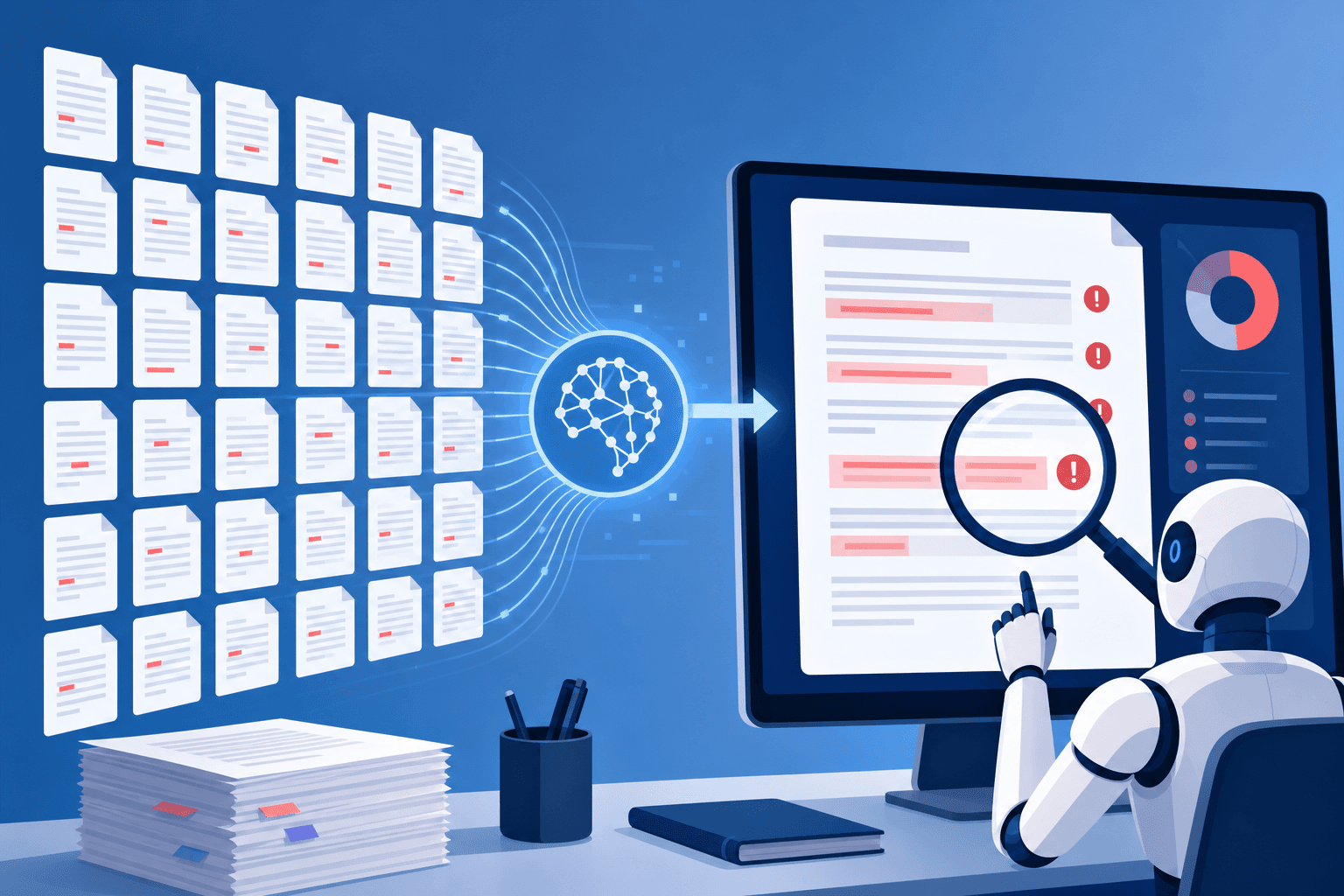
When an AI system can review 41 financial documents in minutes, catch every planted error, and boost workflow performance by nearly 40%, the legal and finance industries face a question they can no longer defer: what exactly are human reviewers for?
What Legora Actually Did — And Why It's a Big Deal
Legora, a legal AI platform, ran GPT-6 Astra through a structured financial statement review workflow. The task: process 41 documents, identify discrepancies, and flag errors — four of which were deliberately seeded into the dataset.
Astra found all four. Every single one. And it did it in minutes, not days. The workflow performance improvement clocked in at nearly 40% over Legora's previous model — which, in legal and compliance terms, is not incremental. That's a structural shift.
The Business Impact of AI-Powered Document Review
Financial statement review is one of the most labour-intensive, high-stakes tasks in legal and audit work. Errors carry real consequences — regulatory penalties, failed deals, litigation. The fact that an AI model can now run this review in minutes, with a near-40% gain over the prior model, changes the economics of the entire workflow.
This wasn't a vendor demo. It was a structured evaluation on Legora's own Agentic Reasoning benchmark, with four errors deliberately planted in the accounts and tasks modelled on real review work. The near-40% gain is a benchmark figure other tools will now be measured against.
The harder question this raises is regulatory: if AI is doing the review, who signs off on it? Who carries liability when the AI misses something a human would have caught — or vice versa? The legal profession's duty of care frameworks weren't written with autonomous document agents in mind.
Ethics, Liability, and the Governance Gap
The Legora case exposes a governance gap that's widening fast. AI can now perform tasks that previously required qualified professionals — but the regulatory infrastructure hasn't kept pace. Bar associations, audit standards bodies, and financial regulators are still debating AI's role while firms are already deploying it at scale.
There's also a workforce dimension. Junior lawyers and paralegals have traditionally built expertise through exactly this kind of document review work. If AI absorbs that entry-level workload, the profession loses its training pipeline — and that's a problem no efficiency metric captures.
If you want to understand how AI agents operate inside complex workflows like this, the AI Agents course breaks down the architecture behind these systems — and why they behave the way they do under real conditions.
What This Means for Learners
If you work in law, finance, compliance, or audit — or you're training for those fields — this story is your signal. AI-powered document review is no longer a future scenario. It's a current competitive advantage being deployed by forward-looking firms right now.
The professionals who will thrive aren't those who review documents faster than AI (they won't). They're the ones who know how to design, supervise, validate, and govern AI review workflows — and who understand where AI judgment ends and human accountability begins. Understanding AI assurance and governance is rapidly becoming a core professional skill, not a niche specialisation.