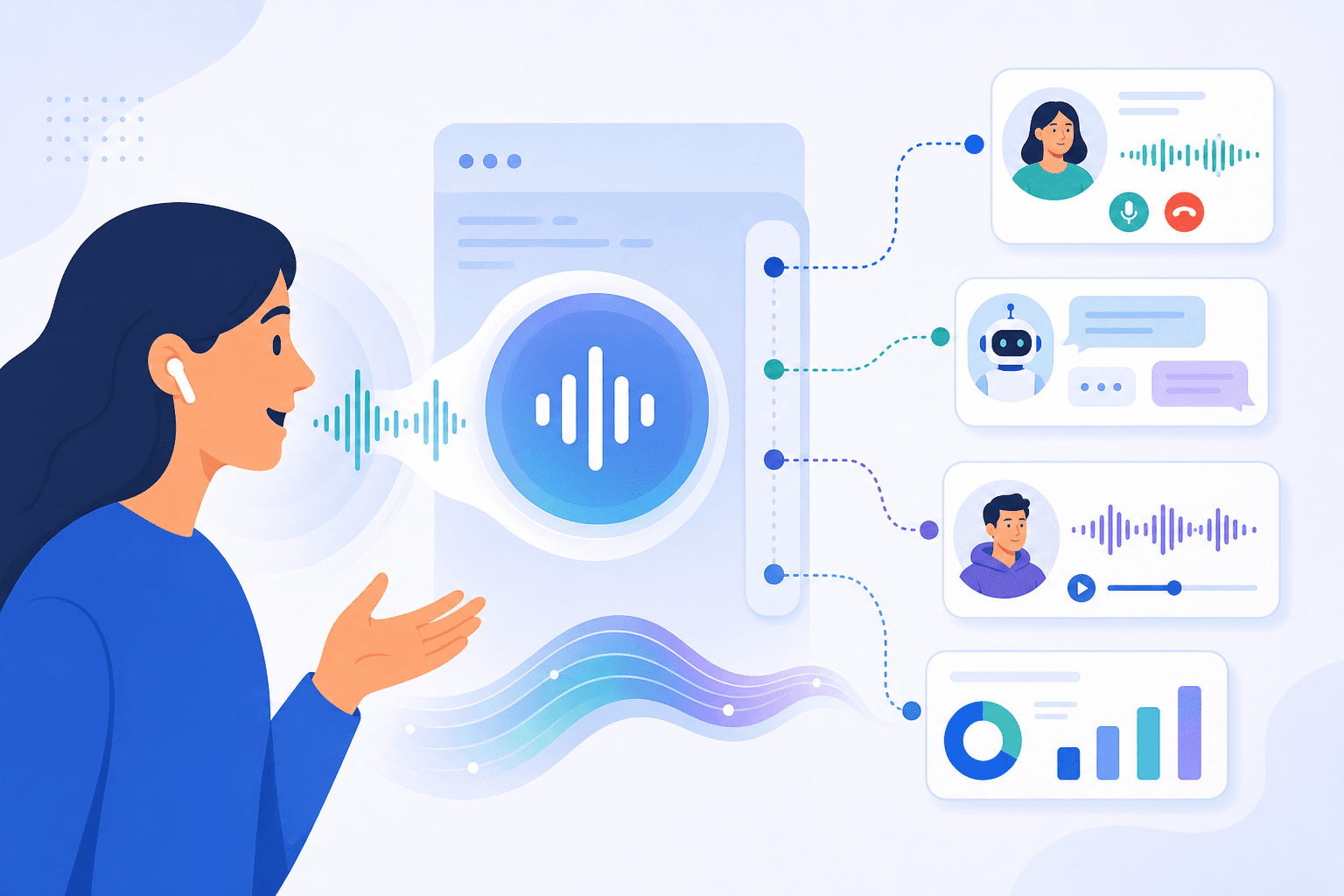
Voice AI just got a serious upgrade — GPT-Live-1 brings full-duplex, natural conversation to the OpenAI API, and it's the closest thing yet to building your own AI phone agent without a PhD in audio engineering.
What GPT-Live-1 Actually Does
Full-duplex means both sides can talk at once — no awkward push-to-talk pauses, no waiting for the AI to finish its sentence before you can interrupt. That's how real human conversation works, and until now, most voice AI felt like a walkie-talkie by comparison.
GPT-Live-1 also ships with stronger instruction following, so your voice agent actually sticks to its persona and task — whether that's a customer support bot or a language tutor. Custom voice options mean you're not stuck with the default robotic tone either.
The Telephony Support Is the Real Story for Voice AI Productivity
Buried in the announcement is the detail that changes everything for businesses: telephony support. That means GPT-Live-1 can plug directly into phone call infrastructure — think inbound customer service lines, appointment booking systems, or outbound reminder calls, all powered by a conversational AI that sounds genuinely human.
For developers and small business owners, this lowers the barrier to building voice-first tools dramatically. You no longer need a specialist vendor for AI voice — you can wire it up through the same API you already use for text.
What This Means for Learners
If you've been watching voice AI from the sidelines, this is the moment to start experimenting. The API-first approach means you can prototype a voice agent with surprisingly little code — a customer FAQ bot, a voice-controlled task manager, or even a conversational quiz tool.
Understanding how AI agents handle multi-turn conversations and instruction following is now a genuinely marketable skill. Our AI Agents course covers the architecture behind exactly this kind of system, and if you want hands-on practice building with a live API, Coding with Claude: First Steps is a solid starting point for getting comfortable making API calls without prior experience.
Voice is no longer a niche AI modality — it's becoming the default interface for a huge slice of real-world AI applications. Getting fluent in how these systems work now puts you well ahead of the curve.