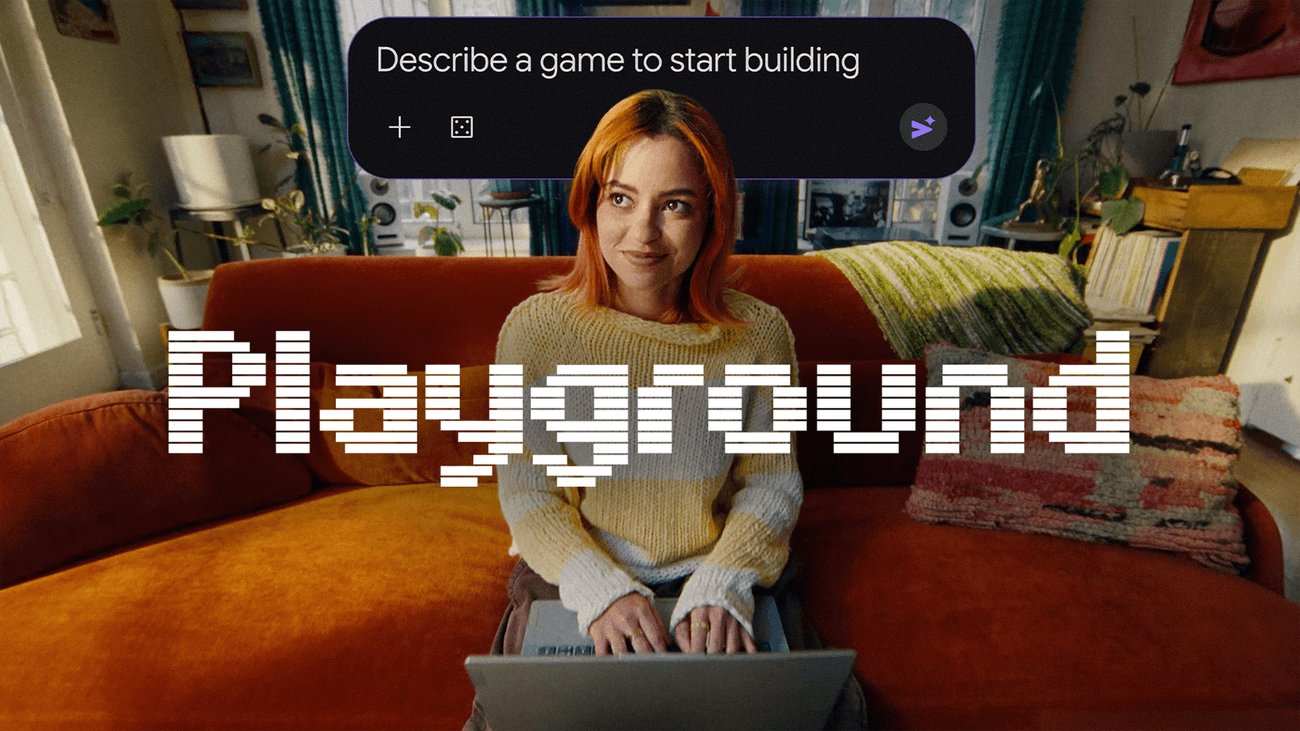
Google's new Playground platform means anyone — not just developers — can now build, play, and share custom games using AI, making game creation a practical skill worth learning today.
What Is Google Playground and What Can You Actually Do With It?
Playground is Google's experimental AI-powered gaming platform that lets you generate custom games from scratch, then share them with others — no coding required. Think of it as a creative sandbox where your prompts become playable experiences.
You describe what you want, the AI builds it, and you can iterate in real time. It's the same prompt-to-output loop you'd use with a text or image generator, except the output is something people can actually interact with and play.
A Practical AI Game Creation Use-Case You Can Try Right Now
The most immediately useful angle here isn't entertainment — it's rapid prototyping for learning and training. Educators, trainers, and content creators can use Playground to build quiz games, scenario simulations, or interactive explainers in minutes rather than months.
Imagine a small business owner building a customer service training game for new staff, or a teacher creating a geography challenge tailored to their class — without touching a line of code. That's the practical productivity unlock hiding inside what looks like a gaming toy.
The platform is experimental, so expect rough edges. But experimental Google products that gain traction have a habit of becoming infrastructure — see Google Docs, Google Meet, and more recently, NotebookLM.
What This Means for Learners
Playground is a live demonstration of AI agents doing creative, multi-step work on your behalf — exactly the kind of capability covered in AI Agents. Understanding how these systems take a high-level instruction and turn it into a structured output is increasingly core AI literacy.
It also reinforces a key skill: writing clear, specific prompts. The better you describe your game concept, the better Playground's output will be. If you want to sharpen that instinct across AI tools, Claude: Your AI Working Partner is a solid place to start — the principles of directing AI effectively transfer directly here.
The broader lesson? Every time a major AI platform lowers the barrier to creation — whether that's writing, images, code, or now games — the competitive advantage shifts from technical skill to creative clarity. The people who can articulate what they want precisely will win.