A top-tier law firm just shipped a ChatGPT-powered IPO tool — and it's a masterclass in how professionals can use AI to do high-stakes work faster without cutting corners.
What Cooley Actually Built
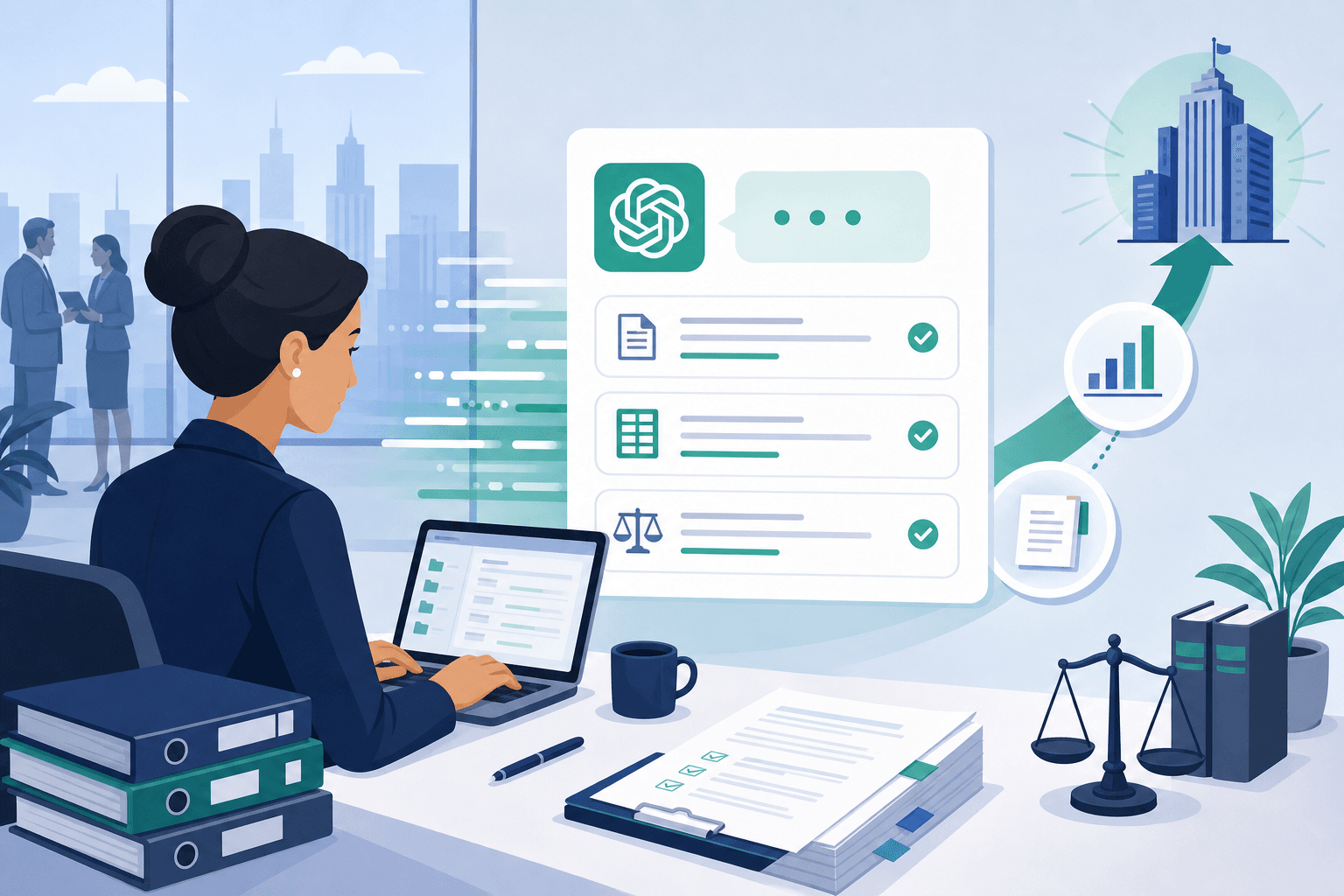
Cooley, one of the go-to law firms for tech IPOs, built a tool called GO Public using ChatGPT for Work (OpenAI's enterprise tier). It's designed specifically for the IPO process — one of the most document-heavy, deadline-driven workflows in corporate law.
The tool helps lawyers surface potential issues earlier in the process, so human judgment gets applied where it actually counts: complex decisions, not routine document trawling. Think of it as giving every associate a tireless first-pass reviewer that never misses a clause.
The Practical AI Productivity Lesson Here
This isn't AI replacing lawyers — it's AI handling the volume so lawyers can handle the nuance. That's the pattern worth learning from. Cooley identified their most time-consuming, low-judgment task (scanning documents for red flags) and handed it to the model.
You can apply the same logic today. Whatever your job, ask: "What do I spend time on that requires pattern recognition but not deep expertise?" That's your AI handoff candidate. Draft reviews, data checks, research summaries — the model does the sweep, you do the call.
If you want to build that skill systematically, Claude: Your AI Working Partner walks through exactly this kind of task delegation thinking, and AI Agents goes deeper on how automated workflows like GO Public are actually structured.
What This Means for Learners
The Cooley story is a template, not a one-off. Every industry has its version of "IPO document review" — a high-volume, high-stakes task that eats expert time. The professionals who will thrive are the ones who can identify those tasks and design AI-assisted workflows around them.
You don't need to be a lawyer or a developer to do this. You need to understand how to prompt well, how to verify AI output, and how to know when not to trust the model. Those are learnable skills — and they're exactly what separates AI-literate professionals from everyone else right now.