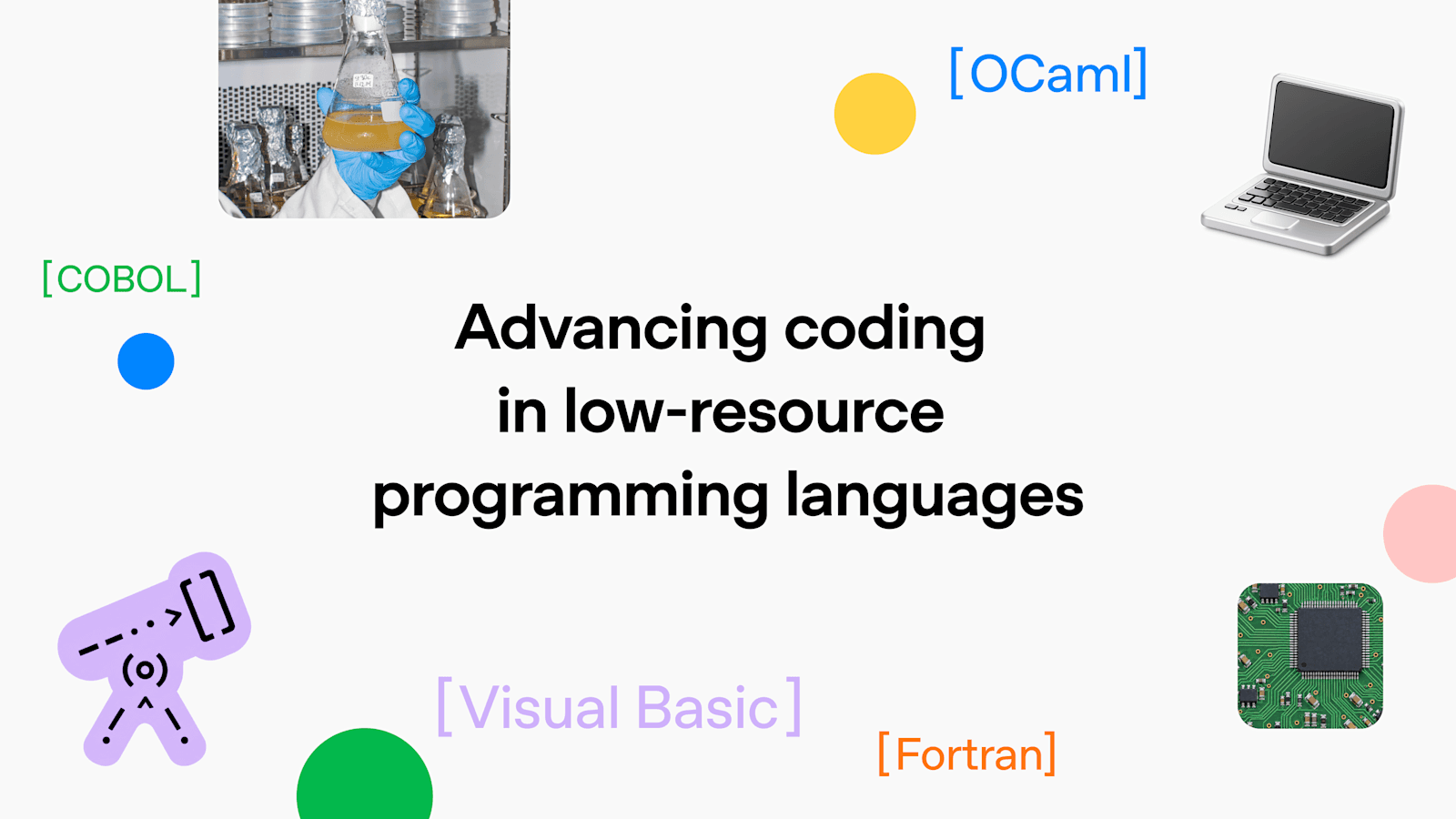
Most AI coding tools are brilliant at Python and useless at the languages quietly running the world's banks, hospitals, and government systems — OpenAI just decided to fix that.
The Low-Resource Language Problem in AI Coding
"Low-resource" programming languages aren't obscure curiosities — they're the backbone of critical infrastructure. COBOL alone processes an estimated $3 trillion in daily commerce. SQLite is embedded in billions of devices. The problem? AI models trained mostly on GitHub data are swimming in Python, JavaScript, and Rust examples, leaving legacy and niche languages severely underserved.
When developers asked ChatGPT to help with COBOL migration or complex SQLite queries, results were patchy at best and confidently wrong at worst. That's a real risk when the stakes involve financial records or embedded systems.
OpenAI's Breakthrough: New Evals and Targeted Training
OpenAI has published new evaluation benchmarks specifically designed for low-resource language performance, covering software engineering tasks, SQLite, and COBOL migration workflows. Building dedicated evals is the hard part — you can't improve what you can't measure, and until now, nobody was measuring this properly.
The move signals a deliberate push to make ChatGPT genuinely useful for the developers maintaining legacy systems, not just the ones building greenfield apps in trendy frameworks. For the millions of programmers still working in COBOL — many of them in finance and government — this is a meaningful shift in what AI assistance can actually deliver.
What This Means for Learners
If you've been learning to use AI coding assistants, this is a reminder that prompt quality and model selection both matter enormously when working outside mainstream languages. Knowing how to structure a migration task or a complex query as a prompt is now a genuinely transferable skill — even in legacy environments.
It's also worth understanding how AI models are evaluated, because benchmark design shapes what models get good at. If you want to go deeper on using AI as a coding partner, our Claude: Your AI Working Partner course covers how to collaborate effectively with AI on real development tasks. And if you're curious about the agent-driven future of software engineering, AI Agents explores how autonomous coding workflows are evolving beyond simple autocomplete.
The bottom line: AI coding assistance is no longer just for the Python crowd. The gap between "languages AI is good at" and "languages the world actually runs on" is finally starting to close.