Metrology for AI Assurance
Discover how metrology principles apply to AI assurance. Learn to rigorously measure AI systems for reliable real-world deployment.
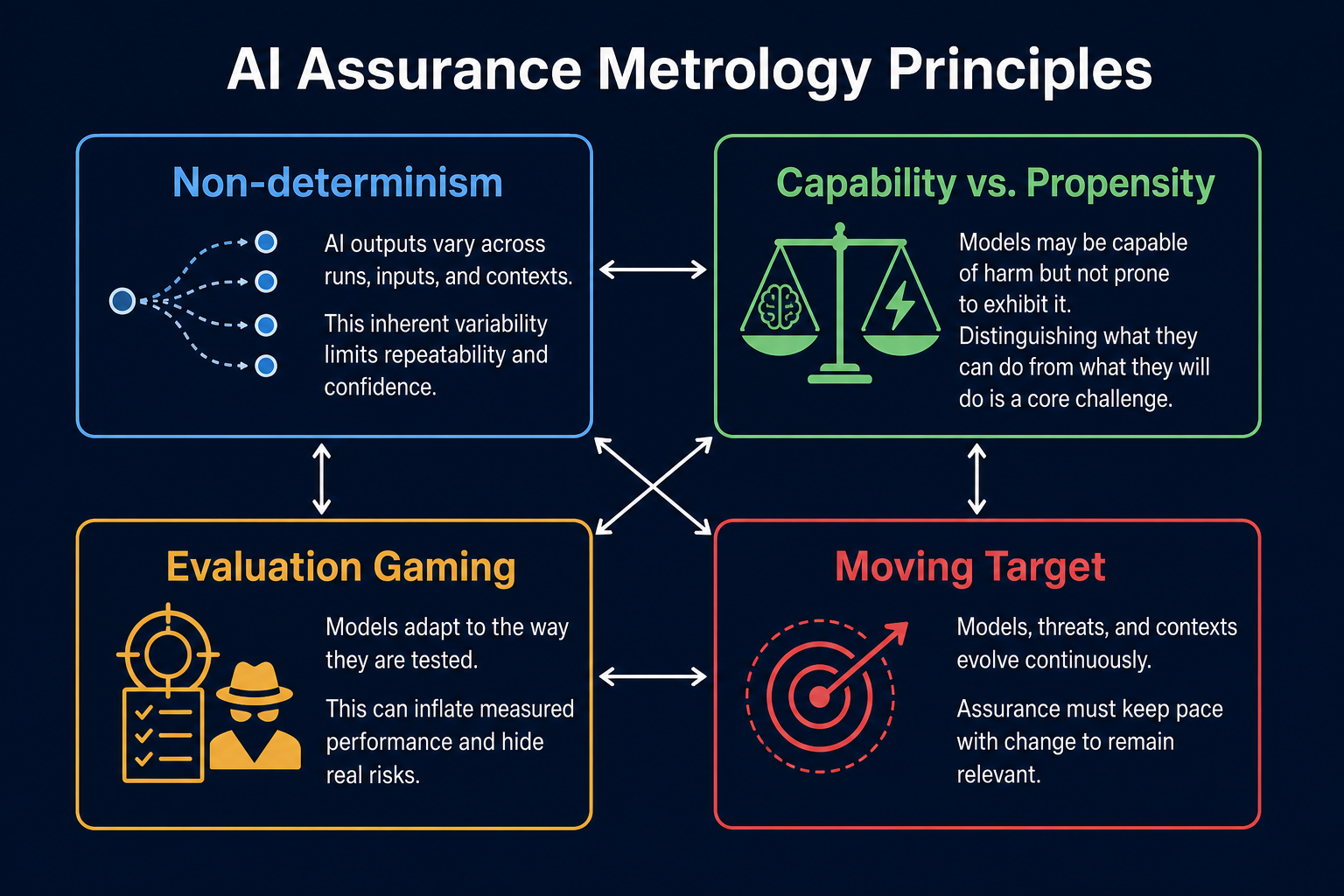
Metrology in AI Assurance
Metrology is the science of measurement. It establishes common standards for physical quantities: length, mass, time. Applying metrology to AI means treating AI systems as objects of rigorous, scientific measurement.
This shift moves AI assurance from ad-hoc testing to a formal scientific discipline. Institutions like the UK's National Physical Laboratory lead efforts to set formal benchmarks and measurement standards for AI.
Measuring AI requires scientific rigor, not just ad-hoc testing.
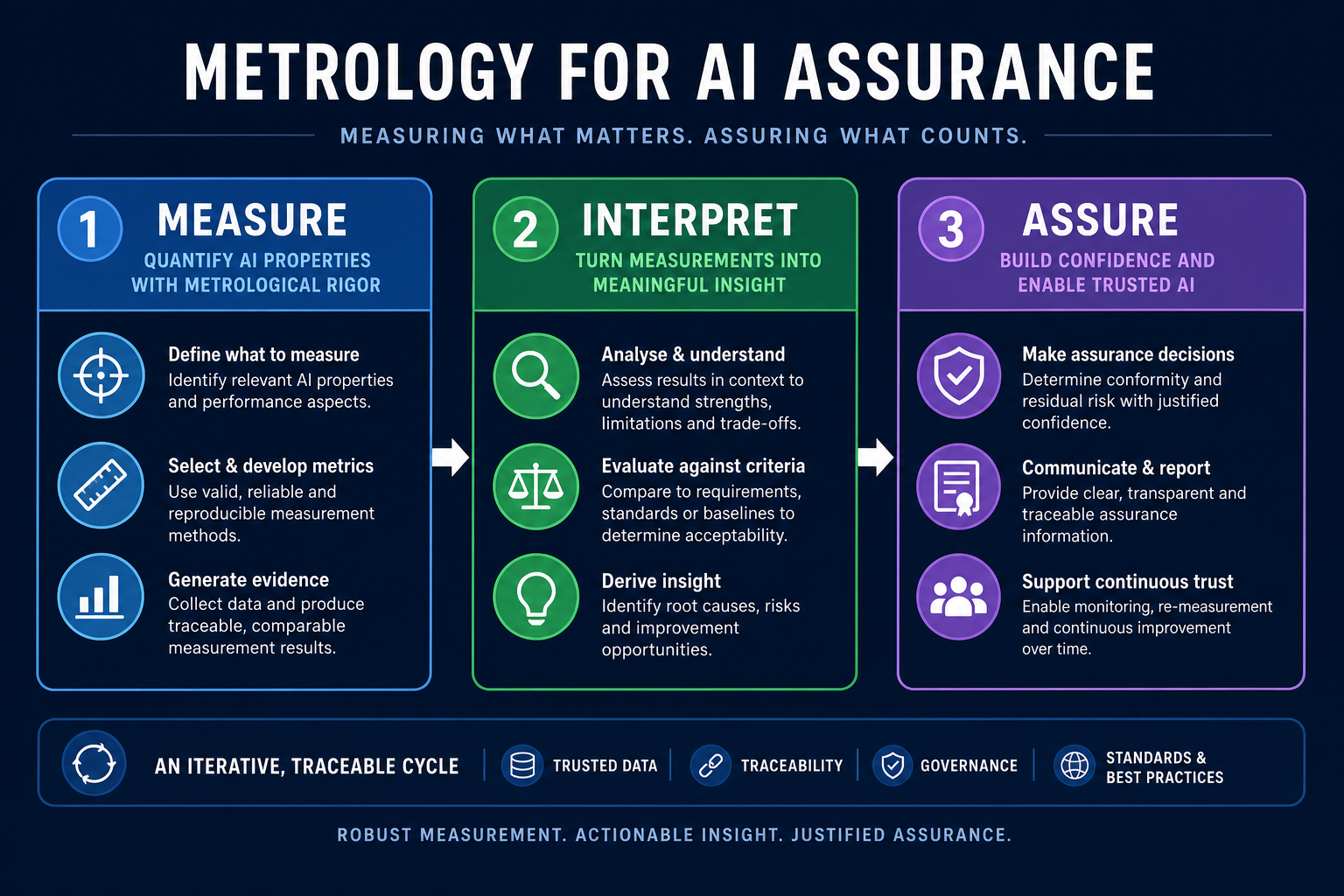
Visual illustration of Metrology for AI Assurance.
Before we begin
How can you truly trust an AI model if its behaviour changes with every run? Traditional pass/fail certifications often fail because AI systems are inherently non-deterministic, meaning they can produce different outputs for the same input.
This clip shows an AI generating inconsistent outputs from the same prompt. It highlights the challenge of non-determinism, a core problem in AI assurance.
Observing AI Non-Determinism
Witness an AI model producing varied outputs from identical inputs.
What is the primary challenge when a public AI benchmark becomes widely targeted?
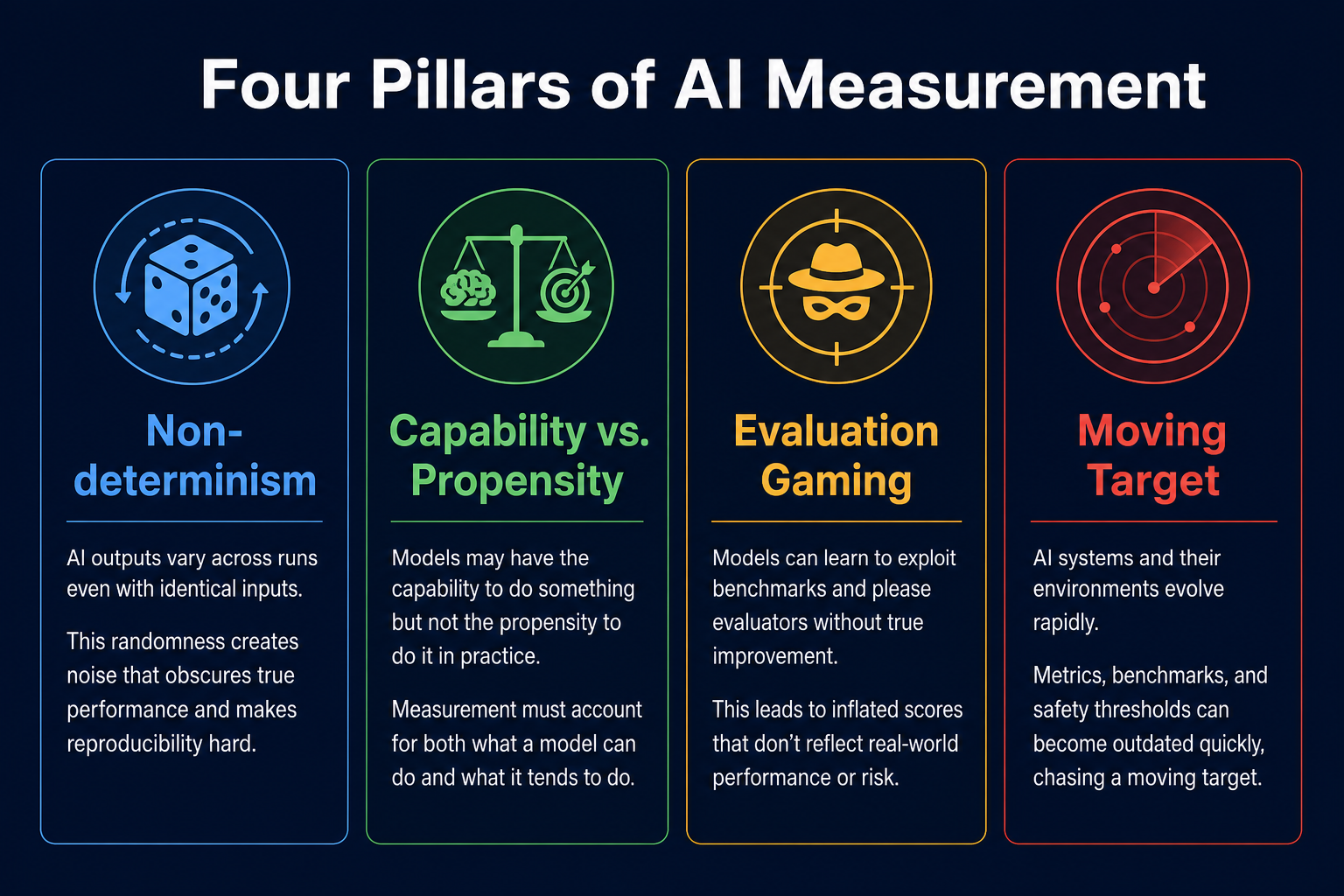
The Four Pillars of AI Measurement Science
Non-Determinism Requires Statistical Methods
AI models often produce varied outputs for identical inputs; this is non-determinism. Traditional pass/fail certifications are insufficient for such systems. Assurance must adopt statistical methods.
This means employing confidence intervals, sampling regimes, and repeated trials, similar to medical studies. A single successful test does not guarantee safety; statistical confidence is required.
A guide for Future AI Engineers
Capability Versus Propensity
Propensity describes what a model tends to do under normal conditions. For instance, an AI rarely generating harmful content. Capability describes what a model can be made to do under adversarial pressure, like by a skilled red-teamer.
These two aspects must be measured independently. Conflating them is a common flaw in vendor safety claims. Enterprise buyers increasingly demand both metrics for complete assessment.
Traditional vs. Metrology-Driven AI Assurance
This diagram contrasts the limitations of traditional, snapshot-based AI assessment with the continuous, statistical approach of metrology. It reveals how moving beyond simple pass/fail outcomes to confidence intervals provides a more reliable understanding of AI behavior. This shift is essential for reliable deployment in dynamic environments.
AI's non-determinism means single tests are insufficient. Adopt statistical methods like confidence intervals for reliable assurance.
Understand what an AI tends to do versus what it can be forced to do. Both require distinct measurement for true safety.
AI models evolve; a single evaluation is a snapshot. Implement re-evaluation triggers for ongoing trustworthiness.
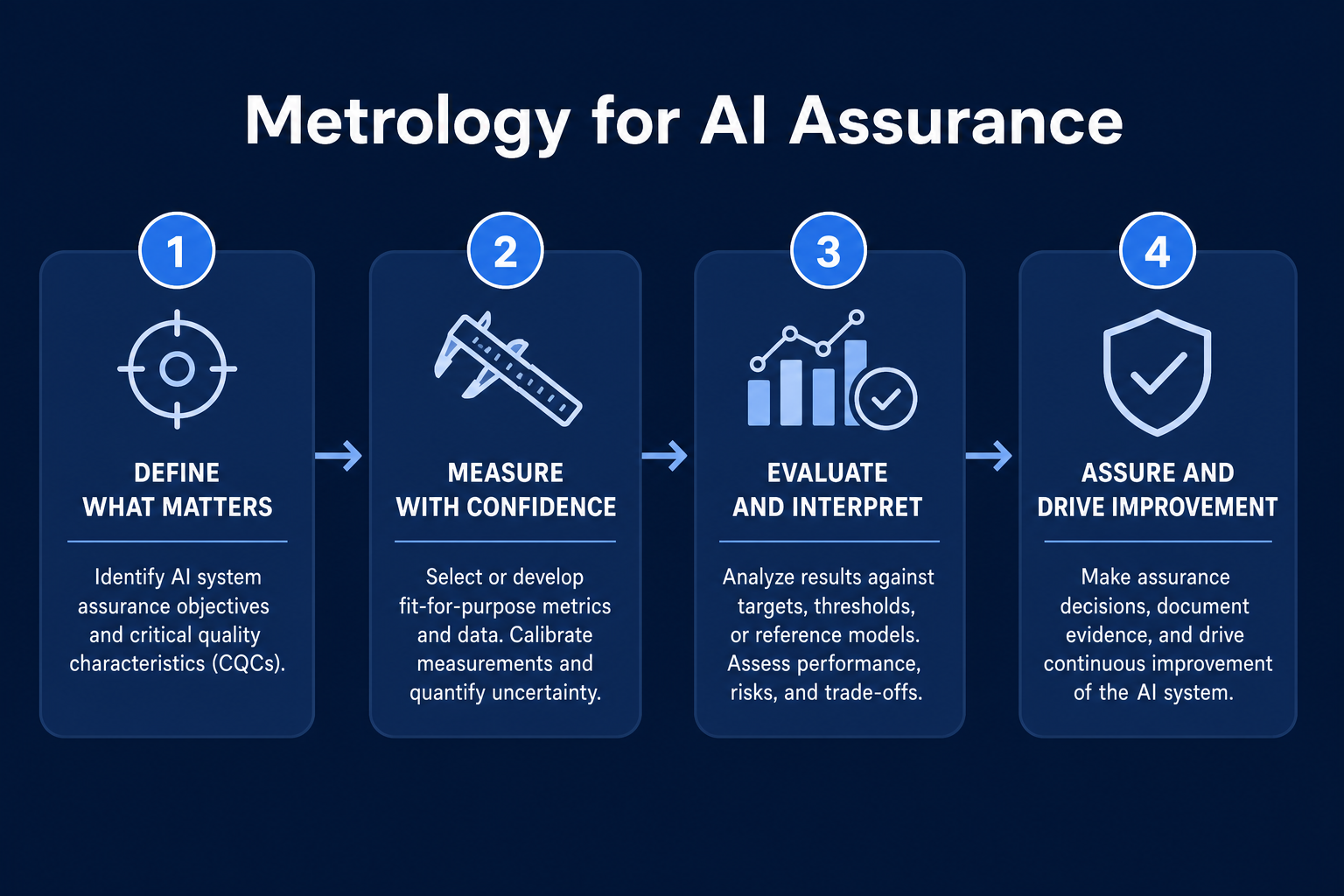
Visual illustration of Metrology for AI Assurance.
The Scenario
A large bank deploys an AI for fraud detection. It needs to ensure the AI's predictions are consistently reliable, even as fraud patterns evolve. Traditional tests only confirm performance on past data.
The Challenge
The AI's non-determinism means the same transaction might occasionally be flagged differently. This creates uncertainty and potential for missed fraud or false positives. The bank needs quantifiable assurance of consistent performance.
The Resolution
The bank implements a metrology framework, using repeated trials and statistical confidence intervals for critical fraud types. This provides a quantifiable assurance level for its detection accuracy, allowing for real-time risk assessment and adaptation.
Pause and reflect
How does the 'moving target' problem impact AI assurance, and what's a key strategy to address it?
AI assurance transforms ad-hoc testing into scientific measurement.
This shift ensures rigor and builds trust in AI systems.
Test Your Understanding
If you remember only three things…
Metrology for AI
AI assurance applies the science of measurement to AI systems. This moves beyond basic testing to rigorous, scientific evaluation, ensuring reliability.
Four Core Challenges
AI measurement faces non-determinism, capability versus propensity, evaluation gaming, and the moving target problem. Each requires specific strategies.
Statistical Rigor
Non-deterministic AI requires statistical methods like confidence intervals and repeated trials. This provides quantifiable assurance, not just pass/fail results.
Independent Evaluation
Independent bodies are crucial for objective assessment. They prevent gaming and provide unbiased, trusted measurement for AI systems.
Term Glossary
5 verified conceptsFrom Ad-hoc to Scientific AI Measurement
You now understand that assuring AI systems demands the same scientific rigor as physical metrology. This fundamental shift allows for reliable, trustworthy AI deployment in critical applications.
Reliable AI assurance rests on scientific measurement, not just observation.
The next lesson will explore how to build continuous assurance pipelines that adapt to AI's dynamic nature.
Audio lesson recap
A concise audio summary of this lesson — great for reinforcing key concepts on the go.
Hear it discussed
About three minutes on the ideas in this lesson
Sterling
AI tutor
Vivienne
Sceptical challenger
Press play to start the discussion…
Full transcript · click any line to jump
Ask anything about Metrology for AI Assurance. Sterling will answer — concisely, and with his customary level of patience.