Fugu Core Concepts
Explore the fundamental building blocks of Sakana Fugu, understanding how agents interact and make decisions.
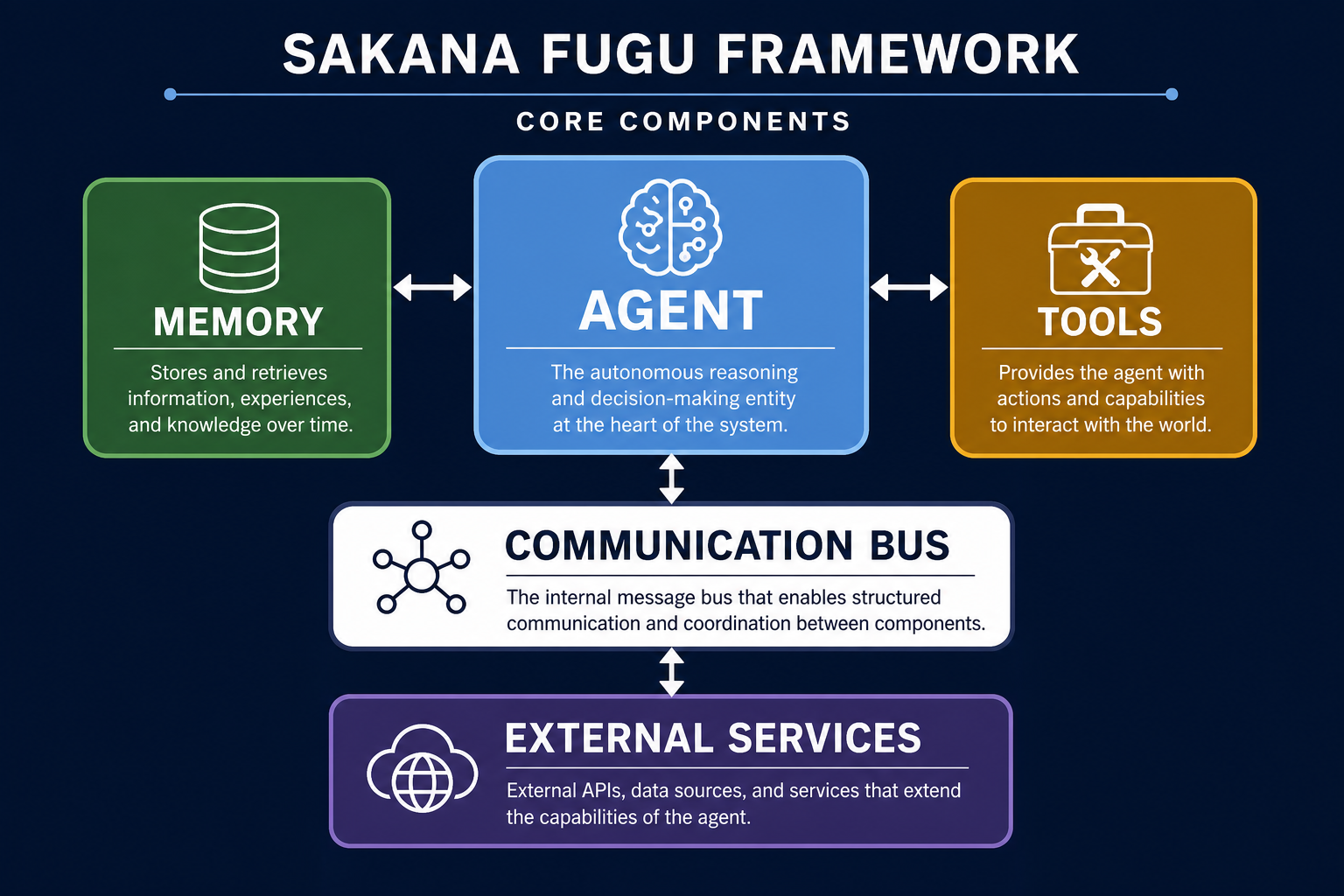
What is a Fugu Agent?
What exactly makes a Fugu agent tick? A Fugu agent is an autonomous software entity designed to perceive its environment, make decisions, and execute actions, all while communicating with other agents or external services.
This multi-faceted capability is achieved through a structured internal architecture that separates concerns like memory, perception, and action execution, enabling complex behaviors from simple building blocks.
Unlike a simple script, a Fugu agent maintains a persistent state and can adapt its behavior based on new information or interactions, making it suitable for dynamic and unpredictable environments.
In practical terms, this means a Fugu agent can handle tasks that require continuous monitoring, adaptive planning, and collaborative problem-solving, such as managing a supply chain or coordinating a fleet of drones.
Fugu agents operate on a simple principle: perceive, decide, act, and communicate.
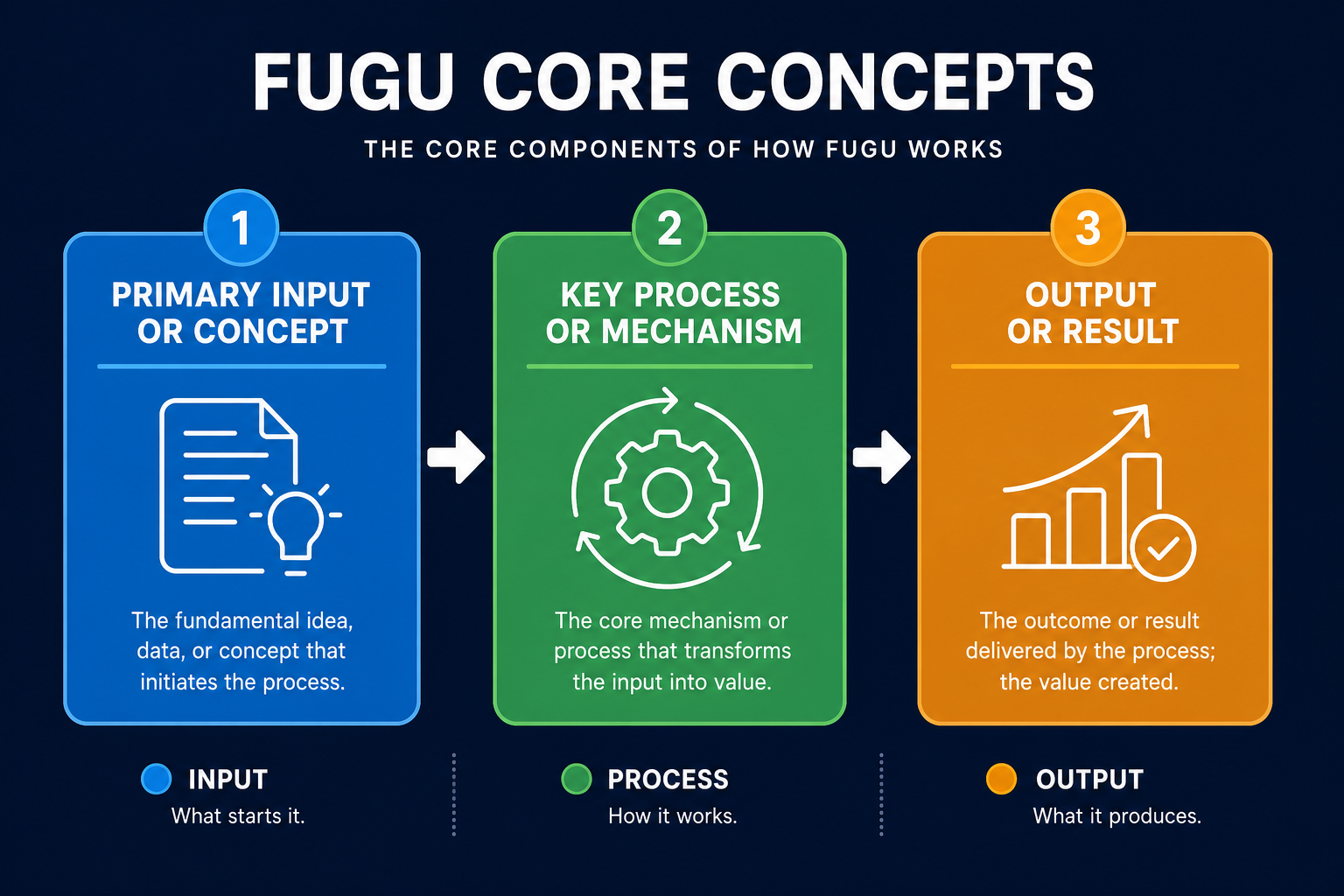
This diagram breaks down the core building blocks of Fugu Core Concepts so you can see how each part connects.
This video shows a developer monitoring a multi-agent system, highlighting the complexity and coordination involved. It sets the stage for understanding how individual Fugu components contribute to overall system behavior.
Agent Orchestration Overview
Observing an agent orchestrating tasks.
What is the primary role of the 'Communication Bus' in Sakana Fugu?
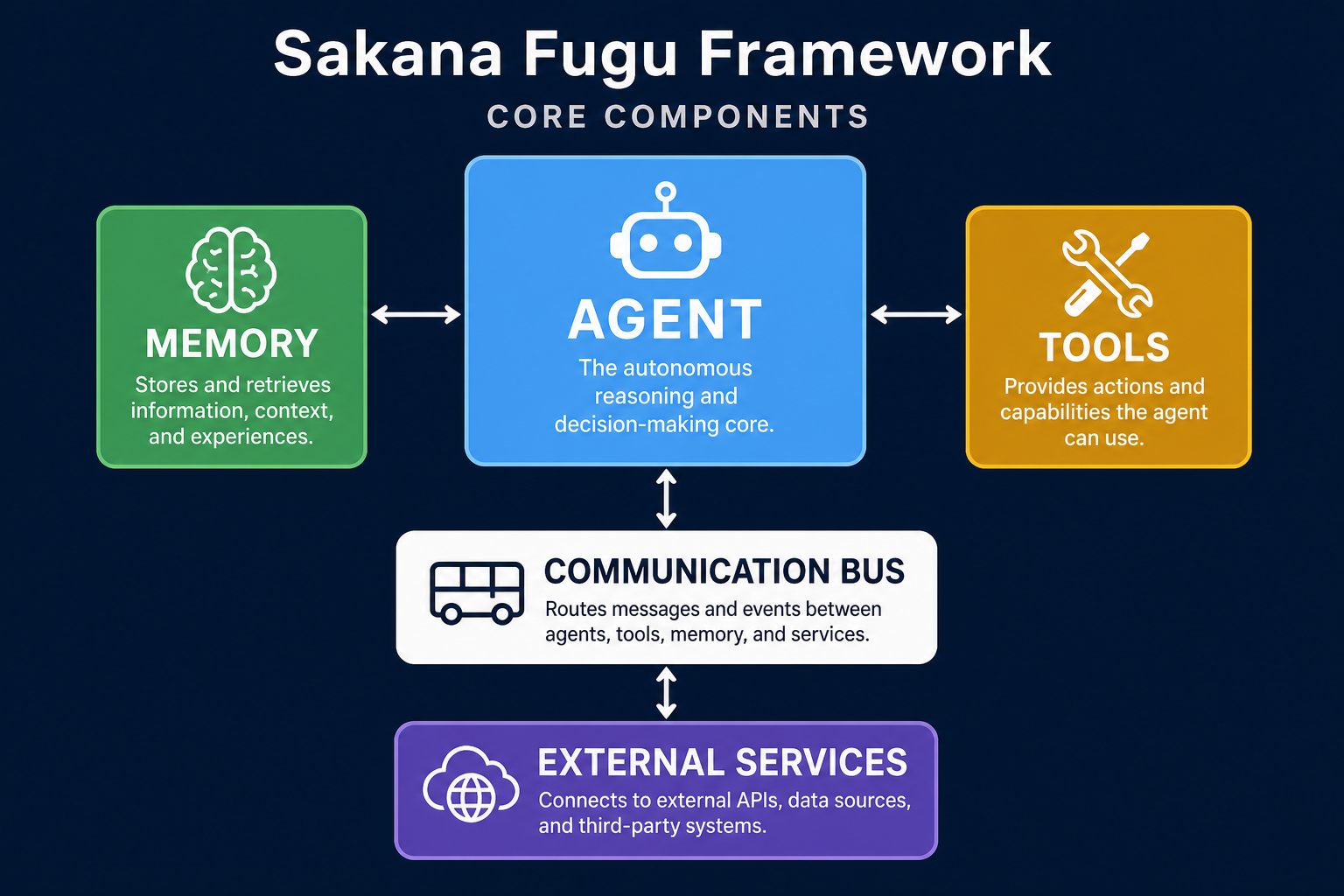
The Agent is the Core
Your Future Self Will Thank You
This is a pivotal moment in your process. You're not just learning concepts; you're building a new way of thinking about intelligent systems. Remember this feeling of discovery, because this foundational understanding of agent architectures will be the bedrock for everything you achieve in multi-agent design.
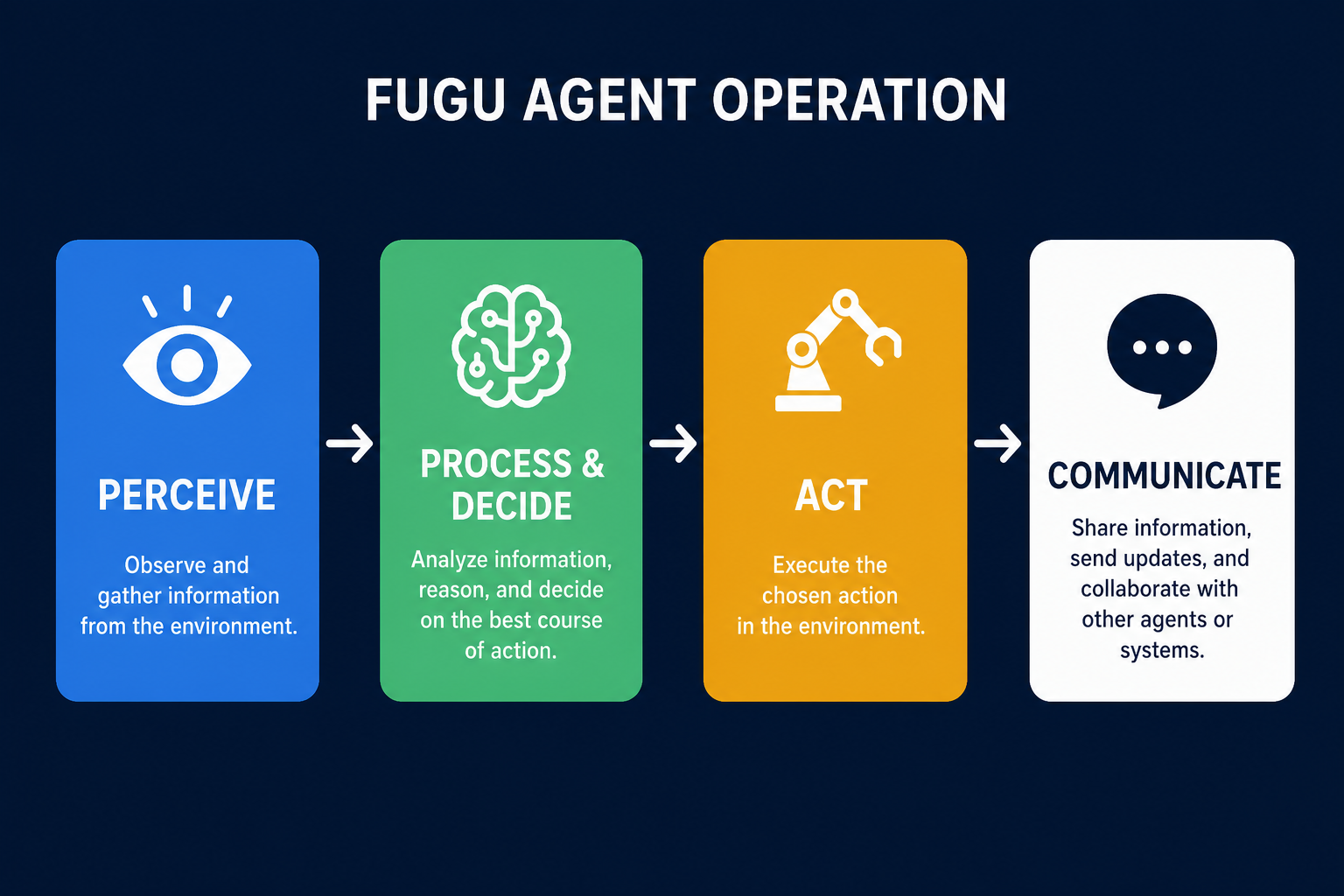
This diagram illustrates the continuous operational cycle of a Fugu agent, highlighting the causal dependencies between its core functions. It shows that actions are not isolated but are direct consequences of processed perceptions and decisions, which in turn feed back into the system through communication. This cyclical flow is essential for agents to adapt and respond intelligently to changing environments.
From Isolated Logic to Collaborative Intelligence
This contrast highlights the fundamental shift from traditional, tightly coupled software to the modular, message-driven architecture of Sakana Fugu. The key insight is how the Communication Bus transforms isolated logic into a collaborative intelligence, enabling greater resilience and scalability. This architectural choice directly impacts how easily systems can adapt and grow.
A Fugu agent's memory isn't just a database; it actively shapes perception and decision-making by providing context and learning from past experiences.
The communication bus ensures agents are loosely coupled. This means you can update one agent or service without breaking the entire system, making development much more agile.
Think of the agent's cycle as perpetual. There's no 'end' to perceiving, deciding, and acting; it's a constant adaptation to a changing environment.
This clip visualises a Fugu agent's core loop: perceiving, processing, and communicating. It shows the practical output of the architectural concepts discussed, bringing the abstract components to life.
Fugu Agent in Action
A Fugu agent processing data and sending a message.
Putting the Pieces Together
Understanding these core components—Agent, Memory, Tools, and the Communication Bus—is the first step towards building sophisticated multi-agent systems. Each piece plays a critical role in how the agent perceives its environment and interacts with the world.
The power of Sakana Fugu lies in how these components are integrated, creating a flexible and reliable framework for intelligent automation. This modularity allows for complex behaviors to emerge from simple, well-defined interactions.
If you remember only three things…
Fugu Agents are Modular
Agents consist of distinct Memory, Tools, and Communication Bus components, making them flexible and extensible.
Communication is Key
The Communication Bus is central to inter-agent and agent-service interactions, enabling coordinated actions and system scalability.
Continuous Operational Loop
Fugu agents operate in a constant cycle of perceiving, deciding, acting, and communicating, adapting to dynamic environments.
Architectural Shift
Fugu moves beyond monolithic systems, offering a resilient, distributed approach to building intelligent applications.
Test Your Understanding
Term Glossary
4 verified conceptsBuilding Blocks of Intelligence
You now understand the foundational architecture of Sakana Fugu, moving beyond a black-box view to seeing how intelligent agents are constructed. This knowledge help you to design systems where agents can truly collaborate and adapt.
Understanding the Fugu architecture is seeing the plan for collaborative AI.
Next, we will explore how these Fugu agents can be configured to achieve specific goals and tasks.
Audio lesson recap
A concise audio summary of this lesson — great for reinforcing key concepts on the go.
Hear it discussed
About three minutes on the ideas in this lesson
Sterling
AI tutor
Vivienne
Sceptical challenger
Press play to start the discussion…
Full transcript · click any line to jump
Ask anything about Fugu Core Concepts. Sterling will answer — concisely, and with his customary level of patience.