Neurons and Activation Functions
Explore how neurons process inputs and produce outputs using weights, biases, and activation functions.
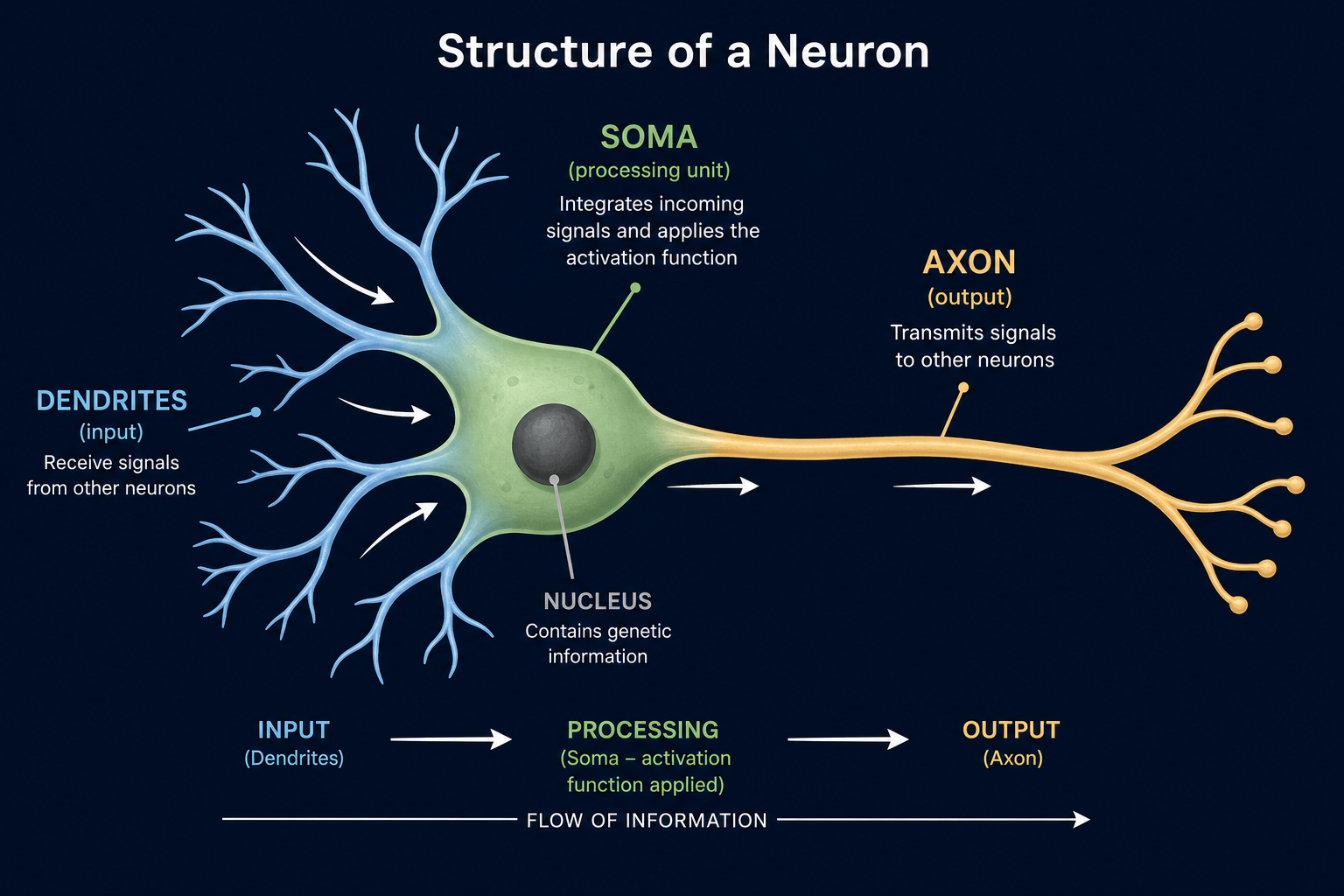
This is where we pause to reflect on the process ahead. Remember, understanding neural networks is about more than just code. It's about grasping the underlying principles that allow these systems to learn and adapt. Take a moment to appreciate the elegance and power of these concepts.
Before we begin
Why do neural networks need activation functions? Without them, a neural network would simply be a linear regression model, unable to learn complex patterns.
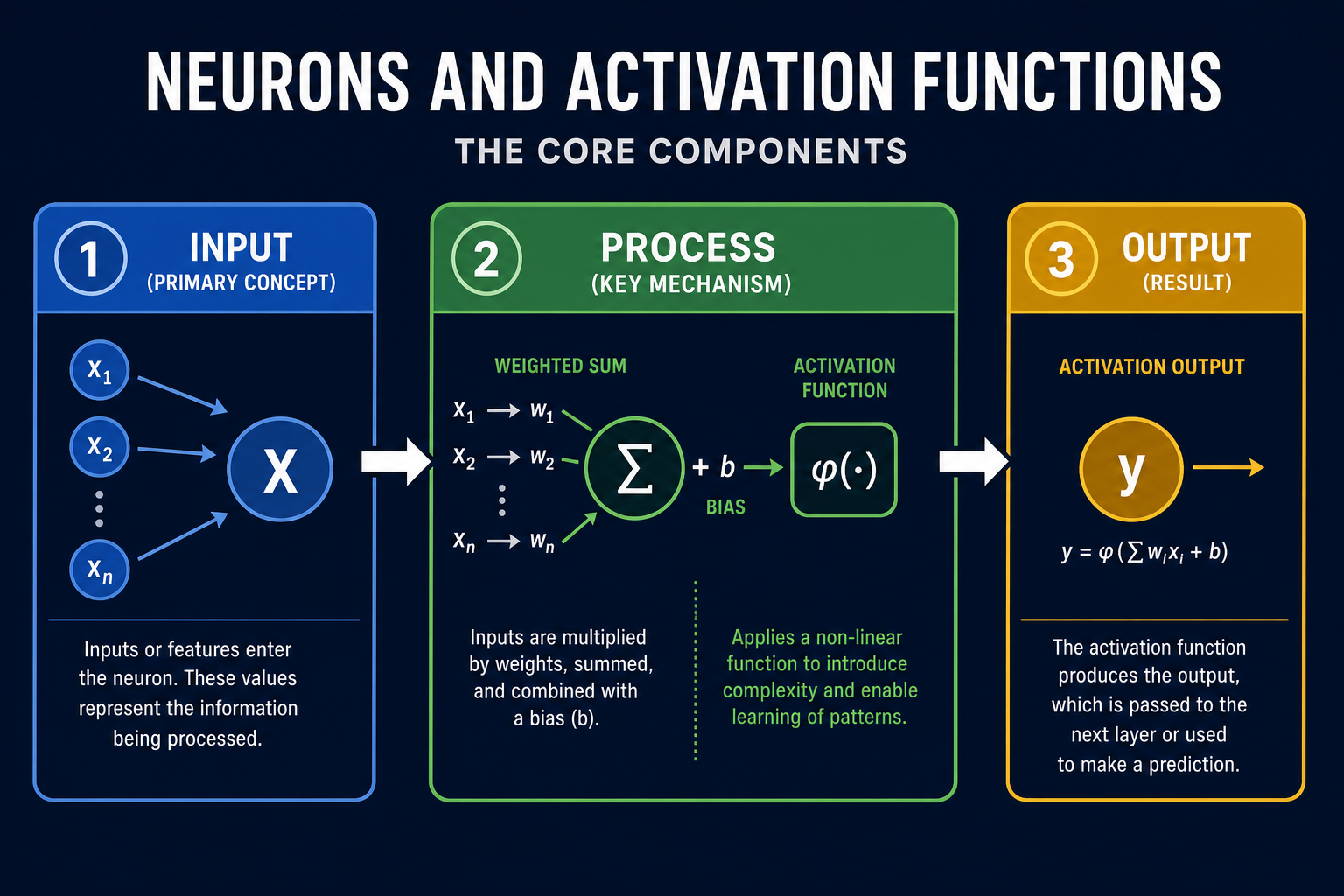
This diagram breaks down the core building blocks of Neurons and Activation Functions so you can see how each part connects.
Which of these activation functions is most likely to cause the 'vanishing gradient' problem during deep learning?
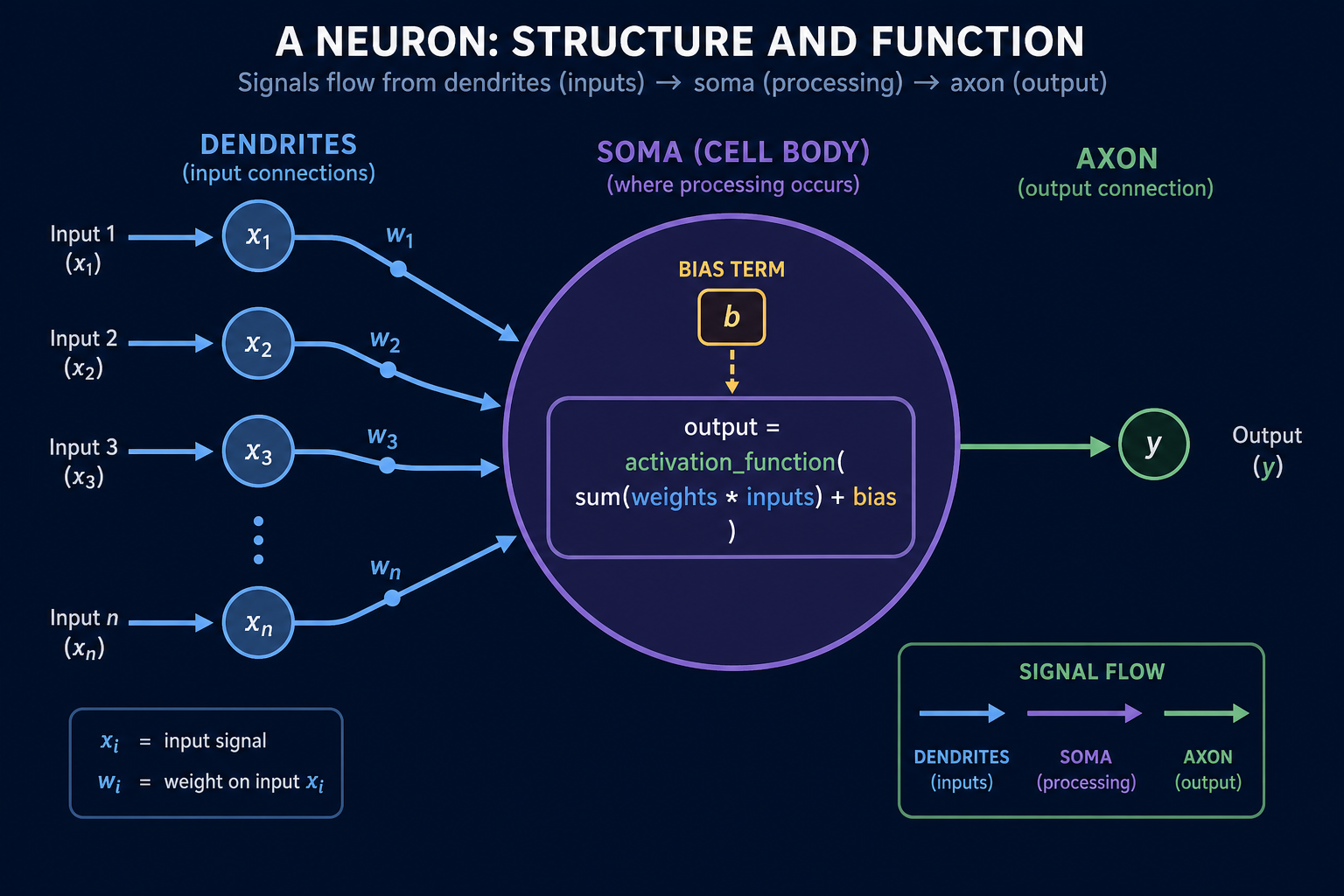
Inside a Neuron
The Role of Weights
Weights determine the strength of each input connection. A higher weight means the input has a greater influence on the neuron's output.
Think of weights as adjusting the volume knob on different instruments in an orchestra. Some instruments (inputs) are amplified, while others are dampened.
The Impact of Bias
Bias allows the neuron to activate even when all inputs are zero. It shifts the activation function, influencing the neuron's firing threshold.
Imagine a door with a spring preventing it from opening. The bias is like a constant push that helps overcome the spring's resistance, making it easier to open the door.
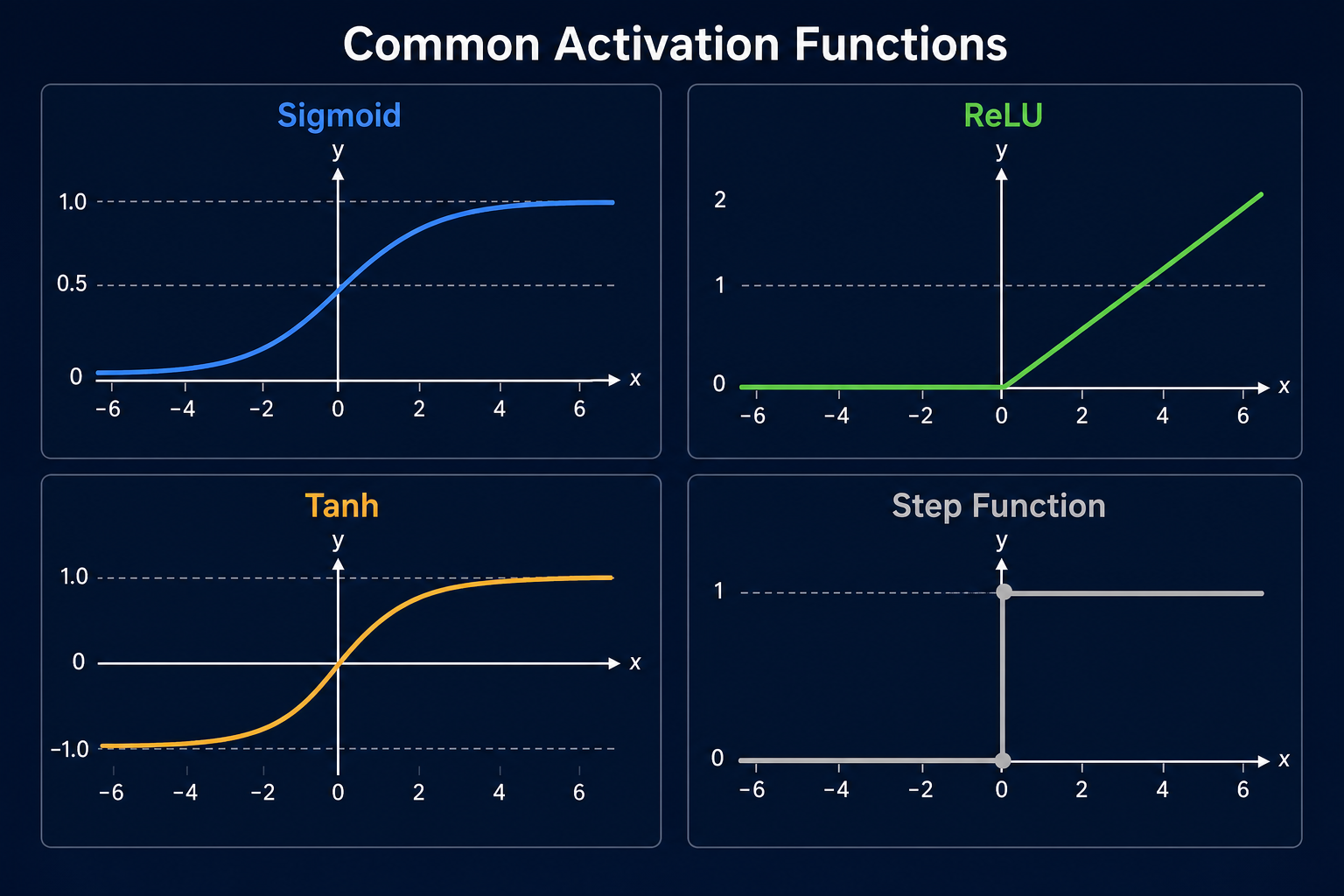
Each activation function introduces non-linearity, allowing the network to learn complex patterns. The choice of activation function can dramatically impact the network's performance and training stability.
Activation Function Contrast
Sigmoid activation functions can cause the vanishing gradient problem, slowing down learning in deep networks. ReLU activation functions mitigate this by maintaining larger gradients, leading to faster training.
Weights amplify or dampen incoming signals. They're the primary mechanism for learning.
Bias allows neurons to activate even with zero input. It provides the necessary offset.
Activation functions introduce non-linearity. They enable complex pattern recognition.
This video shows a data scientist choosing activation functions. Different activation functions affect a model's ability to learn.
Activation Function Selection
See a data scientist experimenting with different activation functions. This choice impacts model performance significantly.
Preparing for the Next Step
Understanding neurons is crucial for grasping how neural networks function. Weights, biases, and activation functions work together to process information.
Next, we'll explore how multiple neurons are connected to form layers. These layers enable neural networks to learn increasingly complex representations.
If you remember only three things…
Weights
Weights control the strength of input signals. They determine each input's influence on the neuron's output.
Bias
Bias shifts the activation function. This allows the neuron to activate even with zero input.
Activation Functions
Activation functions introduce non-linearity. They allow neural networks to learn complex patterns.
Neuron
The fundamental unit of a neural network. Neurons process data and make predictions.
Test Your Understanding
Prompt AI on Activation Function Comparisons
Write a prompt asking an AI to explain common activation functions and compare their uses for a beginner in machine learning.
You're trying to understand the different types of activation functions after learning about how a neuron processes input. You've read some technical papers, but they're dense. You want an AI to provide a clear, concise overview of the most common activation functions (like Sigmoid, Tanh, ReLU) and explain when each is typically used, keeping the explanation simple for someone just starting out in AI.
Term Glossary
4 verified conceptsGrasping Neuron Fundamentals
You now understand the fundamental components of a neuron and how they contribute to the overall function of a neural network. This understanding shifts your perspective from seeing neural networks as black boxes to understanding their inner workings, enabling you to reason about their behavior.
Neurons are the fundamental building blocks that enable neural networks to learn complex patterns and make intelligent decisions, making them the cornerstone of deep learning.
Next, we'll explore how layers of neurons form a neural network, enabling the creation of deep learning models capable of solving complex problems.
Audio lesson recap
A concise audio summary of this lesson — great for reinforcing key concepts on the go.
Hear it discussed
About three minutes on the ideas in this lesson
Sterling
AI tutor
Vivienne
Sceptical challenger
Press play to start the discussion…
Full transcript · click any line to jump
Weights Control Input Influence
Weights determine the strength of each input connection, significantly influencing the neuron's output. Adjusting weights is the primary mechanism through which neural networks learn and adapt.
Bias Shifts Activation Threshold
Bias allows a neuron to activate even when all inputs are zero, providing a crucial offset. It effectively shifts the activation function, influencing the neuron's firing behaviour.
Activation Functions Introduce Non-linearity
Activation functions are essential for enabling neural networks to learn complex, non-linear patterns. Choosing the right activation function can dramatically impact network performance and training stability.
Ask anything about Neurons and Activation Functions. Sterling will answer — concisely, and with his customary level of patience.