Adversarial AI Techniques
Explore how adversarial attacks exploit vulnerabilities in image recognition models.

Understanding Adversarial Attacks
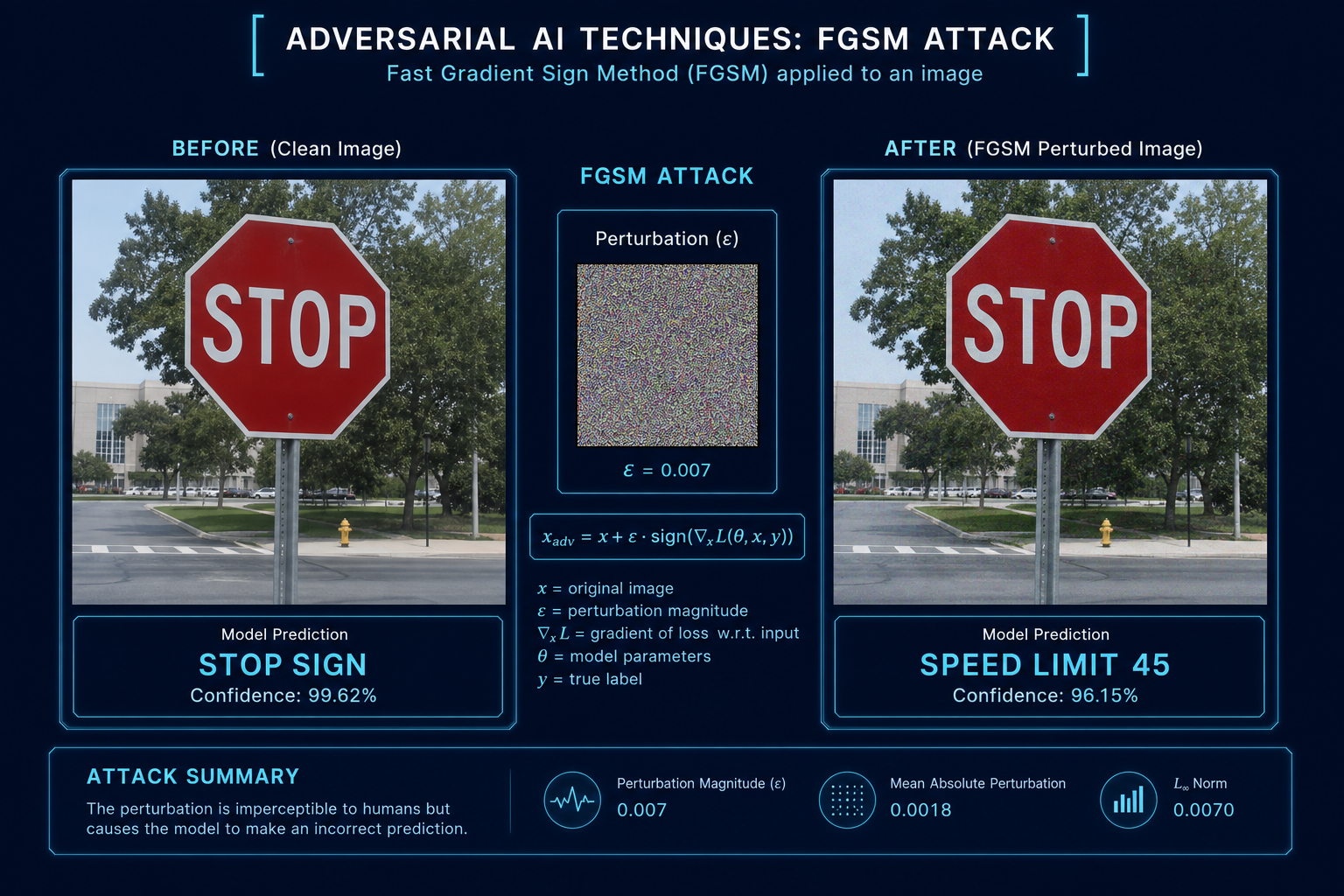
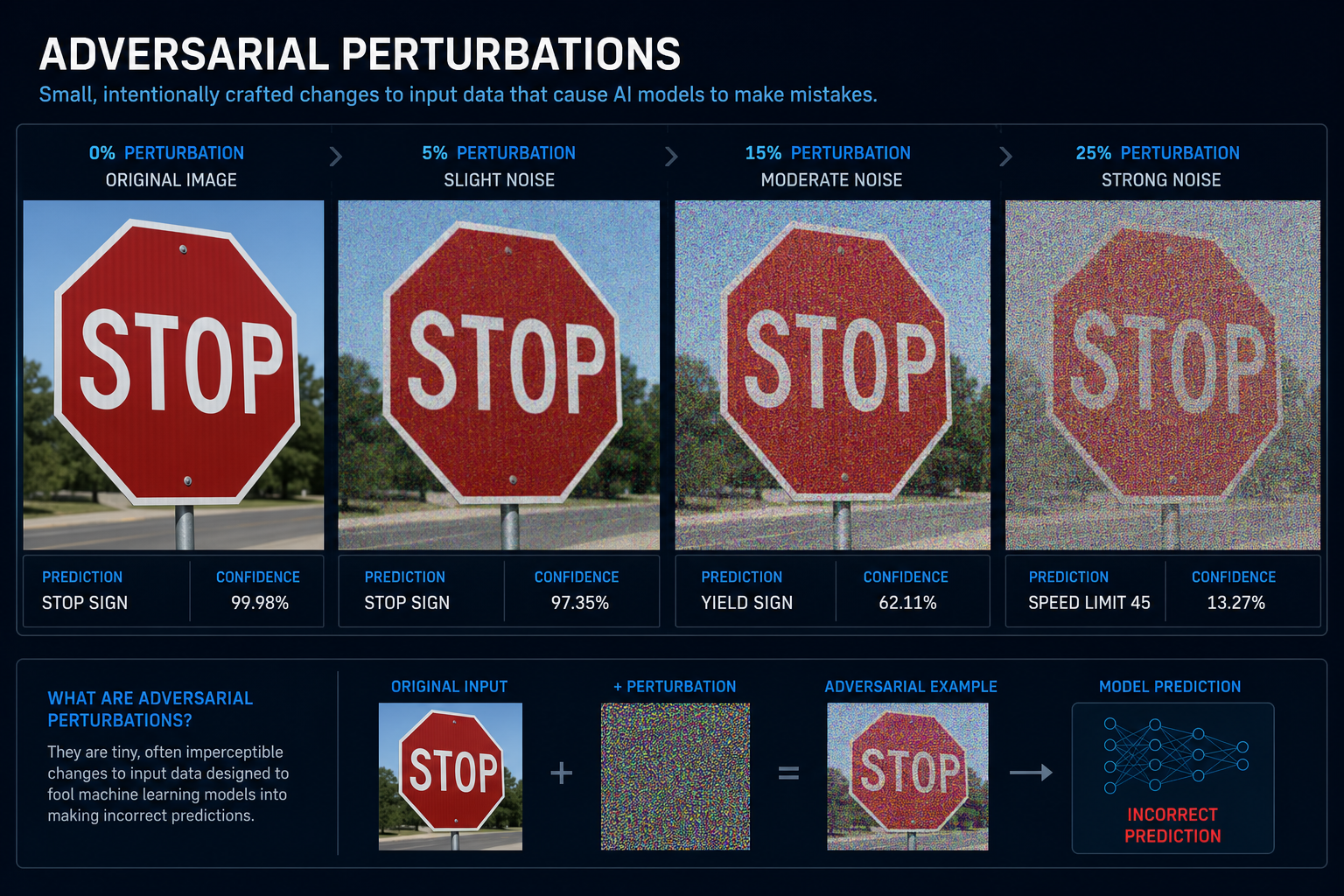
Adversarial attacks manipulate input data to deceive machine learning models. These attacks can cause misclassification while appearing unchanged to humans.
Common techniques include Fast Gradient Sign Method (FGSM) and Projected Gradient Descent (PGD). Understanding these helps improve model robustness.
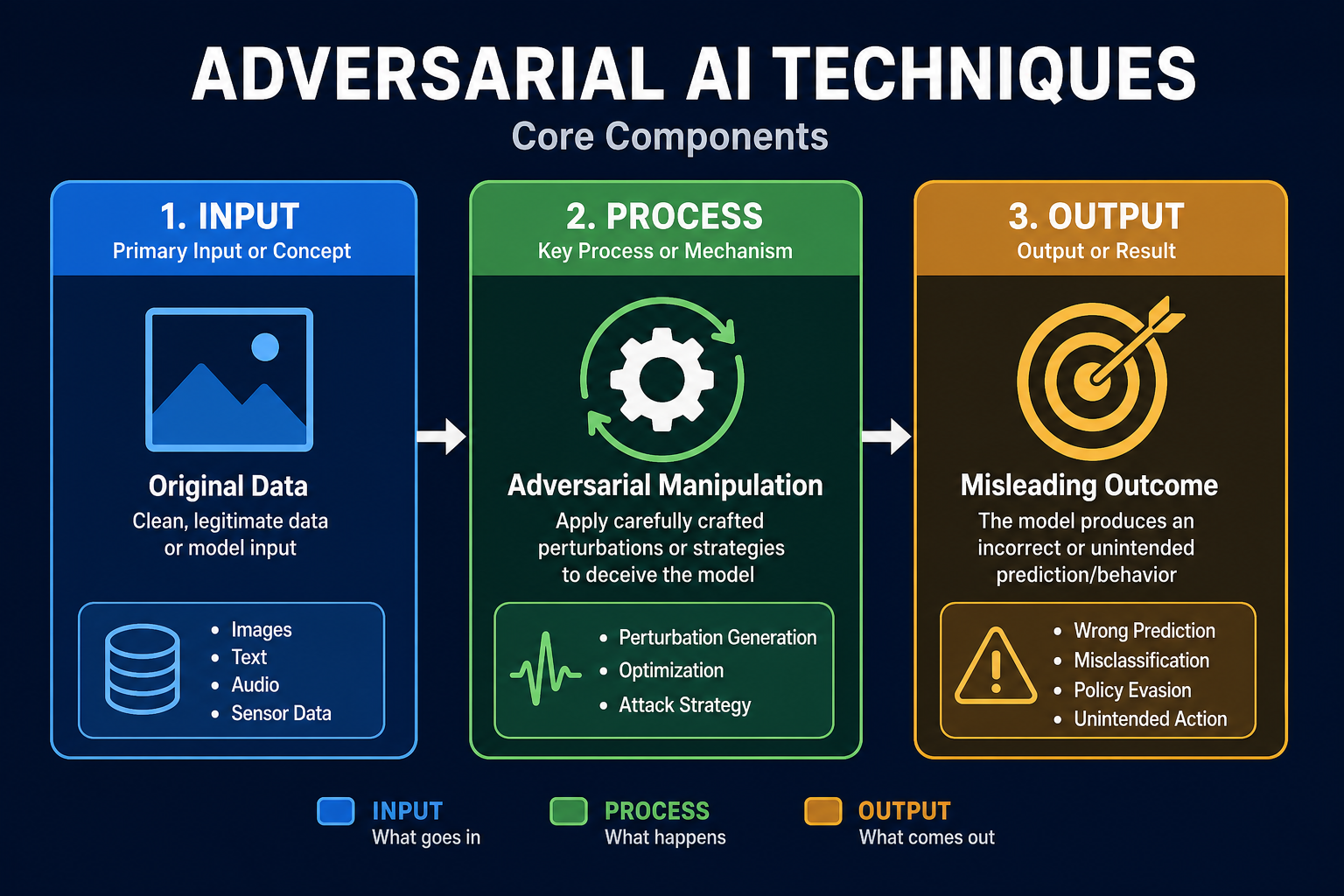
This diagram breaks down the core building blocks of Adversarial AI Techniques so you can see how each part connects.
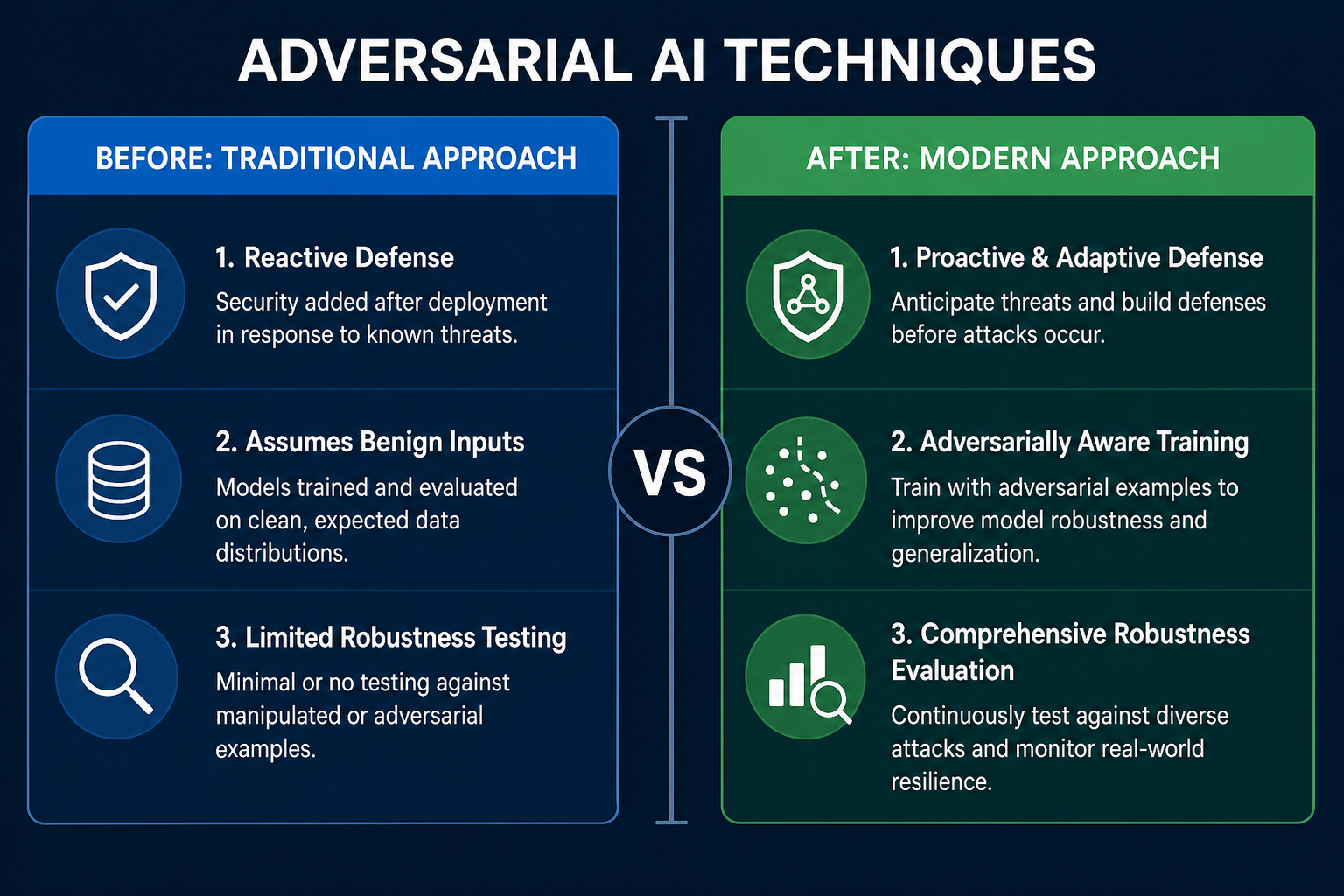
Comparing the old approach to the new one shows why Adversarial AI Techniques matters in Cybersecurity in the Age of AI.

Following the sequence step by step makes Adversarial AI Techniques straightforward to apply immediately.
Adversarial Attack Methods

Key Takeaways
Understand Adversarial AI's Cybersecurity Impact
Adversarial AI techniques are crucial in cybersecurity, revealing vulnerabilities in machine learning models. Learning these methods helps you build more robust and secure AI systems against malicious attacks.
FGSM and PGD: Core Attack Methods
Fast Gradient Sign Method (FGSM) and Projected Gradient Descent (PGD) are fundamental adversarial attack techniques. Mastering these allows you to identify and mitigate model weaknesses effectively.
Robustness is Key for AI Security
Model robustness, its resistance to adversarial inputs, is paramount for reliable AI deployment. Implement input sanitisation and understand attack transferability to enhance your model's defence.
Knowledge Check
Term Glossary
8 verified conceptsSpot the Hallucination
The following paragraph was generated by an AI about adversarial AI attacks. Identify what is factually incorrect or unverifiable — name the specific claim and explain why it is wrong.
Adversarial AI attacks were first formally described by Geoffrey Hinton in his 2009 paper "Adversarial Examples in Neural Networks". The Fast Gradient Sign Method (FGSM), invented by Hinton and LeCun, works by adding invisible noise to images that humans cannot perceive but causes models to misclassify with near-100% confidence. FGSM attacks are unique in that they only work on convolutional neural networks, making them irrelevant to large language models.
Lesson Complete
You've explored how adversarial attacks exploit model vulnerabilities and implemented basic attacks.
Now apply this knowledge to test your own models!
Advanced Defense Strategies
Audio lesson recap
A concise audio summary of this lesson — great for reinforcing key concepts on the go.
Hear it discussed
About three minutes on the ideas in this lesson
Sterling
AI tutor
Vivienne
Sceptical challenger
Press play to start the discussion…
Full transcript · click any line to jump
Understand Adversarial AI's Cybersecurity Impact
Adversarial AI techniques are crucial in cybersecurity, revealing vulnerabilities in machine learning models. Learning these methods helps you build more robust and secure AI systems against malicious attacks.
FGSM and PGD: Core Attack Methods
Fast Gradient Sign Method (FGSM) and Projected Gradient Descent (PGD) are fundamental adversarial attack techniques. Mastering these allows you to identify and mitigate model weaknesses effectively.
Robustness is Key for AI Security
Model robustness, its resistance to adversarial inputs, is paramount for reliable AI deployment. Implement input sanitisation and understand attack transferability to enhance your model's defence.
Ask anything about Adversarial AI Techniques. Sterling will answer — concisely, and with his customary level of patience.