Introduction to Hermes Framework
This lesson introduces the Hermes framework, its architecture, and core components. You will learn how these elements work together to automate tasks.
Core Components Explained
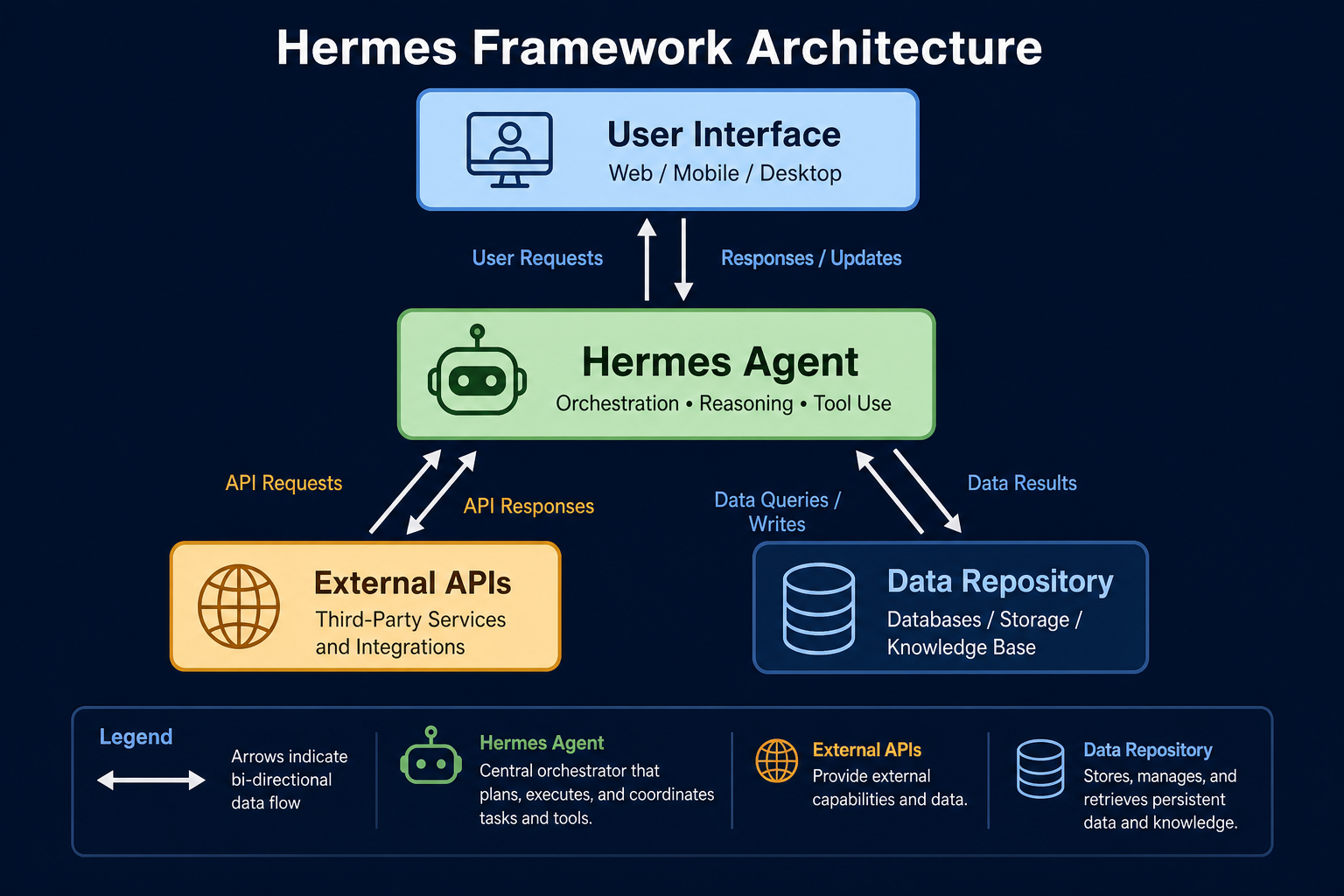
The Hermes framework consists of several key components. These components work together to enable automated task execution.
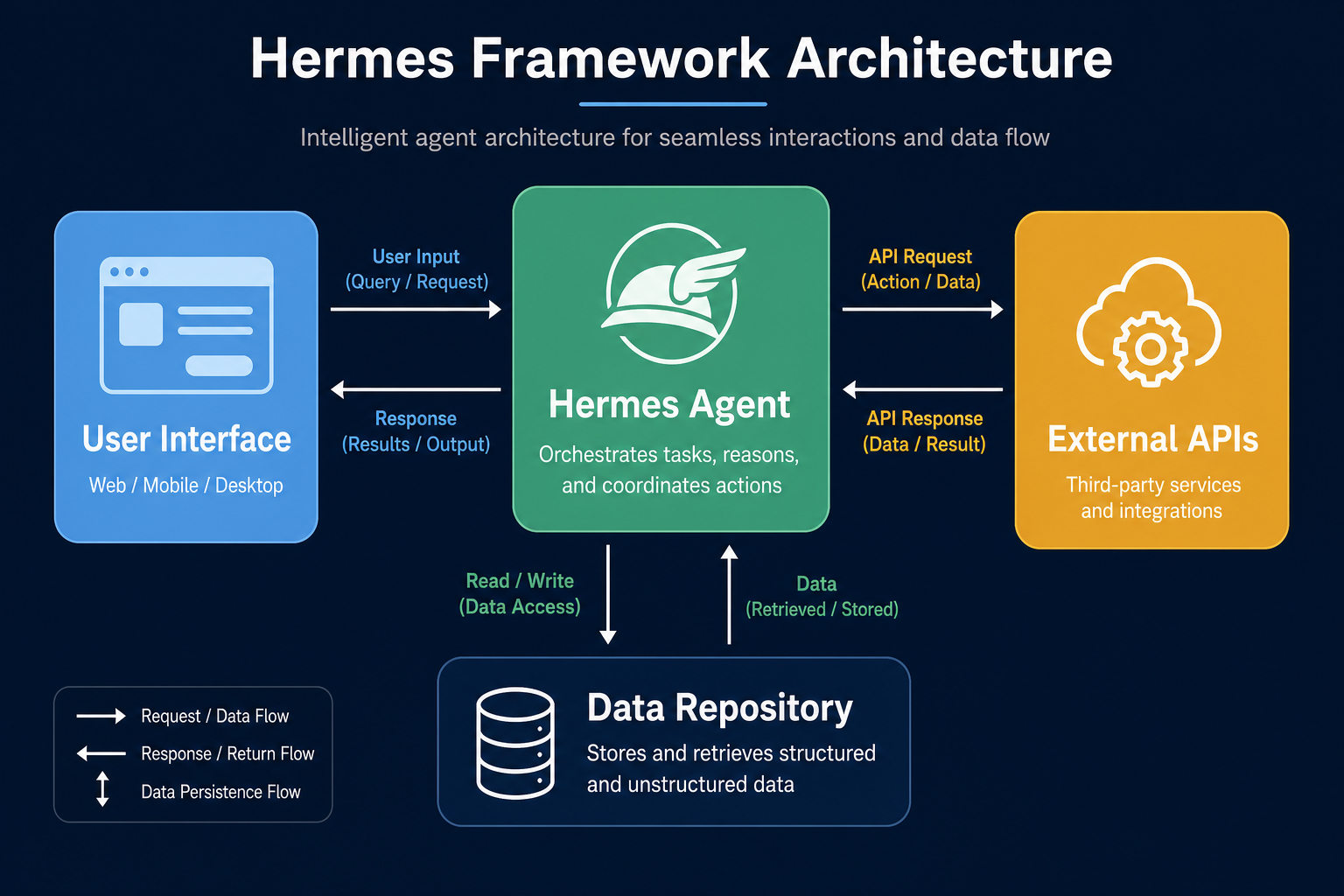
The user interface allows users to interact with Hermes agents. Agents then connect to external APIs to retrieve data or perform actions. The data repository stores data used by the agents.
Understanding these components is crucial for building effective automated solutions.
Hermes agents automate tasks by connecting users, APIs, and data.
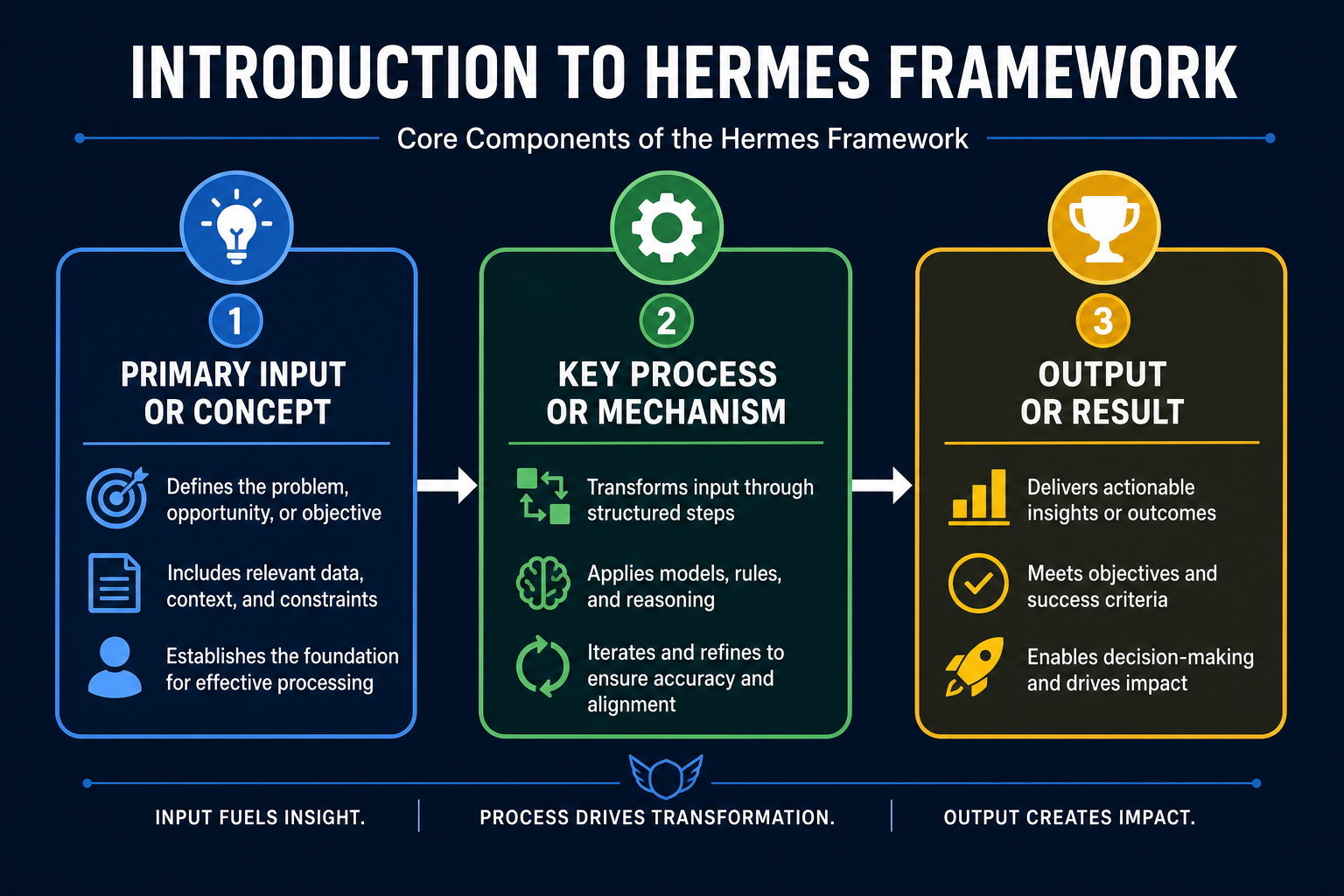
This diagram breaks down the core building blocks of Introduction to Hermes Framework so you can see how each part connects.
This video demonstrates the Hermes framework automating a data extraction task. Witnessing this helps understand its practical applications.
Hermes Framework in Action
A glimpse into the Hermes framework automating a routine task.
Which of these is NOT a core component of the Hermes framework?
Hermes Framework Architecture
Agent-API Interaction
Hermes agents interact with external APIs to automate tasks. This interaction involves sending requests to APIs and processing the responses.
Agents can use APIs to retrieve data, trigger actions, or perform other operations. This integration allows Hermes to automate a wide range of tasks.
For example, an agent could use a marketing API to retrieve campaign performance data.
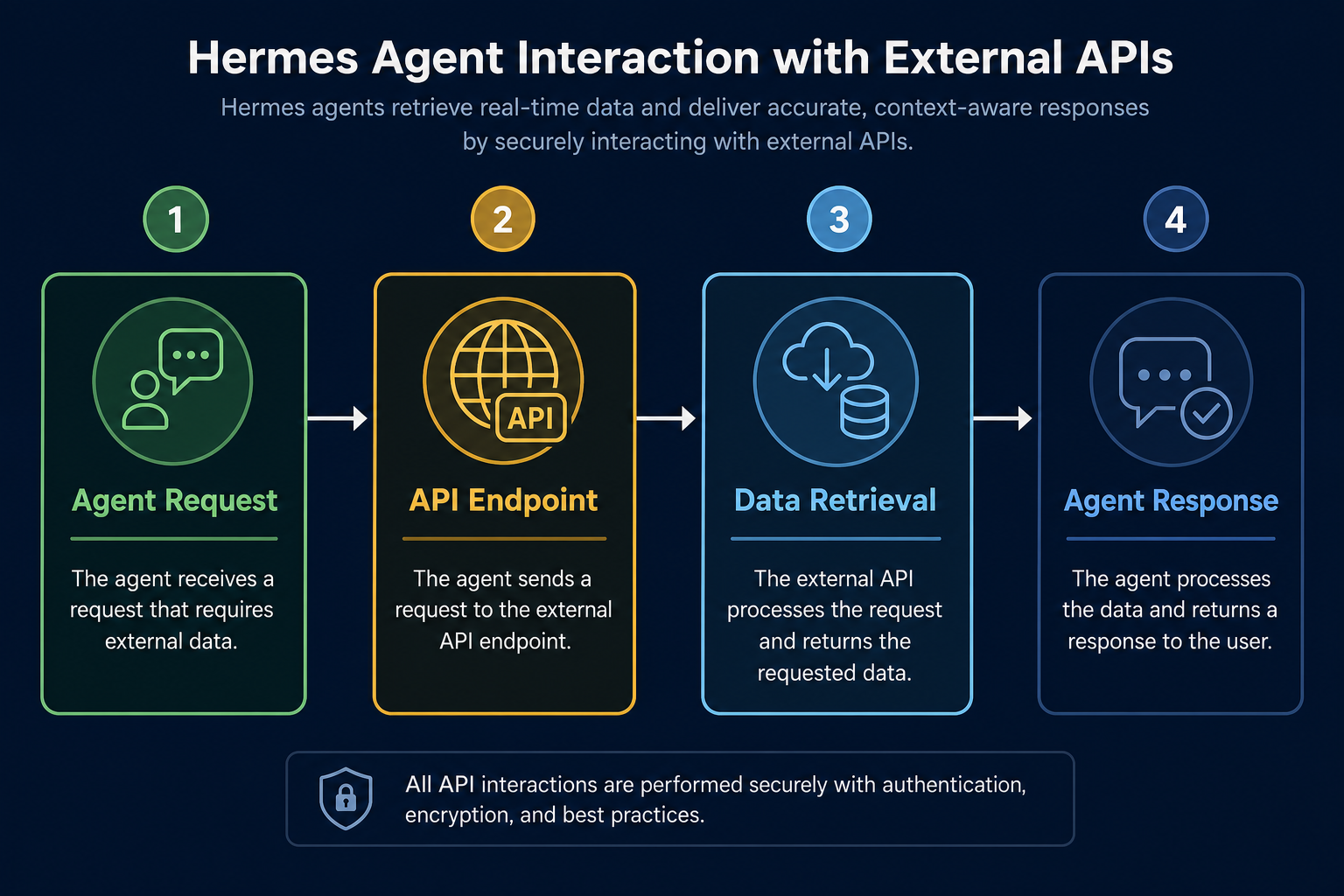
This visual illustrates the data flow during API interaction. The agent sends a request, the API retrieves the data, and the agent processes the response.
Automated vs. Manual Data Extraction
This contrast highlights the efficiency gains from automation. Hermes reduces manual effort and increases data accuracy.
The architecture reveals how components enable automated tasks. Each component plays a crucial role in data flow and task execution.
Hermes agents connect to external APIs to retrieve data. This integration allows the framework to interact with various services.
The data repository stores data used by the agents. Effective data management is crucial for reliable automation.
This video shows a Hermes agent automating report generation. This showcases how Hermes can automate repetitive tasks.
Hermes Automating Report Generation
A Hermes agent automatically generates a marketing report.
Consolidating the Architecture
The Hermes framework's architecture enables simplify automation. It connects users, APIs, and data in a coherent system.
By understanding the components, you can design effective agents. These agents can then automate a wide range of business tasks.
If you remember only three things…
Hermes Architecture
The framework connects users, agents, APIs, and data. This architecture enables simplify automation of tasks.
Agent-API Interaction
Agents interact with APIs to retrieve data and perform actions. This integration is crucial for automating tasks.
Data Repository
The data repository stores data used by the agents. Effective data management is essential for reliable automation.
Core Components
User interface, Hermes agent, external APIs, and data repository. These components form the foundation of the framework.
Test Your Understanding
Define Hermes Agent Role and Tool
Complete the prompt template by filling in the blanks to define a Hermes agent's primary role and an essential tool.
You are defining a new Hermes agent for customer support. Complete the prompt template below to assign its primary role and an essential tool for its operation. Remember that Hermes agents rely on clear roles and defined tools to perform their tasks effectively. ``` AGENT_NAME: CustomerSupportBot ROLE: [BLANK] GOALS: - Resolve common customer inquiries efficiently. - Escalate complex issues to human agents. - Provide instant access to product FAQs. INITIAL_TOOLS: - Tool: KnowledgeBaseQuery (description: Accesses product documentation) - Tool: [BLANK] (description: Creates support tickets for escalation) ```
Term Glossary
4 verified conceptsUnderstanding the Hermes Architecture
You now understand the architecture of the Hermes framework. You can design and deploy effective automated solutions.
The Hermes framework enables automation by connecting users, APIs, and data.
Next, we will build a simple Hermes agent using Python.
Audio lesson recap
A concise audio summary of this lesson — great for reinforcing key concepts on the go.
Hear it discussed
About three minutes on the ideas in this lesson
Sterling
AI tutor
Vivienne
Sceptical challenger
Press play to start the discussion…
Full transcript · click any line to jump
Hermes connects users, APIs, and data
The Hermes framework integrates these three elements to automate tasks efficiently. Understanding this core connection is vital for designing effective automated solutions.
Architecture enables automated task execution
The framework's design facilitates seamless interaction between its components for task automation. This mental model helps in visualising how software agents interact with external services.
Agents interact with APIs for tasks
Hermes agents send requests to external APIs and process responses to automate various operations. This integration allows for retrieving data, triggering actions, and performing other essential functions.
Ask anything about Introduction to Hermes Framework. Sterling will answer — concisely, and with his customary level of patience.