Data Types and Sources
Understand how to classify data based on its structure and origin. This is fundamental for effective data processing and analysis.
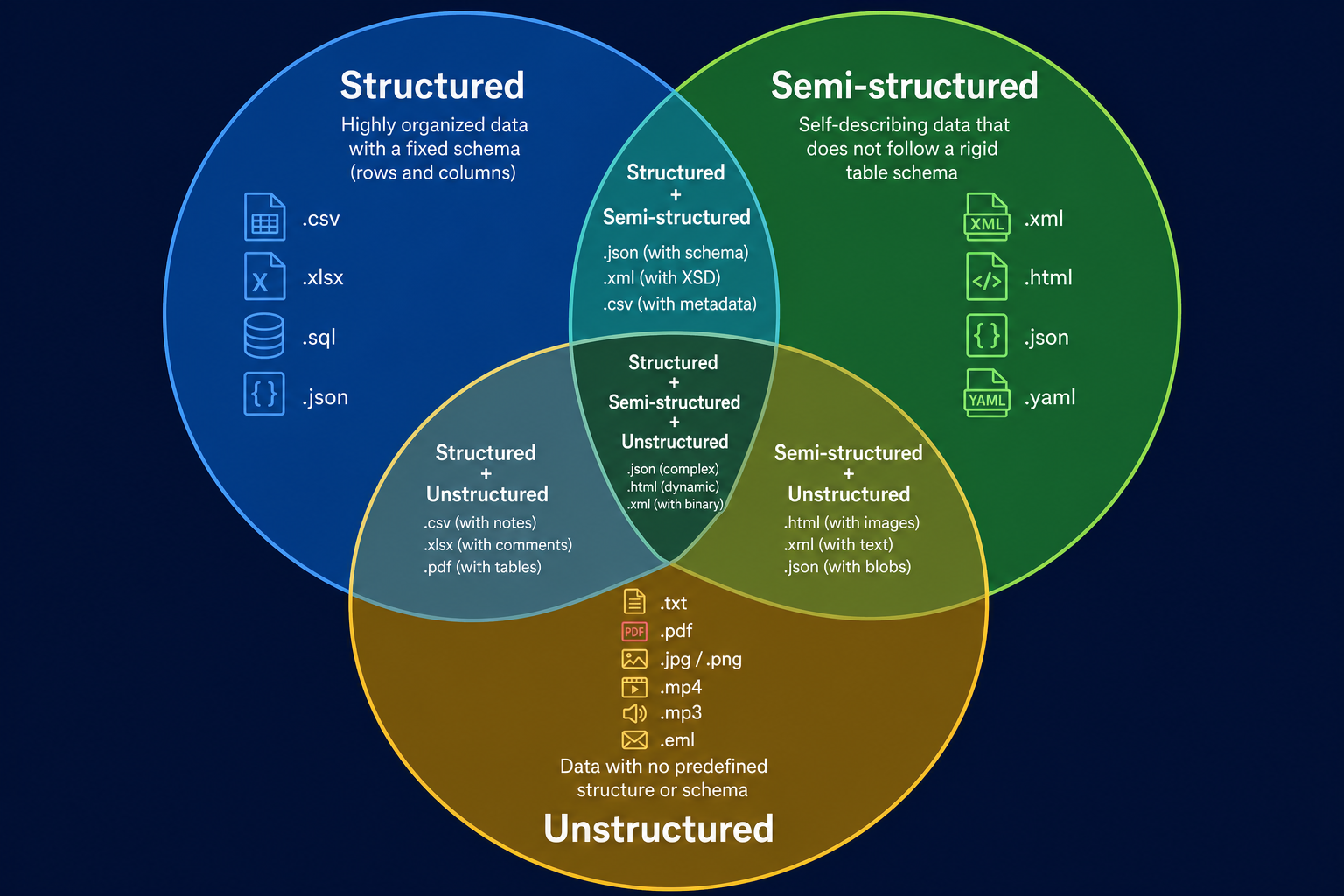
Structured Data Explained
Structured data is organised in a predefined format. Think of spreadsheets or relational databases, where data is stored in rows and columns.
This rigid structure makes it easy to search, sort, and analyse. However, it can be inflexible when dealing with diverse information.
Data isn't just information; it's potential waiting to be learn.
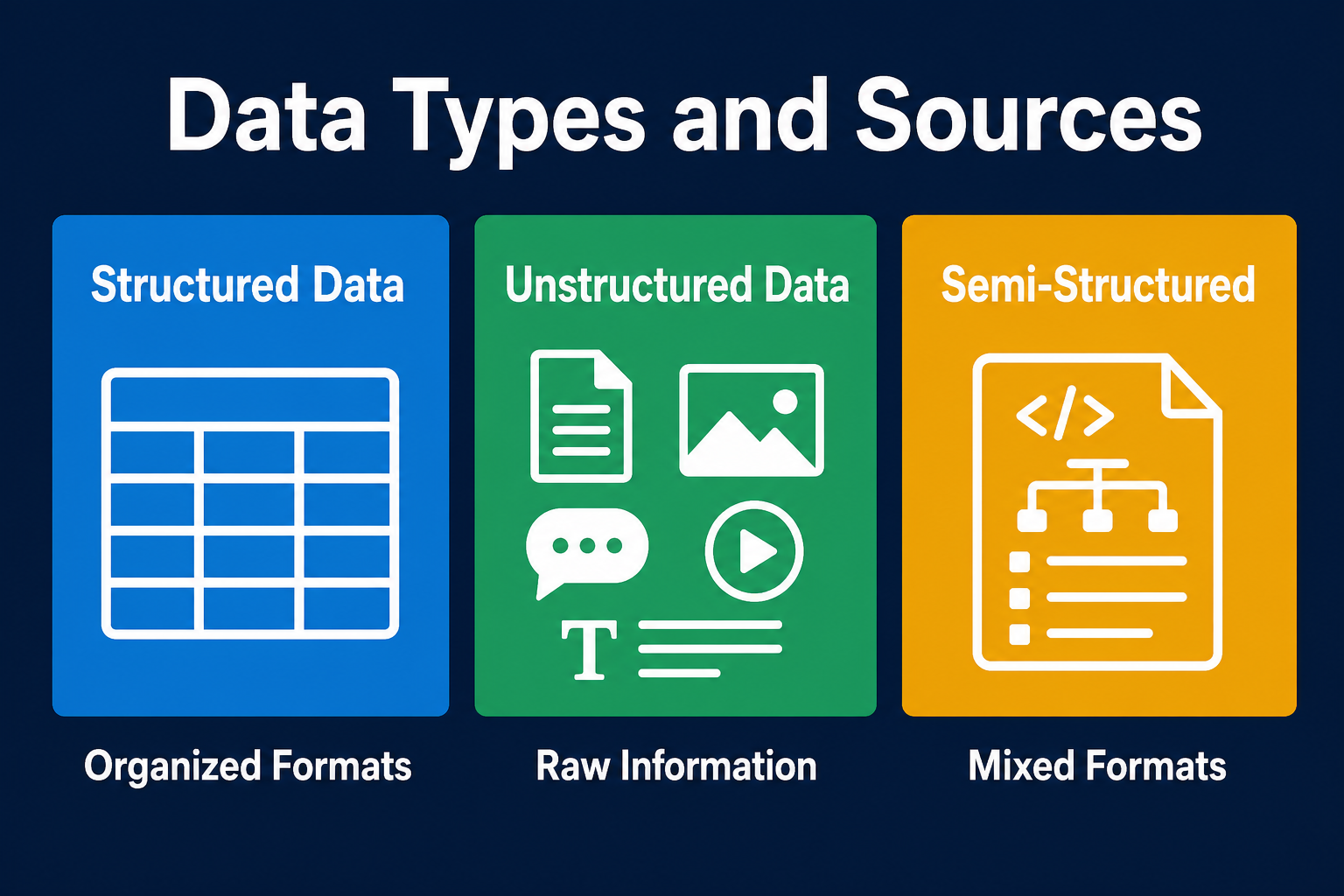
This visual illustrates how Data Types and Sources applies in real-world Data & AI Fundamentals scenarios.
This video shows you examples of different data types in context. Understanding these types is the first step in working with data intelligently.
Data Types Visualised
A quick visualisation of the three main data types. See how data manifests in the real world and why classification is vital.
Which of these is the best example of semi-structured data?
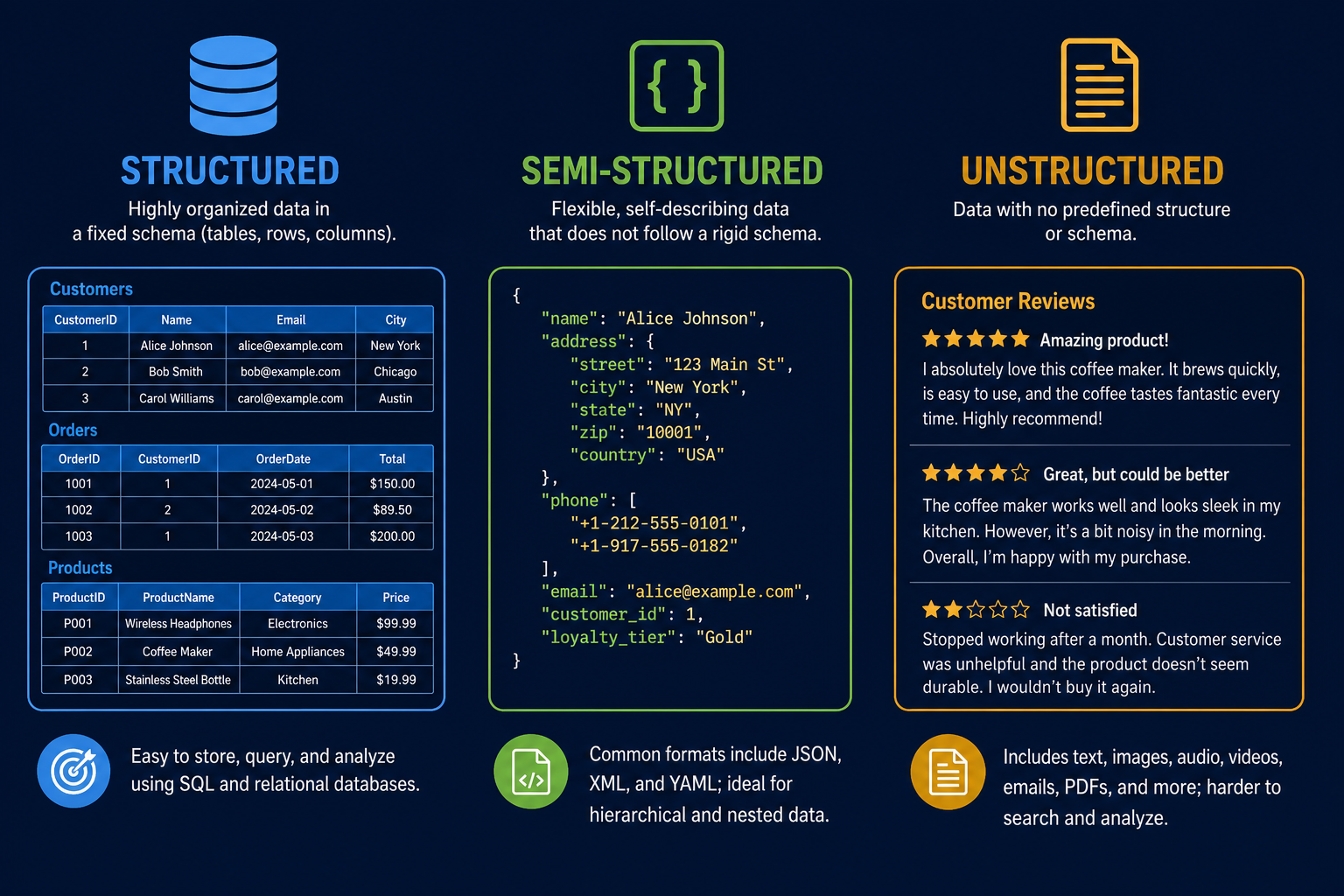
Understanding Data Structure
Semi-Structured Data
Semi-structured data doesn't fit neatly into tables. It has tags or markers that provide some organisation, but it's not as strict as structured data.
JSON and XML files are common examples. They're more flexible than databases, but still offer some level of structure for processing.
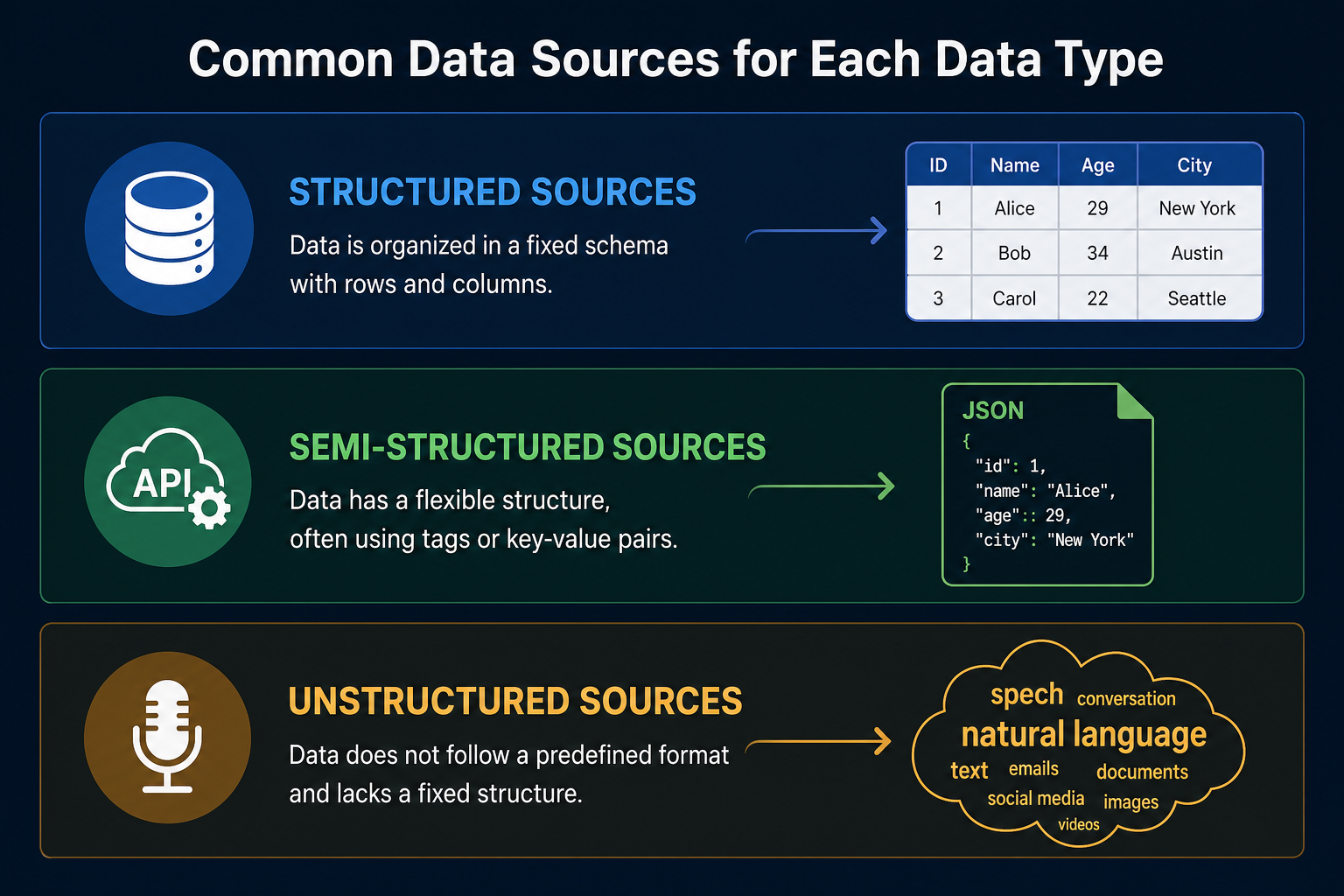
The diagram highlights how the origin of data often dictates its structure. Databases are designed for structured information, APIs deliver semi-structured data, and sensors generate unstructured content.
Data Processing: Before and After Data Classification
This contrast illustrates how data classification simplify processing. By categorising data first, you can apply the right tools and techniques, preventing errors and ensuring consistency.
Unstructured data is most flexible, but hardest to analyse directly. Structured data is the opposite: rigid but easy to query.
Schema design is critical for structured data. A poorly designed schema can limit analysis and create data integrity issues.
Mixing data types requires careful planning. Transforming unstructured data into structured formats can be complex.
This video visualises how data moves through a typical data pipeline. It shows the transformation of data from raw sources to usable insights.
Data Pipeline Animation
See a simplified data pipeline processing different data types. Understanding the flow helps with system design and troubleshooting.
Choosing the Right Type
The right data type depends on your needs. Structured data is ideal for reporting and analysis, while unstructured data is better for capturing rich information.
Semi-structured data offers a middle ground, balancing flexibility with some degree of organisation. This choice determines your whole data architecture.
If you remember only three things…
Structured Data
Highly organised data in a predefined format. This allows for efficient querying and reporting.
Semi-Structured Data
Data with some organisational properties, but not a rigid schema. JSON and XML are common examples.
Unstructured Data
Data with no predefined format. This is often rich in content, but harder to analyse directly.
Data Source
The origin of data influences its structure. Understanding the source can guide your approach to data classification.
Test Your Understanding
Classify Data Sources for AI Strategy
Given the retailer's goal, classify the primary data types and sources that would be most crucial for their AI system. Justify your selection.
A large online clothing retailer wants to implement an AI system to predict customer satisfaction and minimize product returns. They have access to internal sales transaction data, customer demographics, and product descriptions (structured data). However, they also receive thousands of customer reviews daily, alongside social media mentions and customer service chat logs (unstructured text). They are considering whether to prioritize quantitative metrics or qualitative feedback.
Term Glossary
4 verified conceptsFrom Raw Input to Organised Insight
You now understand the fundamental differences between data types and their sources. You can recognise which data type is best suited to specific business requirements, turning raw input into organised insight.
Understanding data types is the foundation for effective data management and analysis.
Next, we will explore data cleaning and transformation techniques.
Audio lesson recap
A concise audio summary of this lesson — great for reinforcing key concepts on the go.
Hear it discussed
About three minutes on the ideas in this lesson
Sterling
AI tutor
Vivienne
Sceptical challenger
Press play to start the discussion…
Full transcript · click any line to jump
Classify data to choose right tools
Distinguishing between structured, semi-structured, and unstructured data is fundamental. This classification guides the selection of appropriate analysis tools and techniques, preventing errors and ensuring consistency in data processing.
Data origin dictates its inherent structure
The source of data significantly influences its format and organisation. Databases yield structured data, APIs often provide semi-structured data, and sensors typically generate unstructured content.
Schema design is critical for structured data
A well-designed schema is paramount for structured data, enabling efficient querying and maintaining data integrity. Poor schema design can severely limit analytical capabilities and introduce inconsistencies.
Ask anything about Data Types and Sources. Sterling will answer — concisely, and with his customary level of patience.