Understanding Model Context
This lesson defines and explains the importance of model context in machine learning.
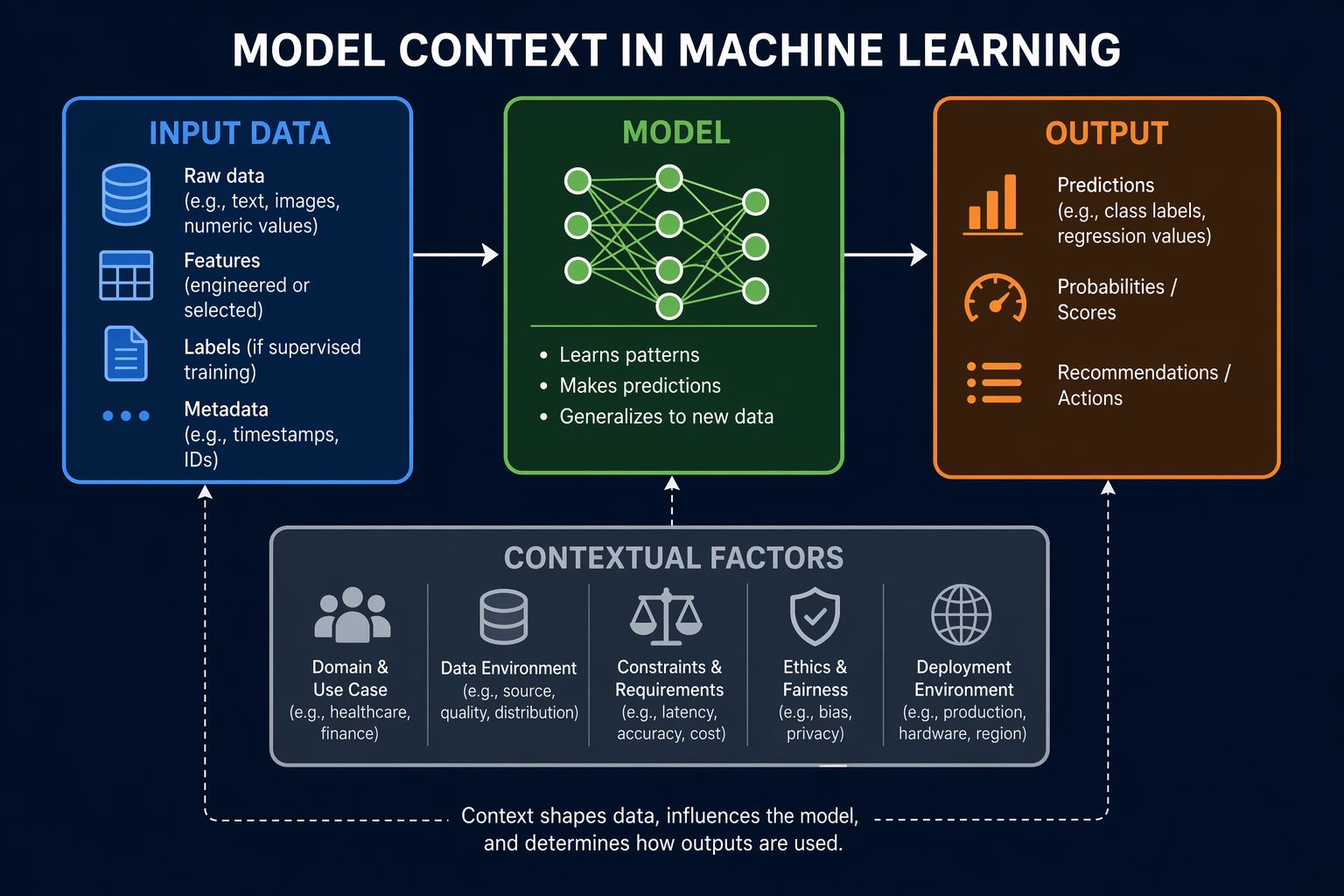
The Role of Context in Models
Context plays a pivotal role in how models interpret data. It includes factors such as the environment, data quality, and specific use cases.
Without considering context, models may produce misleading results. This highlights the importance of situating models within their relevant environments.
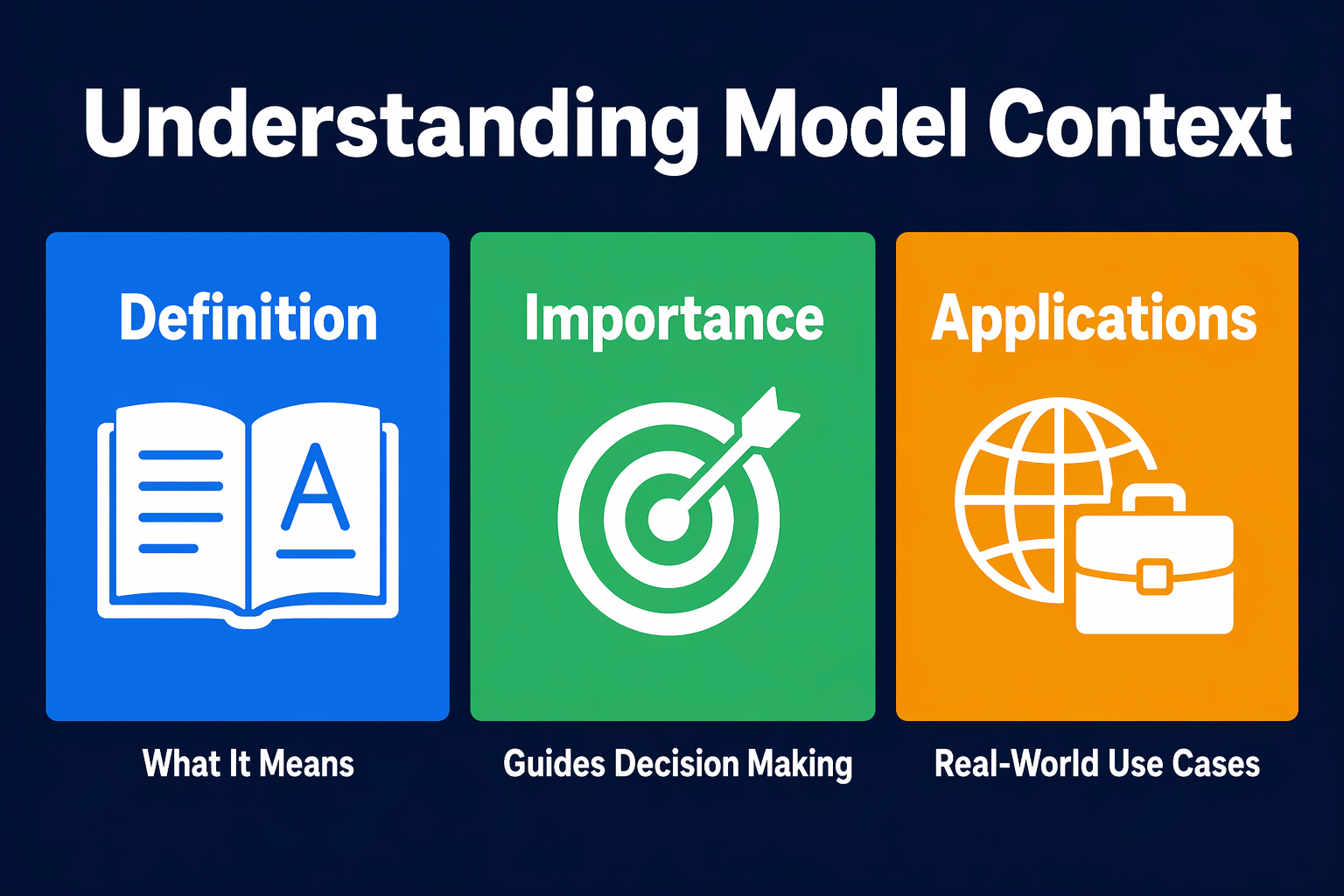
This visual illustrates how Understanding Model Context applies in real-world Model Context Protocol (MCP) scenarios.
Model context shapes the effectiveness of your machine learning applications.
What do you predict?
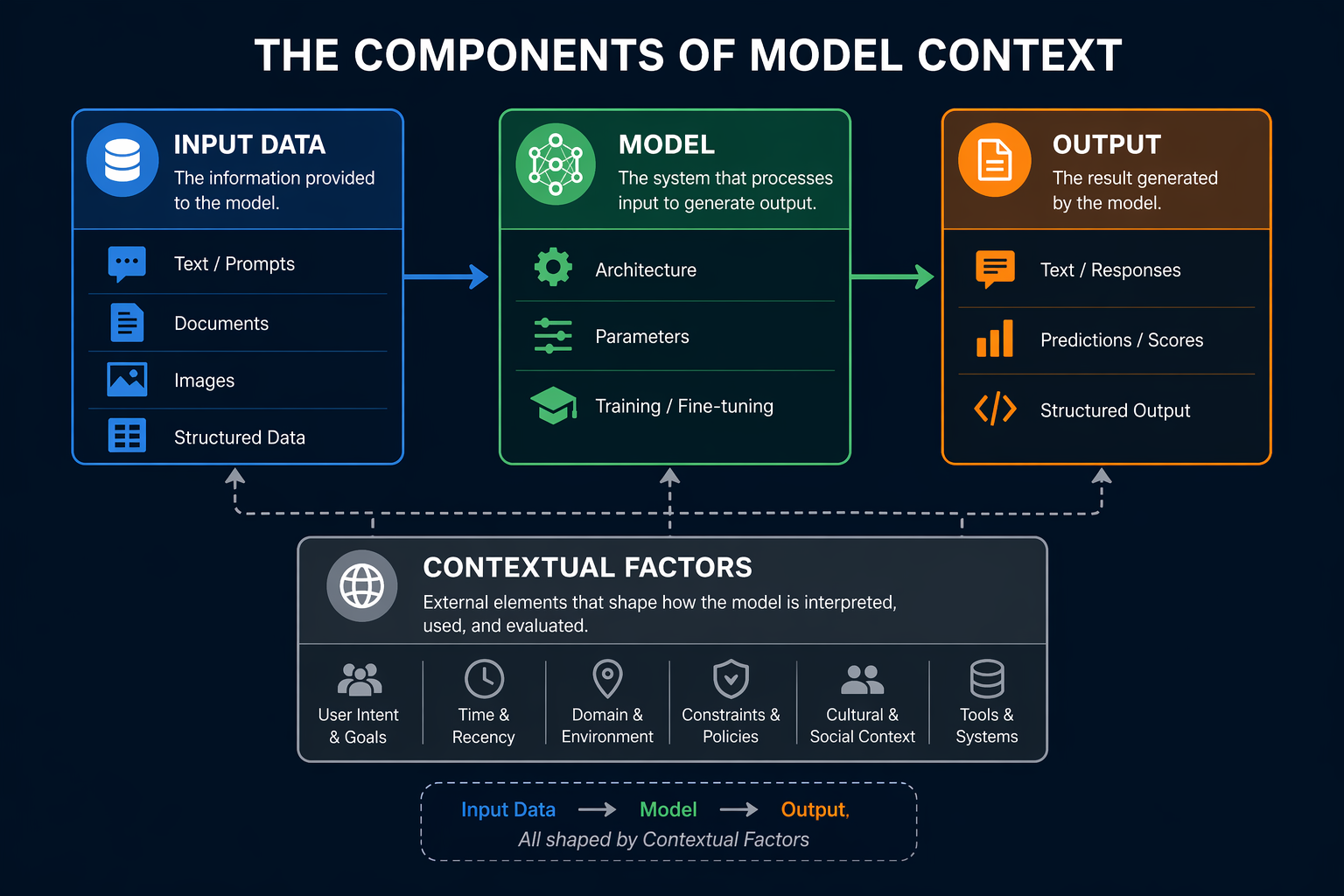
Understanding the Components
Contextual Factors Comparison
This contrast shows the difference between model performance with and without considering context. Without context, the model may yield misleading results. In contrast, incorporating context leads to more accurate and relevant outputs.
Being aware of context can prevent common pitfalls in model deployment.
Models that consider context tend to perform better in real-world applications.
Context allows for dynamic adjustments in model outputs based on situational factors.
This visual illustrates how Understanding Model Context applies in real-world Model Context Protocol (MCP) scenarios.
This clip visually demonstrates how model context impacts machine learning outcomes. It is crucial for understanding the practical implications of context in model deployment.
Model Context in Action
A visual representation of model context and its effects.
Applying Model Context
Recognising the importance of model context can enhance decision-making. It allows for better alignment between model outputs and real-world scenarios.
By applying context effectively, you can improve model accuracy and relevance. This understanding is key to successful machine learning applications.
If you remember only three things…
Definition of Model Context
Model context refers to the environment and factors influencing a model's performance.
Importance of Context
Context is critical for ensuring models produce accurate and relevant outputs.
Components of Context
Key components include input data, the model itself, output, and contextual factors.
Real-World Application
Applying model context can significantly enhance decision-making and model effectiveness.
Test Your Understanding
Prompt for Focused Meeting Transcript Summary
Write a prompt that clearly instructs the AI to summarize only specific parts of a provided meeting transcript, ensuring it understands the relevant context.
You have a long meeting transcript, and your goal is to extract only the key decisions and action items related to 'Project Apollo funding' and 'marketing campaign launch dates'. You want the AI to ignore general chitchat, administrative announcements, and discussions about unrelated projects. The AI often includes extraneous details when not given specific boundaries for its focus.
Term Glossary
4 verified conceptsFrom Context to Clarity
You now understand how model context shapes machine learning outcomes. This perspective allows for more informed decisions when deploying models.
Model context is the key to learn accurate and relevant machine learning outputs.
The next lesson will explore how to evaluate model performance in different contexts.
Audio lesson recap
A concise audio summary of this lesson — great for reinforcing key concepts on the go.
Hear it discussed
About three minutes on the ideas in this lesson
Sterling
AI tutor
Vivienne
Sceptical challenger
Press play to start the discussion…
Full transcript · click any line to jump
Context prevents misleading model results
Always situate your machine learning models within their relevant environments to ensure accurate and reliable outputs. Ignoring context can lead to significant errors and misinterpretations in real-world applications.
Components interact for effective model deployment
Understand how input data, the model, output, and contextual factors interrelate to achieve successful model deployment. Recognising these interactions is crucial for optimising model performance and applicability.
Contextual awareness enhances decision-making
Develop contextual awareness to prevent common pitfalls and improve the alignment of model outputs with real-world scenarios. Applying context effectively leads to enhanced model accuracy and relevance, supporting better decisions.
Ask anything about Understanding Model Context. Sterling will answer — concisely, and with his customary level of patience.