Crafting AI-Friendly Prompts
Discover the art of writing effective prompts for AI code generation.
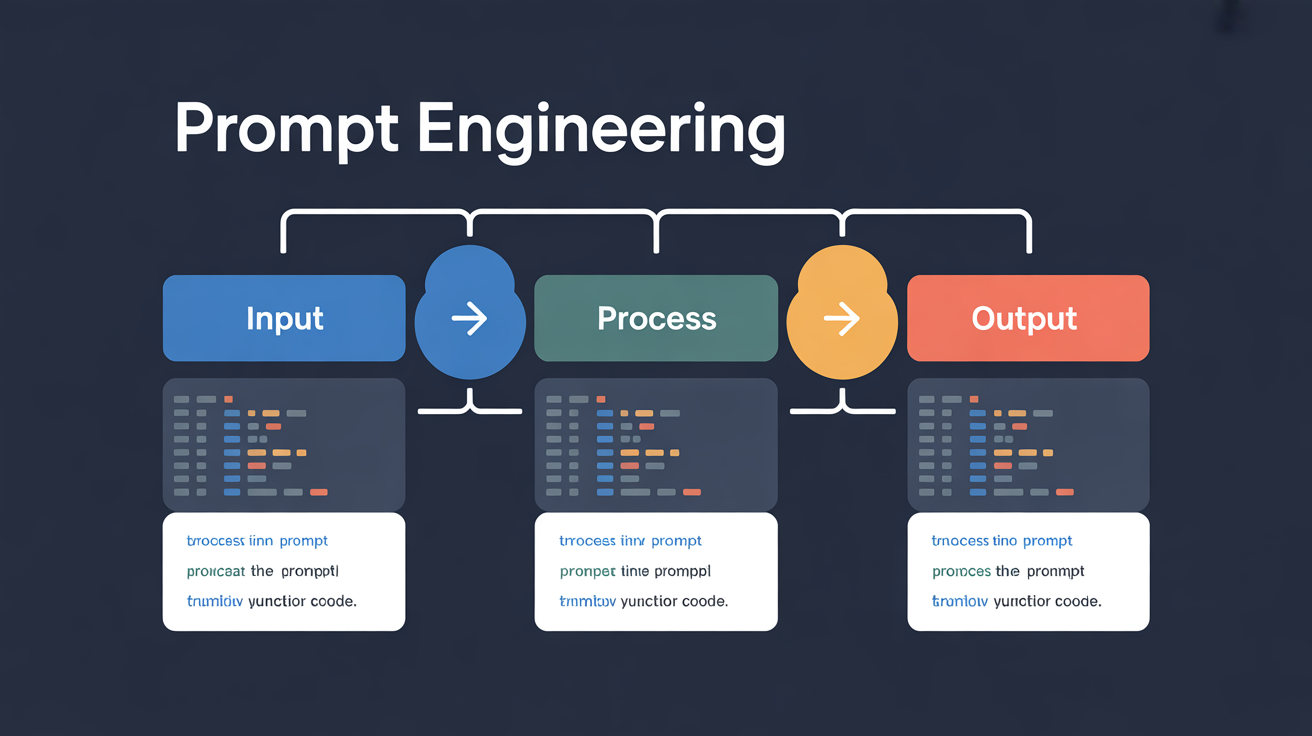
The Power of Specificity
Why does the same prompt sometimes yield wildly different outputs? Here's the thing: The answer lies in prompt specificity, not the model's inherent randomness. A vague prompt allows the AI to interpret your request in many ways.
A specific prompt narrows down these possibilities, guiding the AI towards a more focused and predictable output. The more details you provide, the better the AI understands your intent.
Effective prompts are not just requests; they are precise instructions that guide the AI's output.
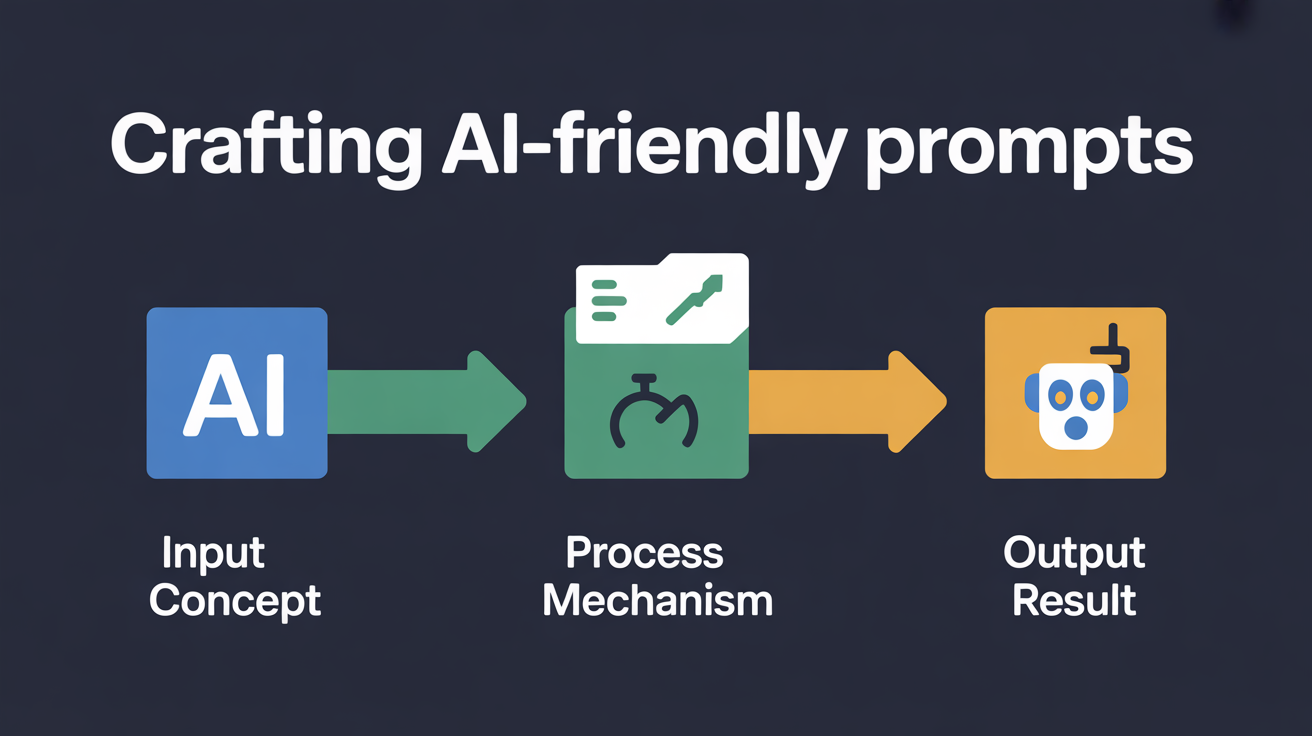
This visual illustrates how Crafting AI-Friendly Prompts applies in real-world Vibe Coding scenarios.
This video showcases the iterative nature of prompt engineering. Watch how prompt refinements directly influence the AI's code generation.
Prompt Engineering in Action
See prompt engineering used to generate code.
Which of these prompts would likely generate a working Python function to calculate the area of a square?
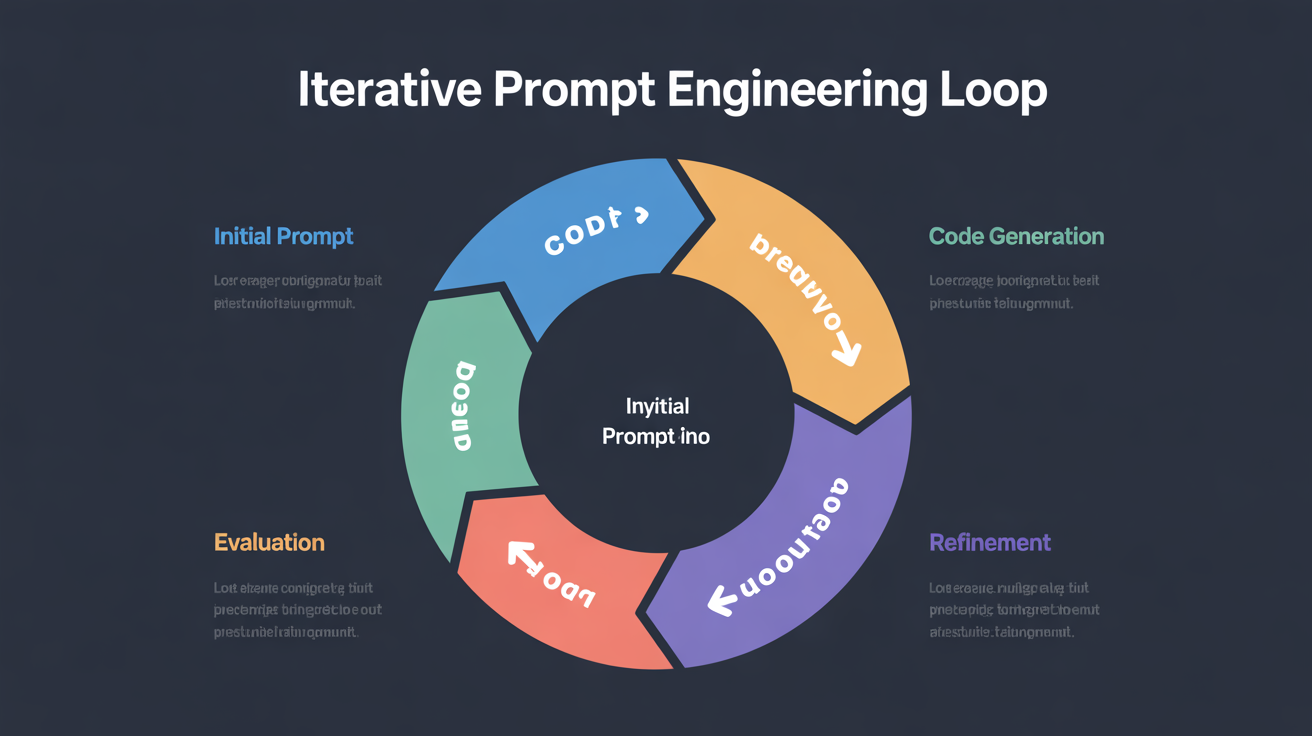
The Iterative Cycle
Beyond Simple Instructions
Crafting AI-friendly prompts goes beyond simply asking for code. It involves understanding how the AI processes instructions and tailoring your prompts accordingly. We need to think like translators, converting our needs into a formal AI-readable format.
This means being explicit about the expected input, output format, and any constraints. The AI is a effective tool, but it needs clear directions to deliver the required results.
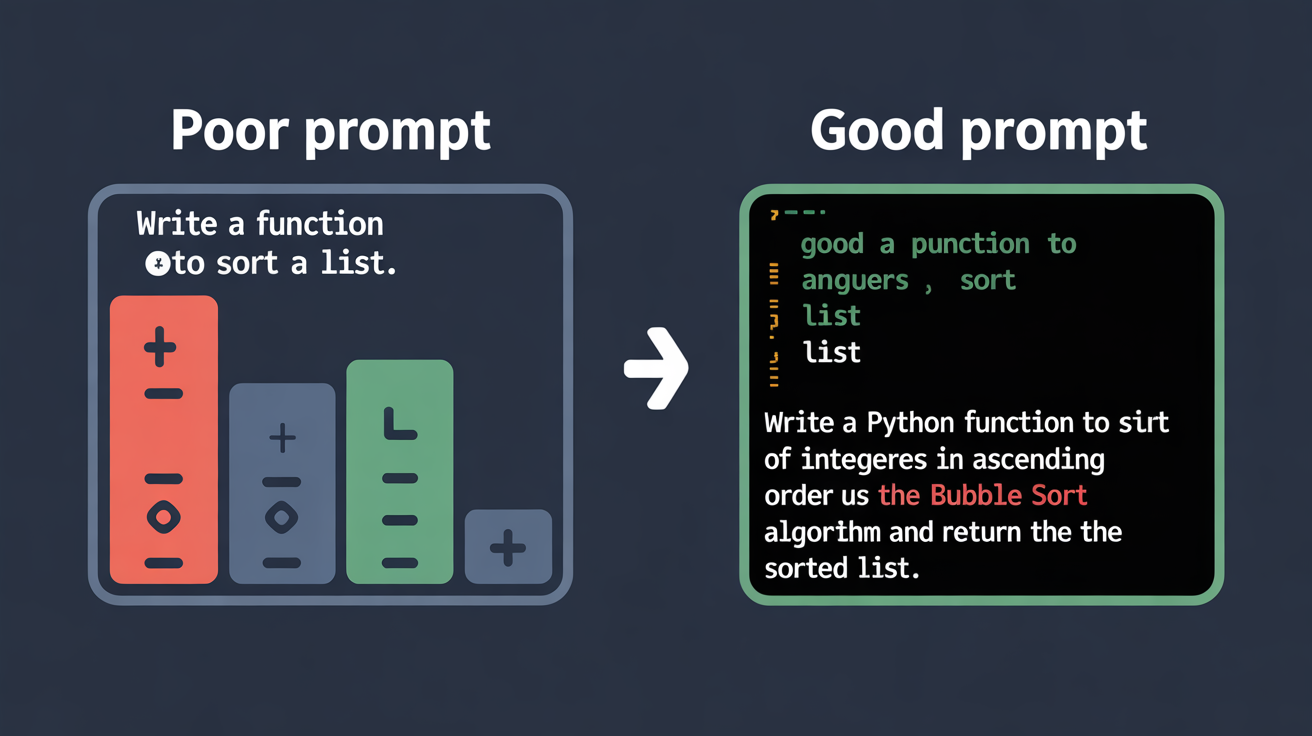
The comparison highlights the difference between vague and specific prompts. The detailed prompt provides the AI with the necessary context to generate the desired code.
Prompt Refinement: Before & After
This contrast shows how a vague prompt leads to unpredictable output. By contrast, a precise prompt yields consistent and reliable results. The key is providing the AI with enough information to understand your intent.
Clearly state the desired programming language, input, output, and constraints. The more details you provide, the better the AI can understand your needs.
Prompt engineering is an iterative process. Evaluate the generated code and refine your prompts based on the results. Don't be afraid to experiment with different approaches.
Think about the desired outcome, not just the steps. Frame your prompts in terms of the result you want to achieve. This helps the AI understand your goals.
This video demonstrates how prompt refinements directly improve code quality. You’ll see a practical example of prompt engineering in action.
Refining Prompts for Code Quality
See how small prompt adjustments improve code.
From Instructions to Outcomes
Prompt engineering is more than just writing instructions; it's about shaping outcomes. The key is to understand how AI interprets requests and provide the necessary context for success. This knowledge help you to generate high-quality code efficiently.
By mastering prompt engineering, you learn the full potential of AI-driven code generation. You can translate your ideas into functional code with greater precision and control. The next step is to learn how to structure larger projects.
If you remember only three things…
Specificity Matters
The more detailed your prompt, the better the AI can understand your intent. Specificity leads to more predictable and reliable results.
Iteration is Key
Prompt engineering is an iterative process. Refine your prompts based on the generated code to achieve the desired outcome.
Think Outcomes
Focus on the result you want to achieve, not just the steps. Frame your prompts in terms of the desired outcome for the best performance.
Context is King
Provide the AI with enough context to understand the task. Be explicit about the language, input, output, and constraints.
Test Your Understanding
Generate Robust Python Function Prompt
Based on the scenario, write a detailed prompt that will guide an AI to generate a high-quality, production-ready Python function for calculating the nth Fibonacci number.
You need a Python function that calculates the nth Fibonacci number. Your previous prompt, 'Write a Python function for Fibonacci', produced a basic function without any error handling, type hints, or clear documentation. Craft a new prompt that guides the AI to generate a robust, production-ready function with specific requirements.
Term Glossary
4 verified conceptsFrom Instructions to Outcomes
You now understand how to craft effective prompts that guide AI code generation. You’re able to translate your ideas into functional code with greater precision and control, moving from vague requests to precise outputs.
Effective prompts are not just instructions; they are the keys to learn the full potential of AI code generation, transforming intent into reality.
Next, we'll explore how to structure larger projects with AI assistance for maximum efficiency and scalability, building on your new prompting skills.
Audio lesson recap
A concise audio summary of this lesson — great for reinforcing key concepts on the go.
Hear it discussed
About three minutes on the ideas in this lesson
Sterling
AI tutor
Vivienne
Sceptical challenger
Press play to start the discussion…
Full transcript · click any line to jump
Specificity drives predictable AI code outcomes
Vague prompts lead to inconsistent AI outputs due to broad interpretation. Provide explicit details to narrow possibilities and guide the AI towards focused, predictable results.
Cultivate a prompt refinement mental model
View prompt engineering as an ongoing, iterative process, not a single task. Continuously evaluate generated code and refine your prompts based on the results to achieve desired quality.
Translate needs into AI-readable instructions
Think like a translator, converting your requirements into a formal, explicit format for the AI. Clearly state expected input, output format, and any constraints for effective guidance.
Ask anything about Crafting AI-Friendly Prompts. Sterling will answer — concisely, and with his customary level of patience.