Setting Up Claude for Co-work
Configure your Claude environment for effective collaborative workflows.
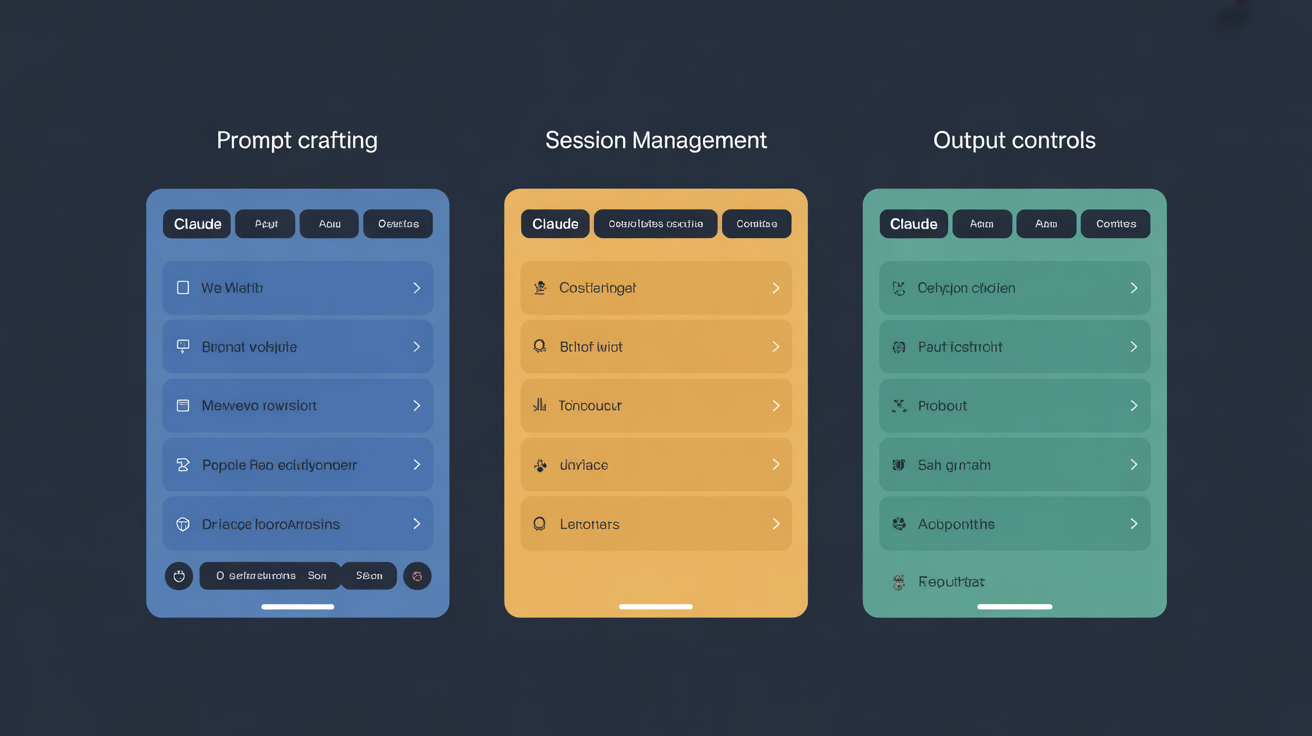
The Configuration Triad
Claude's workspace settings form an interdependent system: prompt defaults establish baselines, session controls maintain continuity, and output filters shape delivery. Changing one affects how the others function.
Unlike individual accounts, team environments compound these effects. A formatting preference set by one member becomes Claude's new normal for all subsequent queries in that workspace.
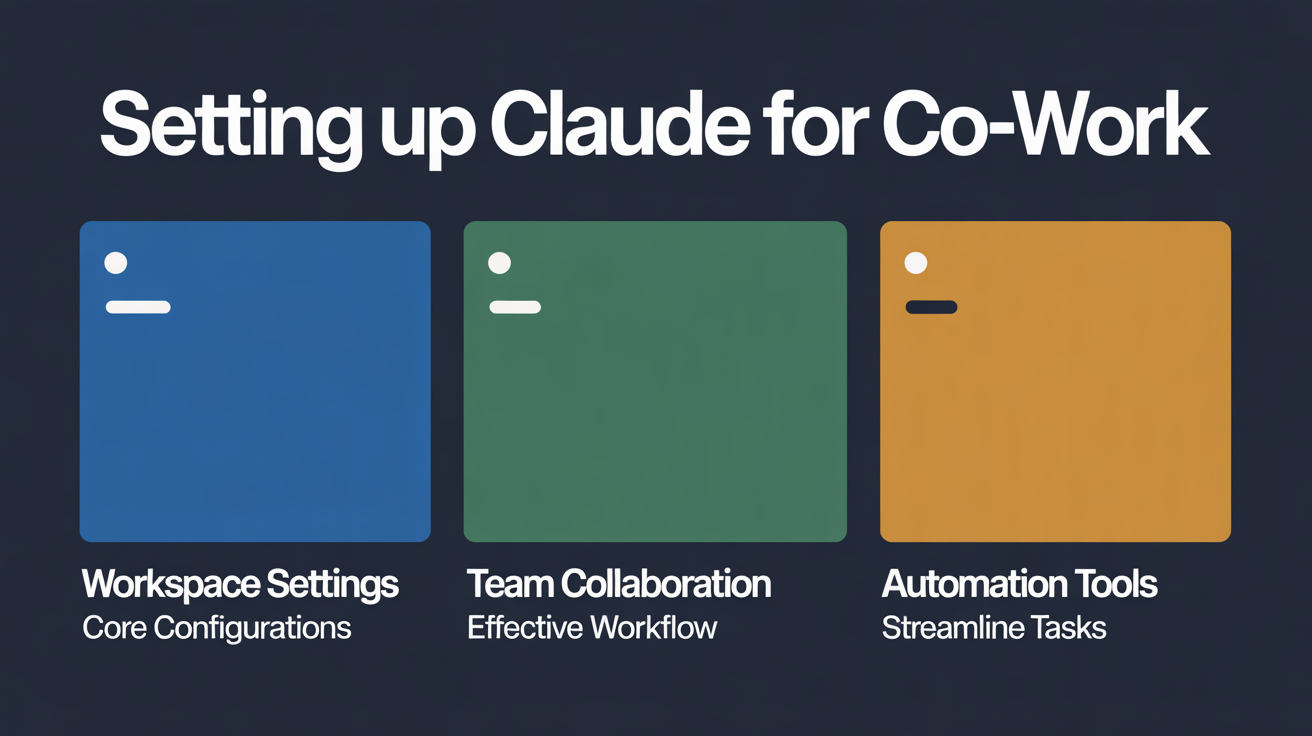
This visual illustrates how Setting Up Claude for Co-work applies in real-world Claude Co-work Automation: Using AI to automate repetitive work tasks scenarios.
Claude remembers what you forget — but only if you tell it how.
Before we begin
Why do two team members using identical prompts get wildly different responses from Claude? The divergence starts with three unchecked workspace settings.
What's the most common cause of inconsistent AI responses across team members?
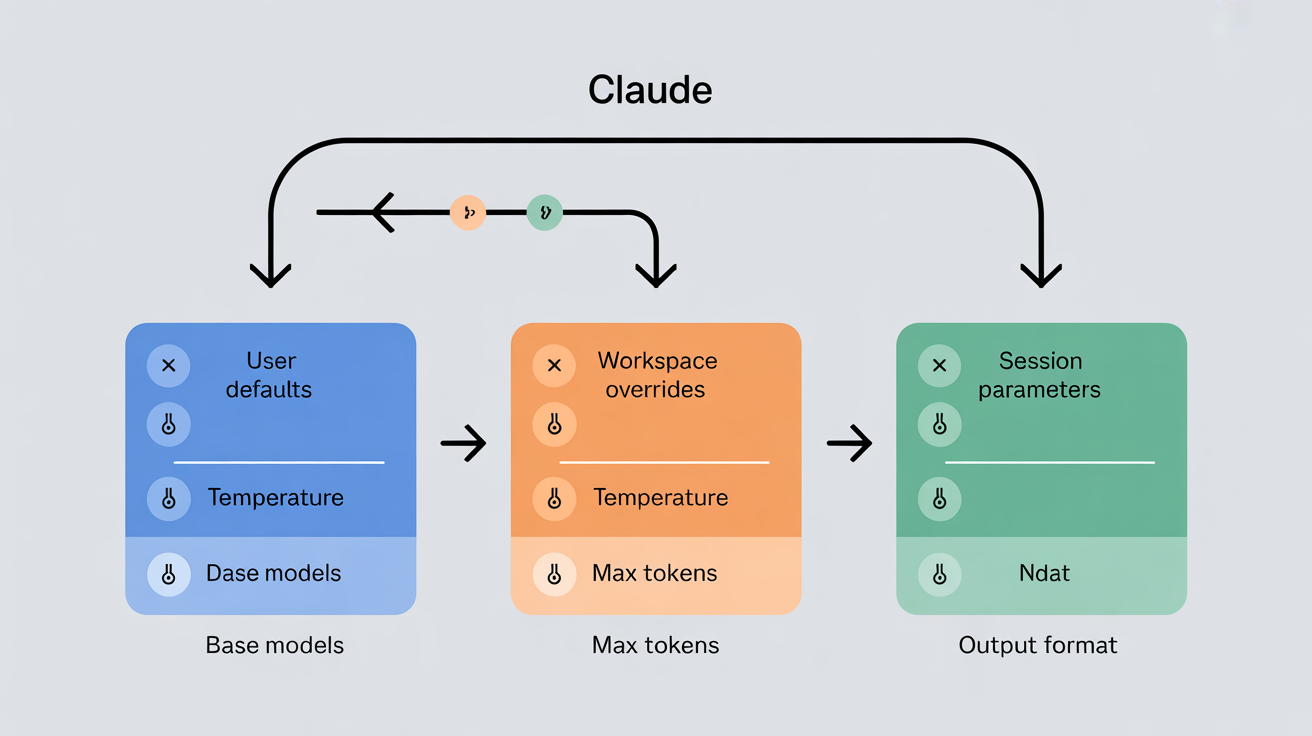
How Settings Cascade
Contrast: Solo vs Team Configuration
The diagram shows why teams need different protocols - individual settings become shared variables. The gap between left and right is what proper workspace configuration bridges.
Remember this moment when you first saw how workspace settings silently reshape Claude's behavior. Future you will recognize this as the turning point where AI collaboration became intentional rather than accidental.
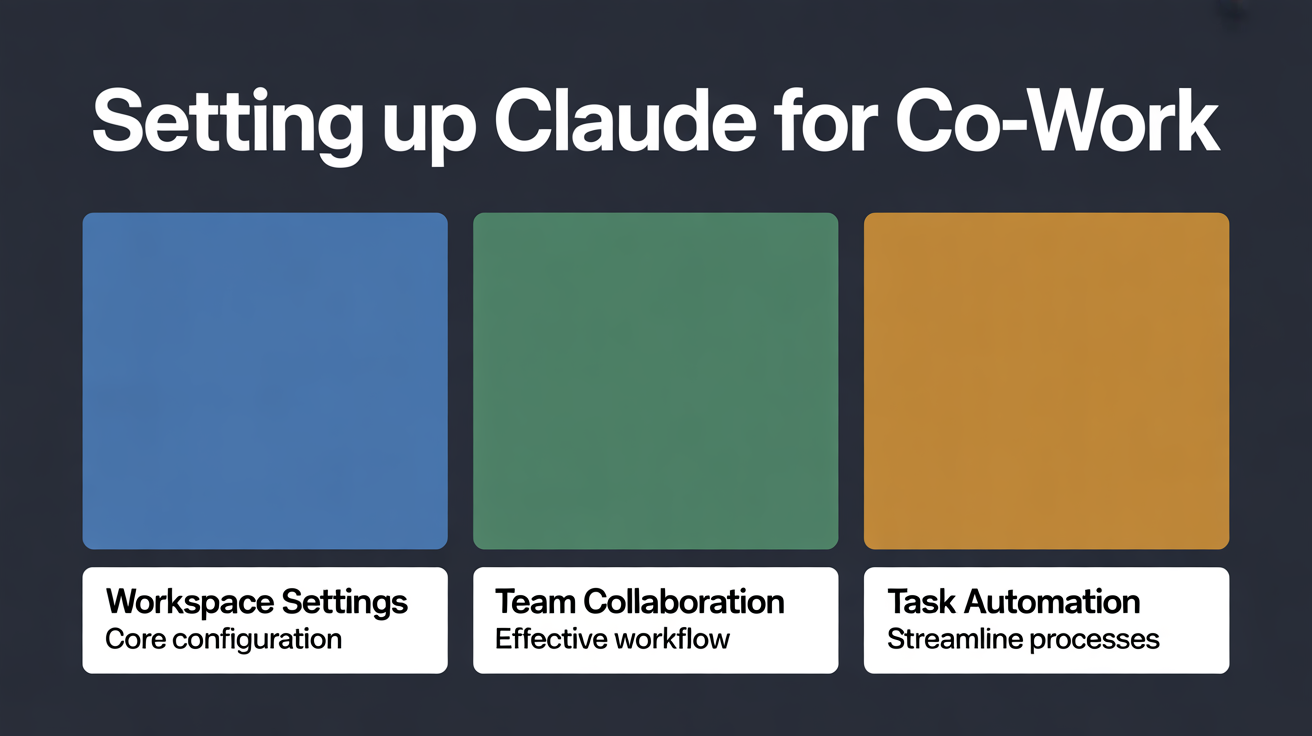
This visual illustrates how Setting Up Claude for Co-work applies in real-world Claude Co-work Automation: Using AI to automate repetitive work tasks scenarios.
The Scenario
A documentation team uses Claude to maintain consistent tone across API references.
The Challenge
Different writers' style preferences kept overriding the shared voice guidelines.
The Resolution
They locked workspace-level tone parameters while leaving technical specificity adjustable per session.
Pause and reflect
Which of your current Claude workspaces needs configuration auditing first?
A developer opens a clean interface, types a structured system prompt, then submits a work request and watches Claude respond with a formatted output. This shows the full co-work initialisation cycle.
Claude Co-work Setup
Watch a real co-work session being configured — system prompt written, context loaded, first task submitted.
Configuration Awareness
If you remember only three things...
Configuration Cascade
Workspace settings override individual defaults but yield to session parameters.
Team Dynamics
Shared environments turn personal preferences into collective variables.
First Fix
Always align model versions before addressing other inconsistencies.
Define Claude's Co-work Role
Complete the prompt template to effectively set up Claude as a co-worker for blog post brainstorming.
You are now my dedicated AI [BLANK] for brainstorming and outlining blog posts. Your primary objective is to help me generate innovative ideas and structured outlines for a target audience of [BLANK]. When I provide a topic, you should first [BLANK] it and then propose a 3-part outline including key points for each section. Always maintain a [BLANK] and helpful tone.
Term Glossary
3 verified conceptsFrom Defaults to Design
You now see Claude workspaces as configurable systems rather than static environments. This perspective shifts configuration from troubleshooting to intentional design.
Configuration isn't just about preferences—it's about creating predictable collaboration surfaces.
In the next lesson, we'll examine how prompt chaining use these configured workspaces for complex tasks.
Audio lesson recap
A concise audio summary of this lesson — great for reinforcing key concepts on the go.
Hear it discussed
About three minutes on the ideas in this lesson
Sterling
AI tutor
Vivienne
Sceptical challenger
Press play to start the discussion…
Full transcript · click any line to jump
Prioritise Workspace Settings for Teams
Document and lock workspace-level settings first to establish a consistent baseline for all users. This prevents common team conflicts arising from differing default assumptions.
Understand Configuration Cascade Precedence
Workspace settings override individual defaults, but session-level adjustments take immediate effect. Be aware of this hierarchy to manage how Claude behaves in shared environments.
Team Protocols Prevent Version Control Issues
Establish clear team protocols for making session-specific adjustments to maintain version control. Without these, output formatting and other parameters can become inconsistent.
Ask anything about Setting Up Claude for Co-work. Sterling will answer — concisely, and with his customary level of patience.