Attention Mechanisms explain
Grasp the core principles of attention in Transformers.
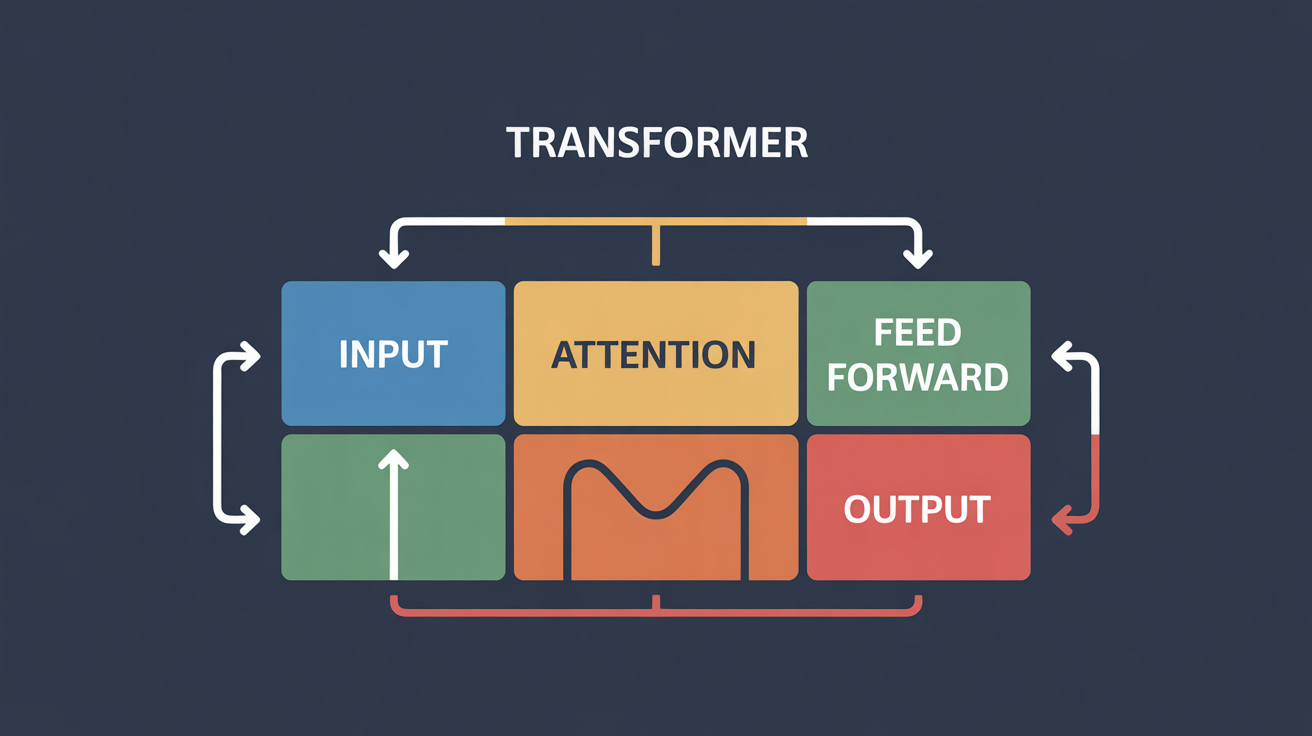
The Essence of Attention
Attention mechanisms allow a model to focus on the most relevant parts of the input when processing information. Instead of treating all inputs equally, attention assigns weights to different parts, indicating their importance.
These weights are learned during training, allowing the model to adapt its focus based on the specific task. This is crucial for tasks like machine translation or text summarisation, where context is key.
Here's the thing: attention isn't about 'understanding' in a human sense; it's about statistically associating inputs with outputs based on the training data.
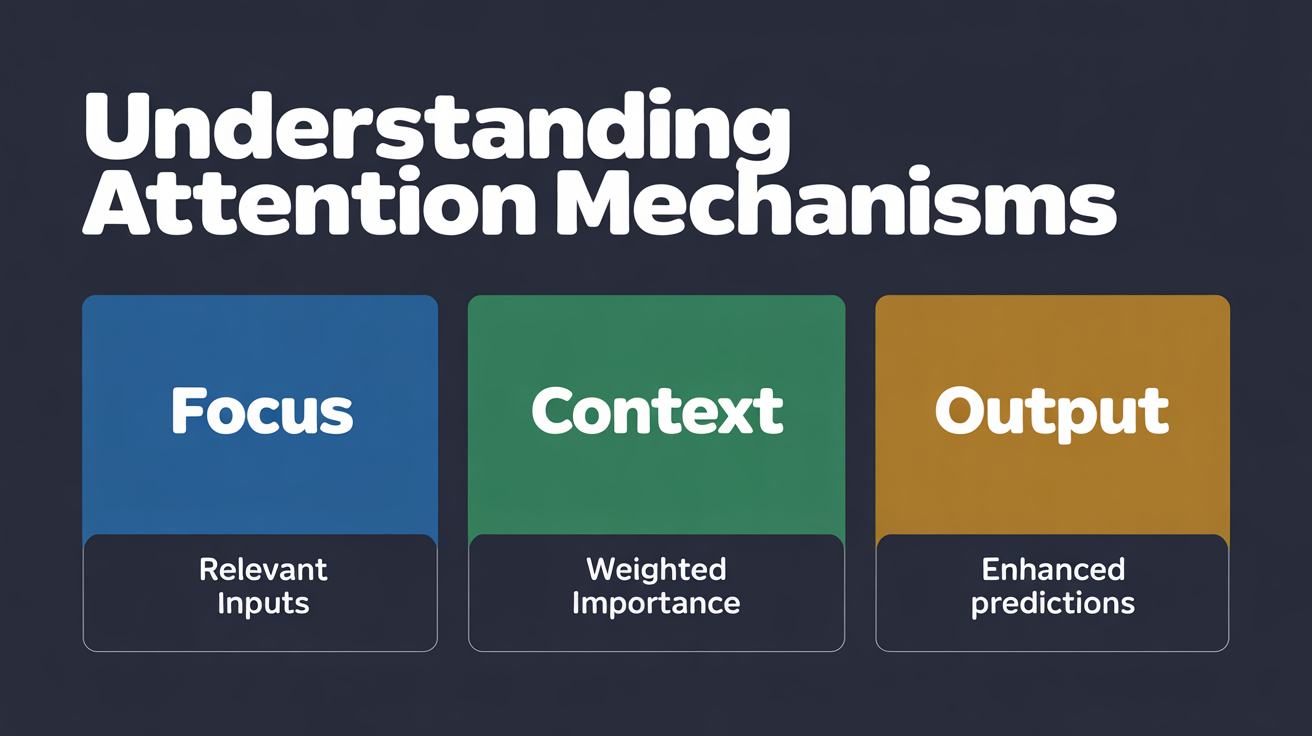
This visual illustrates how Attention Mechanisms explain applies in real-world Generative AI with Large Language Models scenarios.
Before we begin
Why does a transformer sometimes focus on the wrong words? The attention mechanism, while effective, isn't magic; it's a learned weighting system.
Which of these factors MOST influences the attention weight assigned to a word?
This video demonstrates how the attention mechanism dynamically focuses on different parts of the input. This dynamic focus allows the model to capture complex relationships between words.
Visualising Attention Weights
See how attention weights shift to highlight relevant words.
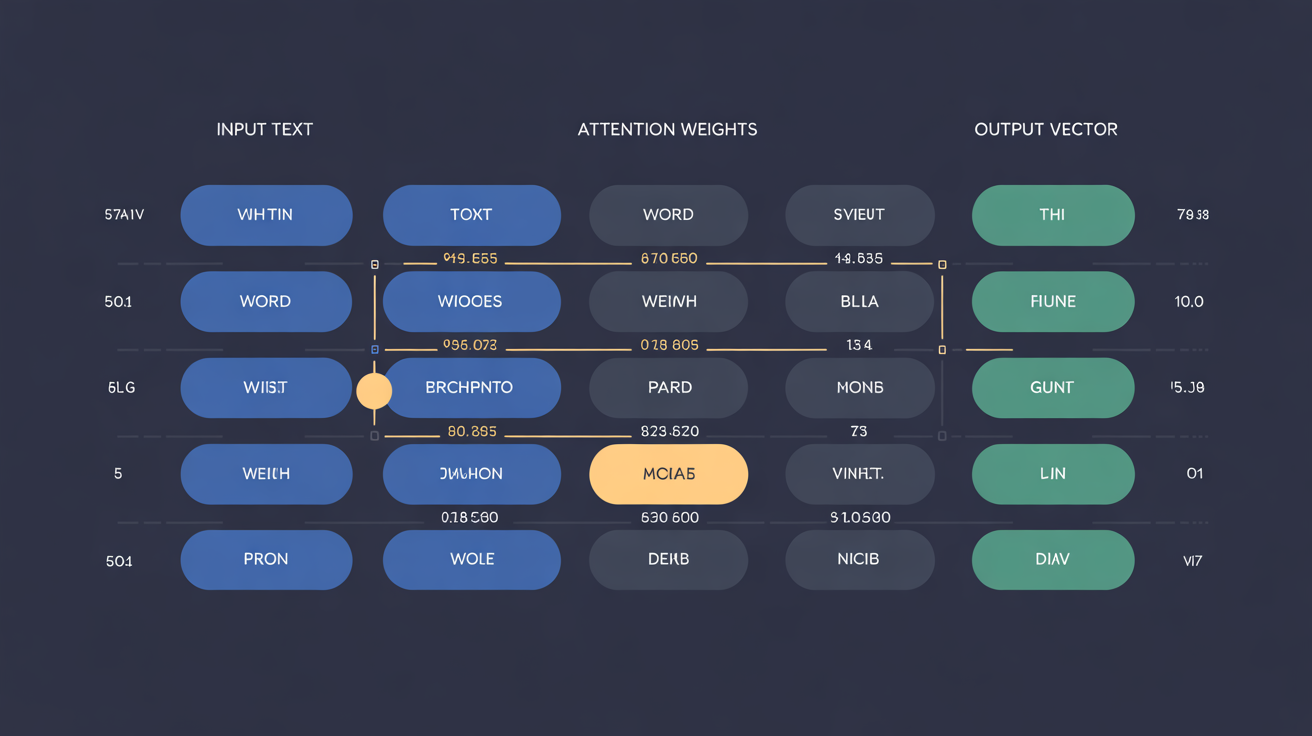
Visualising Attention
The Process Unveiled
The attention mechanism calculates a score for each input element relative to the current processing element. These scores are then normalised to create a probability distribution, representing the attention weights.
These weights are used to create a weighted sum of the input elements, effectively focusing the model's attention on the most relevant parts. This weighted sum is then used as input for further processing.
This process allows the model to dynamically adjust its focus based on the input data, leading to better performance.
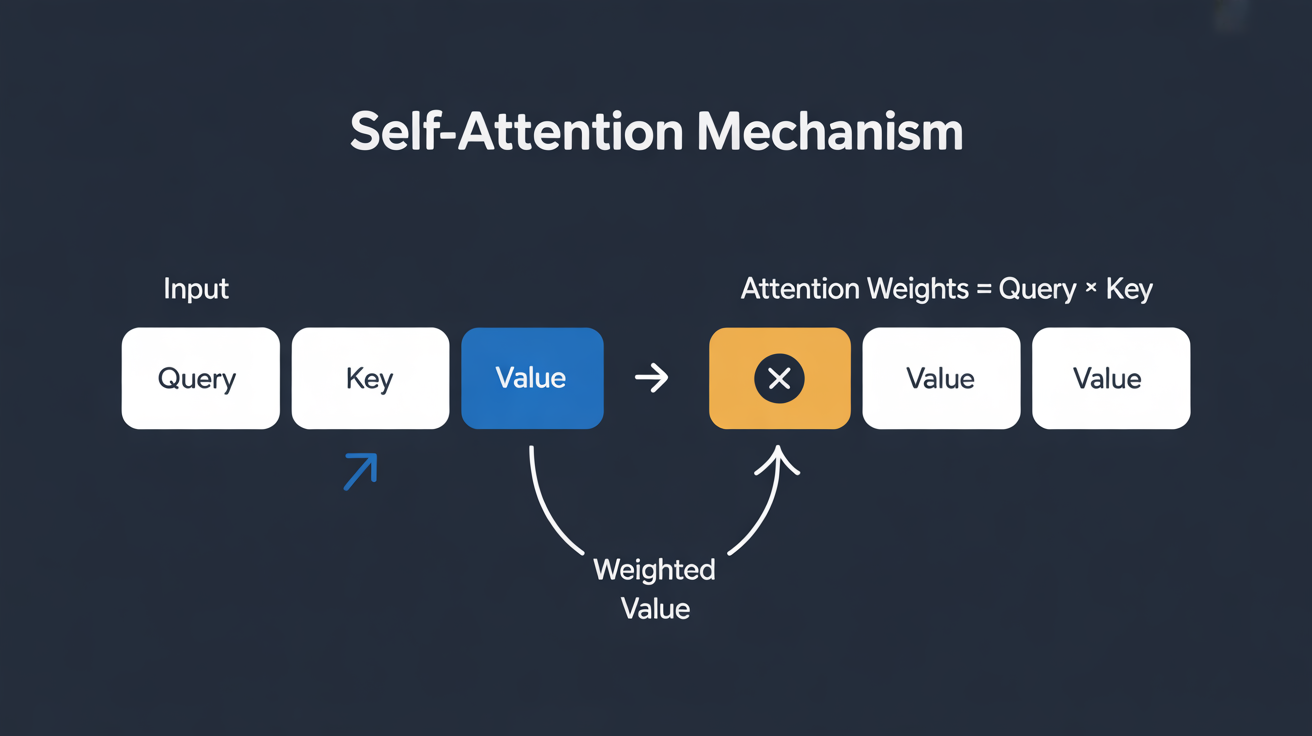
This diagram illustrates the core calculation behind self-attention. The query, key, and value matrices are used to compute attention weights, which determine the importance of each input element.
Attention Before and After
This comparison highlights the impact of attention mechanisms. Without attention, all words are treated equally, leading to a loss of context. With attention, the model focuses on the most relevant words, resulting in a contextualised output.
Attention allows the model to focus on the relevant context, not just individual words.
Different parts of the input have different levels of importance, reflected in attention weights.
The attention mechanism dynamically adjusts its focus based on the specific task.
Consolidating Understanding
Attention mechanisms are a fundamental aspect of modern AI, enabling models to process complex data with greater accuracy. By focusing on the most relevant parts of the input, these mechanisms enhance performance and provide contextual understanding.
Understanding attention is crucial for anyone working with transformer models or other AI systems that rely on this technique. This knowledge forms a solid foundation for exploring more advanced concepts.
Now we can move on to exploring different types of attention and their specific applications.
If you remember only four things…
Attention Weights
Attention mechanisms assign weights to different parts of the input. These weights indicate their relative importance.
Contextual Understanding
Attention allows models to capture context and relationships between elements in the input data. This leads to more accurate results.
Dynamic Focus
The attention mechanism dynamically adjusts its focus based on the task and the input. This adaptability enhances performance.
Key to Transformers
Attention is a core component of transformer models and many other modern AI systems. It is essential for processing complex data.
Test Your Understanding
Prompt for simple Attention explanation
Write a prompt for an AI that clearly and simply explains the core concept of 'Attention' in Transformers to a new learner, focusing on its purpose and benefit.
You're preparing a foundational resource for new AI engineers. You need an explanation of Attention Mechanisms that focuses on *why* they are important and *what* problem they solve in processing sequences, rather than immediately diving into the mathematical specifics (e.g., Q, K, V matrices). The AI's output should be digestible for someone just starting to understand Transformer architectures.
Term Glossary
4 verified conceptsThe Attention Lens Unveiled
You now understand how attention mechanisms enable AI models to focus on relevant information, capturing context and relationships in data. This allows for more accurate and nuanced results, shifting your perspective from seeing words as isolated tokens to seeing them as interconnected signals.
Attention mechanisms are the lens through which AI models focus on what truly matters, transforming noise into signal.
Next, we'll explore different types of attention and their specific applications, including multi-head attention.
Audio lesson recap
A concise audio summary of this lesson — great for reinforcing key concepts on the go.
Hear it discussed
About three minutes on the ideas in this lesson
Sterling
AI tutor
Vivienne
Sceptical challenger
Press play to start the discussion…
Full transcript · click any line to jump
Focus on relevant input for accuracy
Attention mechanisms enable AI models to prioritise crucial parts of input data. This focused approach leads to more accurate and nuanced results in complex tasks.
Weights dynamically adapt to context
Attention assigns learned weights to input elements, indicating their importance. This dynamic adaptation is vital for understanding context in tasks like machine translation.
Context is king for understanding
Attention mechanisms allow models to grasp the relevant context, not just individual words. This contextual understanding is fundamental for modern AI systems.
Ask anything about Attention Mechanisms explain. Sterling will answer — concisely, and with his customary level of patience.