RAG: Core Concepts
Learn the foundational elements of Retrieval-Augmented Generation (RAG). Grasp how RAG enhances language model performance.
The RAG Process
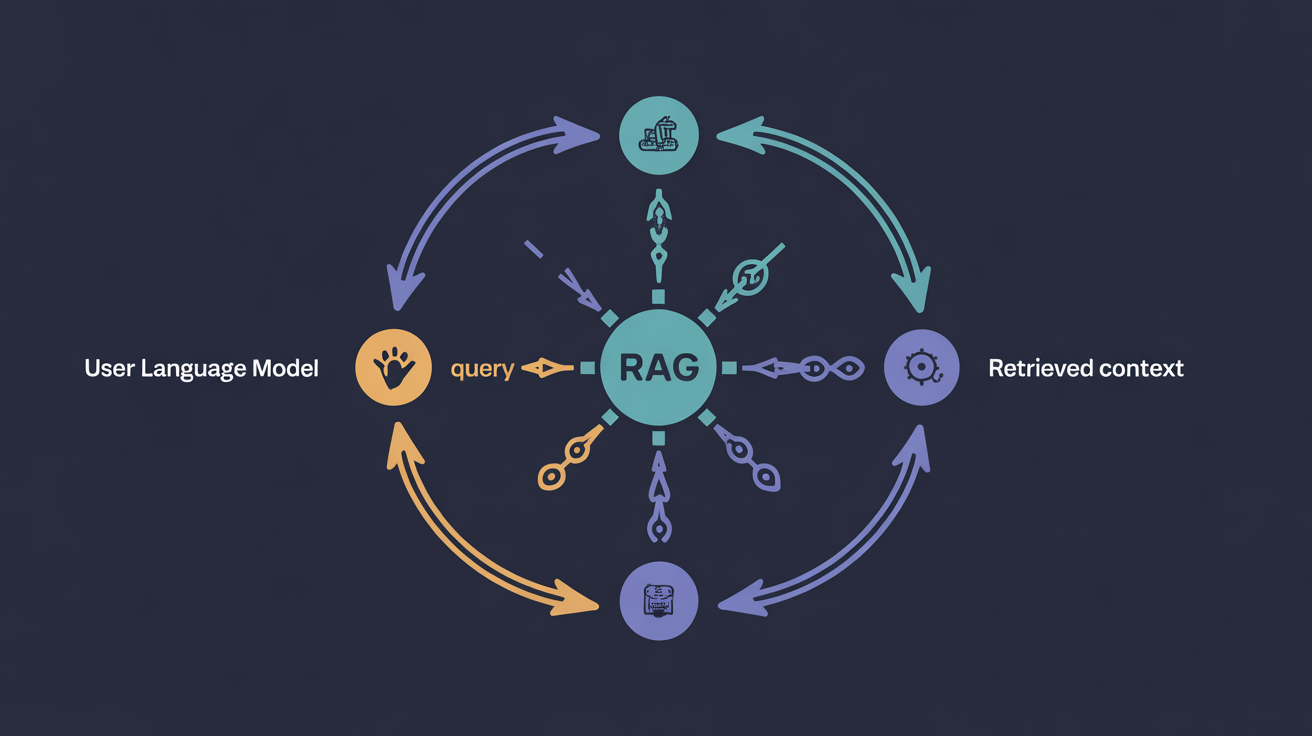
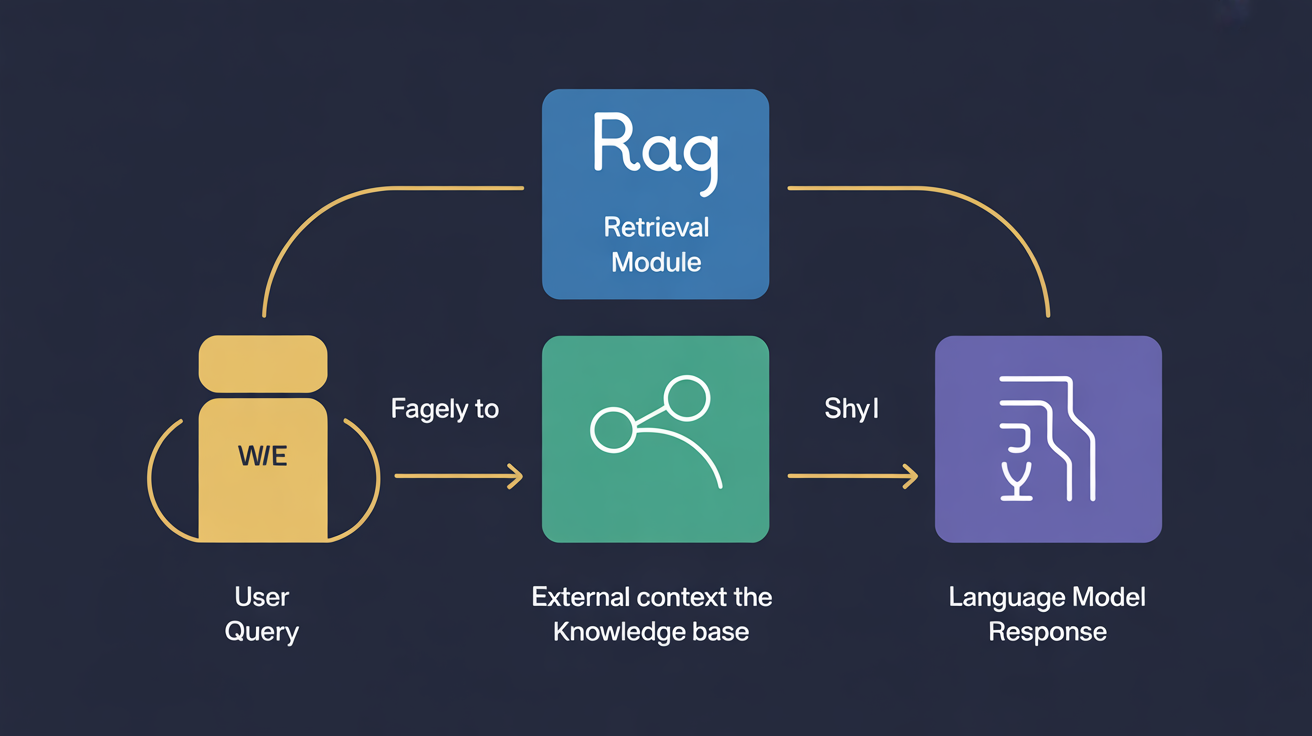
RAG works by first retrieving relevant information. A user query triggers a search of an external knowledge base. This knowledge base could be a document store, a database, or the web.
The retrieved information is then combined with the original query. This augmented prompt is fed into a language model. The model generates a response based on both the query and the retrieved context.
The result is a more informed and accurate answer. RAG reduces the risk of the model generating incorrect or irrelevant information. It grounds the AI's output in facts.
This visual illustrates how RAG: Core Concepts applies in real-world Retrieval Augmented Generation (RAG) scenarios.
Before we begin
Why do language models sometimes generate incorrect information? RAG addresses this by grounding the model's responses in retrieved, factual context.
Which of these is the primary benefit of using RAG?
RAG enables language models to access and incorporate external knowledge, improving their performance.
RAG Architecture
RAG vs. Standard LM
The diagram highlights the key difference: RAG incorporates external knowledge. This reduces dependence on the model's pre-trained data. The result is more trustworthy and accurate responses.
RAG effectively gives language models a better memory. It allows them to access up-to-date information.
By grounding responses in retrieved content, RAG reduces hallucinations. This leads to more reliable AI outputs.
Updating a knowledge base is much faster than retraining a model. RAG provides a quicker way to adapt to new information.
This visual illustrates how RAG: Core Concepts applies in real-world Retrieval Augmented Generation (RAG) scenarios.
This video shows how RAG integrates information retrieval with text generation. It demonstrates how RAG improves the accuracy and relevance of AI-generated content.
Understanding RAG
RAG combines retrieval and generation for better AI responses.
RAG in Practice
RAG is used in various applications to enhance AI performance. Chatbots use RAG to provide more accurate and relevant responses. This improves user satisfaction.
Content creation tools benefit from RAG by generating factually correct articles. This reduces the need for extensive fact-checking. Using RAG ensures the AI's output is trustworthy.
Search engines use RAG to improve the quality of search results. The model uses external knowledge to refine the search and deliver better information.
If you remember only three things…
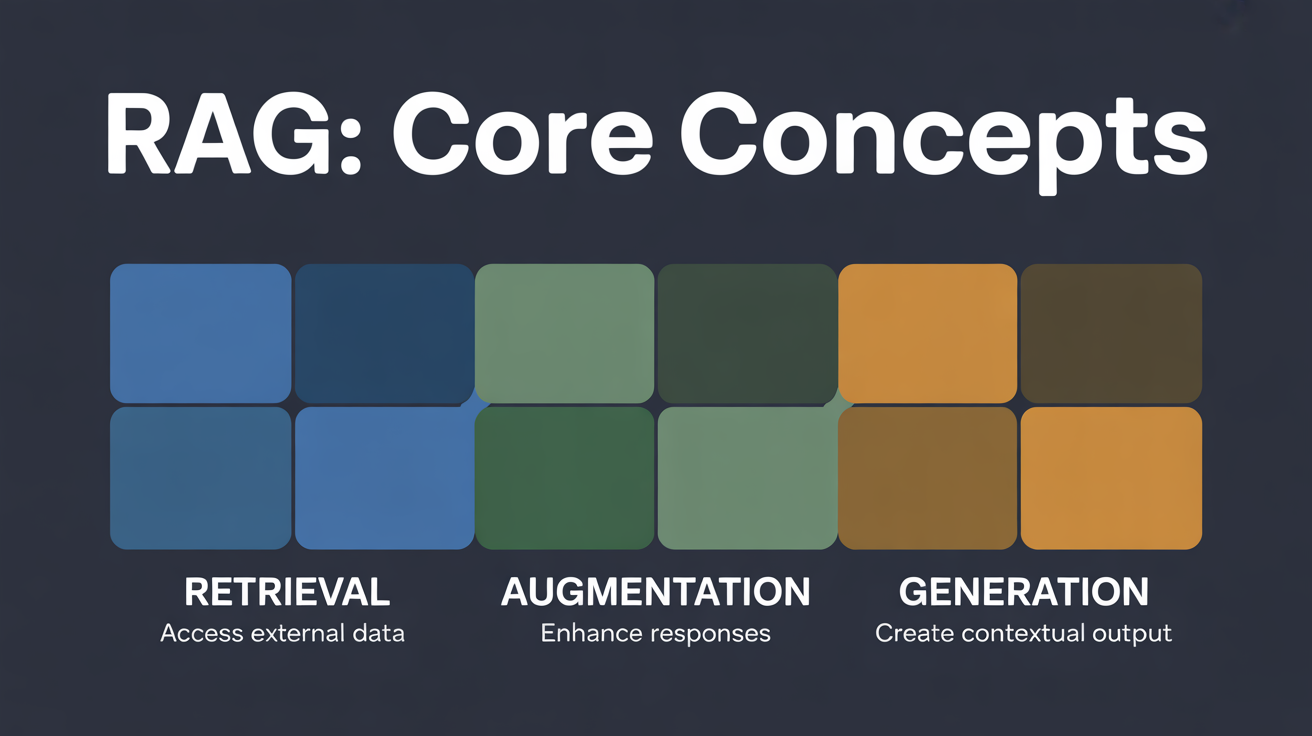
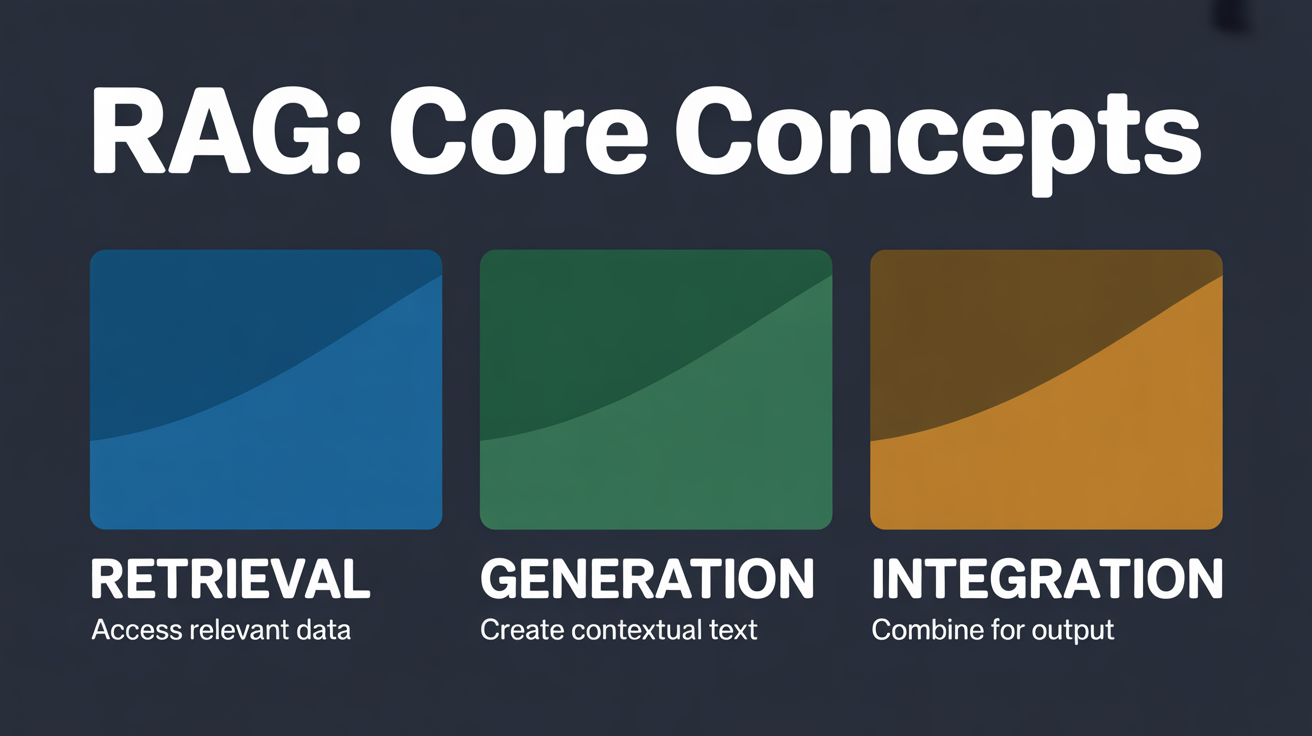
Retrieval
RAG uses a retrieval module to search for relevant information. This pulls in external knowledge to augment the prompt.
Augmentation
The retrieved information is combined with the user's query. This creates an augmented prompt that feeds into the language model.
Generation
The language model generates a response based on the augmented prompt. This results in more accurate and reliable outputs.
Accuracy
RAG reduces the risk of hallucinations in AI-generated content. It ensures responses are grounded in factual data.
Test Your Understanding
Craft a Prompt for RAG Context Integration
Your goal is to write a prompt that clearly instructs an LLM to use provided retrieved context when answering a user query, and to refuse if the answer isn't in the context.
You are setting up a RAG system for a company's HR knowledge base. The system retrieves relevant document snippets based on a user's query before sending them to the LLM. Your task is to write the *system prompt* that will guide the LLM. This prompt must clearly instruct the LLM to use *only* the provided context for its answer and to state if the answer cannot be found within the given context.
Term Glossary
4 verified conceptsFrom Data to Insight
You now understand how RAG enhances language model performance by grounding it in external knowledge. You can now build more accurate and reliable AI systems that provide more trustworthy results.
RAG combines the power of language models with the reliability of external knowledge.
Next, we'll explore different RAG implementation strategies in more detail.
Audio lesson recap
A concise audio summary of this lesson — great for reinforcing key concepts on the go.
Hear it discussed
About three minutes on the ideas in this lesson
Sterling
AI tutor
Vivienne
Sceptical challenger
Press play to start the discussion…
Full transcript · click any line to jump
RAG grounds AI in factual knowledge
RAG integrates external knowledge bases to ensure AI outputs are accurate and relevant. This significantly reduces the generation of incorrect or nonsensical information, known as hallucinations.
Enhanced memory for language models
By accessing up-to-date external information, RAG effectively provides language models with an improved memory. This allows them to deliver more reliable and trustworthy responses.
Faster AI adaptation to new data
Updating an external knowledge base is considerably quicker than retraining an entire AI model. RAG offers a rapid method for AI systems to incorporate and adapt to new information efficiently.
Ask anything about RAG: Core Concepts. Sterling will answer — concisely, and with his customary level of patience.