What is AI?
Define AI and differentiate it from other technologies.
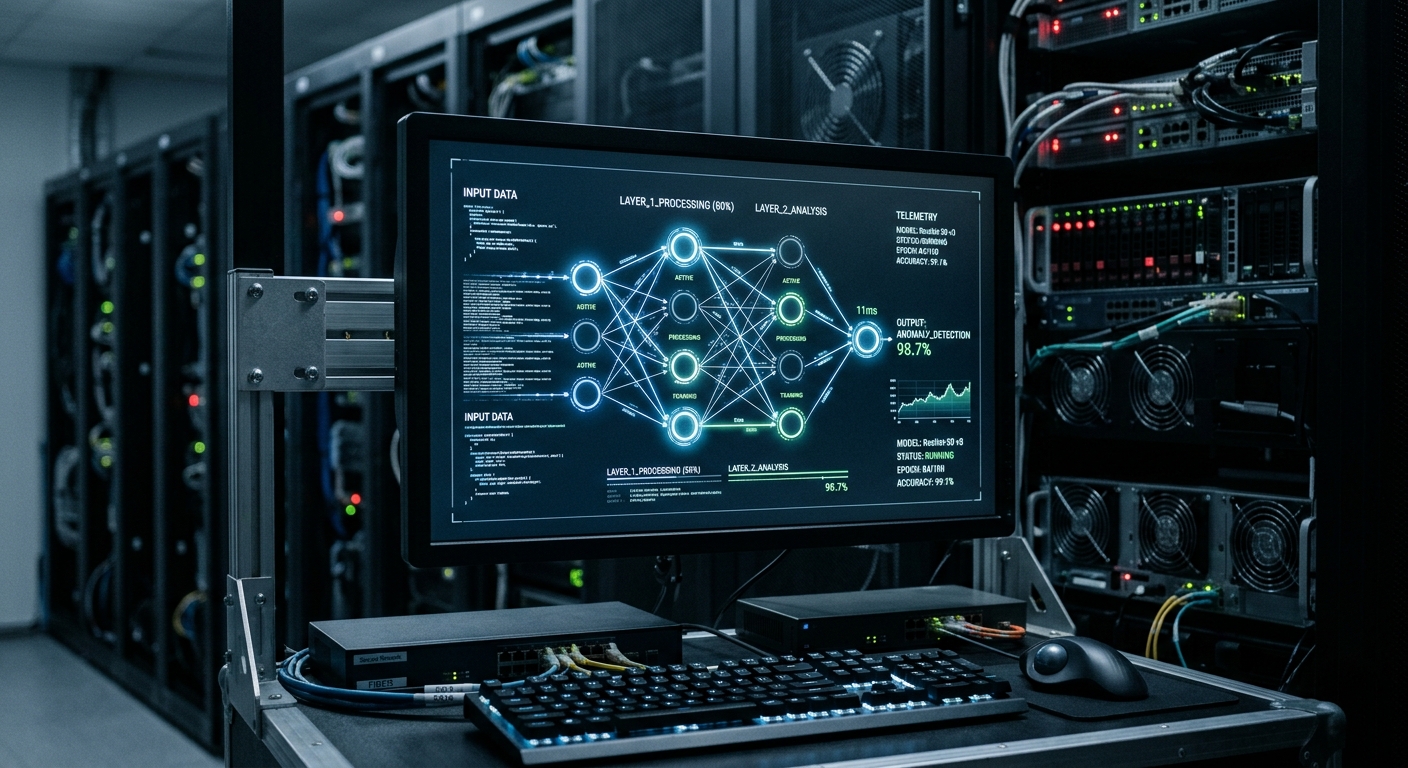
AI learns by adjusting itself based on data, not by following pre-set rules.
This video provides a brief visual introduction to artificial intelligence. It shows how data transforms into meaningful patterns within a neural network.
The Essence of AI
A glimpse into the core of artificial intelligence. This animation captures the essence of AI's learning process.
Which of the following is the most accurate definition of AI?
Neural Networks
AI vs. Traditional Software
Traditional software follows pre-defined rules, whereas AI learns from data. AI systems adapt and improve their performance over time, unlike static software programs.
AI can handle complex, unstructured data, while traditional software typically requires structured inputs. This adaptability allows AI to solve problems that are too complex for rule-based systems.
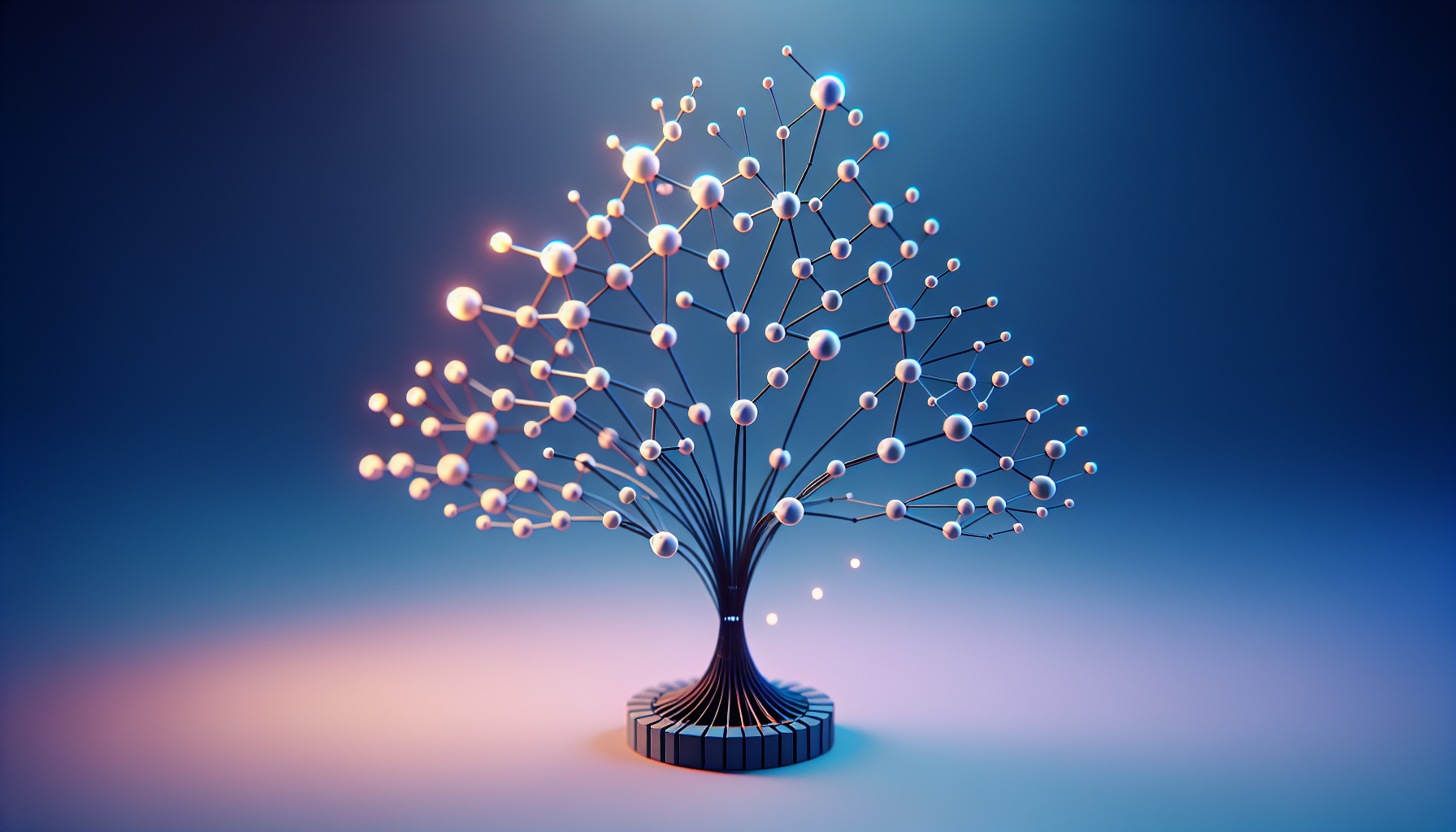
This visual reveals how AI can make decisions based on data. The tree structure shows how different data features lead to different outcomes, automating the decision-making process.
Rule-Based vs. AI Systems
The diagram highlights the key difference: rule-based systems follow fixed instructions, while AI systems learn from data. AI can adapt to new information and improve its performance, unlike rule-based systems.
AI learns patterns from data, not explicit instructions.
AI systems adjust their parameters as they encounter new data.
AI excels at making predictions based on learned patterns.
This video illustrates how AI learns by iterating through data, predictions, and adjustments. Understanding this loop is crucial for grasping AI's adaptive nature.
AI Learning Loop
Visualising the iterative learning process in AI. This video shows the feedback loop that drives AI improvement.
The Power of Adaptation
AI's ability to adapt makes it suitable for dynamic, real-world problems. Unlike static software, AI can handle uncertainty and changing conditions.
This adaptability enables AI to automate complex tasks, improve decision-making, and create new possibilities across various industries.
If you remember only four things…
Learning from Data
AI learns from data, not pre-defined rules. This is the fundamental difference between AI and traditional software.
Adaptive Systems
AI systems adjust their parameters as they encounter new data. This allows them to improve their performance over time.
Prediction Power
AI excels at making predictions based on learned patterns. This capability enables AI to automate complex tasks and improve decision-making.
Real-World Problems
AI's adaptability makes it suitable for dynamic, real-world problems. This is why AI is transforming various industries.
Test Your Understanding
Complete the AI Definition Prompt
Complete the prompt template below by filling in the blanks. Your goal is to instruct an AI to define Artificial Intelligence for a beginner.
You are an AI tutor explaining complex topics simply. Define Artificial Intelligence (AI) for a beginner with [BLANK] prior knowledge. Explain its core concept as a field of computer science that develops [BLANK] machines to [BLANK] tasks typically requiring human intelligence, such as learning, problem-solving, and decision-making. Focus on the *mimicking* of human cognitive functions. Keep the explanation concise, around [BLANK] words.
Term Glossary
12 verified conceptsFrom Rules to Learning
You now grasp the core distinction between traditional software and AI: AI learns from data, adapting to changing conditions rather than following pre-set rules. This shift enables AI to solve problems previously intractable with traditional methods, opening new possibilities across diverse fields.
This is where systems stop following rigid instructions — and start evolving intelligently with the data, learn unforeseen potential.
Next, we'll look into the diverse types of AI, exploring supervised, unsupervised, and reinforcement learning, and their specific applications across industries, building on your newfound understanding of AI's fundamental nature and adaptive capabilities.
Audio lesson recap
A concise audio summary of this lesson — great for reinforcing key concepts on the go.
Hear it discussed
About three minutes on the ideas in this lesson
Sterling
AI tutor
Vivienne
Sceptical challenger
Press play to start the discussion…
Full transcript · click any line to jump
AI learns from data, not rules
Unlike traditional software, AI systems adapt and improve their performance over time by learning patterns from data. This fundamental difference enables AI to handle complex, unstructured information and solve problems beyond fixed instructions.
Neural networks are AI's foundation
Many AI systems are built upon neural networks, which process data through interconnected nodes, mimicking the human brain. This architecture allows AI to recognise intricate patterns and make predictions from complex datasets.
AI excels at real-world predictions
AI's ability to adapt to new information and learn from data makes it highly effective for dynamic, real-world problems. This prediction power enables automation of complex tasks and improved decision-making across various industries.
Ask anything about What is AI?. Sterling will answer — concisely, and with his customary level of patience.