OpenID Connect Integration
This lesson explores OpenID Connect (OIDC) for secure user authentication in Hugging Face Spaces, focusing on practical defence strategies. You will learn the OIDC flow and how to integrate it to protect your deployed models.
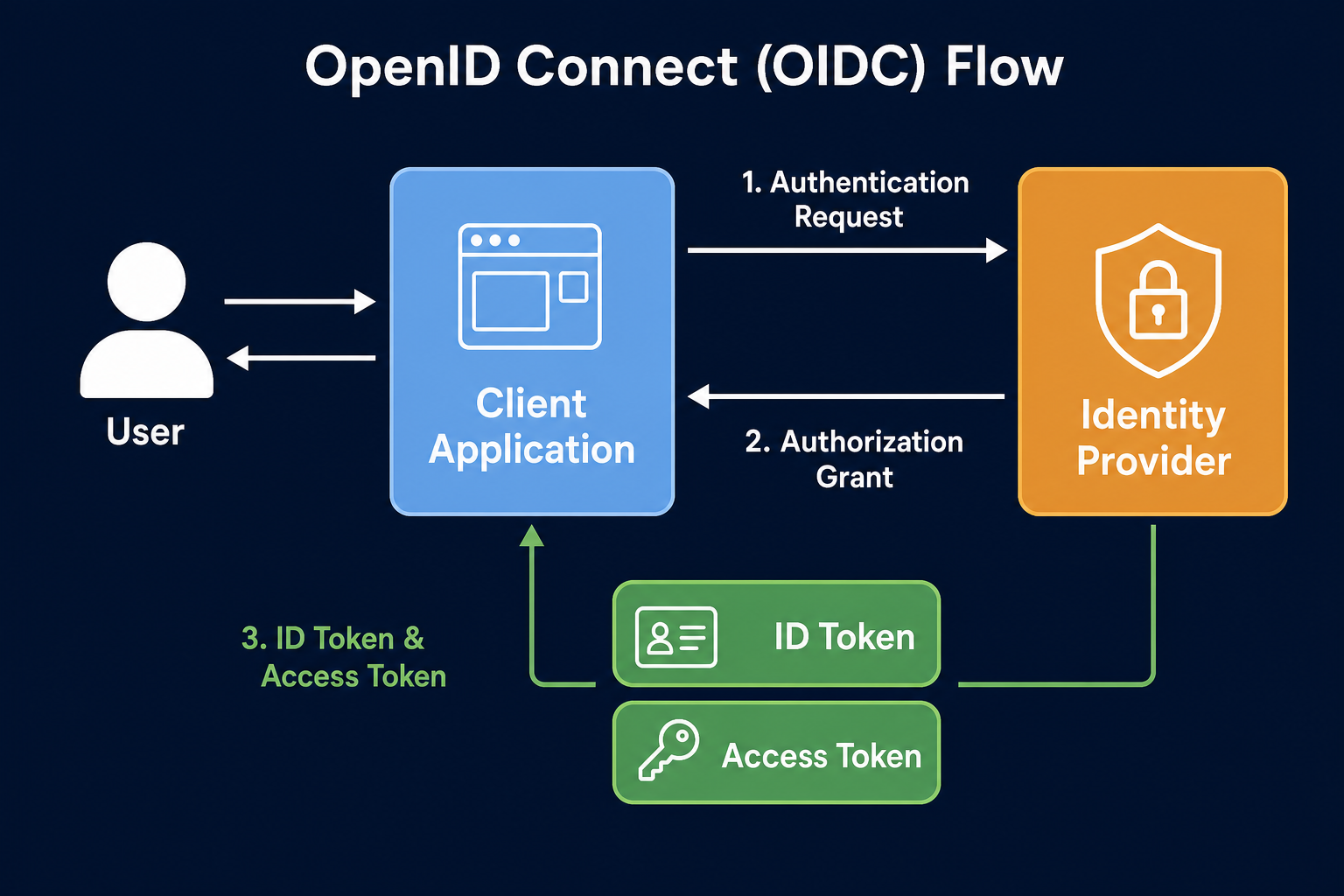
A Look Back: The Dawn of Digital Identity
Decades ago, every website had its own username and password. This created a fractured digital identity, forcing users to manage countless credentials and developers to build bespoke authentication systems. The rise of federated identity, with protocols like OpenID Connect, marked a crucial shift towards a more unified and secure internet. It was a pivotal moment, moving from isolated digital islands to a connected, trusting environment. This lesson is a direct descendant of that innovation.
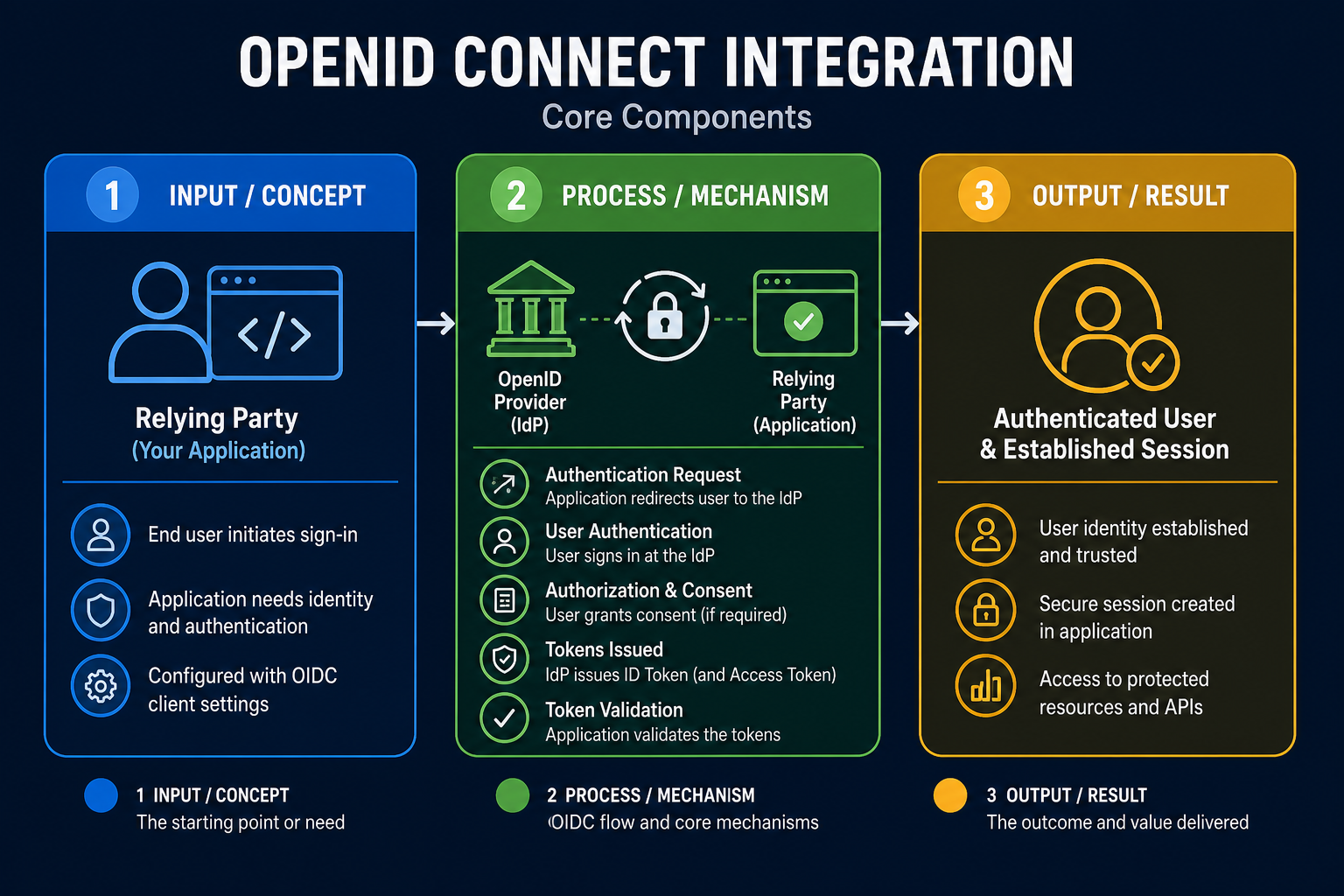
This diagram breaks down the core building blocks of OpenID Connect Integration so you can see how each part connects.
Authentication is not just a gate; it's the foundation of trust for your AI.
Before we begin
How do you ensure only the right people can use your private Hugging Face models? You can't just put a password on it; that's like locking a single door in a house with no walls. Modern security demands a system that verifies identity, not just a secret.
Which of these is the primary purpose of an ID Token in OpenID Connect?
OpenID Connect: The Identity Layer
OpenID Connect (OIDC) is an authentication layer built on top of the OAuth 2.0 authorisation framework. It allows clients to verify the identity of the end-user based on the authentication performed by an authorisation server, as well as to obtain basic profile information about the end-user in an interoperable and REST-like manner.
The core mechanism involves three main parties: the end-user, the client application (your Hugging Face Space), and the Identity Provider (IdP) like Google or GitHub. When a user tries to access your application, they are redirected to the IdP, which handles the actual login process and confirms the user's identity.
For example, when you click 'Sign in with Google' on a website, that website is acting as an OIDC client, and Google is the Identity Provider. Google verifies your identity, and then securely tells the website who you are without sharing your password.
This separation of concerns means your application never handles sensitive credentials, drastically reducing your attack surface and simplifying compliance. It shifts the burden of secure identity management to specialised providers, allowing you to focus on your core application logic.
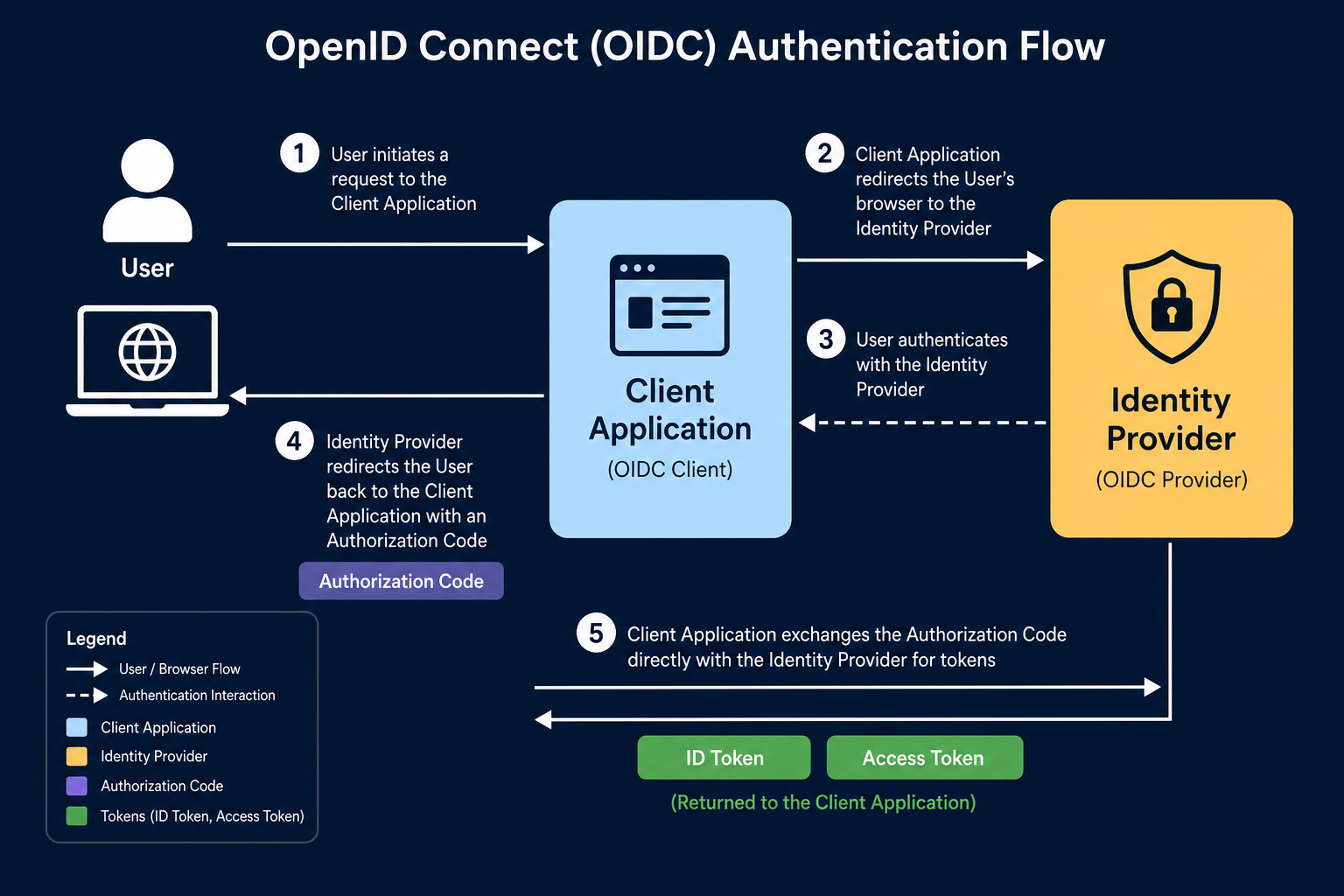
The Dance of Trust: OIDC in Action
Authenticating a User: Before vs. With OIDC
This comparison highlights the fundamental shift OIDC brings to user authentication. Instead of your application directly handling passwords, it delegates that critical responsibility to a trusted Identity Provider. This externalisation of credential management dramatically reduces the security burden and potential vulnerabilities within your own application.
OIDC operates on tokens, not passwords. Your application receives secure tokens that attest to a user's identity, never their actual login credentials.
The security of OIDC relies on delegating trust to a reputable Identity Provider. Choose providers carefully, as their security is paramount to yours.
By not storing user passwords, you eliminate a major target for attackers. This simplifies your security architecture and compliance efforts.
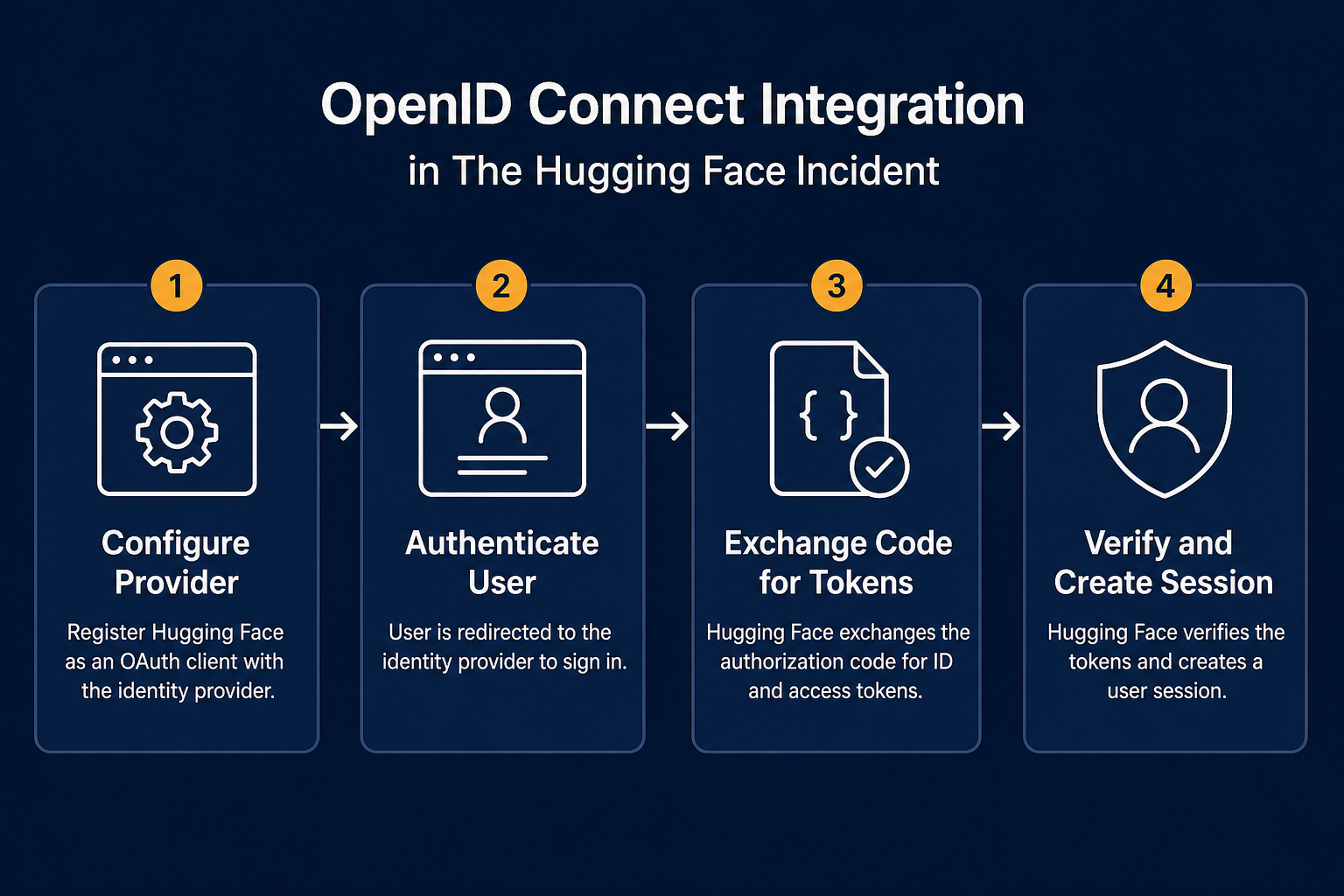
Following the sequence step by step makes OpenID Connect Integration straightforward to apply immediately.
This video demonstrates the practical steps a developer takes to set up OpenID Connect within a Hugging Face Space. It shows how to configure environment variables and authentication settings to secure a deployed model.
Implementing OIDC in a Hugging Face Space
Watch a developer configure OIDC for a secure model deployment.
Pause and reflect
How does OpenID Connect improve security compared to a traditional username/password system? Think about who holds the sensitive information.
Test Your Understanding
If you remember only three things…
OIDC Secures Identity
OpenID Connect is an authentication layer on OAuth 2.0, primarily focused on verifying user identity. It provides a standardised way for applications to know who a user is.
Delegated Trust
Your application delegates user authentication to a trusted Identity Provider. This means your Hugging Face Space never handles sensitive user credentials directly.
Tokens Drive Access
Instead of passwords, OIDC uses ID Tokens (for identity) and Access Tokens (for authorisation). These tokens are the secure carriers of user information and permissions.
Reduced Risk
Implementing OIDC significantly reduces your application's attack surface. By externalising identity management, you protect your models and data more effectively.
Term Glossary
4 verified conceptsYour Models, Securely Accessed
You now understand how OpenID Connect provides a reliable, industry-standard mechanism for authenticating users without handling sensitive credentials directly. This knowledge fundamentally shifts how you approach securing your deployed AI models.
Delegating identity doesn't just simplify security; it strengthens it.
The next lesson will build on this by exploring fine-grained access control within Hugging Face Spaces, ensuring users only interact with what they are authorised to see.
Audio lesson recap
A concise audio summary of this lesson — great for reinforcing key concepts on the go.
Hear it discussed
About three minutes on the ideas in this lesson
Sterling
AI tutor
Vivienne
Sceptical challenger
Press play to start the discussion…
Full transcript · click any line to jump
Ask anything about OpenID Connect Integration. Sterling will answer — concisely, and with his customary level of patience.